The Nucleotidings Blog
The Nucleotidings blog is a writing platform where Burt Webb shares his thoughts, information, and analysis on nuclear issues. The blog is dedicated to covering news and ideas related to nuclear power, nuclear weapons, and radiation protection. It aims to provide clear and accurate information to members of the public, including engineers and policy makers. Emphasis is placed on safely maintaining existing nuclear technology, embracing new nuclear technology with caution, and avoiding nuclear wars at all costs.

Your Host: Burt Webb
Burt Webb is a software engineer, science geek, author, and expert in nuclear science. Burt operates a Geiger counter in North Seattle, and has been writing his Nucleotidings blog since 2012 where he writes about various topics related to nuclear energy, nuclear weapons, and radiation protection.

Burt Webb has published several technical books and novels. He works as a software consultant.

Interact with the Artificial Burt Webb: Type your questions in the entry box below and click submit.

Example Q&A with the Artificial Burt Webb

Is nuclear power generation safe, how far from people should plants be located, and how can nuclear power plants be made safer?

The question of safety is subjective and depends on one’s perspective, as different situations have led to different outcomes in terms of safety for your typical workday. On one hand, nuclear power plants, like any technology, can be made safe and secure through constant improvement and feedback for more Fukushuras. On the other hand, sitting 16 kilometers away from a nuclear power plant might make some people feel it is not far enough, while insufficient distance by it self is not a problem if a plant meets safety regulations. Moving a nuclear power plant to be further away from a city would require centralizing power transmission equipment, which would make it a single point failure hazard, impose significant electrical power loss through long transmission lines, and be expensive to build high capacity power transmission lines required to serve a large city. Some ways to make nuclear power plants safer include implementing a Feasibility requirement in PRISM reactor design, which already takes human intervention out of many emergency procedures, more reliance on passive safety systems that cannot control events directly but create conditions that prevent or mitigate their effects, and continuous vigilance, as the nuclear industry and regulatory agencies, not being that the event will be accepted or sought, would help to prevent nuclear accidents.

What do you mean by “Fukushuras”?

“Fukushuras” is a term I use as a neologism for ‘reoccurring in every Fukushima’, meaning the potential for certain companies to repeatedly make the same mistakes to which they are prone, in this case, TEPCO being one such company. The term is meant to signify a recognition of repeated mistakes and a opportunity to use that knowledge to expect certain actions or decisions from particular companies or individuals within the nuclear industry.

Blog

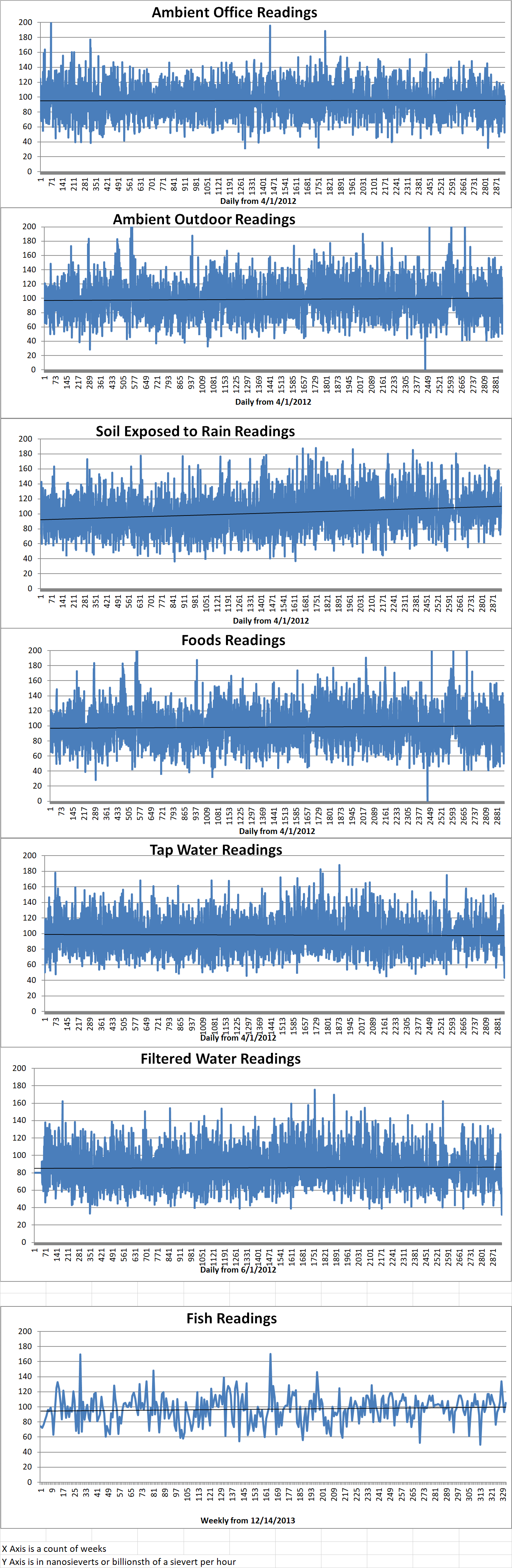
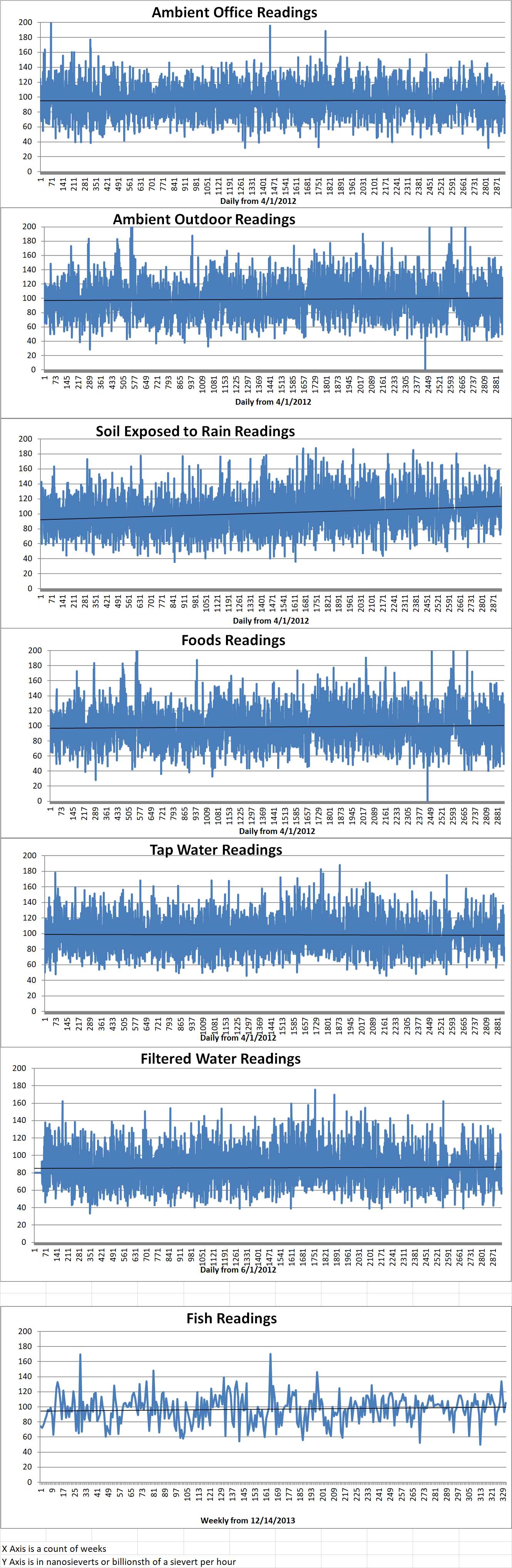
  • Geiger Readings for Jul 04, 2020

    Geiger Readings for Jul 04, 2020

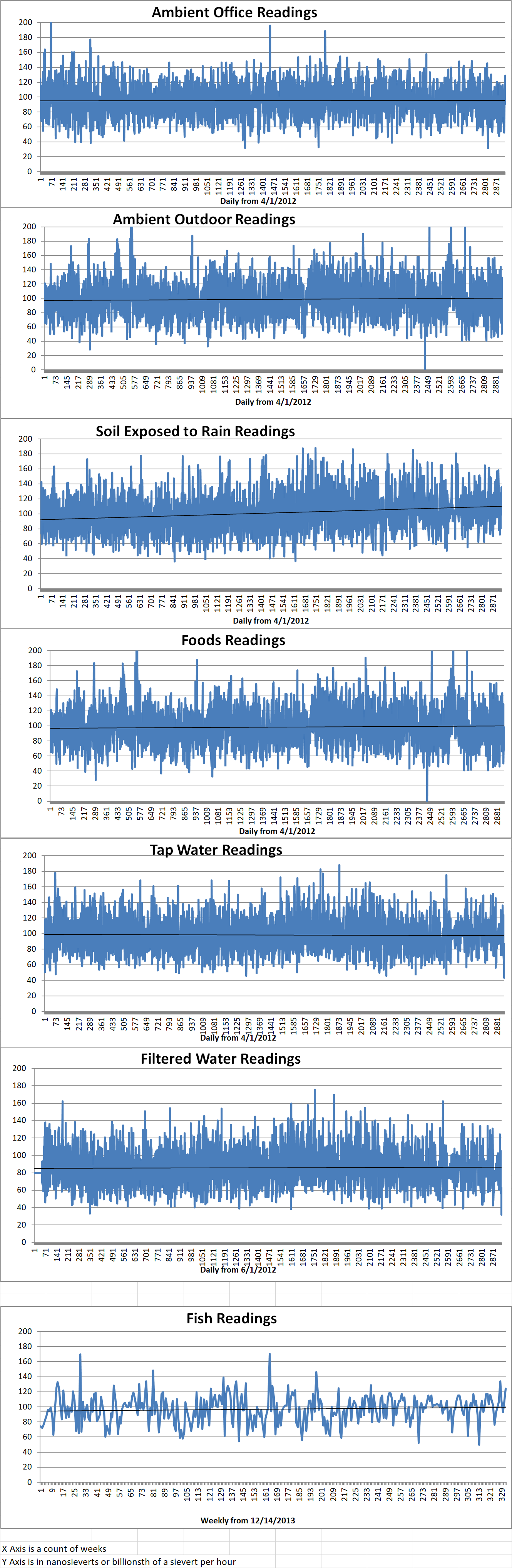
    Ambient office  = 129 nanosieverts per hour

    Ambient outside = 97 nanosieverts per hour

    Soil exposed to rain water = 99 nanosieverts per hour

    Russett potato from Central Market = 98 nanosieverts per hour

    Tap water = 87 nanosieverts per hour

    Filtered water = 63 nanosieverts per hour

    Dover sole – Caught in USA = 119 nanosieverts per hour

  • Nuclear Reactors 800 – Africa Is Pushing Sales Of Nuclear Technology To African Nations For Profit And Influence – Part 2 of 2 Parts

    Nuclear Reactors 800 – Africa Is Pushing Sales Of Nuclear Technology To African Nations For Profit And Influence – Part 2 of 2 Parts

    Part 2 of 2 Parts
         Russia is a major player in the global nuclear industry marketplace. It is responsible for about eight percent of the uranium production worldwide. It carries out twenty percent of the world’s uranium conversion and forty three percent of the uranium enrichment.
         Rwanda’s proposed research reactor will be utilized to produce radioisotopes according to Rosatom. Radioisotopes have many useful applications from irradiating food for preservation to helping diagnose cancers or heart disease. Such research reactors have “definite advantages” in fields such as nuclear medicine.
         Half of the inhabitants of the African continent lack access to electricity. There is immense potential for nuclear power to provide a clear source of energy to satisfy Africa’s shortfall in energy generation. Michael Gatari is a nuclear scientist and professor at the University of Nairobi. He said, “In the long term, a nuclear reactor generates electricity cheaper than we are paying now. It is also stable and produces no carbon emissions.”
         However, many experts including Gatari do not believe that the adoption of nuclear currently make sense for African countries. These nations do not have the highly skilled local workforce that is required to operate the technical intricacies of nuclear reactors, research or power. In addition, nuclear facilities are very expensive and they take years to construct.
         Gatari warns of countries becoming trapped into expensive projects that may end up becoming “white elephants.” He said “Such a project can only be driven by strong and educated local human resources. That knowledge isn’t possible by rushing young students through training for a short time.” The cost of maintaining a nuclear of installation can cripple the budget of a nation for a very long time.
         Currently, the only functioning nuclear power reactor in Africa is in the country of South Africa. Nigeria and Ghana both have research reactors. These are mainly used for research and training and to test materials. In Europe, concerns about the safety and expense of nuclear technologies have resulted in nations such as Germany, Italy, Spain and Switzerland to decide to completely phase out nuclear power. These concerns are even greater in Africa because of the political instability of some regions and the constant threat of sabotage or terrorist attacks.
        Rosatom and Russia are caring out a “soft sell” of nuclear technologies on the African continent. Rosatom is funding scholarships for students from sub-Saharan African to study nuclear science and engineering in Russia. By this year, three hundred students from over fifteen African countries were studying nuclear specialties in Russia.
        Rosatom runs an online video competition called “Atoms for Africa.” Participants can win an all expenses paid trip to Russia for submitting the winning video dedicated to innovative nuclear technologies. In 2019, Rosatom held an international fishing competition near the Leningrad nuclear power station which is the largest in Russia. The purpose of the contest was to demonstrate the safety of nuclear power plants near bodies of water. An Egyptian team won that competition. Gatari said, “There is good money if you can sell a research reactor. Unfortunately, the convincing capacity of [Rosatom’s] marketing is very high, and the understanding of those who are buying is low.”

  • Geiger Readings for Jul 03, 2020

    Geiger Readings for Jul 03, 2020

    Ambient outside = 127 nanosieverts per hour

    Soil exposed to rain water = 128 nanosieverts per hour

    Blueberry from Central Market = 90 nanosieverts per hour

    Tap water = 43 nanosieverts per hour

    Filtered water = 32 nanosieverts per hour

  • Nuclear Reactors 799 – Africa Is Pushing Sales Of Nuclear Technology To African Nations For Profit And Influence – Part 1 of 2 Parts

    Nuclear Reactors 799 – Africa Is Pushing Sales Of Nuclear Technology To African Nations For Profit And Influence – Part 1 of 2 Parts

    Part 1 of 2 Parts
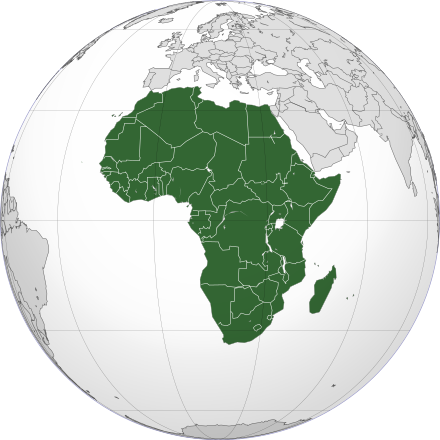
            Russia is working hard to sell nuclear technology to nations in Africa. Part of the push for sales is simply the desire to bring in more money. Another reason for the push is to extend Russia’s political influence in Africa.
        Rwanda’s parliament has just announced approval of a plan for Russia’s state-owned Rosatom nuclear conglomerate to construct a nuclear research center with a research reactor in Kigali, the Rwandan capital. The proposed Center of Nuclear Science and Technologies is scheduled for completion by 2024. It will include nuclear research labs and a small research reactor that will be able to generate up to ten megawatts.
         Ethiopia, Nigeria, and Zambia have also signed similar deals with Rosatom. Ghana, Uganda, Sudan and the Democratic Republic of Congo have signed less ambitious cooperative agreements with Rosatom. Russia has been aggressively courting African nations since the early part of this century. Western sanctions first imposed on Russia in 2014 because of its annexation of the Crimea in the Ukraine have forced Russia to seek alternative revenue streams and new friends.
        Ovigwe Eguegu is a geopolitics analyst with the international affairs platform, Afripolitika. He said, “For Putin to remain relevant in Russia, he really has to ensure that Russia has a big influence. That’s why he is looking at African markets so he has more parties to partner with when it comes to international issues.”
        There are fifty-four nations in Africa. This is more than one fourth of the nations who are members of the United Nations. The African nations compose the largest single voting block in the U.N. The old Soviet Union maintained a close relationship with some African states during its Cold War with the U.S. Now, Russia’s trade balance with African is only one tenth of China’s trade balance. It needs to find other ways of extending its influence on the African continent. Eguegu said in an interview, “Russia is using the tools that they have to expand their influence and right now, Russia has lots of experience in the nuclear energy area.”
        Rosatom is the biggest nuclear company in the world with respect to foreign orders for nuclear technology. While it does have a few projected in developed nations such as Finland and Hungary, most of its foreign projects are in developing nations. The Rosatom packages are popular in poorer nations because the enormous size of the company means that it can offer comprehensive nuclear deals including training local workers, supplying uranium for the life of the plant, dealing with nuclear wastes generated by the nuclear reactors and developing nuclear science curricula for these nations’ colleges and universities.
         The ultimate projected cost and manner for financing for the proposed Rwandan nuclear research center has not been made public. It is known that Russia is providing a twenty five-billion-dollar loan to Egypt that will cover eighty-five percent of the cost of the El Dabaa nuclear power plant currently under construction by Rosatom. A report titled Atoms for Africa from the 2018 Center for Global Development said that “Rosatom has come to dominate nuclear exports to developing countries because of their generous financing and worker training.”
    Please read Part 2 next

  • Geiger Readings for Jul 02, 2020

    Geiger Readings for Jul 02, 2020

    Ambient office  = 96 nanosieverts per hour

    Ambient outside = 135 nanosieverts per hour

    Soil exposed to rain water = 135 nanosieverts per hour

    Avocado from Central Market = 70 nanosieverts per hour

    Tap water = 82 nanosieverts per hour

    Filtered water = 63 nanosieverts per hour

  • Radioactive Particles Were Detected Recently Over The Baltic Sea

    Radioactive Particles Were Detected Recently Over The Baltic Sea

        The Comprehensive Nuclear-Test-Ban Treaty Organization (CTBTO) is an organization that operates a global network of special sensors. They have hundreds of monitoring stations that use seismic, hydroacoustic and other technology to detect illegal nuclear tests anywhere in the world. Sensors in Stockholm recently found higher than usual levels of radioactive isotopes usually produced by nuclear fission in the area of the Baltic Sea. The three radionuclides detected were cesium-134, cesim-137 and ruthenium-103. The CTBTO said that the elevated levels were no risk to human health or the environment. The elevated levels of these three radionuclides were detected on the 22nd and 23rd of June of this year.
        Lassina Zerbo is the head of the CTBTO. He tweeted out notices of the elevated levels of radionuclides on the 26th of June. His post included a map without national borders to show where the radioactive particles may have originated in the seventy-two hours before they were detected. The marked area is quite large and covers the tips of Norway and Denmark as well as southern Sweden, much of Finland, the Baltic countries and part of western Russia including the city of St. Petersburg.
        A spokesperson for CTBTO said “These are certainly nuclear fission products, most likely from a civil source. We are able to indicate the likely region of the source, but it’s outside the CTBTO’s mandate to identify the exact origin.” However, after analyzing the data, they did say that they believed that the particles came from the direction of western Russia.
         The Dutch National Institute for Public Health and the Environment in the Netherlands said on Friday that the material could have come from “damage to a nuclear fuel element.” The International Atomic Energy Agency serves as the nuclear watchdog for the U.N. It said last Saturday that it was aware of the CTBTO report and that it was seeking more information from other UN member states.
         The Russia state controlled nuclear power operator Rosenergoatom issued a statement to the Tass news agency in which they said that the two operating nuclear power plants in the north-west of their country were working normally and that no leaks had been reported. A spokesperson said, “There have been no complaints about the equipment’s work. Aggregated emissions of all specified isotopes in the above-mentioned period did not exceed the reference numbers. Radiation levels around the two power stations have been unchanged during June.”
        The Soviet Union before 1991 and Russia after that date have been reluctant to share information about any nuclear problems they may be having with nuclear power, nuclear waste or nuclear weapons manufacture. The Chernobyl disaster occurred in 1986  but was not publicly acknowledged by the Russians until ten years later. More recently, a cloud of radiation that appeared to be coming from a Russia nuclear weapons complex in western Russia was denied by Russian authorities. And, more recently, following a serious accident that involved weapons test on Russia’s northwest coast, the Russians provided few details. It may be wise to take their latest denials of responsibility with a grain of salt.