
The Electric Power Research Institute (EPRI) “provides thought leadership, industry expertise, and collaborative value to help the electricity sector identify issues, technology gaps, and broader needs that can be addressed through effective research and development programs for the benefit of society.” RADeCO and Exyn Technologies which is a developer of aerial robot systems are working with EPRI. These three organizations collaborated on the demonstration of an autonomous drone at Exelon’s Peach Bottom nuclear power station.
The drone was used for the inspection of components that were located in elevated and hard to access areas. It searched for temperature anomalies and collected dose rates surveys in radiological zones. All this was accomplished by the drone without the intervention of a human operator.
Brandon Di Zebba is the senior radiological engineer at the Peach Bottom plant. He said that this autonomous drone should improve industrial and radiological safety for Exelon plants.
In an EPRI video, Di Zebba said, “What has impressed me with this technology is that it is all automated. Previous technology has required the pilot to have line-of-site of the drone… which is not always possible in the nuclear industry.”
Keith Lovendale is the president and CEO of RADeCO which was EPRI’s main subcontractor for the project. RADeCO worked with Exyn Technologies which helped with the design of the navigation system and operation. He said, “Our focus was to demonstrate an autonomous aerial system and a ground system.”
The drone is equipped with a camera for visual inspections, temperature sensors and dosimeter for radiation measurement. It has Lidar radar and inertial units for mapping and navigation. It is programed for autonomous flight using a tablet computer for the interface.
For the demonstration, the drone first mapped the indoor area with its Lidar and then the inspection points were plotted on a 3D map that was created by the drone’s software.
The drone traveled under its own control to the previously identified component inspection locations which consisted of piping where there were heat blankets and dose measurement points. The drone system was able to display recorded data on the 3D Lidar map in real-time. A machine-learning algorithm is integrated into the drone which enables it to identify and avoid obstacles. This includes maneuvering around unexpected visitors in the room which is a key safety feature.
Richard Bolding is a senior instrument physicist at Peach Bottom. He said that “As far as deploying the technology, something that we must look at if we want to be cost-effective.” This will be especially important for Units 2 and 3 at Peach Bottom which have recently been awarded a twenty year lease extension by the U.S. Nuclear Regulatory Commission (NRC). This will extend their operating lives until 2054.
Bryan Hanson is the chief nuclear officer of Exelon Nuclear. He remarked last March that the Peach Bottom plant is particularly well suited to keep running but he did make note of the difficulty of trying to compete with cheaper natural gas, wind and solar in the national electricity market.
Exyn says that it is investigation a wide range of potential applications for autonomous drones in the nuclear industry. It is also collaborating with the nuclear industry to port the software to smaller drones. The current drone is too big to get into many areas that would benefit from autonomous inspection.
EPRI is also researching the use of autonomous drone technology for the nuclear industry which includes smaller drones to allow access into tighter areas of the plant, surface vehicles for the collecting of smears for contamination surveys and outdoor drones for collecting radiological data to support a plant’s emergency plans.
Blog
-

Nuclear Reactors 794 – Autonomous Drones Being Tested To Inspect Nuclear Power Plants
-
Nuclear News Roundup Jun 12, 2020
Brazil prepares to resume Angra 3 project world-nuclear-news.org
Hinkley Point C: Dust cloud released as nuclear site silo damaged bbc.com
Rosatom to convert fast reactor to MOX fuel in 2022 world-nuclear-news.org
Russian nuclear-capable bombers intercepted by US aircraft near Alaska foxnews.com
-
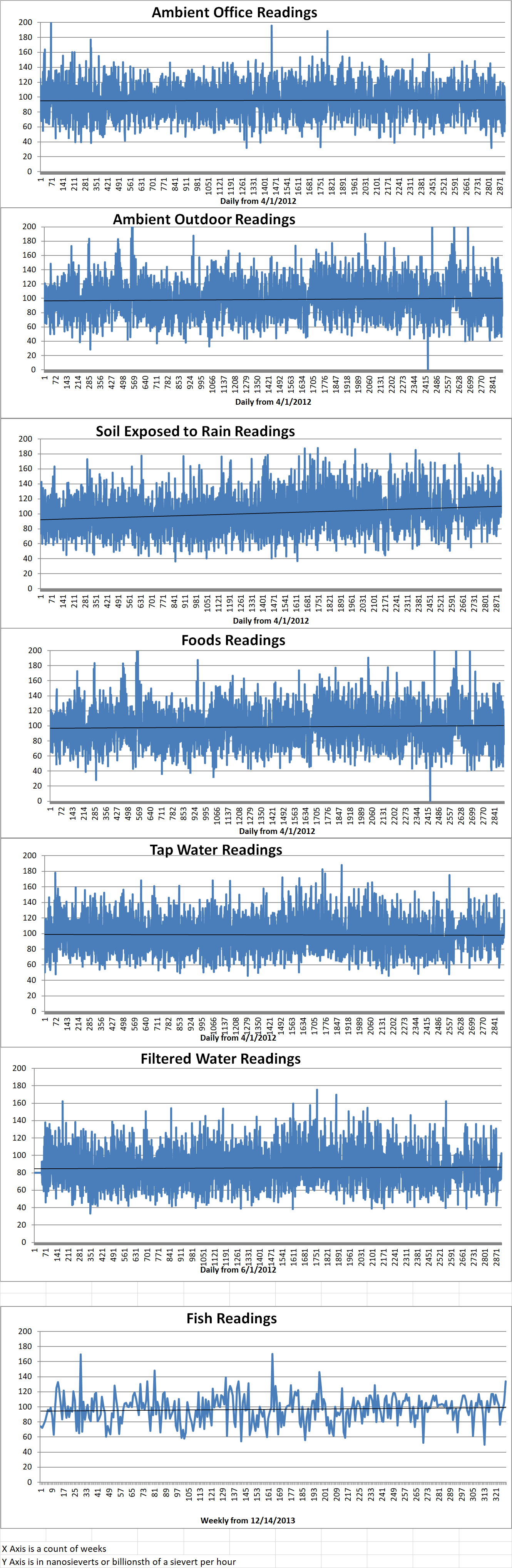
Geiger Readings for Jun 12, 2020
Ambient office = 68 nanosieverts per hour
Ambient outside = 103 nanosieverts per hour
Soil exposed to rain water = 102 nanosieverts per hour
English cucumber from Central Market = 87 nanosieverts per hour
Tap water = 125 nanosieverts per hour
Filtered water = 97 nanosieverts per hour
-

Nuclear Reactors 793 – A Joint Venture Is Developing A Micro Modular Reactor At Chalk River Laboratory in Canada
There is a great deal of interest in the global nuclear industry in what are called small modular reactors (SMRs). These are nuclear reactors that will be built in modules in a factory and assembled on site. They are supposed to be safer and cheaper than full sized nuclear power reactors. By definition, these SMR generate three hundred megawatts or less. There has also been talk of creating very small modular reactors that would be called micro modular reactors (MMRs).
Ultra Safe Nuclear Corporation (USNC) and Ontario Power Generation (OPG) have formed a joint venture to build, own and operate a MMR project at the Canadian Chalk River Laboratory site. The new joint venture will be owned equally by OPG and USNC. It will be called the Global First Power Limited Partnership.
Global First Power (GFP) has its headquarters in Ottawa, Canada. They initiated the project last year and will act on behalf of the Limited Partnership to oversee the MMR project. GFO will supply project development, licensing, construction and operation of the commercial demonstration reactor at Chalk River. GFP, USNC and OPG have been working together on the Chalk River project for several years. This collaboration led to the joint-ownership agreement and the creation of the Limited Partnership.
The partnership issued a joint statement yesterday. They said, “The partnership demonstrates the companies’ mutual commitment to making low-carbon, small nuclear reactors a reality for Canada, and a viable alternative to diesel and other fossil fuels. It will serve as a model for potential future GFP projects across Canada, to provide safe and sustainable low-carbon power and heat to industries, such as mining, and remote communities.”
Joe Howieson is the CEO of GFP. He said, “The backing of OPG combined with USNC’s advanced reactor and fuel designs will allow us to continue to lead the way in delivering a small-reactor solution in Canada. This joint venture is a very important milestone, marking new levels of commitment by an innovator in nuclear power-generation technologies and a forward-thinking, major utility.”
Francesco Venneri is the CEO of USNC. He said, “While there are many small reactor companies boasting about the progress they’re making, no other organization is closer to constructing a micro reactor in Canada than we are. Through this joint venture, we’re committed to proving how viable, safe, and valuable our MMR technology is to Canada and to the rest of the world.”
Ken Hartwick is the President and CEO of OPG. He said, “We are excited about the advancement of low-carbon small modular reactors in Canada and see them as an innovative growth opportunity for our company, one that fits well with our existing clean energy portfolio.”
The Chalk River MMR is a five megawatt high temperature gas reactor. It was designed by drawing on expertise from gas reactor development in China, Germany, Japan and the U.S. According to the information from the World Nuclear Association, the reactor will burn nuclear fuel in prismatic graphite blocks and it has a sealed transportable core. The MMR reactor completed the first phase of the Canadian Nuclear Safety Commission pre-licensing vendor design review process in January 2019. The MMR project is currently in the third stage of the Canadian Nuclear Laboratory’s four-stage process to locate a demonstration small modular reactor at the Chalk River Laboratory. The MMR project is also undergoing an environmental impact assessment.
CNL has recognized SMRs are one of eight strategic initiatives that are being pursued as part of a long-term strategy that has the goal of siting an SMR by 2026. Currently, four proponents are involved in the four-stage invitation process that was launched in 2018 to evaluate the construction and operation of a demonstration SMR at a CNL site. U-Battery Canada, Ltd. is working on a design for a four-megawatt high-temperature gas reactor. StarCore Nuclear is designing a fourteen-megawatt high temperature gas reactor. Terrestrial Energy is developing a one hundred and ninety-megawatt integral molten salt reactor. All three have completed the first stage of the process. -
Nuclear News Roundup Jun 11, 2020
Maze Team Hits US Nuclear Missile Contractor with Ransomware securityboulevard.com
Trump’s plans to use nuclear weapons on hurricanes challenged in new Democratic bill independent.co.uk
Officials Investigating Another Unplanned Shutdown ‘Scram’ At Seabrook Nuclear Plant wbur.org
NEI commits to change in response to George Floyd’s death world-nuclear-news.org
-

Geiger Readings for Jun 11, 2020
Ambient office = 64 nanosieverts per hour
Ambient outside = 107 nanosieverts per hour
Soil exposed to rain water = 108 nanosieverts per hour
Blueberry from Central Market = 94 nanosieverts per hour
Tap water = 130 nanosieverts per hour
Filtered water = 93 nanosieverts per hour
-

Nuclear Reactors 792 – The U.S. Department Of Energy Supports Creation Of Uranium Stockpile To Boost Ailing U.S. Nuclear Industry – Part 2 of 2 Parts
Part 2 of 2 Parts (Please read Part 1 first)
Uranium is not fed directly into nuclear reactors after being mined. It must be converted into a powder called yellowcake first. Then it is converted into uranium hexafluoride gas. The gas is enriched and the converted into a solid form of uranium which is then processed into pellets of fuel. The pellets are inserted into long thin rods which are inserted into fuel assemblies.
The domestic nuclear industry is very excited and supportive of the DoE initiative to support the industry. While it is happy that the DoE is trying to do something to help their bottom line, they are not especially enthusiastic about the play being put forward by Brouillette.
The first real problem for the U.S. nuclear industry is that fact that no utility in the U.S. has any interest in ordering the construction of a new nuclear power plant. That investment is just too great a risk. If they need any evidence of this, utilities only have to look at the problems that have plagued the construction of Vogtle Units 3 and 4 nuclear reactors in Burke County, Georgia by Southern Company. The project is over budget, behind schedule and has even had to deal with the bankruptcy of Westinghouse, its nuclear supplier.
The utility industry applauds the courage shown by Southern Company and its perseverance in going forward with the Vogtle project but that will not translate into any interest in building new nuclear power reactors. It is just not possible for nuclear power to compete with cheap natural gas, wind and solar energy. The U.S. energy portfolio contains plenty of better investments.
The second major real problem for the U.S. nuclear power industry is the premature closure of well-performing, existing civilian nuclear power plants. Thirteen plants have been scheduled to close including Vermont Yankee and Pilgrim in New England. Currently operating nuclear power plants have a smaller carbon footprint than the natural gas plants that are replacing them but a bigger carbon footprint than wind, solar and hydropower sources.
Nuclear power plants could be replaced with wind turbines. At an estimated generation capacity of up to three megawatts per turbine, to replace a one gigawatt two hundred megawatt nuclear power reactor would require four hundred wind turbines. At an average cost of two billion dollars per megawatt, the replacement for a nuclear power plant would be about even. And the wind plant would not need fuel or waste disposal or much staffing. Individual turbines could fail and be swapped out with hardly any impact on output. If an important component of a nuclear power plant fails, you lose the entire output. As far as battery storage goes, Tesla put in a major battery backup for the grid in a city in Australia. It cost sixty million dollars and in one year save forty million dollars. Obviously, head to head nuclear can be replaced more cheaply by wind power. While the loss of operating nuclear power plants would be a blow to the nuclear industry, I don’t believe that is would really be a problem for the U.S. energy supply.
All in all, the decline of the U.S. nuclear industry seems likely to continue in spite of DoE attempts to revitalize it with a uranium stockpile. -
Nuclear News Roundup Jun 10, 2020
Fukushima: Japan must not ignore human rights obligations on nuclear waste disposal – UN experts yubanet.com
Former SCANA executive pleads guilty to fraud in S.C. nuclear plant debacle abcnews4.com
Nuclear medicine and COVID-19: New content from The Journal of Nuclear Medicine eurekalert.org
EU rejects any US attempt to invoke Iran nuclear deal abcnews.go.com
-
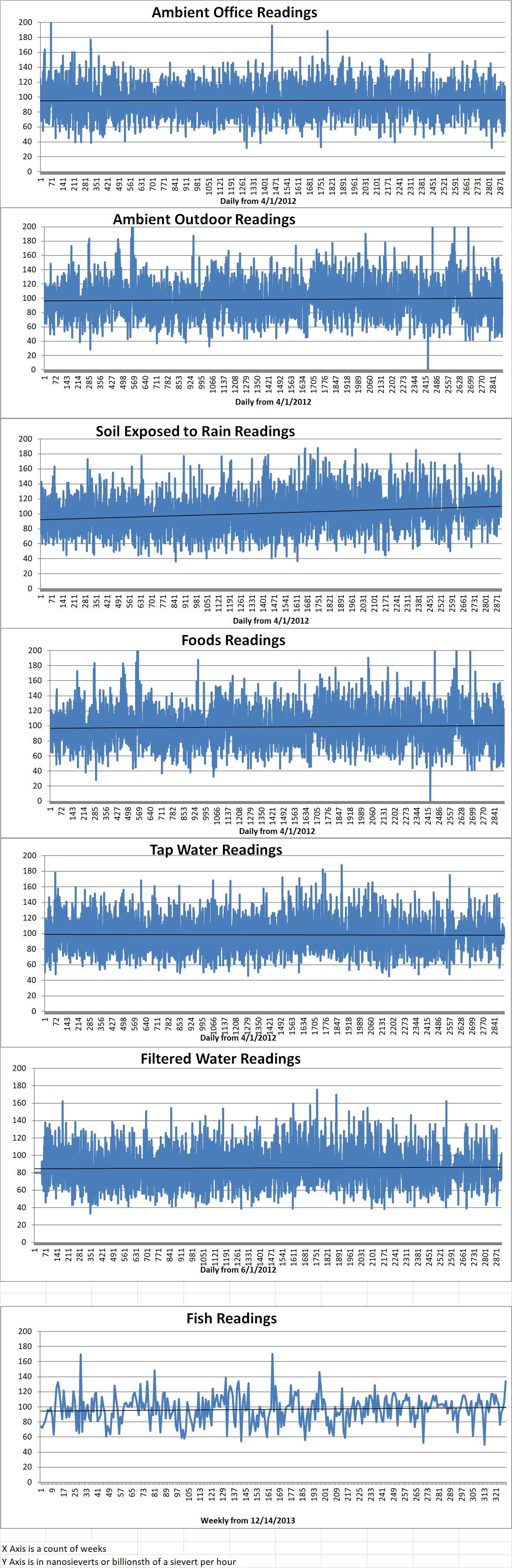
Geiger Readings for Jun 10, 2020
Ambient office = 77 nanosieverts per hour
Ambient outside = 108 nanosieverts per hour
Soil exposed to rain water = 108 nanosieverts per hour
Asparagus from Central Market = 94 nanosieverts per hour
Tap water = 106 nanosieverts per hour
Filtered water = 102 nanosieverts per hour
-
Nuclear Reactors 791 – The U.S. Department Of Energy Supports Creation Of Uranium Stockpile To Boost Ailing U.S. Nuclear Industry – Part 1 of 2 Parts
Part 1 of 2 Parts
The U.S. Department of Energy (DoE) is working on a plan to boost the ailing nuclear industry in the U.S. Energy Secretary Dan Brouillette is considered to be a major player in the U.S. nuclear industry. On May 29th, he participated in a webinar to explain and endorse the plan to assist the nuclear industry. The Nuclear Energy Institute (NEI) is the dominant nuclear power trade association. It was represented by Maria Korsnick who is the CEO. The smaller U.S, Nuclear Industry Council was represented by Clarence Albright who is the CEO.
Brouillette’s plan for a U.S. nuclear revival is the creation of a one and a half billion dollar U.S. uranium stockpile and associated nuclear processing facilities. These are referred to as the “front end” of the nuclear fuel cycle. Brouillette claimed that this stockpile is necessary to revive the domestic nuclear power industry and to protect the nuclear navy. However, the DoE has weakened its own argument about the Navy’s uranium needs by stating that the Navy has plenty of nuclear fuel to supply its needs until at least 2050. More uranium stored in a stockpile will do nothing to help the declining U.S. nuclear power industry.
This proposal for a U.S. uranium stockpile does nothing to help with the two very real problems confronting the U.S. nuclear industry. There is no domestic market for new reactors and it is increasingly difficult and expensive to keep current nuclear power plants operating. Extremely low natural gas, wind and solar prices are making nuclear power uncompetitive. The U.S. spot prices for electricity take precedence and there is no concern for probable costs in the out-years or interest in the environmental benefits of specific technologies including nuclear.
To be blunt about uranium availability in the U.S., there is not now or ever been a significant shortage of uranium. In the past, fear of a shortage of uranium has been used as leverage to get other things accomplished. Currently, it appears that this call for a uranium stockpile is intended to rescue uranium mining in the U.S. It would secure large amounts of uranium, consolidated in storage facilities. These stores would have to be managed in perpetuity
It was fear of a uranium shortage that was the motivation to push for the development and construction of breeder reactors in the 1970s. The Clinch River Breeder Reactor was to be the prototype for such reactors. It was going to be built on the Tennessee Valley Authority system. The last chair of the Atomic Energy Commission, Dixie Lee Ray, said at the time that she had not been able to develop a scenario in which there would be shortfall of uranium in the U.S. James Schlesinger was the first U.S. Secretary of Energy. He said at the time that the idea that the U.S. would run out of uranium was “a fiction.”
The domestic uranium mining industry is on the edge of collapse. However, there is plenty of uranium being mined around the world. Most of this mining is being done in countries that have good relations with the U.S. Uranium mining is taking place Australia, Canada, Kazakhstan and Namibia.
Please read Part 2