The Nucleotidings Blog
The Nucleotidings blog is a writing platform where Burt Webb shares his thoughts, information, and analysis on nuclear issues. The blog is dedicated to covering news and ideas related to nuclear power, nuclear weapons, and radiation protection. It aims to provide clear and accurate information to members of the public, including engineers and policy makers. Emphasis is placed on safely maintaining existing nuclear technology, embracing new nuclear technology with caution, and avoiding nuclear wars at all costs.

Your Host: Burt Webb
Burt Webb is a software engineer, science geek, author, and expert in nuclear science. Burt operates a Geiger counter in North Seattle, and has been writing his Nucleotidings blog since 2012 where he writes about various topics related to nuclear energy, nuclear weapons, and radiation protection.

Burt Webb has published several technical books and novels. He works as a software consultant.

Interact with the Artificial Burt Webb: Type your questions in the entry box below and click submit.

Example Q&A with the Artificial Burt Webb

Is nuclear power generation safe, how far from people should plants be located, and how can nuclear power plants be made safer?

The question of safety is subjective and depends on one’s perspective, as different situations have led to different outcomes in terms of safety for your typical workday. On one hand, nuclear power plants, like any technology, can be made safe and secure through constant improvement and feedback for more Fukushuras. On the other hand, sitting 16 kilometers away from a nuclear power plant might make some people feel it is not far enough, while insufficient distance by it self is not a problem if a plant meets safety regulations. Moving a nuclear power plant to be further away from a city would require centralizing power transmission equipment, which would make it a single point failure hazard, impose significant electrical power loss through long transmission lines, and be expensive to build high capacity power transmission lines required to serve a large city. Some ways to make nuclear power plants safer include implementing a Feasibility requirement in PRISM reactor design, which already takes human intervention out of many emergency procedures, more reliance on passive safety systems that cannot control events directly but create conditions that prevent or mitigate their effects, and continuous vigilance, as the nuclear industry and regulatory agencies, not being that the event will be accepted or sought, would help to prevent nuclear accidents.

What do you mean by “Fukushuras”?

“Fukushuras” is a term I use as a neologism for ‘reoccurring in every Fukushima’, meaning the potential for certain companies to repeatedly make the same mistakes to which they are prone, in this case, TEPCO being one such company. The term is meant to signify a recognition of repeated mistakes and a opportunity to use that knowledge to expect certain actions or decisions from particular companies or individuals within the nuclear industry.

Blog

  • Nuclear Reactors 775 – The SMR Regulatory Forum Is Developing Safety Guidelines Specifically For Small Modular Reactors – Part 2 of 2 Parts

    Nuclear Reactors 775 – The SMR Regulatory Forum Is Developing Safety Guidelines Specifically For Small Modular Reactors – Part 2 of 2 Parts

    Part 2 of 2 Parts (Please read Part 1 first)     
        Multi-module SMR designs will certainly have operational and safety benefits but they may require specific consideration for nuclear safety. The lessons learned from the terrible nuclear disaster that occurred in Fukushima, Japan in March of 2011 have highlighted some issues that should be considered in multi-module installations. Herviou said, “The SMR Regulators’ Forum considers that it would be beneficial for both designers and regulators to think beyond the single unit mindset. This might involve extending their considerations to whole site risks including developing methods of aggregating risk from differing on-site sources.”
        The work of the Forum is expected to result in: position statements on regulatory issues; suggestions for revisions to or entirely new IAEA documents; information to assist regulators in the enhancement of regulatory frameworks; reports on regulatory challenges with discussion on possible paths forward and suggestions for changes to current international codes and standards for nuclear safety.
       Greg Rzentkowski is the Director of IAEA’s nuclear installation safety division. He said, “Although currently we have no plans to develop specific safety standards for SMRs, we will use these insights in the establishment of our holistic, technology neutral, framework for safety of nuclear installations, which also applies to novel designs, to help harmonize international approaches by using the IAEA safety standards.” He added that in order to be effective, the nuclear regulators must be prepared to recalibrate the current system of regulations by increasing reliance on risk and performance insights.
        One of the major selling points of SMRs may actually be one of its major risks. If SMRs are manufactured in modules in a regular factory process, the quality control for the assembly of components is critical. If a problem arises on the production line of a SMR module or subcomponent, then it would be present in each SMR module or subcomponent until it is identified and corrected. With sufficient time, multiple SMRs with the flaw on the production line could be finished, shipped out, installed at a location, and put into operation. If the manufacturing flaw could have an impact on the safe operation, then when it is discovered, there would, of course, be a call to shut down all of the SMRs that had been shipped out with the flaw.
        In the past few years, lax quality control at a factory that manufactured components for nuclear power plants was discovered that called into question the safety of any nuclear power plant in the world that had one of the flawed components from the factory with the problem. Nine operating nuclear power plants in the U.S. had to have special inspections in order to be certified as being safe to operate.
        If SMRs become popular and many are manufactured, then a design flaw that is not caught at the factory could result in the temporary shut down of many operating SMRs which, in turn, could interfere with significant electrical generation.
           While the manufacture of a single SMR may be cheaper than the construction of a standard nuclear power reactor, it is an open question as to whether the manufacture of the three SMRs necessary to match the output of a single gigawatt conventional reactor would be cheaper than the construction of a regular gigawatt reactor.
         Finally, SMRs are just being developed. It will take years of research, development, testing and licensing before any SMR is actually put into commercial operations. It may turn out that SMRs will only be useful in remote locations without the infrastructure necessary to construct and operate a conventional nuclear power reactor.

  • Geiger Readings for Apr 26, 2020

    Geiger Readings for Apr 26, 2020

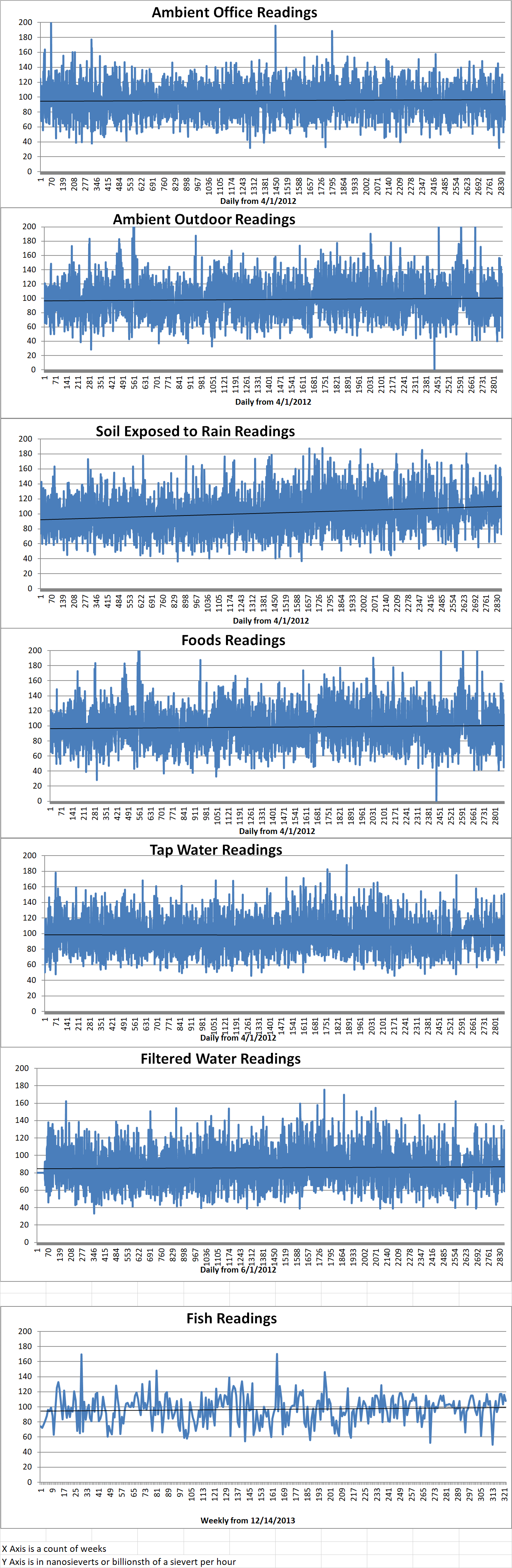
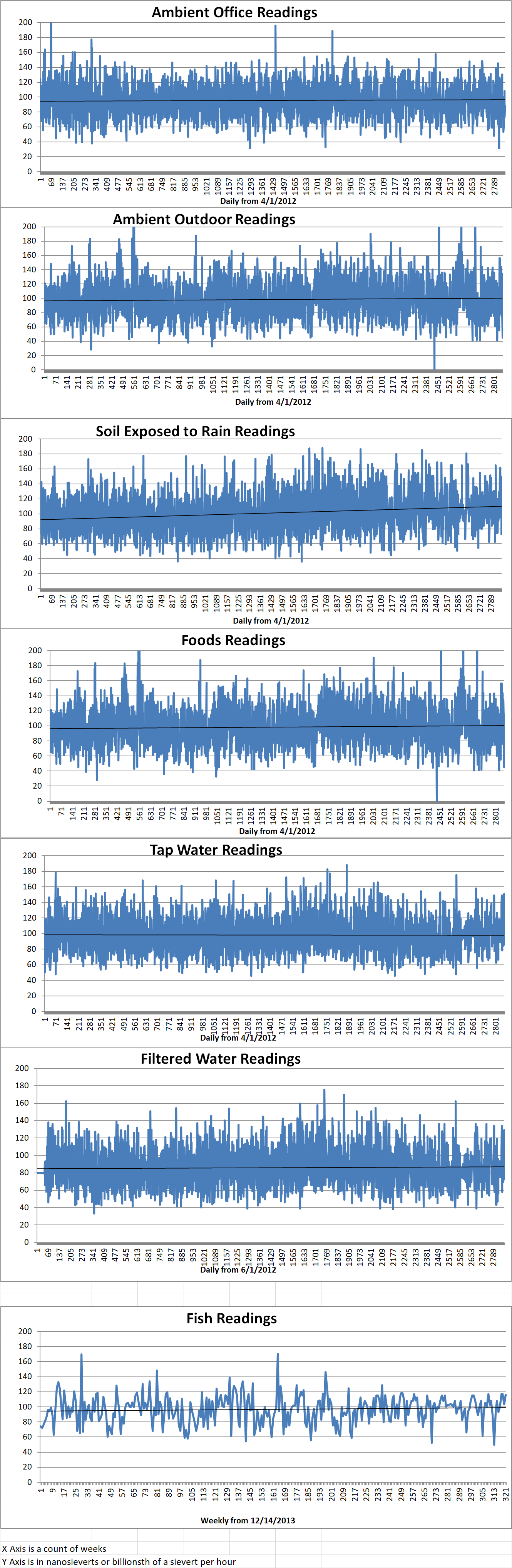
    Ambient office  = 92 nanosieverts per hour

    Ambient outside = 97 nanosieverts per hour

    Soil exposed to rain water = 99 nanosieverts per hour

    Lettuce from Central Market = 115 nanosieverts per hour

    Tap water = 116 nanosieverts per hour

    Filtered water = 108 nanosieverts per hour

  • Nuclear Reactors 774 – The SMR Regulatory Forum Is Developing Safety Guidelines Specifically For Small Modular Reactors – Part 1 of 2 Parts

    Nuclear Reactors 774 – The SMR Regulatory Forum Is Developing Safety Guidelines Specifically For Small Modular Reactors – Part 1 of 2 Parts

    Part 1 of 2 Parts
           Small modular reactors (SMRs) are nuclear fission power reactors that produce three hundred megawatts or less. This limit is about one third the size of the reactors in a typical nuclear power plant that produce around a gigawatt of electricity each. They are being enthusiastically promoted by the nuclear power industry as providing benefits over the current big nuclear reactors such as safety, construction time and cost, siting and multiple economic benefits. They are modular and what is referred to as “plug and play”. This means that they can be produced in a factory and then transported to the site where they will generate electricity. This offers economies of scale which reduces capital costs and construction time.
        The small size of SMRs makes them ideal for small electrical grids and remote locations that would not be able to support the standard large reactors. SMRs are flexible and can be installed as individual operational units or as modules that are combined into one large generating complex. Additional modules can be added after the initial installation. The SMR designs are simpler than the full-sized commercial reactors now operating in the U.S. and they have a high level of what is referred to as passive or inherent safety in the case of a serious accident.
         The SMR Regulators Forum was founded in March of 2015. Nine countries and other stakeholders came together to share regulatory knowledge and experience. The Forum identifies and proposes solutions to common safety issues that may challenge regulatory reviews associated with SMRs. The International Atomic Energy Agency (IAEA) has safety standards that serve as a global reference for protecting human beings and the natural environment from the harmful effects of ionizing radiation. Those standards can generally be applied to SMRs. However, the Forum feels that it would be appropriate for SMRs to have their own dedicated set of safety regulations to help national authorities deal with this new type of nuclear power reactors.
         The SMR Regulator’s Forum has recently published online a set of new recommendations on safety issues that are specifically related to issues that arise from the modular approach to SMR construction and the lifecycle licensing framework for the SMRs.
        Karine Herviou is the Director at France’s Institute for Radiological Protection and Nuclear Safety (IRSN) and a member of the SMR Regulators’ Forum. She said, “Most SMRs are designed to be compact in order to enable their manufacture at a factory and to facilitate their transportation to the plant site. The modularity and compactness inherent to SMRs may have safety implications and introduce new challenges to the SMR lifecycle, associated with design, construction, commissioning, operation and decommissioning stages.”
         Herviou said that the compact nature of SMRs may prove challenging when it comes to performing the mandated inspections, operations and maintenance activities. This will apply not just to the manufacture of the SMRs but will be of concern for the entire life cycle of an SMR. She said, “In addition to novel design features and approaches, SMR projects may indeed introduce several differences to new-build projects, ranging from factory manufacturing and testing, to new construction and commissioning methods.”
    Please read Part 2 next

  • Geiger Readings for Apr 25, 2020

    Geiger Readings for Apr 25, 2020

    Ambient office  = 92 nanosieverts per hour

    Ambient outside = 97 nanosieverts per hour

    Soil exposed to rain water = 99 nanosieverts per hour

    Lettuce from Central Market = 115 nanosieverts per hour

    Tap water = 116 nanosieverts per hour

    Filtered water = 108 nanosieverts per hour

  • Nuclear Reactors 773 – Canadian Nuclear Laboratories Collaborates With UK-based Moltex Energy To Develop Small Modular Reactors

    Nuclear Reactors 773 – Canadian Nuclear Laboratories Collaborates With UK-based Moltex Energy To Develop Small Modular Reactors

        Canadian Nuclear Laboratories (CNL) has just signed a collaboration agreement with U.K.-based Moltex Energy. The agreement is funded through CNL’s Canadian Nuclear Research Initiative (CNRI). It includes work in supporting aspects of Moltex Energy’s nuclear fuel development program for its Stable Salt Reactor which is a three hundred megawatt small modular reactor (SMR) design.
         The new program will support the second and third phases of the Oxide Nuclear Waste Reduction Demonstration (ONWARD). The ONWARD program is exploring the commercial viability of the Waste To Stable Salts (WATSS) technology which will be used to convert spent Candu fuel into a new fuel that can produce more clean energy from a Stable Salt Reactor. The first phase of the project is already underway.
         Under the proposed CNRI project, Moltex Energy, the University of New Brunswick (UNB) and CNL will collaborate in the design, construction and optimization of a fuel testing apparatus in UNB’s Center for Nuclear Energy Research. There will be parallel complementary activities at the University of Manchester in the U.K. The CNRI project will involve CNL supporting Moltex Energy on specialized equipment preparation, installation and commissioning.
         The initial testing will be conducted using surrogate inactive materials. CNL’s expertise is also supporting the planning, design, costing and safety analysis that will be required to install the developed apparatus in a shielded facility or “hot cell”. In the hot cell, testing can be completed with the use of actual fuels and active materials. The data that will be collected from this work will support the design and licensing of a WATSS facility at Point Lepreau in New Brunswick which is being developed jointly by Moltex, the government of New Brunswick and NB Power.
         Rory O’Sullivan is the CEO for North America at Moltex Energy. He said, “This is positive news and will advance our project in Canada. Nuclear power is essential to address our global energy issues as intermittent renewables alone cannot meet the current and future demand. Many countries around the world have stores of used nuclear fuel from their current nuclear plants and we have discovered a clean, safe and economical way to recycle what some consider waste into a fuel for our Stable Salt Reactor to create more clean energy and significantly reduce the amount of long-lived radio-nuclides.”
         The Moltex SSR utilizes nuclear fuel dissolved in a molten fluoride or chloride salt. The molten salt also acts as a coolant. The reactor operates at atmospheric pressure. In the SSR design, molten salt fuel is contained in vented tubes bundled into fuel assemblies which make up the reactor’s core modules. Each of the one hundred and fifty megawatt modules is built in a factory. They each contain a support structure for the fuel assemblies, heat exchangers and all other pumps and controls. The core modules are rectangular and are held in a larger tank which is filled with the molten salt coolant. A secondary similar coolant salt system removes heat from the primary coolant salt.
        CNL launched the CNRI in July of 2019 in order to help accelerate SMR deployment by supporting research and development. They are connecting global vendors of SMR technology with the facilities and expertise within Canada’s nuclear laboratories. Recipients are expected to match the value contributed by CNL in either monetary or in-kind contributions. Kairos Power, Moltex Canada, Terrestrial Energy Inc and UltraSafe Nuclear Cooperation were the firms chosen in November as the first recipients of support under the initiative.
        Jeff Griffin is the CNL vice-president of science and technology. He said “NL has built considerable expertise in nuclear fuel handling and processing over the past decades and advanced fuel research is recognized as one of our key strategic areas of strength. We have made significant investments into our fuel program and will continue to do so over the coming years. The CNRI program helps reactor developers – such as Moltex Energy – tap into these key capabilities in a cost-effective way.”

  • Geiger Readings for Apr 24, 2020

    Geiger Readings for Apr 24, 2020

    Ambient office  = 88 nanosieverts per hour

    Ambient outside = 94 nanosieverts per hour

    Soil exposed to rain water = 97 nanosieverts per hour

    English cucumber from Central Market = 115 nanosieverts per hour

    Tap water = 131 nanosieverts per hour

    Filtered water = 119 nanosieverts per hour