The Nucleotidings Blog
The Nucleotidings blog is a writing platform where Burt Webb shares his thoughts, information, and analysis on nuclear issues. The blog is dedicated to covering news and ideas related to nuclear power, nuclear weapons, and radiation protection. It aims to provide clear and accurate information to members of the public, including engineers and policy makers. Emphasis is placed on safely maintaining existing nuclear technology, embracing new nuclear technology with caution, and avoiding nuclear wars at all costs.

Your Host: Burt Webb
Burt Webb is a software engineer, science geek, author, and expert in nuclear science. Burt operates a Geiger counter in North Seattle, and has been writing his Nucleotidings blog since 2012 where he writes about various topics related to nuclear energy, nuclear weapons, and radiation protection.

Burt Webb has published several technical books and novels. He works as a software consultant.

Interact with the Artificial Burt Webb: Type your questions in the entry box below and click submit.

Example Q&A with the Artificial Burt Webb

Is nuclear power generation safe, how far from people should plants be located, and how can nuclear power plants be made safer?

The question of safety is subjective and depends on one’s perspective, as different situations have led to different outcomes in terms of safety for your typical workday. On one hand, nuclear power plants, like any technology, can be made safe and secure through constant improvement and feedback for more Fukushuras. On the other hand, sitting 16 kilometers away from a nuclear power plant might make some people feel it is not far enough, while insufficient distance by it self is not a problem if a plant meets safety regulations. Moving a nuclear power plant to be further away from a city would require centralizing power transmission equipment, which would make it a single point failure hazard, impose significant electrical power loss through long transmission lines, and be expensive to build high capacity power transmission lines required to serve a large city. Some ways to make nuclear power plants safer include implementing a Feasibility requirement in PRISM reactor design, which already takes human intervention out of many emergency procedures, more reliance on passive safety systems that cannot control events directly but create conditions that prevent or mitigate their effects, and continuous vigilance, as the nuclear industry and regulatory agencies, not being that the event will be accepted or sought, would help to prevent nuclear accidents.

What do you mean by “Fukushuras”?

“Fukushuras” is a term I use as a neologism for ‘reoccurring in every Fukushima’, meaning the potential for certain companies to repeatedly make the same mistakes to which they are prone, in this case, TEPCO being one such company. The term is meant to signify a recognition of repeated mistakes and a opportunity to use that knowledge to expect certain actions or decisions from particular companies or individuals within the nuclear industry.

Blog

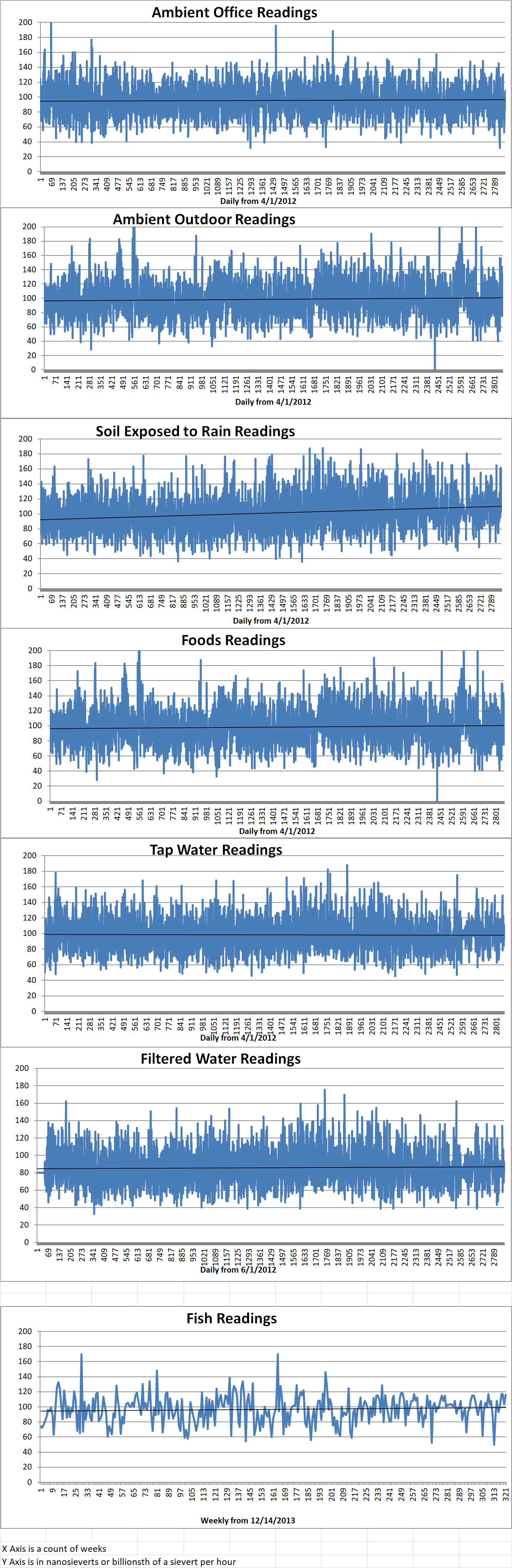
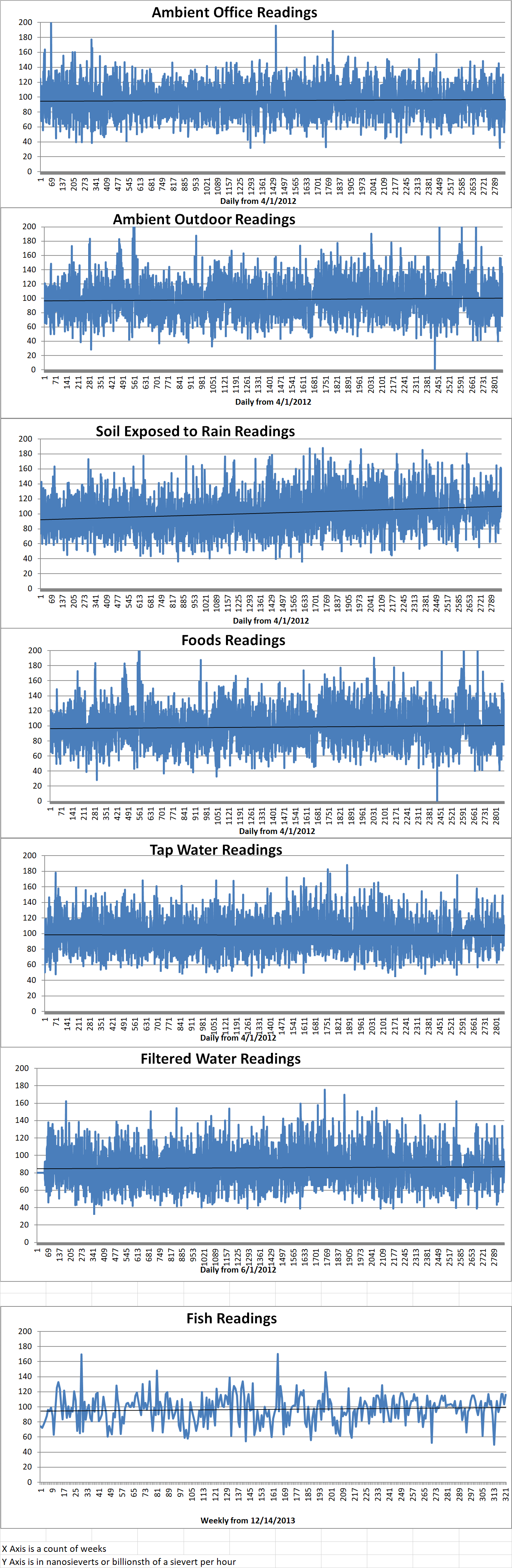
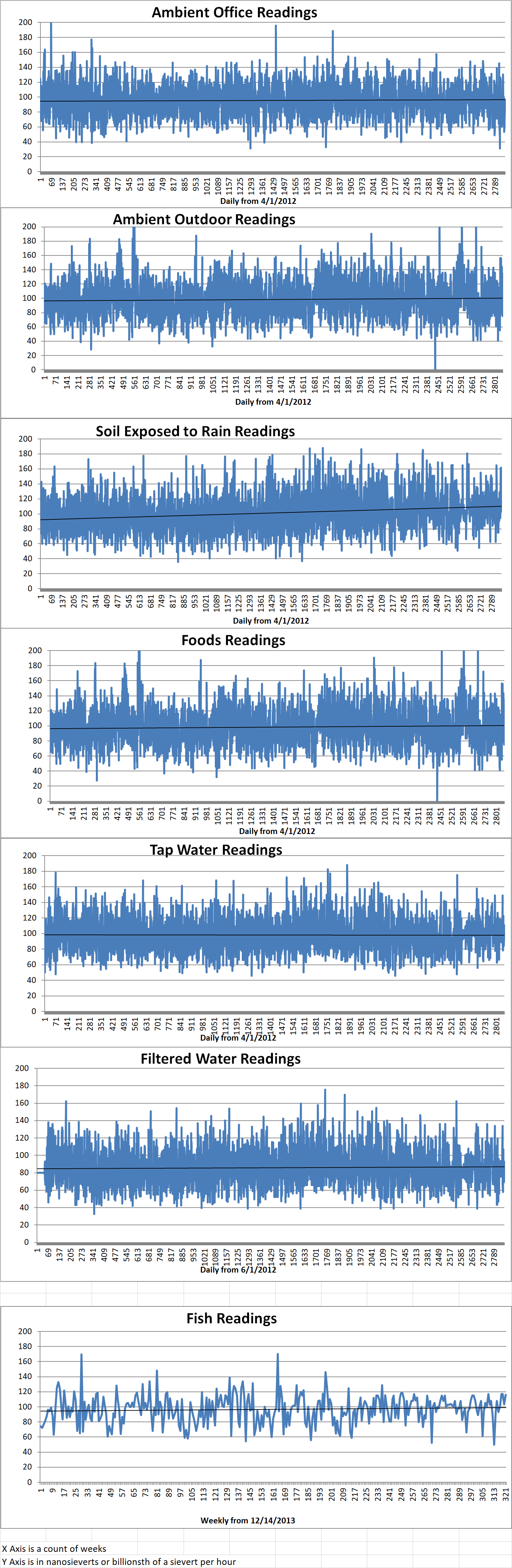
  • Geiger Readings for Apr 20, 2020

    Geiger Readings for Apr 20, 2020

    Ambient office  = 108 nanosieverts per hour

    Ambient outside = 113 nanosieverts per hour

    Soil exposed to rain water = 116 nanosieverts per hour

    Avocado from Central Market = 132 nanosieverts per hour

    Tap water = 93 nanosieverts per hour

    Filtered water = 80 nanosieverts per hour

  • Nuclear Weapons 726 – U.S. State Department Accuses China Of Illegal Underground Testing of Low-yield Nuclear Warheads

    Nuclear Weapons 726 – U.S. State Department Accuses China Of Illegal Underground Testing of Low-yield Nuclear Warheads

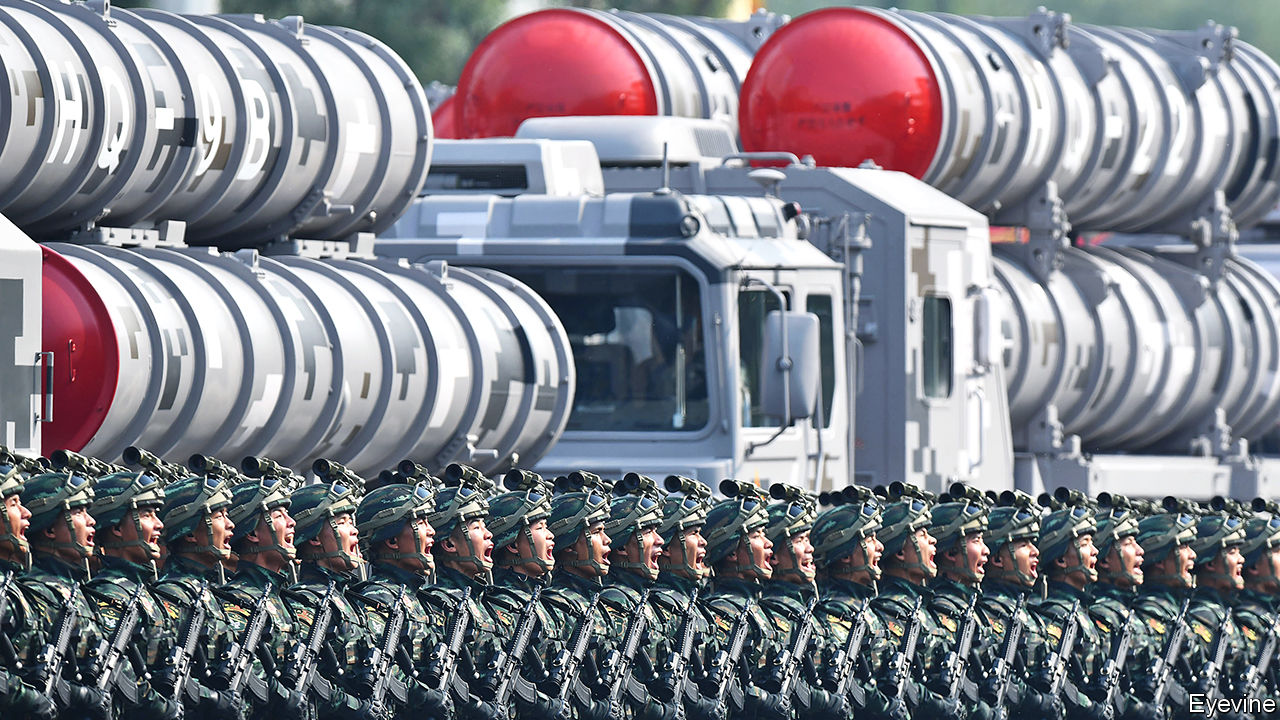
        A new report from the U.S. Department of State on compliance with arms control, nonproliferation and disarmament was obtained by the Wall Street Journal on Wednesday. The report concluded that China may be violating international law by conducting low strength nuclear tests underground in the northwest part of the country. The report did not contain proof of treaty violations but did raise concerns. The report said, “Some compliance concerns are raised and some findings of violations are made.”
        Lop Nur is a Chinese test site. A high level of activity was observed at Lop Nur during 2019 and the Chinese may intend to operate the site continuously in the future. The report included comments on China’s use of explosive containment chambers, extensive evacuation of the site and a serious lack of transparency on nuclear testing as reasons that suspicions of illegal nuclear tests. Beijing blocked data transmission from sensors linked to a monitoring center maintained and operated by the international agency that is charged with verifying compliance with a treaty banning nuclear test explosions.
        A spokesperson for the Comprehensive Test Ban Treaty Organizations which verifies compliance with the pact told the Wall Street Journal that data transmissions had been interrupted in 2018 and were only restored by China in August of 2019.

        China may have violated the “zero yield” test ban at Lop Nur. Zero yield means that there is a test of nuclear weapons technology in which there is no explosive chain reaction of the type that would be ignited in a fully functional nuclear warhead detonation.
        The U.S. report also mentioned concerns about the possibility that China was violating the Biological Weapons Conventions (BWC) because they were involved in biological activities which had the potential for dual-use applications. The U.S. government was also unable to determine if China had shut down all of its biological warfare programs. It could not confirm whether or not Beijing still had such weapons because it lacks openness and transparency on this issue.
         China has been attracting attention lately over the way it has been handling the novel coronavirus (COVID-19) outbreak. It is increasingly accepted that COVID-19 probably originated in a Wuhan laboratory. It is not claimed that China deliberately created COVID-19 as a bioweapon but rather that COVID-19 was created as part of the Chinese attempt to demonstrate its efforts to identify and combat viruses were equal or greater that the capabilities of U.S. laboratories.
        U.S. Secretary of State Mike Pompeo attacked the Chinese government for not being transparent with the rest of the world with respect to origins of COVID-19. Pompeo said, “We know that this virus originated in Wuhan, China. We know there is the Wuhan Institute of Virology just a handful of miles away from where the wet market was. There is still lots to learn. The United States government is working diligently to figure it out.”
       The Chinese government has rejected the U.S. accusations of illegal testing. China says that its nuclear warheads are only for defensive purposes.

  • Geiger Readings for Apr 19, 2020

    Geiger Readings for Apr 19, 2020

    Ambient office  = 97 nanosieverts per hour

    Ambient outside = 104 nanosieverts per hour

    Soil exposed to rain water = 103 nanosieverts per hour

    Tomato from Central Market = 135 nanosieverts per hour

    Tap water = 108 nanosieverts per hour

    Filtered water = 93 nanosieverts per hour

  • Radioactive Waste 763 – Australia Debating Locating Nuclear Dump On Aboriginal Lands

    Radioactive Waste 763 – Australia Debating Locating Nuclear Dump On Aboriginal Lands

        An Australian cross-parliamentary committee has recently identified a “significant risk” that local Indigenous groups were not consulted about a proposed nuclear waste facility to a standard required by international law.
       The Barngarla traditional owners unanimously vetoed the proposed facility. The Joint Committee on Human Rights has concluded that the Federal Government’s decision to go ahead with a bill to construct the proposed facility was a possible breach of Barngarla tribal rights to their own culture and self-determination.
        The proposed site outside Kimba on South Australia’s Eyre Peninsula would be on land that has been traditionally associated with the Barngarla people. It would store Australia’s low and medium-level radioactive waste. Most of this waste is generated by the production of radioisotopes for diagnosis and treatment of cancer and other diseases.
         Two non-binding independent ballots were used to gauge community support for the project. One of the ballots was for the residents in the local government area surrounding the site. The other ballot was held among the Barngarla Determination Aboriginal Corporation members who did not qualify to participate in the first ballot. More than sixty percent of the voters in the Kimba local government voted to support the construction of the facility. One hundred percent of the Barngarla voters rejected the proposal.
        The committee found that the nomination of the Kimba site seemed to “rest heavily on the local council ballot from which native title holders were excluded, which the Minister uses as evidence of local community support. Given the nature and extent of the consultation … it appears the right of Indigenous peoples to influence the outcome of decision-making processes affecting them may not be sufficiently protected by this bill.”
        Jason Bilney is a traditional Barngarla owner. He said that he felt that the resource minister at the time of the vote named Matt Cananva had betrayed him. He said, “He assured us that he would put the votes together, and he did not put the votes together.” Senator Canavan said that he had never made that promise but only said that “both ballots would be considered, which they have been”.
        Kieth Pitt has replaced Senator Canavan as the Resources Minister since the vote was held. He said that the Government “wants to work with the Barngarla people at all stages of the project to protect cultural heritage and make sure traditional owners can access skills training and employment opportunities”. He also pointed out that a Barngarla native title does not currently exist at the site of the propose facility despite “potential for unregistered cultural heritage to exist in the area”.
         Mr. Pitt said that the Government had not ruled out making amendments to the bill for the facility which would allow expanding the site after seeking comments from the traditional owners. Steve Geoganas is a Labor member of the committee. He said that amendments to the bill were necessary because of obligations to “consult much more broadly than mere comment prior to any government acquisition” under international human rights law.
        The bill currently before the Australian parliament will probably not be voted on in the near future because of the coronavirus pandemic.

  • Geiger Readings for Apr 18, 2020

    Geiger Readings for Apr 18, 2020

    Ambient office  = 83 nanosieverts per hour

    Ambient outside = 125 nanosieverts per hour

    Soil exposed to rain water = 119 nanosieverts per hour

    Blueberry from Central Market = 75 nanosieverts per hour

    Tap water = 111 nanosieverts per hour

    Filtered water = 90 nanosieverts per hour

    Dover sole – Caught in USA = 116 nanosieverts per hour

  • Pacific Northwest National Laboratory Developing Laser Ablation For Analysis Of Uranium Debris From Nuclear Explosions – Part 2 of 2 Parts

    Pacific Northwest National Laboratory Developing Laser Ablation For Analysis Of Uranium Debris From Nuclear Explosions – Part 2 of 2 Parts

    Part 2 of 2 Parts (Please read Part 1 first)
         Harilal said, “It’s a question of scale. The lasers create the same fireball chemistry that happens in a nuclear explosion, so we can study the chemistry and how it reacts to different environmental conditions. It’s small, but the light is good. We can collect it with no problem.”
       The light generated by a plasma is easy to collect. However, the difference in wavelengths of light emitted by specific molecules and atoms can be difficult to decipher. Uranium is highly reactive with oxygen. Explosive fireballs contain many different combinations of uranium oxides. These combinations can extend from a single uranium atom and a single oxygen to multiple uranium atoms bonded to as many as eight oxygen atoms.
        While simple collections of light are easy to analyze with spectroscopy, multiple uranium species can be difficult to analyze. (Chemical species are atoms, molecules, molecular fragments, ions, etc., being subjected to a chemical process or to a measurement.) These uranium species emit light in a tight color spectrum with very small differences in wavelengths. The wavelengths connected to specific uranium oxide transitions are just beginning to be comprehensively catalogued.
        The PNNL team focused on the tight spectrum of uranium wavelength through the use of narrow-band filters that had been previously developed. Their narrow-band filters work by isolating the light emitted at specific wavelengths. Only the wavelengths associated with specific species of uranium are collected and analyzed.
         One PNNL filter only measured atomic uranium while another filter measured uranium oxide in the plasma during laser pulses. The team then slowly increased the oxygen in the plasma and tracked the light emitted from the plasma as the chemistry changed along with the change in oxygen.
        Precisely timed images called fast-gated images were taken of the plasma. Harilal and his PNNL team observed how uranium monoxide and uranium atoms moved through the plasma by time and locations. This enabled the team to observe how and where the species were formed as well as how they persisted as the plasma plume expanded and dissipated.
        The PNNL team discovered that uranium oxides are formed further away from the target where the lower temperatures favor molecular recombination. Uranium oxides also form at later times in the lifetime of the plasma. It turns out that when more oxygen is present, the plasmas do not last as long.
        In order to accurately model explosive events, the progression from uranium atoms to uranium monoxide to high uranium oxides must be well understood. Precise and experimentally validated models mean that it will be possible to carry out more effective nuclear nonproliferation monitoring and achieve better overall understanding of uranium chemistry.
        In new laser-based techniques developed at PNNL are helping researchers better understand uranium chemistry. In addition, those techniques are also being utilized to work in-field at remote proliferation monitoring sites as well. Laser ablation (as the PNNL technique is called) coupled with optical emission spectroscopy measures light emitted from a plasma so data can be collected from a safe, standoff distance that requires no sample handling. This technique has profound implications for nuclear forensics and safeguards monitoring.