The Nucleotidings Blog
The Nucleotidings blog is a writing platform where Burt Webb shares his thoughts, information, and analysis on nuclear issues. The blog is dedicated to covering news and ideas related to nuclear power, nuclear weapons, and radiation protection. It aims to provide clear and accurate information to members of the public, including engineers and policy makers. Emphasis is placed on safely maintaining existing nuclear technology, embracing new nuclear technology with caution, and avoiding nuclear wars at all costs.

Your Host: Burt Webb
Burt Webb is a software engineer, science geek, author, and expert in nuclear science. Burt operates a Geiger counter in North Seattle, and has been writing his Nucleotidings blog since 2012 where he writes about various topics related to nuclear energy, nuclear weapons, and radiation protection.

Burt Webb has published several technical books and novels. He works as a software consultant.

Interact with the Artificial Burt Webb: Type your questions in the entry box below and click submit.

Example Q&A with the Artificial Burt Webb

Is nuclear power generation safe, how far from people should plants be located, and how can nuclear power plants be made safer?

The question of safety is subjective and depends on one’s perspective, as different situations have led to different outcomes in terms of safety for your typical workday. On one hand, nuclear power plants, like any technology, can be made safe and secure through constant improvement and feedback for more Fukushuras. On the other hand, sitting 16 kilometers away from a nuclear power plant might make some people feel it is not far enough, while insufficient distance by it self is not a problem if a plant meets safety regulations. Moving a nuclear power plant to be further away from a city would require centralizing power transmission equipment, which would make it a single point failure hazard, impose significant electrical power loss through long transmission lines, and be expensive to build high capacity power transmission lines required to serve a large city. Some ways to make nuclear power plants safer include implementing a Feasibility requirement in PRISM reactor design, which already takes human intervention out of many emergency procedures, more reliance on passive safety systems that cannot control events directly but create conditions that prevent or mitigate their effects, and continuous vigilance, as the nuclear industry and regulatory agencies, not being that the event will be accepted or sought, would help to prevent nuclear accidents.

What do you mean by “Fukushuras”?

“Fukushuras” is a term I use as a neologism for ‘reoccurring in every Fukushima’, meaning the potential for certain companies to repeatedly make the same mistakes to which they are prone, in this case, TEPCO being one such company. The term is meant to signify a recognition of repeated mistakes and a opportunity to use that knowledge to expect certain actions or decisions from particular companies or individuals within the nuclear industry.

Blog

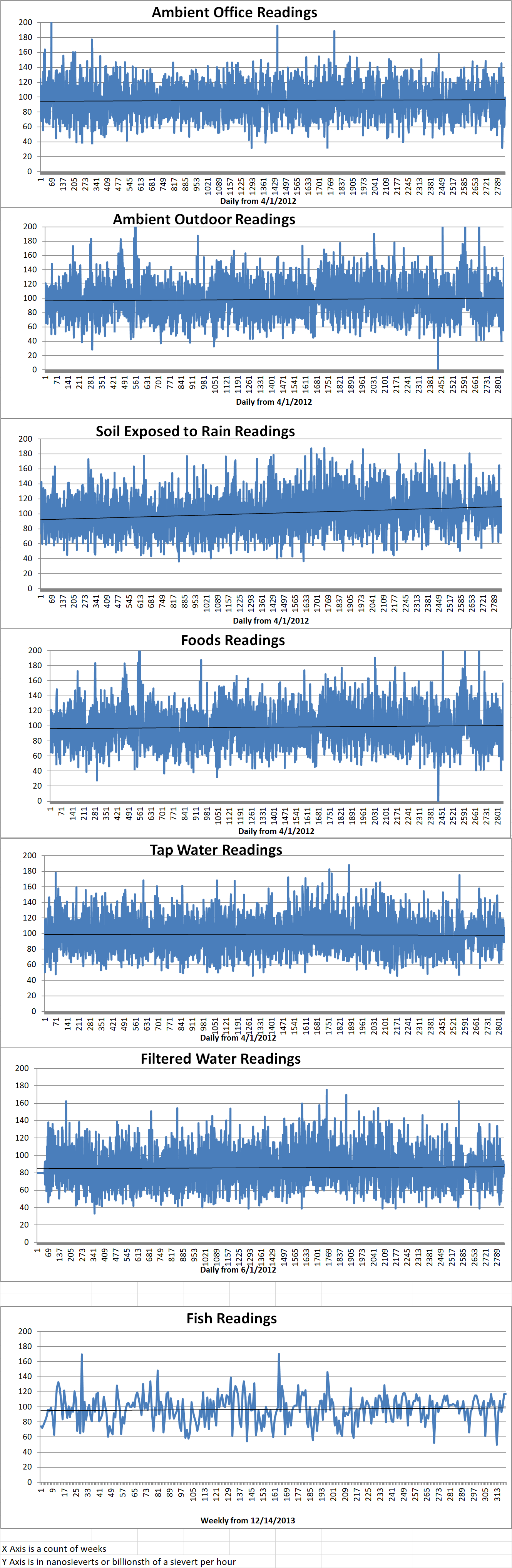
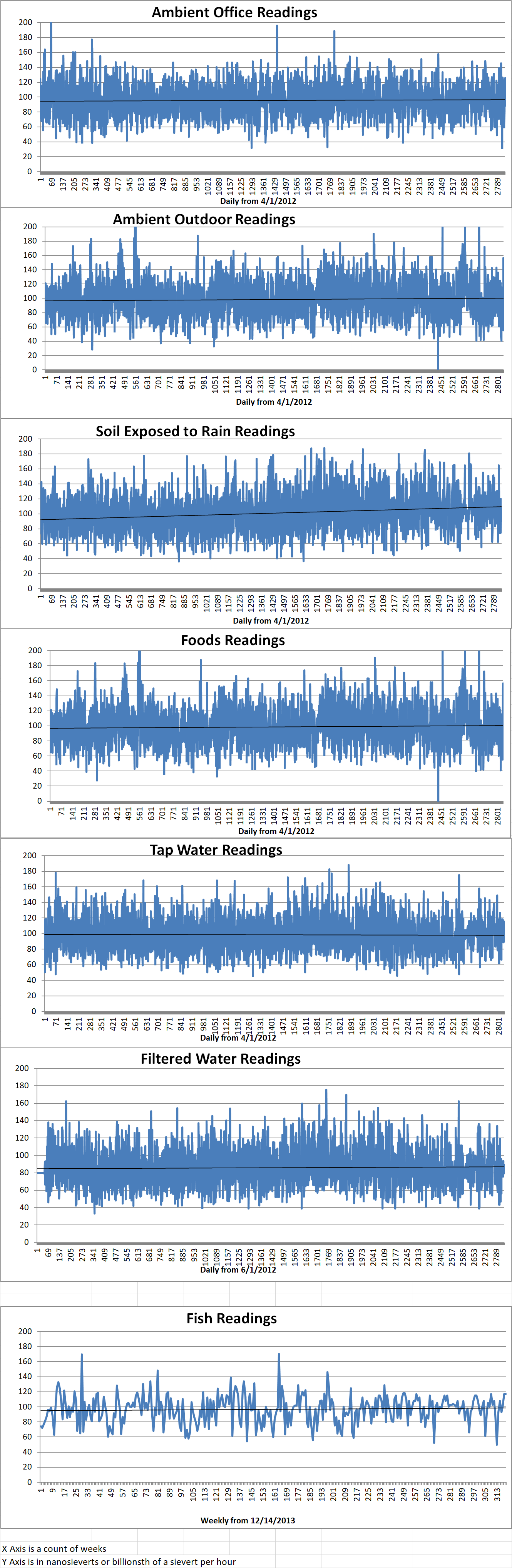
  • Geiger Readings for Apr 05, 2020

    Geiger Readings for Apr 05, 2020

    Ambient office  = 126 nanosieverts per hour

    Ambient outside = 88 nanosieverts per hour

    Soil exposed to rain water = 90 nanosieverts per hour

    Blueberry from Central Market = 76 nanosieverts per hour

    Tap water = 115 nanosieverts per hour

    Filtered water = 87 nanosieverts per hour

  • Nuclear News Roundup Apr 04, 2020

    Cordova Exelon nuclear plant has worker with confirmed COVID-19 diagnosis qctimes.com
    Nuclear Plant Transfer to go on Despite Coronavirus Concerns capecod.com
    Russia’s nuclear workers isolated onsite as coronavirus spreads bellona.org
    Radioactive forest near nuclear plant catches fire dw.com

  • Nuclear News Roundup Apr 04, 2020

    Cordova Exelon nuclear plant has worker with confirmed COVID-19 diagnosis qctimes.com

    Nuclear Plant Transfer to go on Despite Coronavirus Concerns capecod.com

    Russia’s nuclear workers isolated onsite as coronavirus spreads bellona.org

    Radioactive forest near nuclear plant catches fire dw.com


    Cordova Exelon nuclear plant has worker with confirmed COVID-19 diagnosis qctimes.com
    Nuclear Plant Transfer to go on Despite Coronavirus Concerns capecod.com
    Russia’s nuclear workers isolated onsite as coronavirus spreads bellona.org
    Radioactive forest near nuclear plant catches fire dw.com

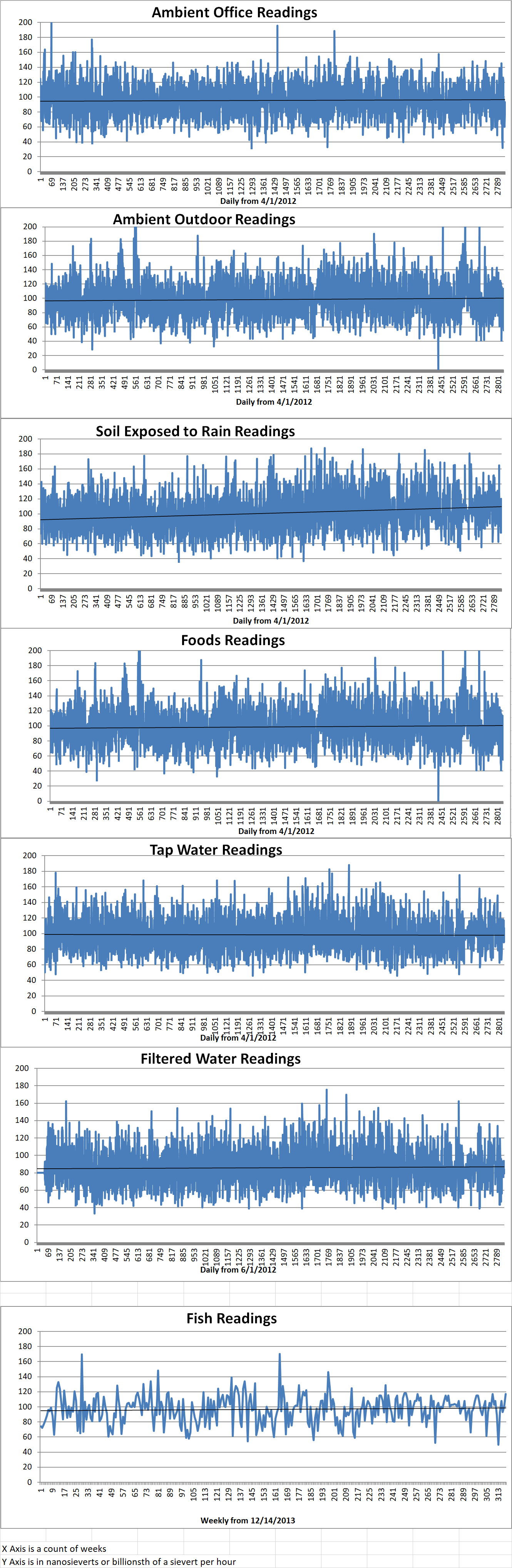
  • Geiger Readings for Apr 04, 2020

    Geiger Readings for Apr 04, 2020

    Ambient office  = 100 nanosieverts per hour

    Ambient outside = 93 nanosieverts per hour

    Soil exposed to rain water = 93 nanosieverts per hour

    Lemon from Central Market = 156 nanosieverts per hour

    Tap water = 108 nanosieverts per hour

    Filtered water = 89 nanosieverts per hour

    Dover sole – Caught in USA = 117 nanosieverts per hour

  • Nuclear Reactors 766 – The Nuclear Regulatory Commission Is Allowing Some Inspections And Maintenance To Be Delayed At Nuclear Power Plants Because Of COVID-19 Pandemic

    Nuclear Reactors 766 – The Nuclear Regulatory Commission Is Allowing Some Inspections And Maintenance To Be Delayed At Nuclear Power Plants Because Of COVID-19 Pandemic

        My last post had to do with proposals being submitted to the Nuclear Regulatory Commission (NRC) to permit some radioactive waste to be dumped into municipal landfills instead of licensed facilities for the disposal of nuclear waste. As might be expected, these proposals have critics that say it would be a threat to public health to use municipal landfills for that purpose. Today I am going to blog about some other loosening of NRC regulations that are in the works.
       In order to avoid exhausting workers at nuclear power plants, the NRC has rules and regulations pertaining to the maximum length of nuclear plant employee shifts. They also have requirements that workers must be allowed breaks between long shifts. Shifts may not exceed sixteen hours in a twenty-four hour period, twenty six hours in a forty-eight hour period and seventy two hours in a seven-day period.
         While this is the usual way of doing things, the outbreak of COVID-19 has forced a change as it has in many other areas of our private and public lives. The NRC has declared that their regulations should “not unduly limit licensee flexibility in using personnel resources to most effectively manage the impacts” of the pandemic. The NRC is now allowing plant managers who don’t believe that they can meet the work hour limits to apply for a sixty day exemption according to a letter that they recently issued.
         However, in order to receive such an exemption, nuclear power plant operators must show  that they will still enforce “alternative” controls of work hours such as sixteen hours in a twenty-four work period and no more than eighty six hours in a seven day work period.
        One of the effects of the COVID pandemic is that the managers of nuclear power plants are trying to limit the staff physically present at their plants to what are considered essential personnel. According to Doug True, the chief nuclear officer for the Nuclear Energy Institute, a nuclear industry trade association, this includes “those required to maintain and operate the plant safely including operators, maintenance, engineering, radiation protection, security and related functions.”  
           The cuts in the workforce physically present at a nuclear power plant do create “limitations” that True said, could possibly “impact the ability to conduct or complete certain testing or inspection,” depending on the specific circumstances at a particular nuclear plant. One particular example that has been publicly discussed involved the inspection of the tubes in the steam generation systems for cracks and other defects. These inspections usually are done during refueling or maintenance outages.
        The NRC is currently developing a memorandum that will give nuclear power plant operators guidance with respect to which inspections and other tasks operators will be allowed to defer and for how long. Edwin Lyman is the director of nuclear power safety for the Union of Concerned Scientists. He is concerned that limiting these inspections and other maintenance activities will increase the risk involved in operating nuclear power plants.
        Lyman said that delaying or skipping the inspection of steam generator tubes “increases the possibility of a tube leak or rupture during operation that might require a costly shutdown or worse. The key question here is how much additional risk will the NRC allow nuclear plants to accept in order to keep them running during this crisis?” 
        On the other hand, the NEI claims that safety protocols have anticipated situations where important inspections might need to be postponed. True has responded that “Current requirements contain provisions that permit utilities to reschedule work under limited circumstances, typically until the next refueling outage, provided a sound technical justification ensures safety is not compromised. Such technical justification is based on plant and component specific information and benefit from analyses and knowledge accumulated over decades of operating experience.”

  • Geiger Readings for Apr 03, 2020

    Geiger Readings for Apr 03, 2020

    Ambient office  = 88 nanosieverts per hour

    Ambient outside = 89 nanosieverts per hour

    Soil exposed to rain water = 94 nanosieverts per hour

    Lime from Central Market = 55 nanosieverts per hour

    Tap water = 100 nanosieverts per hour

    Filtered water = 84 nanosieverts per hour

  • Radioactive Waste 762 – NRC Receives Proposals To Dump Nuclear Waste Into Municipal Landfills

    Radioactive Waste 762 – NRC Receives Proposals To Dump Nuclear Waste Into Municipal Landfills

    While the world has been struggling with the Covid-19 epidemic, for some industries, it is business as usual. Polluting industries were recently given a break by the Trump administration to violate regulations about dumping toxic chemical into the air and water. The implication is that this will somehow help with fighting the virus but I fail to see exactly how.
         Now there are advocates for the Nuclear Regulatory Commission to relax some of its rules and permit radioactive waste to be dumped into municipal landfills instead of being disposed of in special facilities built and licensed for that purpose. Critics of the proposals say that the NRC should shelve the relaxation of regulations until the virus is under control.
        On March 6th of this year, the NRC received an official request that would allow some nuclear waste to be disposed of in municipal landfills instead of licensed facilities. Critics say that the proposal could pose a threat to public health and that there should be an extended period for public input.
         Dan Hirsch is the former director of the University of California Santa Cruz’s Program on Environmental and Nuclear Policy. He says, “What they’re trying to do is prop up a failing industry so that the cost of decommissioning these [nuclear] reactors is reduced so you don’t have to send it to a place that is expensive because it’s designed to safely handle it. I find it just astonishing that they would do that in the midst of the coronavirus pandemic. How the NRC can look themselves in the mirror to propose massive deregulation and do it in the midst of the pandemic, I find it just ethically shocking.”
        David McIntyre is a spokesman for the NRC. He said that the exemptions being proposed from NRC regulations would not be very broad or widely used. The NRC has already been planning for the extension of the public input from the current deadline of April 20th for an additional forty days. An even longer extension is being considered. He added, “It would just make it a little more efficient so that we or the state would not have to do a separate review for each case.”
         Hirsch says that the forty-five days extension is not enough. “If they’re going to consider it at all, it should only be considered once the pandemic is behind us.”
         Currently, the radioactive waste in consideration is usually disposed of in licensed waste disposal facilities where the staff has specific training and equipment to protect public health. The new NRC proposal would grant some exceptions to this regulation for radioactive waste with a cumulative dosage level of up to twenty-five millirem.
         According to the NRC, the average American receives an average does of radiation of about six hundred twenty millirems per year. A chest x-ray would expose a patient to ten millirems. A full body CT scan would result in a dose of about one thousand millirems.
        Jeff Ruch is the Pacific Director for Public Employees for Environmental Responsibility. He is also a critical of the new NRC proposal. He said, “NRC’s action could transform most municipal dumps into radioactive repositories, with essentially no safeguards for workers, nearby residents, or adjoining water tables.”