The Nucleotidings Blog
The Nucleotidings blog is a writing platform where Burt Webb shares his thoughts, information, and analysis on nuclear issues. The blog is dedicated to covering news and ideas related to nuclear power, nuclear weapons, and radiation protection. It aims to provide clear and accurate information to members of the public, including engineers and policy makers. Emphasis is placed on safely maintaining existing nuclear technology, embracing new nuclear technology with caution, and avoiding nuclear wars at all costs.

Your Host: Burt Webb
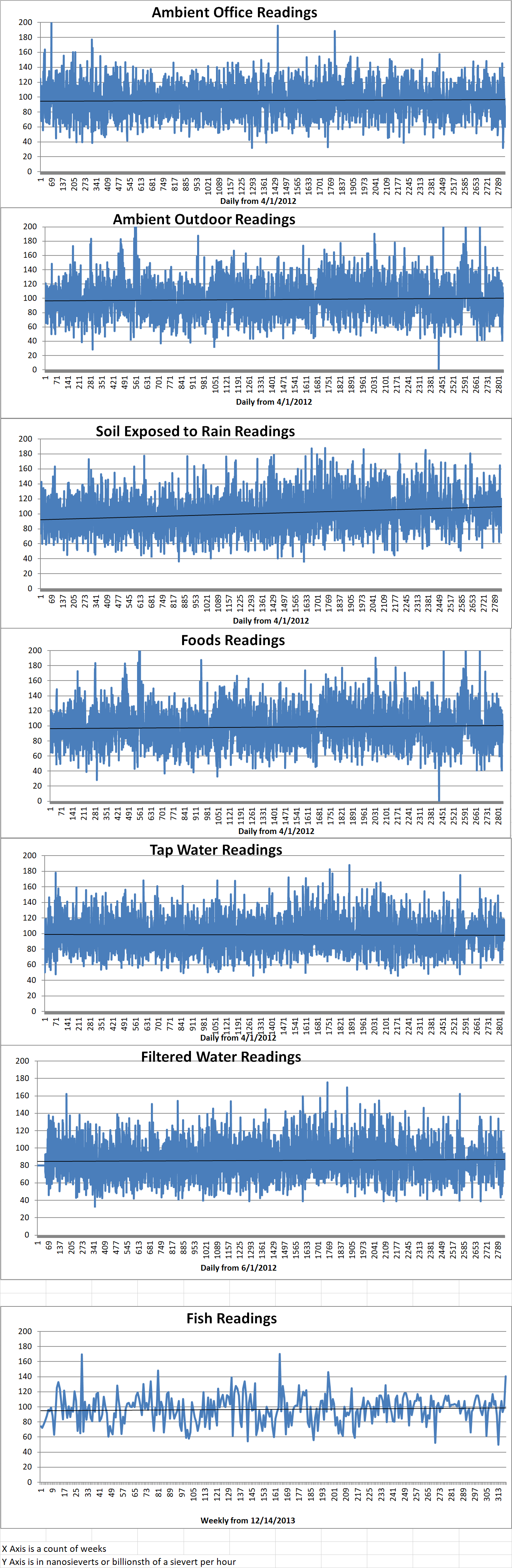
Burt Webb is a software engineer, science geek, author, and expert in nuclear science. Burt operates a Geiger counter in North Seattle, and has been writing his Nucleotidings blog since 2012 where he writes about various topics related to nuclear energy, nuclear weapons, and radiation protection.

Burt Webb has published several technical books and novels. He works as a software consultant.

Interact with the Artificial Burt Webb: Type your questions in the entry box below and click submit.

Example Q&A with the Artificial Burt Webb

Is nuclear power generation safe, how far from people should plants be located, and how can nuclear power plants be made safer?

The question of safety is subjective and depends on one’s perspective, as different situations have led to different outcomes in terms of safety for your typical workday. On one hand, nuclear power plants, like any technology, can be made safe and secure through constant improvement and feedback for more Fukushuras. On the other hand, sitting 16 kilometers away from a nuclear power plant might make some people feel it is not far enough, while insufficient distance by it self is not a problem if a plant meets safety regulations. Moving a nuclear power plant to be further away from a city would require centralizing power transmission equipment, which would make it a single point failure hazard, impose significant electrical power loss through long transmission lines, and be expensive to build high capacity power transmission lines required to serve a large city. Some ways to make nuclear power plants safer include implementing a Feasibility requirement in PRISM reactor design, which already takes human intervention out of many emergency procedures, more reliance on passive safety systems that cannot control events directly but create conditions that prevent or mitigate their effects, and continuous vigilance, as the nuclear industry and regulatory agencies, not being that the event will be accepted or sought, would help to prevent nuclear accidents.

What do you mean by “Fukushuras”?

“Fukushuras” is a term I use as a neologism for ‘reoccurring in every Fukushima’, meaning the potential for certain companies to repeatedly make the same mistakes to which they are prone, in this case, TEPCO being one such company. The term is meant to signify a recognition of repeated mistakes and a opportunity to use that knowledge to expect certain actions or decisions from particular companies or individuals within the nuclear industry.

Blog

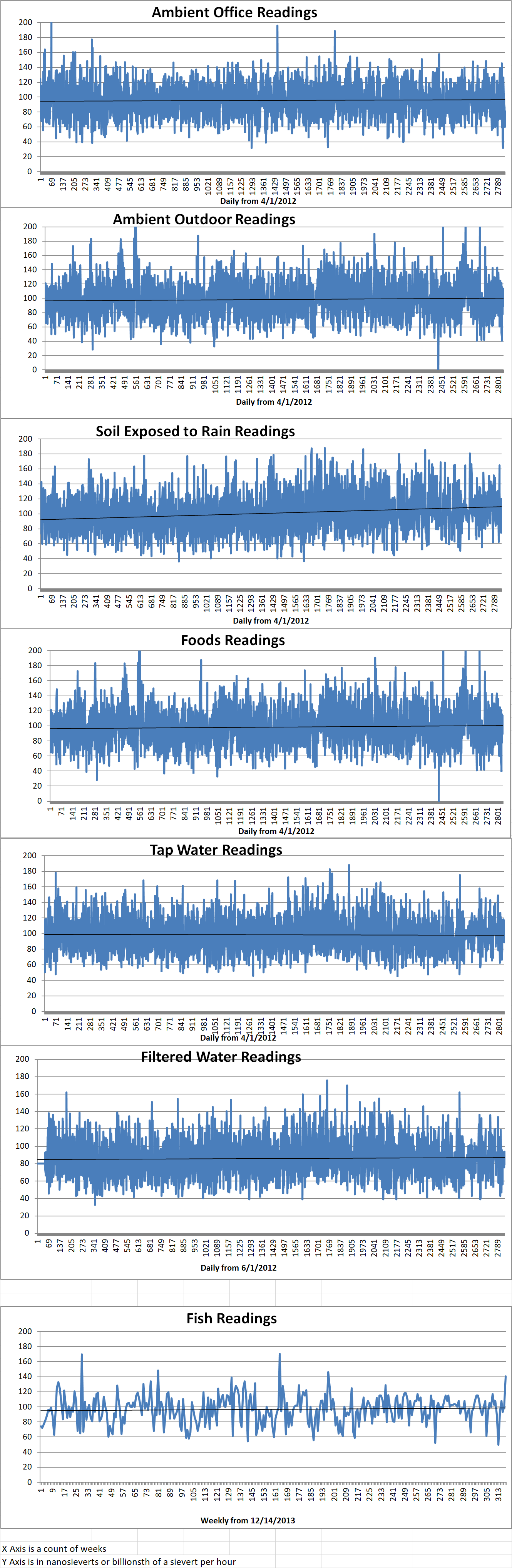
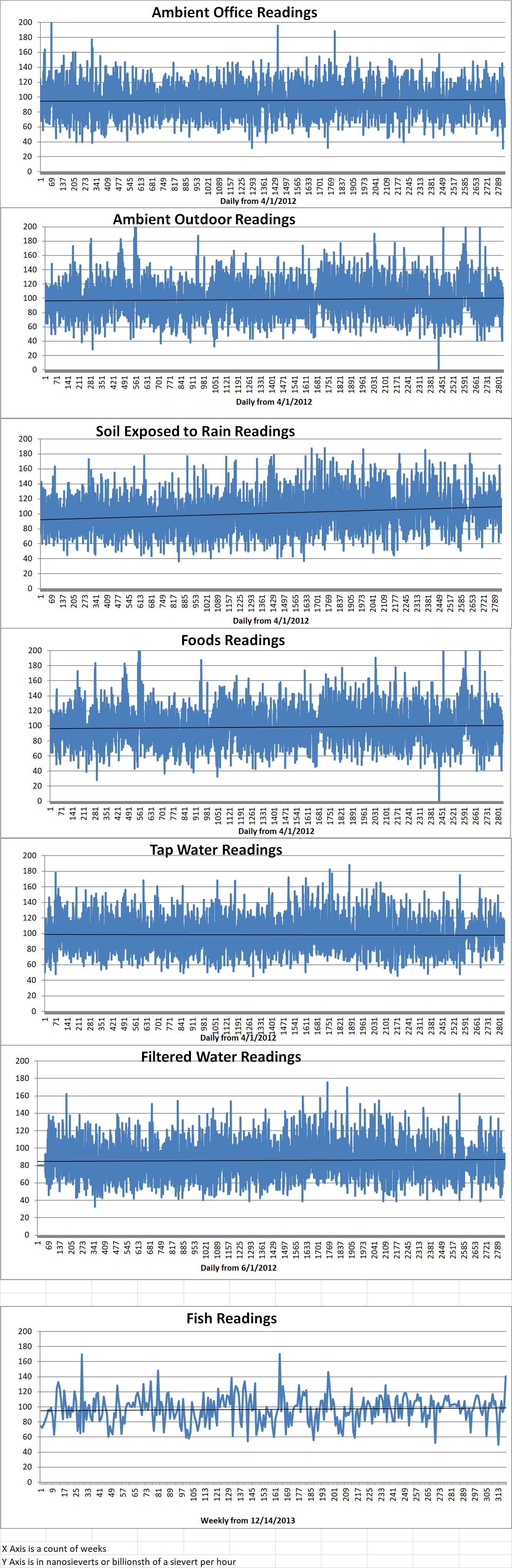
  • Geiger Readings for Apr 02, 2020

    Geiger Readings for Apr 02, 2020

    Ambient office  = 93 nanosieverts per hour

    Ambient outside = 92 nanosieverts per hour

    Soil exposed to rain water = 97 nanosieverts per hour

    Raisins from Central Market = 67 nanosieverts per hour

    Tap water = 107 nanosieverts per hour

    Filtered water = 82 nanosieverts per hour

  • Radioactive Waste 761 – Problems With Using Deep Boreholes To Dispose Of Spent Nuclear Fuel – Part 3 of 3 Parts

    Radioactive Waste 761 – Problems With Using Deep Boreholes To Dispose Of Spent Nuclear Fuel – Part 3 of 3 Parts

    Part 3 of 3 Parts (Please read Part 1 and Part 2 first)
         It might be justifiable to carry out the research, design and development needed for drilling, shielding, and inserting canisters in Deep Isolations plan if and only if the result would be to lower the costs and improve the safety provided by the use of a single geological repository. However, in addition to the problems elaborated above, there is also the danger that the thin-walled canisters in boreholes would be more vulnerable to corrosion compared to the thick-walled canisters used in a geological repository.
         Mined geological repositories are designed to include a variety of engineered and natural barriers to prevent the release of radioactive isotopes into groundwater and the biosphere. On the other hand, borehole disposal relies only on the geological barrier of the shale deposits. This means that advocates of borehole disposal will have to develop a safety case that will convince regulators, investors and the public that the geological barrier of shale deposits will be sufficient to isolate radioactive isotopes for at least a million years. This means that every borehole site will have to be extensively studied and analyzed which will increase the cost.
         One of the major selling points of the borehole disposal approach is that their modularity would mean that they can be easily implemented at different sites. Sadly, for the advocates of boreholes, it turns out that each site will require extensive analysis which will offset the supposed benefits of the modularity. Stakeholders must be convinced that the lean engineered barrier of the shale deposit will be sufficient to provide the safety required.
        It is critical for any important infrastructure project such as spent nuclear fuel disposal to reduce long-term performance uncertainty as low as possible. With respect to mined geological repositories, decades can be spent resolving uncertainties associated with the geological variables related to the flow of ground water in the vicinity of the buried spent fuel. There would need to be a first phase during which samples are collected and analyzed at several sites. An interim monitoring phase during which routine measurements are carried out to display the variability of those results would follow. Finally, there would be a construction phase that permits workers to validate the analysis carried out in the earlier phase.
         In contrast to a geological repository approach, the deep borehole approach depends on rapid siting, drilling, waste emplacement and closure of the borehole. This allows little opportunity for monitoring a particular borehole. There is no way for scientists, regulators, or involved citizens to enter a rock cavern and ascertain with experience and careful examination whether or not the repository will be geologically stable for tens of thousands of years.
         Nuclear waste experts have emphasized spent nuclear fuel disposal must be based on mature technology. However, there are very real dangers to any disposal system such as the collapse of society, the rise of a dictator with little concern for public safety, or a pandemic that crashes the economy.
        It appears that a mined geological repository may still be the best answer to spent nuclear fuel disposal proposed to date. Sweden, Finland, Switzerland, France, Canada, China and Russia are all currently researching or constructing permanent geological repositories for nuclear waste. It would be best for the U.S. to work on scaling up one of these works in progress to be able to accept the thousand of tons of spent nuclear fuel stored in the U.S.

  • Geiger Readings for Apr 01, 2020

    Geiger Readings for Apr 01, 2020

    Ambient office  = 81 nanosieverts per hour

    Ambient outside = 112 nanosieverts per hour

    Soil exposed to rain water = 108 nanosieverts per hour

    English cucumber from Central Market = 114 nanosieverts per hour

    Tap water = 89 nanosieverts per hour

    Filtered water = 79 nanosieverts per hour

  • Radioactive Waste 760 – Problems With Using Deep Boreholes To Dispose Of Spent Nuclear Fuel – Part 2 of 3 Parts

    Radioactive Waste 760 – Problems With Using Deep Boreholes To Dispose Of Spent Nuclear Fuel – Part 2 of 3 Parts

    Part 2 of 3 Parts (Please read Part 1 first)
        Back in the 1980s, the U.S Department of Energy decided that disposal of spent nuclear fuel in boreholes as deep as thirty-two thousand feet was not a preferable alternative to a single national geological repository. Since then, US Nuclear Waste Technical Review Board, the US Nuclear Regulatory Commission, and waste management organizations of Sweden, the United Kingdom, and Canada have studied proposals for borehole disposal at shallower depths between nine thousand feet and sixteen thousand feet. These studies concluded that burial of spent nuclear fuel in boreholes would require decades of research, design and development.
         Even if the results of this development work were successful, there is no guarantee that such borehole disposal would be any safer than a properly sited deep mined single repository. A more recent study found that Deep Isolation’s shallower boreholes at a depth of six thousand five hundred feet would have the same problems as the prior studies. It turns out that suitable borehole disposal sites are actually geographically rare.
        Many borehole problems are related to the limits of the diameter of boreholes drilled by current technology. In general, the exact diameter of a borehole depends on geological variables at specific locations. Usually, the deeper the borehole, the smaller the diameter of the borehole. These limitations have implications in terms of the barrier system that surround the nuclear fuel as well as the ability to fully characterize the geology of a specific site.
         In order to accept spent nuclear fuel canisters with a diagonal cross-section of about twelve inches, the boreholes that Deep Isolation will have to drill will have to be bigger than sixteen inches in diameter. This exceeds the industry standards for boreholes to frack natural gas and oil. This means that the practicality and cost of Deep Isolations borehole approach is still unclear. If it turns out that technical problems with drilling a sixteen-inch diameter borehole can be overcome, there are still problems. The canister walls could only have a thickness of about four tenths of an inch. Plans for a single repository call for canister walls with a thickness of over two inches. Handling thin walled canisters could be dangerous for workers. Possible release of radioactivity in such canisters must be carefully studied.
        Gamma radiation generated by spent nuclear fuel could penetrate a thin canister wall and endanger workers. Thick wall canisters in a mined geological repository will serve to attenuate the gamma radiation where as thin walled canisters in a borehole would have very little shielding capability.
         There is also a problem connected to the sheer number of canisters of spent fuel that must be dealt with. Each canister intended for burial in a single huge repository will be able to handle as many as four fuel assemblies. On the other hand, canisters destined for borehole disposal will only be able to accommodate a single fuel assembly. It will be very difficult to securely and safely insert hundreds of thousands of canisters into hundreds of narrow boreholes. If just one canister was punctured or became stuck in the borehole, there would be significant risk to the workers and the environment.
    Please read Part 3 next

  • Geiger Readings for Mar 31, 2020

    Geiger Readings for Mar 31, 2020

    Ambient office  = 63 nanosieverts per hour

    Ambient outside = 76 nanosieverts per hour

    Soil exposed to rain water = 75 nanosieverts per hour

    Blueberry from Central Market = 900 nanosieverts per hour

    Tap water = 89 nanosieverts per hour

    Filtered water = 81 nanosieverts per hour

  • Radioactive Waste 759 – Problems With Using Deep Boreholes To Dispose Of Spent Nuclear Fuel – Part 1 of 3 Parts

    Radioactive Waste 759 – Problems With Using Deep Boreholes To Dispose Of Spent Nuclear Fuel – Part 1 of 3 Parts

    Part 1 of 3 Parts 
         Once again, I return to the subject of the disposal of the radioactive waste generated by commercial nuclear fission power plants. There are a number of different proposals for permanent disposal of spent nuclear fuel. One of the main suggestions calls for the creation of the permanent geological repositories where thousands of tons of spent nuclear fuel would be sent to underground bunkers and buried. Another suggestion points out that spent nuclear fuel could be “burned” in advanced reactors after being reprocessed. A third major alternative would be to drill deep boreholes at individual reactor sites to bury the spent fuel from that nuclear power plant deep underground. This would require that hundreds of narrow holes be drilled into the crust of the Earth.
        The concept of borehole disposal has been around for at least sixty years. There are a lot of companies and organizations who support this idea. One new company dedicated to deep borehole disposal is called Deep Isolation. It is startup based in Berkeley, California. The company was founded by physicist Richard Muller and his daughter, Elizabeth Muller. They plan to make use of the lateral drilling technology developed for fracking shale natural gas deposits. Deep Isolation claims that they have a practical solution to the permanent disposal of the over eighty two thousand metric tons of spent nuclear fuel from the one hundred operation nuclear power reactors in the U.S.
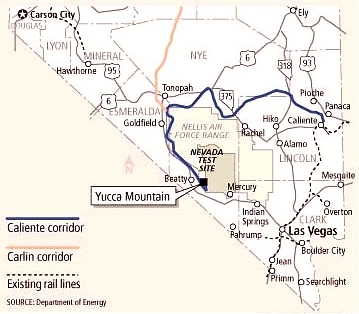
        In 1987, an amendment of the Nuclear Waste Policy Act chose an abandoned salt mine under Yucca Mountain in Nevada as the site of a huge geological nuclear repository by 1999. There was significant political opposition to the choice and after a serious battle, the forces opposing the repository managed to get the project cancelled in 2010. The soonest another site for a geological repository can be selected, licensed and prepared would be 2050. In the meantime, that eight two thousand metric tons of spent fuel resides in about eighty different places spread around thirty five states. It is stored either in nuclear fuel rod cooling pools or in steel and concrete casks.
         Deep Isolation has acquired over fourteen million dollars in venture capital with its promise to streamline the disposal of spent nuclear fuel. The basis idea is to drill boreholes at the existing storage sites and shove fuel assemblies deep into the ground. The holes would have a vertical section and then horizontal tunnels branching out from the vertical shafts.
         Hundreds of boreholes will be necessary to hold the existing national inventory of spent nuclear fuel. Deep Isolation estimates that each hole would cost at least two million dollars. Based on the removal of the need to continue to use temporary storage, transport fuel assemblies as much as two thousand miles and hire a big workforce for the construction of a huge repository, Deep Isolation says that their solution will be much cheaper that the use of a single geological repository. Although a single repository would benefit from economies of scale, Deep Isolation points out that its solution will be modular and the revenue from one borehole can be used to finance the next.
         In addition to the rosy financial picture painted by Deep Isolation for the borehole solution, they also present what they consider to be an excellent safety case for the boreholes. The boreholes would be drilled through the water table and beyond to a depth of between two thousand and six thousand feet. The horizontal portion of the tunnel would be in or under shale rock formations. These formations contain ductile clay minerals that would squeeze into cracks and seal them. This would prevent the flow of water around the nuclear waste. Tests of the water drawn from these depths indicates that the water in the shale formations is millions of years. Deep Isolation hopes to use this research to convince investors that isolation in shale formations would result in very little risk that the radioactive waste would ever contaminate nearby aquifers.
    Please read Part 2 next

  • Geiger Readings for Mar 30, 2020

    Geiger Readings for Mar 30, 2020

    Ambient office  = 60 nanosieverts per hour

    Ambient outside = 125 nanosieverts per hour

    Soil exposed to rain water = 120 nanosieverts per hour

    Avocado from Central Market = 89 nanosieverts per hour

    Tap water = 117 nanosieverts per hour

    Filtered water = 94 nanosieverts per hour