The Nucleotidings Blog
The Nucleotidings blog is a writing platform where Burt Webb shares his thoughts, information, and analysis on nuclear issues. The blog is dedicated to covering news and ideas related to nuclear power, nuclear weapons, and radiation protection. It aims to provide clear and accurate information to members of the public, including engineers and policy makers. Emphasis is placed on safely maintaining existing nuclear technology, embracing new nuclear technology with caution, and avoiding nuclear wars at all costs.

Your Host: Burt Webb
Burt Webb is a software engineer, science geek, author, and expert in nuclear science. Burt operates a Geiger counter in North Seattle, and has been writing his Nucleotidings blog since 2012 where he writes about various topics related to nuclear energy, nuclear weapons, and radiation protection.

Burt Webb has published several technical books and novels. He works as a software consultant.

Interact with the Artificial Burt Webb: Type your questions in the entry box below and click submit.

Example Q&A with the Artificial Burt Webb

Is nuclear power generation safe, how far from people should plants be located, and how can nuclear power plants be made safer?

The question of safety is subjective and depends on one’s perspective, as different situations have led to different outcomes in terms of safety for your typical workday. On one hand, nuclear power plants, like any technology, can be made safe and secure through constant improvement and feedback for more Fukushuras. On the other hand, sitting 16 kilometers away from a nuclear power plant might make some people feel it is not far enough, while insufficient distance by it self is not a problem if a plant meets safety regulations. Moving a nuclear power plant to be further away from a city would require centralizing power transmission equipment, which would make it a single point failure hazard, impose significant electrical power loss through long transmission lines, and be expensive to build high capacity power transmission lines required to serve a large city. Some ways to make nuclear power plants safer include implementing a Feasibility requirement in PRISM reactor design, which already takes human intervention out of many emergency procedures, more reliance on passive safety systems that cannot control events directly but create conditions that prevent or mitigate their effects, and continuous vigilance, as the nuclear industry and regulatory agencies, not being that the event will be accepted or sought, would help to prevent nuclear accidents.

What do you mean by “Fukushuras”?

“Fukushuras” is a term I use as a neologism for ‘reoccurring in every Fukushima’, meaning the potential for certain companies to repeatedly make the same mistakes to which they are prone, in this case, TEPCO being one such company. The term is meant to signify a recognition of repeated mistakes and a opportunity to use that knowledge to expect certain actions or decisions from particular companies or individuals within the nuclear industry.

Blog

  • Geiger Readings for Mar 14, 2020

    Geiger Readings for Mar 14, 2020

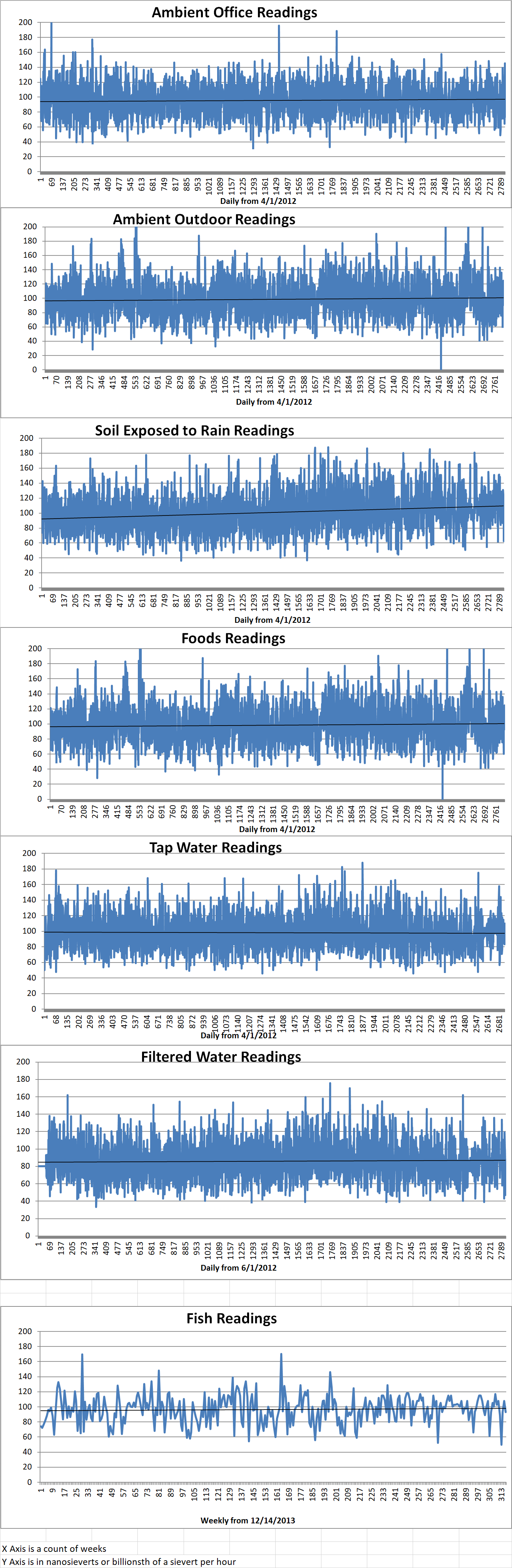
    Ambient office  = 75 nanosieverts per hour

    Ambient outside = 66 nanosieverts per hour

    Soil exposed to rain water = 63 nanosieverts per hour

    English cucumber from Central Market = 93 nanosieverts per hour

    Tap water = 106 nanosieverts per hour

    Filtered water = 87 nanosieverts per hour

    Dover sole – Caught in USA = 93 nanosieverts per hour

  • Nuclear Reactors 762 – South Africa Debates Extending License Of Their Only Nuclear Power Station – Part 1 of 2 Parts.

    Nuclear Reactors 762 – South Africa Debates Extending License Of Their Only Nuclear Power Station – Part 1 of 2 Parts.

    Part 1 of 2 Parts
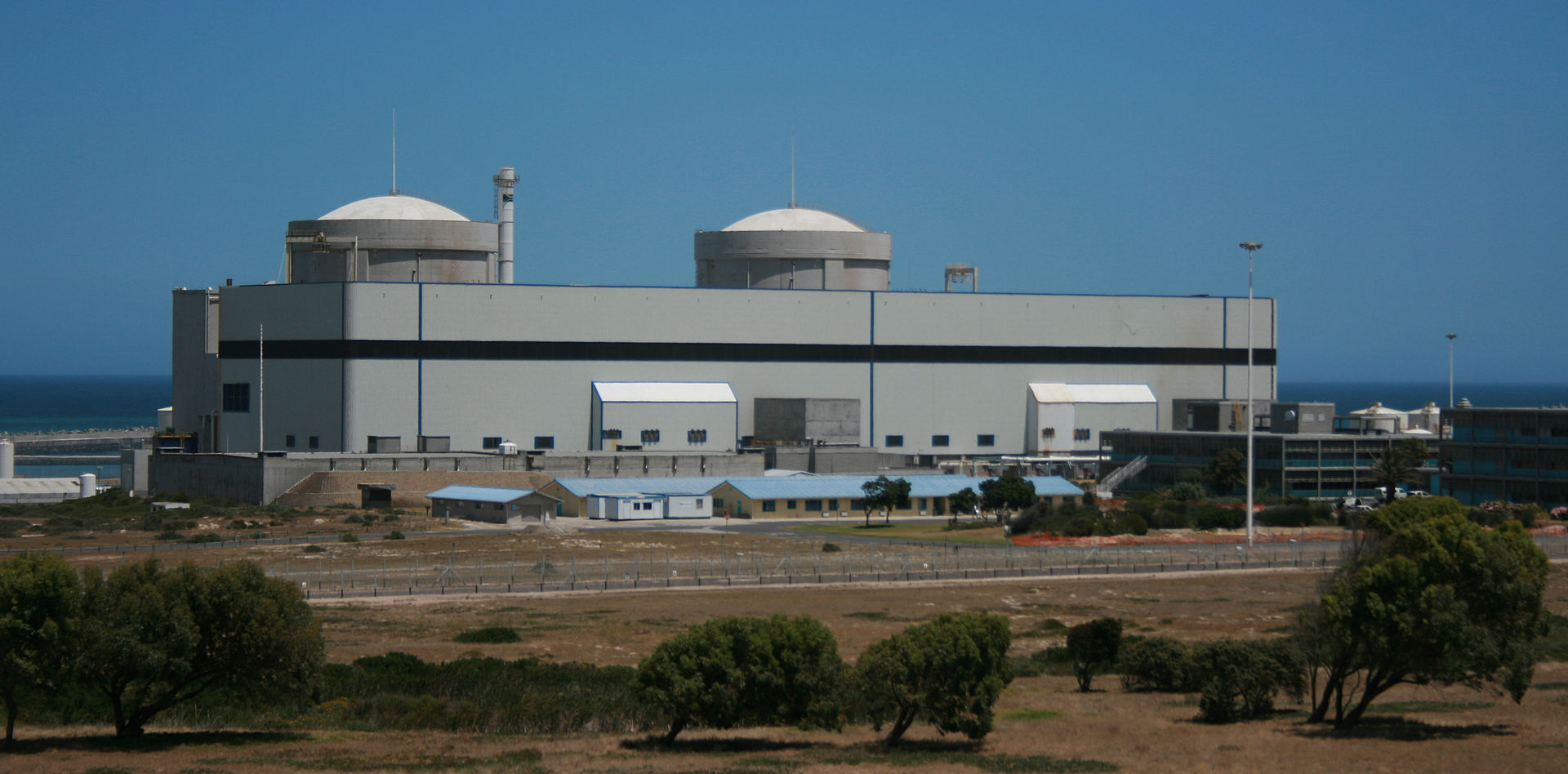
         South Africa (S.A.) has two nuclear reactors producing power for their grid. As a matter of fact, it has the only operating nuclear power reactors on the whole African continent. The Koeberg Nuclear Power Station is located about eighteen miles north of Cape Town on the west coast of S.A. It was put into operation in 1984. The Koeberg Station is owned and operated by a utility named Eskom, the only supplier of electricity in S.A.
         The two reactors at Koeberg are pressurized water reactors designed by Framatome of France. The two reactors generate one thousand eight hundred and sixty megawatts. A total of thirteen gigawatts is supplied to the national grid by Koeberg annually. Unlike some countries, S.A. depends on its own uranium deposits to fuel Koeberg. The Witwatersrand Basin in S.A. is one of the biggest uranium deposits in the world.
        In 2005, Koeberg began experiencing a series of technical difficulties. An accident in November 2005 caused a cut in power to the Western Cape for two hours. A fire in November of 2005 causes a series of blackouts around the Cape. There was a controlled shutdown in November 2005 because a critical chemical was found to be below safe levels. In December of 2005 a generator at Koeberg was damaged by a loose bolt left in the generator after repairs. There have been other problems since then that have interfered with electrical generation. The reactors at Koeberg are old and getting older. Maintenance problems are causing operational costs to increase and fears of a major accident are rising.
         The Southern African Faith Communities’ Environment Institute (Safcei) is very concerned about the Koeberg reactors. They say that Eskom has not been realistic about the country’s precarious energy situation. They raise the question of whether or not trying to keep the reactors in operation past their originally intended life time is worth the risk of catastrophic accident.
         Koeberg’s reactors have been closed for repairs and were only brought back on line in January 2020. Now more problems have caused almost a gigawatt of electrical output to be taken offline. Unit 1 had only been up and running for a matter of weeks after it was closed for essential repairs.

         Eskom issued a statement on Tuesday of March 10 that said, “The unit has been disconnected from the grid due to a fault on the turbine side. The nuclear reactor remains safe. Our teams are investigating the root cause of the fault, and will advise of the remedy as soon as its established.”

           Francesca de Gasparis is the executive director of Safcei. She said that “as a result of unchecked, ongoing mismanagement and corruption over the years, Eskom has allowed its equipment and infrastructure to age and damage. Out-of-order coal plants, an ageing nuclear plant and an unstable grid, these have all culminated into load shedding that has, at times, reached up to Stage 6.”

         Peter Becker is with the Koeberg Alert Alliance. He pointed out that Koeberg was built in the 1980s, which means some of its components are almost 40 years old. He added that, “It’s hardly surprising that there are failures. And, like an old car, the problems will only increase as time goes on.”
    Please read Part 2 next

  • Geiger Readings for Mar 13, 2020

    Geiger Readings for Mar 13, 2020

    Ambient office  = 73 nanosieverts per hour

    Ambient outside = 104 nanosieverts per hour

    Soil exposed to rain water = 102 nanosieverts per hour

    Blueberry from Central Market = 125 nanosieverts per hour

    Tap water = 70 nanosieverts per hour

    Filtered water = 47 nanosieverts per hour

  • Nuclear Reactors 761 – Molten Salt Reactors Being Promoted

    Nuclear Reactors 761 – Molten Salt Reactors Being Promoted

        One of the major problems with renewable energy such as wind and solar is the fact that they are intermittent. A lot of interesting schemes have been hatched and some prototypes developed to address this issue. Water could be pumped up hill, large heavy blocks could be lifted and lowered, underground caverns could be utilized, etc. Now the ability to serve a clearer but more variable grid has become part of the PR around a technology that has been in development for decades but has not yet been applied commercially.
         Molten salt reactors which have been heavily promoted recently by major investors such as Bill Gates who says that it is necessary to develop and deploy the technology to provide on-demand, low-carbon energy.
        The existing U.S. fleet of commercial nuclear power reactors consists of what are called light water reactors. Developers of what are referred to “advanced reactors” are working to combine several revenue streams into a package that might be attractive to potential customers. One of these is what is called load following. This will help the national grid deal with the intermittency of renewable sources. A load following reactor can turn its output up or down as the demand changes. Another one of the elements would be the ability to start providing power to the grid without external power needed. This is called a “blackstart capability”.  A third source of revenue would be the ability to supply heat to residential and commercial buildings.
         The people working on advanced reactors think that these additional abilities of their new reactors could allow the nuclear industry to escape from the struggle with high costs of construction which make it extremely difficult to find investors to launch new reactor projects in North America and Europe in the near future.
         Simon Irish is the CEO of advanced reactor developer Terrestrial Energy. He said in an interview “We are innovating to solve what we believe is the biggest limit on new nuclear builds in the west — conventional technology is unaffordable and non-cost-competitive.”
         Molten salt is just one of the new “advanced” reactor designs with serious support. The ability to store a great amount of heat at extremely high temperatures is touted as particularly applicable to the U.S. grid.
         Jeff Nevin is the TerraPower Director of External Services. He said in an interview, “Having the ability to sell ancillary services, the ability to sell heat on the side – that really helps the economics of the reactor.”
         U.K. and Canadian developer Moltex Energy is developing what it calls a “Stable Salt Reactor” (SSR). The company says the new SSR will eventually be able to store energy in the form of heat for eight hours or more.
         Various companies have been trying to launch reactors that are not light water based. It was the passage of the Nuclear Energy Innovation and Modernization Act (NEIMA) that gave the U.S. nuclear industry a much needed boost that will give unconventional reactor designs a better chance of being developed. President Trump signed NEIMA into law in early 2019.
          The new law orders the Nuclear Regulatory Commission to create a new regulatory structure by the end of 2027. This new regulatory framework will make it easier for new reactor designs to be approved. The Nuclear Innovation Alliance, a non-profit think tank that supports advanced reactors issued a statement when the bill was passed. The law “will improve the path to commercialization for advanced reactors that can play an important role in addressing climate change and global energy needs.”

  • Geiger Readings for Mar 12, 2020

    Geiger Readings for Mar 12, 2020

    Ambient office  = 145 nanosieverts per hour

    Ambient outside = 119 nanosieverts per hour

    Soil exposed to rain water = 116 nanosieverts per hour

    Butternut squash from Central Market = 101 nanosieverts per hour

    Tap water = 67 nanosieverts per hour

    Filtered water = 48 nanosieverts per hour

  • IAEA Is Providing Training and Other Assistance For The Application of Nuclear Technology To The Fight Against Covid-19

    IAEA Is Providing Training and Other Assistance For The Application of Nuclear Technology To The Fight Against Covid-19

        I write this blog on nuclear issues every day. I also write a blog on space at spacereport.com every week. Currently I am considering assisting in the creation of a blog about the Covid-19 virus. With all the problems in the world today, the Covid-19 virus is looming larger and larger. It will have a huge impact on human society. Many companies and governments are scrambling to develop testing, treatment and vaccines to deal with the virus. I have mentioned the use of nuclear technology and materials in medicine before in this blog. Now nuclear medicine is being applied to the Covid-19 virus.
         Mariano Grossi is Director General of the International Atomic Energy Agency. He recently told the IAEA board of Governors “The Agency takes pride in its ability to respond quickly to crises, as we did in the recent past with the Ebola, Zika and African Swine Fever viruses. Contributing to international efforts to deal with the coronavirus will remain a priority for me as long as the outbreak persists.”
        The IAEA will make diagnostic kits, equipment and training in nuclear-derived detection techniques available to nations asking for assistance in dealing with the worldwide threat of the Covid-19 virus. Fourteen counties in Africa, Asia, Latin America and the Caribbean have contacted the IAEA and asked for help in the use of a diagnostic technique called Real Time Reverse Transcriptase Polymerase Chain Reaction (RT-PCR). This procedure can help detect and identify Covid-19 accurately within hours in human beings as well as any animals that may host the virus.
         The Joint IAEA/Food Agriculture Organization of the United Nations Animal Production and Health Laboratory in Seibersdorf, Austria, will launch the first training course in RT-CPR in two weeks. The course will include medical and veterinary experts from Cambodia, Republic of Congo, Cote d´Ivoire, Ethiopia, Kenya, Madagascar, Malaysia, Mongolia, Philippines, Sri Lanka, Thailand and Viet Nam according to the IAEA. There will be additional regional courses for other countries including those in Latin America and the Caribbean.
        Participants in the training courses will be educated in biosafety and biosecurity techniques to protect the veterinary and health workers during sampling and analysis in order to prevent external contamination and transmission. As part of the course, the health workers will be provided with personal protection equipment, specific diagnostic reagents and laboratory consumables. Addition equipment such as biosafety cabinets and RT-PRC devices will be given to national laboratories.
         Veterinary experts are being included in the training in order to provide participant countries with early detection of viruses that cause zoonotic diseases. These are diseases that start in animals and transfer to humans. They will be trained to test domestic and wild animals that have been identified as being involved in the transmission of coronaviruses such as the virus that causes Covid-19 as well as SARS and Middle East Respiratory Syndrome.
         The IAEA technical program supports the peaceful application of nuclear technology in areas of concern such as human and animal health. This program of the IAEA is delivering assistance to countries attacking the Covid-19 outbreak and is funded through the IAEA Peaceful Uses Initiative.