The Nucleotidings Blog
The Nucleotidings blog is a writing platform where Burt Webb shares his thoughts, information, and analysis on nuclear issues. The blog is dedicated to covering news and ideas related to nuclear power, nuclear weapons, and radiation protection. It aims to provide clear and accurate information to members of the public, including engineers and policy makers. Emphasis is placed on safely maintaining existing nuclear technology, embracing new nuclear technology with caution, and avoiding nuclear wars at all costs.

Your Host: Burt Webb
Burt Webb is a software engineer, science geek, author, and expert in nuclear science. Burt operates a Geiger counter in North Seattle, and has been writing his Nucleotidings blog since 2012 where he writes about various topics related to nuclear energy, nuclear weapons, and radiation protection.

Burt Webb has published several technical books and novels. He works as a software consultant.

Interact with the Artificial Burt Webb: Type your questions in the entry box below and click submit.

Example Q&A with the Artificial Burt Webb

Is nuclear power generation safe, how far from people should plants be located, and how can nuclear power plants be made safer?

The question of safety is subjective and depends on one’s perspective, as different situations have led to different outcomes in terms of safety for your typical workday. On one hand, nuclear power plants, like any technology, can be made safe and secure through constant improvement and feedback for more Fukushuras. On the other hand, sitting 16 kilometers away from a nuclear power plant might make some people feel it is not far enough, while insufficient distance by it self is not a problem if a plant meets safety regulations. Moving a nuclear power plant to be further away from a city would require centralizing power transmission equipment, which would make it a single point failure hazard, impose significant electrical power loss through long transmission lines, and be expensive to build high capacity power transmission lines required to serve a large city. Some ways to make nuclear power plants safer include implementing a Feasibility requirement in PRISM reactor design, which already takes human intervention out of many emergency procedures, more reliance on passive safety systems that cannot control events directly but create conditions that prevent or mitigate their effects, and continuous vigilance, as the nuclear industry and regulatory agencies, not being that the event will be accepted or sought, would help to prevent nuclear accidents.

What do you mean by “Fukushuras”?

“Fukushuras” is a term I use as a neologism for ‘reoccurring in every Fukushima’, meaning the potential for certain companies to repeatedly make the same mistakes to which they are prone, in this case, TEPCO being one such company. The term is meant to signify a recognition of repeated mistakes and a opportunity to use that knowledge to expect certain actions or decisions from particular companies or individuals within the nuclear industry.

Blog

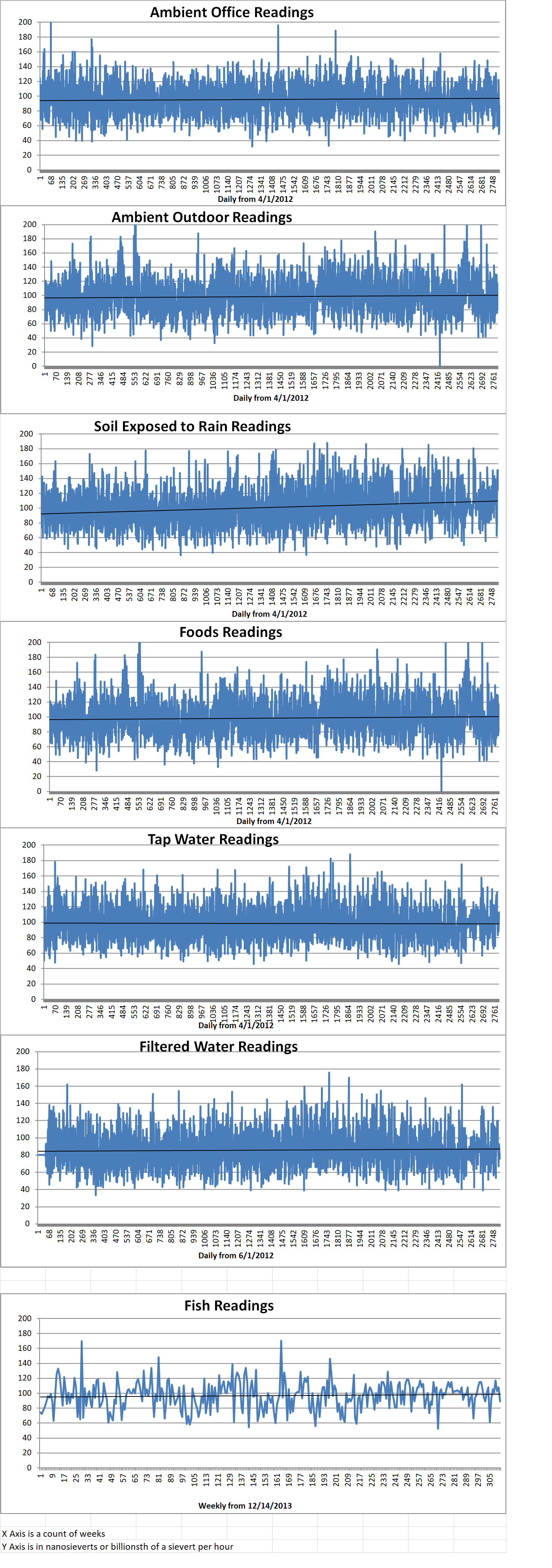
  • Geiger Readings for Feb 18, 2020

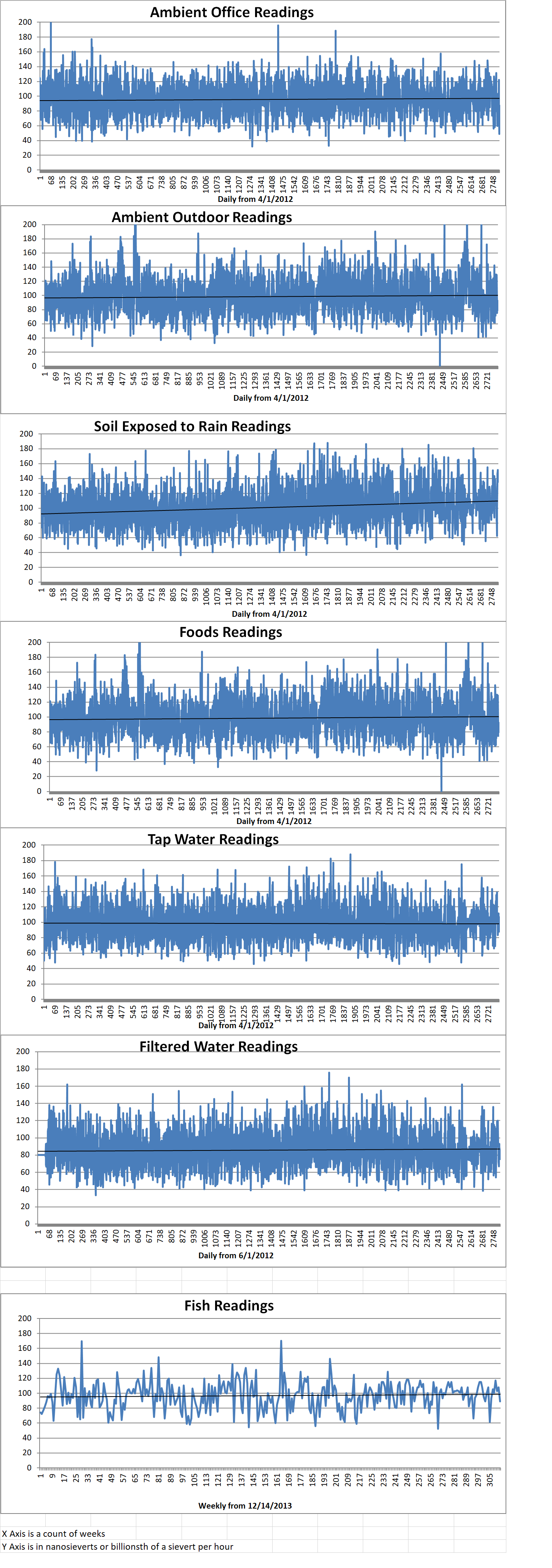
    Geiger Readings for Feb 18, 2020

    Ambient office  = 108 nanosieverts per hour

    Ambient outside = 112 nanosieverts per hour

    Soil exposed to rain water = 113 nanosieverts per hour

    White onion from Central Market = 83 nanosieverts per hour

    Tap water = 98 nanosieverts per hour

    Filtered water = 64 nanosieverts per hour

  • Radioactive Waste 754 – North Dakota Radioactive Fracking Waste Was Dumped Illegally In A Landfill In Oregon

    Radioactive Waste 754 – North Dakota Radioactive Fracking Waste Was Dumped Illegally In A Landfill In Oregon

         Issues of nuclear safety and security are so important because nuclear power is based on the use of highly radioactive isotopes that pose a serious threat to public health and the environment. However, some other types of power generation also involve radioactive materials. The sludge produced by coal power plants have radioactive isotopes. And fracking to produce oil and gas produces waste fluids that contain radioactive materials. A lot of laws and regulations have been broken by the improper disposal of fracking wastes.
        It has just been revealed that a chemical waste landfill next to the Columbia River in Oregon has accepted hundreds of tons of fracking waste from North Dakota. Environmentalist are very concerned by this flagrant violation of Oregon regulations. The Oregonian has reported that the Oregon Department of Energy officials just issued a violation notice to Chemical Waste Management with respect to the landfill they operate near the Oregon town of Arlington which is about one hundred and forty miles east of Portland. The violation notice states that the landfill has accepted over two million pounds of fracking waste from the North Dakota Bakken oil fields. The fracking waste was delivered to the Oregon landfill by rail cars in 2016, 2017 and 2019.
        The landfill operators gave a Montana company permission to dump the fracking waste in the landfill. Some of the waste was tested and showed levels of radium that were more than three hundred times the levels allowed by Oregon state regulation. On average, the waste dumped in the landfill located eight miles from the Columbia River tested at one hundred and forty picocuries which are a measure of radioactivity. The maximum level that Oregon allows for radioactivity in waste stored at the landfill is five picocuries.
         The Oregon Department of Energy regulators say that they will not fine the operators of the landfill for accepting radioactive fracking waste. They believe that the landfill operators did not understand the state regulations and that they were unaware that the landfill was violating the regulations.
        Dan Serres is the conservation director of the Columbia Riverkeeper, a group environmental activist. He said that his group is working to pressure state leaders to discover exactly how Oregon became a dumping ground for radioactive fracking waste. He said “The big question now is what happens to this waste that has been illegally dumped in Oregon? Do they have to clean up this mess they created by accepting this waste from North Dakota? The level and scale of this infraction is alarming and galling.”
        Ken Niles is the Oregon Department of Energy assistant director for nuclear safety said that the Department can only fine companies under certain circumstances. Fines can vary from sixty dollars to five hundred dollars a day. Fines can only be levied if the violator being fined has previously been notified of their violation and then repeated the prohibited activities. The Department can also fine companies which commit willful violations or violation that result in serious adverse impacts on public health or the environment. Niles claims that none of those factors apply to the case of Chemical Waste Management.
        Niles said, “That could change if something were to change in our knowledge. But the company has been taking this very seriously. They have been very cooperative and want to do the right thing.”
        Regulators said that they have determined that the biggest risks to people would occur if they ingested or inhaled fracking waste, if the people were directly exposed to the waste or if it emitted radon. Niles said that the state does not believe that the fracking waste in the landfill poses such threats because it is covered by at least ten feet of non-toxic materials.

  • Geiger Readings for Feb 17, 2020

    Geiger Readings for Feb 17, 2020

    Ambient office  = 69 nanosieverts per hour

    Ambient outside = 128 nanosieverts per hour

    Soil exposed to rain water = 125 nanosieverts per hour

    Asparagus  from Central Market = 117 nanosieverts per hour

    Tap water = 113 nanosieverts per hour

    Filtered water = 77 nanosieverts per hour

  • Geiger Readings for Feb 16, 2020

    Geiger Readings for Feb 16, 2020

    Ambient office  = 87 nanosieverts per hour

    Ambient outside = 133 nanosieverts per hour

    Soil exposed to rain water = 135 nanosieverts per hour

    Avocado from Central Market = 80 nanosieverts per hour

    Tap water = 104 nanosieverts per hour

    Filtered water = 82 nanosieverts per hour

  • Geiger Readings for Feb 15, 2020

    Geiger Readings for Feb 15, 2020

    Ambient office  = 58 nanosieverts per hour

    Ambient outside = 140 nanosieverts per hour

    Soil exposed to rain water = 139 nanosieverts per hour

    Tomato from Central Market = 83 nanosieverts per hour

    Tap water = 107 nanosieverts per hour

    Filtered water = 81 nanosieverts per hour

    Dover sole – Caught in USA = 89 nanosieverts per hour

  • Nuclear Reactors 752 – U.S. President Budget For 2021 Asks For 150 Million Dollars To Start A Uranium Reserve

    Nuclear Reactors 752 – U.S. President Budget For 2021 Asks For 150 Million Dollars To Start A Uranium Reserve

        The Trump administration has requested one and a half billion dollars over ten years to create a new national stockpile of U.S.-mined uranium. The budget request was revealed on February 10th of this year in the Administration 2021 budget which asks for one hundred and fifty million dollars. The administration says that supporting U.S. domestic uranium production over purchase of cheap imported uranium is a matter of vital national energy security. U.S. uranium companies have responded positively to the request to establish a uranium reserve.
         The reserve request is part of efforts to support the re-establishment of the U.S. nuclear fuel supply chain through domestic production and conversion of uranium. The DoE said that the reserve request is a priority of the Nuclear Fuels Working Group (NFWG). The NFWG was created after a July 2019 presidential directive that was a response to a Section 232 Petition submitted by two U.S. uranium mining companies, Energy Fuels Inc and Ur-Energy.
        Mark Chalmers is the President and CEO of Energy Fuels. Energy Fuels is the owner of the White Mesa uranium mill in Utah. The White Mesa mill is the only operating conventional uranium mill in the U.S. Energy Fuels also owns the in-situ leach projects at Nichols Ranch in Wyoming and Alta Mesa in Texas. Chalmer said that the creation of the reserve was “an important step toward addressing the devastating impact of our nation’s overdependence on uranium imports from Russia and its allies, which is displacing free market uranium and forcing US mines out of business”. He went on to say that, “We believe we are well-positioned to provide a significant portion of the uranium needed for the reserve … and we are able to commence ramping up production immediately.”
         Wayne Heili is the managing director and CEO of Peninsula Energy in Australia. Peninsula Energy owns the Lance uranium project in Wyoming. Heili said that the U.S. needed around two to three million pounds of U.S. mined uranium to start the U.S. reserve depending on the price.  Heili also said that Peninsula “stands ready to provide uranium to help meet the strategic needs of the United States”.
         Blake Steele is the President and CEO of Azarga Uranium Corp. He said that the annual budget request for the creation of the reserve would amount to one and a half billion between 2021 and 2030. He also said that Azarga “anticipates being well positioned to realize the benefits of the Administration’s support of the United States nuclear industry”.
        Corey Dias is the CEO of Anfield Resources which is based in Vancouver, Canada. Anfield has twenty-five uranium projects in Wyoming. He said that the company is “well positioned” to contribute to the U.S. reserve and that the proposal to develop a U.S. strategic uranium reserve was an important first step to provide U.S. producers with a “dedicated, improved domestic market.” He went on to say, “Moreover, the NFWG may have additional recommendations on which the Administration might act that could further improve the prospects of US-based uranium miners and producers.”