
Part 1 of 2 Parts
The U.S. Nuclear Regulatory Commission (NRC) recently completed a two-year review of safety requirements for U.S. nuclear power plants. Following the review, the NRC decided that they would not require nuclear power plants and some nuclear material processing plants to maintain systems to defend their facilities against unmanned aerial vehicles which are commonly referred to as drones.
Drone technology has been evolving rapidly and were recently used to attack a major oil refinery in Saudi Arabia. With no requirement for drone defense, U.S. nuclear power plants and other facilities could be vulnerable to terrorists seeking to destroy them, trigger a meltdown or to steal nuclear materials. This decision and the dangers that will result from it was reported in an unclassified report that the Union of Concerned Scientists (UCS) posted to the NRC public document server on the 30th of October of this year.
Edwin Lyman is the acting director of the UCS Nuclear Safety Project. He said, “The NRC’s irresponsible decision ignores the wide spectrum of threats that drones pose to nuclear facilities and is out of step with policies adopted by the Department of Energy and other government agencies. Congress should demand that the NRC require nuclear facility owners to update their security plans to protect against these emerging threats.”
The NRC mandates that nuclear power reactor owners take steps to defend their facilities against terrorist attacks. The terrorists are assumed to have a defined set of offensive capabilities that are referred to as the “design basis threat.” Following the terrorist attack on the World Trade Center in New York City on September 11, 2001, the NRC debated a requirement that nuclear power plants should have defenses against attacks by jets and other aircraft. The suggestion was ultimately rejected by the NRC. Their reasoning was that it was not their responsibility to require such defenses. They said that the U.S. Transportation Security Administration and other federal agencies had that responsibility.
In the years since then, new developments in drone technology have given terrorists new abilities which could be used to defeat current defensive measures for nuclear power plants which are aimed at defending against ground attacks by terrorists on foot or in surface vehicles. So far, drones have been used to spy on the U.S. – Mexican border, to smuggle drugs into the U.S., to surveille nuclear power plants and, mentioned above, attack oil refineries. Drones are very difficult to detect and defend against without very specialized equipment.
A report was issued by the inspector General of the U.S. Department of Energy (DoE) in April of 2019. The report said, “the increasing availability and improved capabilities of small [drones] enhances the potential for use in illicit operations, including surveillance, disruption, and weaponization.” The report suggested that the DoE “use the appropriate process to update security controls based on the most recent information available concerning [drone] capabilities.”
In response to this report, the DoE is updating its design basis threat. The details of such revisions as well as the details of the original design basis threat are classified. Unfortunately, the current threat assessment of the NRC resulted in a recommendation to take no action to change their policy.
Please read Part 2
Blog
-

Nuclear Reactors 735 – NRC Slow To React To Threats Posed By Drones For Nuclear Power Plants – 1 of 2 Parts
-
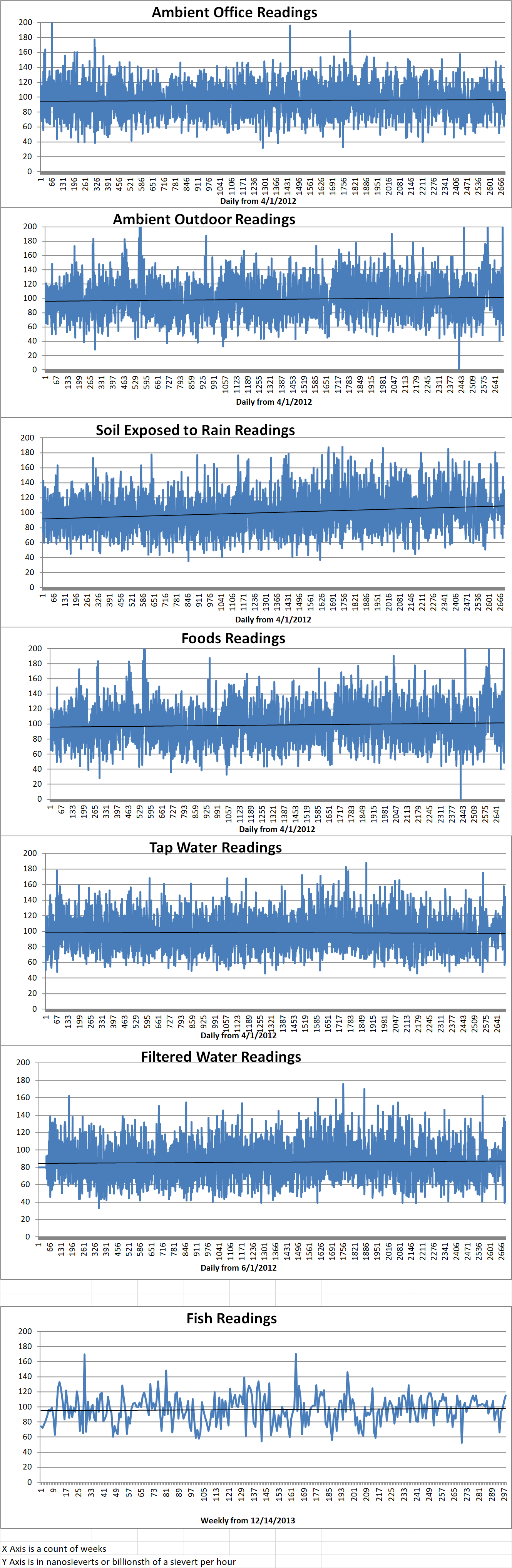
Geiger Readings for Nov 11, 2019
Ambient office = 106 nanosieverts per hour
Ambient outside = 93 nanosieverts per hour
Soil exposed to rain water = 97 nanosieverts per hour
Crimini mushroom from Central Market = 80 nanosieverts per hour
Tap water = 144 nanosieverts per hour
Filtered water = 133 nanosieverts per hour
-
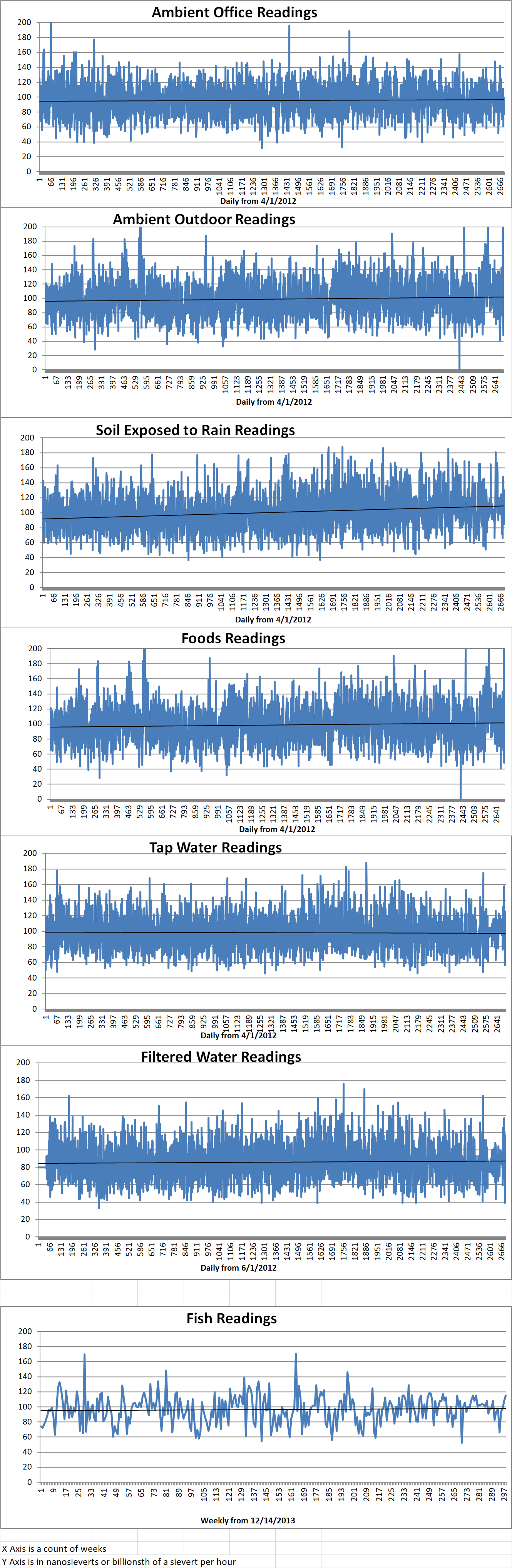
Geiger Readings for Nov 10, 2019
Ambient office = 99 nanosieverts per hour
Ambient outside = 132 nanosieverts per hour
Soil exposed to rain water = 130 nanosieverts per hour
Crimini mushroom from Central Market = 89 nanosieverts per hour
Tap water = 120 nanosieverts per hour
Filtered water = 100 nanosieverts per hour
-
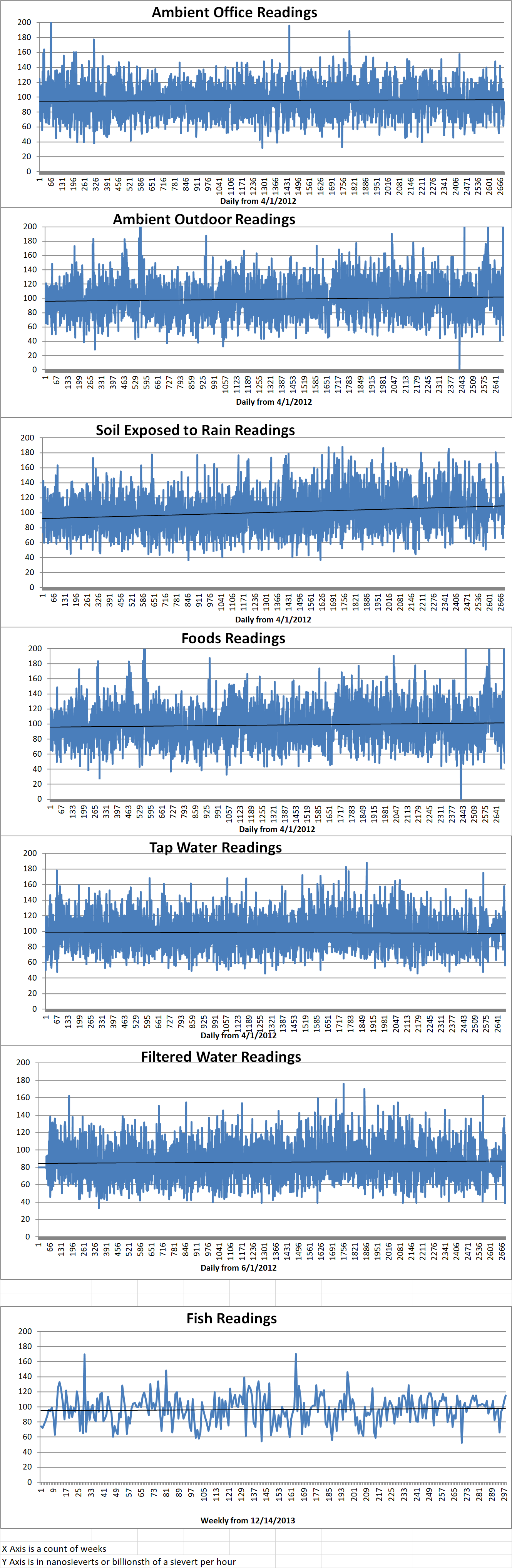
Geiger Readings for Nov 09, 2019
Ambient office = 77 nanosieverts per hour
Ambient outside = 97 nanosieverts per hour
Soil exposed to rain water = 99 nanosieverts per hour
Avocado from Central Market = 109 nanosieverts per hour
Tap water = 104 nanosieverts per hour
Filtered water = 95 nanosieverts per hour
Dover sole – Caught in USA = 115 nanosieverts per hour
-

Nuclear Reactors 734 – Purdue University Is Researching Cybersecurity For Digital Upgrades To Nuclear Power Reactors Safety Systems – Part 4 of 4 Parts
Part 4 of 4 Parts (Please read Part 1, Part 2 and Part 3 first)
Dan Stoddard is the Senior Vice President and Chief Nuclear Officer of Dominion Energy. He presented historical data at the May NRC briefing that documented “tangible performance improvements” in nuclear plants where the controls for their feedwater pumps and steam turbines were upgraded from analog to digital control. Conventional pressurized water reactors which have accomplished the digital steam turbine upgrades have one seventh of the unplanned outages or “scrams” of plants still using analog controls.
Stoddard said, “From an engineering standpoint, the ability [to] do self-diagnostics, plant monitoring, get information from the [digital] system to allow improvements in engineering and improvements in plant reliability is substantial.”
In spite of the benefits of digital upgrades, the operators of some nuclear power plants say that is has been hard to justify these upgrades because of the upfront costs and the time and effort that have to be expended to work through the regulatory process at the NRC to get approval for the changes.
About a decade ago, Duke Energy switched the monitors for water temperature and pressure in the reactor as well as the status of the reactor coolant from analog to digital for their Oconee Nuclear Station in South Carolina. These are some of the most important safety monitoring systems and the three Oconee reactors were the first in the U.S. to make those changes. These changes allowed the Oconee reactors to track temperature and pressure in real time so that the reactors can run more efficiently and problems can be dealt with automatically. However, these upgrades were very expensive and time consuming. Stephen Vaughn is the NEI Senior Project Manager. He said, with respect to the upgrades, “They eventually got done, but it was a burden. It took a long time.” These upgrades allowed the Oconee plant to generate more electricity, but no further digital conversions projects are being planned at Duke Energy at this time.
It is probable that as the U.S. nuclear industry gains experience with adding digital controls to nuclear power plants, the benefits will grow. This would make it easier to sell the cost, time and effort for upgrading to the owners of the nuclear power plants. The NRC allowed the Purdue reactor upgrade to utilize a digital console which incorporates parts that have international standards certification. If domestic standards certification had been required as is usually the case for NRC permission, the cost would have been much higher.
Townsend said, “The fact that the NRC is accepting a digital console for a small research reactor, with parts certified under the [international] standards, signals the regulatory body moving toward approval in a large industry reactor.”
NEI officials have pointed out that the Purdue research reactor is very small when compared to a conventional nuclear power reactor. They say that any results from the Purdue project might not be applicable to the U.S. commercial nuclear power industry in general. Vaughn did say that “from a digital technology perspective, there are some lessons we can learn from it.” It may take years before the Purdue team has conclusions about how reactors can leverage the full benefits of digital instrumentation and control while remaining safe from cyberattacks. He said, “We are just getting started.” -
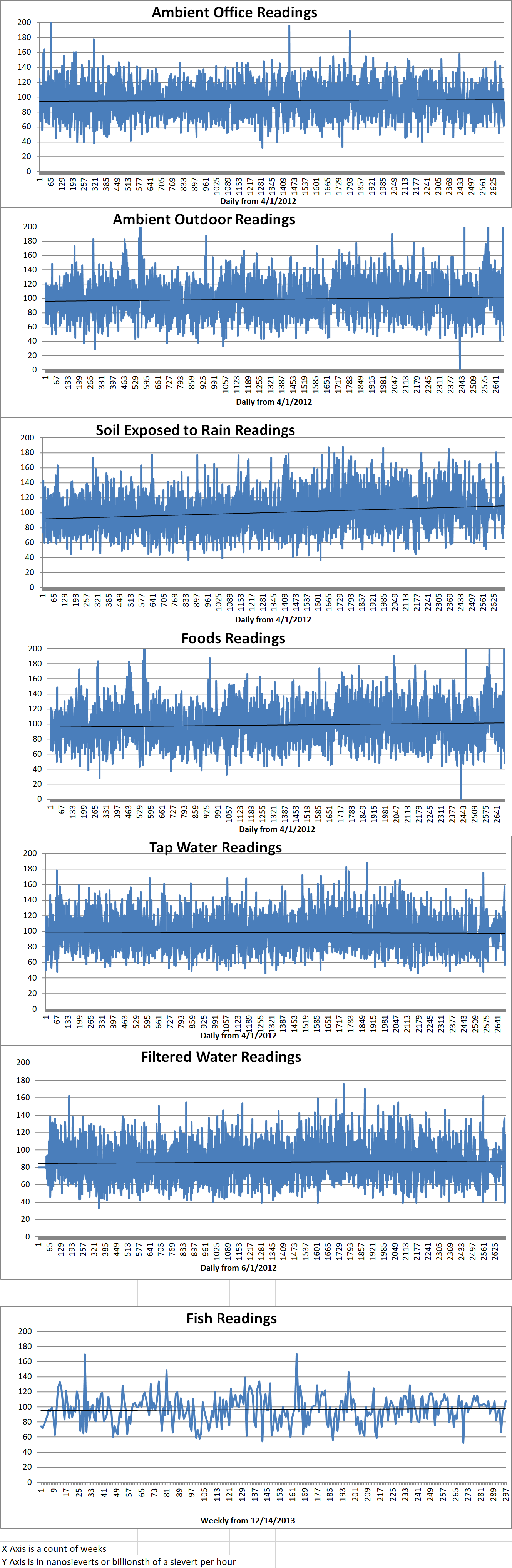
Geiger Readings for Nov 08, 2019
Ambient office = 93 nanosieverts per hour
Ambient outside = 89 nanosieverts per hour
Soil exposed to rain water = 85 nanosieverts per hour
Avocado from Central Market = 48 nanosieverts per hour
Tap water = 126 nanosieverts per hour
Filtered water = 117 nanosieverts per hour