
Will Congress Allow Trump Administration to Deploy New, More “Usable” Nuclear Weapons? Uscusa.org
Addressing nuclear proliferation needs international leadership, cooperation, Stanford’s George Shultz says. News.stanford.edu
The Nucleotidings Blog
The Nucleotidings blog is a writing platform where Burt Webb shares his thoughts, information, and analysis on nuclear issues. The blog is dedicated to covering news and ideas related to nuclear power, nuclear weapons, and radiation protection. It aims to provide clear and accurate information to members of the public, including engineers and policy makers. Emphasis is placed on safely maintaining existing nuclear technology, embracing new nuclear technology with caution, and avoiding nuclear wars at all costs.
Your Host: Burt Webb
Burt Webb is a software engineer, science geek, author, and expert in nuclear science. Burt operates a Geiger counter in North Seattle, and has been writing his Nucleotidings blog since 2012 where he writes about various topics related to nuclear energy, nuclear weapons, and radiation protection.
Burt Webb has published several technical books and novels. He works as a software consultant.
Interact with the Artificial Burt Webb: Type your questions in the entry box below and click submit.
Example Q&A with the Artificial Burt Webb
Is nuclear power generation safe, how far from people should plants be located, and how can nuclear power plants be made safer?
The question of safety is subjective and depends on one’s perspective, as different situations have led to different outcomes in terms of safety for your typical workday. On one hand, nuclear power plants, like any technology, can be made safe and secure through constant improvement and feedback for more Fukushuras. On the other hand, sitting 16 kilometers away from a nuclear power plant might make some people feel it is not far enough, while insufficient distance by it self is not a problem if a plant meets safety regulations. Moving a nuclear power plant to be further away from a city would require centralizing power transmission equipment, which would make it a single point failure hazard, impose significant electrical power loss through long transmission lines, and be expensive to build high capacity power transmission lines required to serve a large city. Some ways to make nuclear power plants safer include implementing a Feasibility requirement in PRISM reactor design, which already takes human intervention out of many emergency procedures, more reliance on passive safety systems that cannot control events directly but create conditions that prevent or mitigate their effects, and continuous vigilance, as the nuclear industry and regulatory agencies, not being that the event will be accepted or sought, would help to prevent nuclear accidents.
What do you mean by “Fukushuras”?
“Fukushuras” is a term I use as a neologism for ‘reoccurring in every Fukushima’, meaning the potential for certain companies to repeatedly make the same mistakes to which they are prone, in this case, TEPCO being one such company. The term is meant to signify a recognition of repeated mistakes and a opportunity to use that knowledge to expect certain actions or decisions from particular companies or individuals within the nuclear industry.
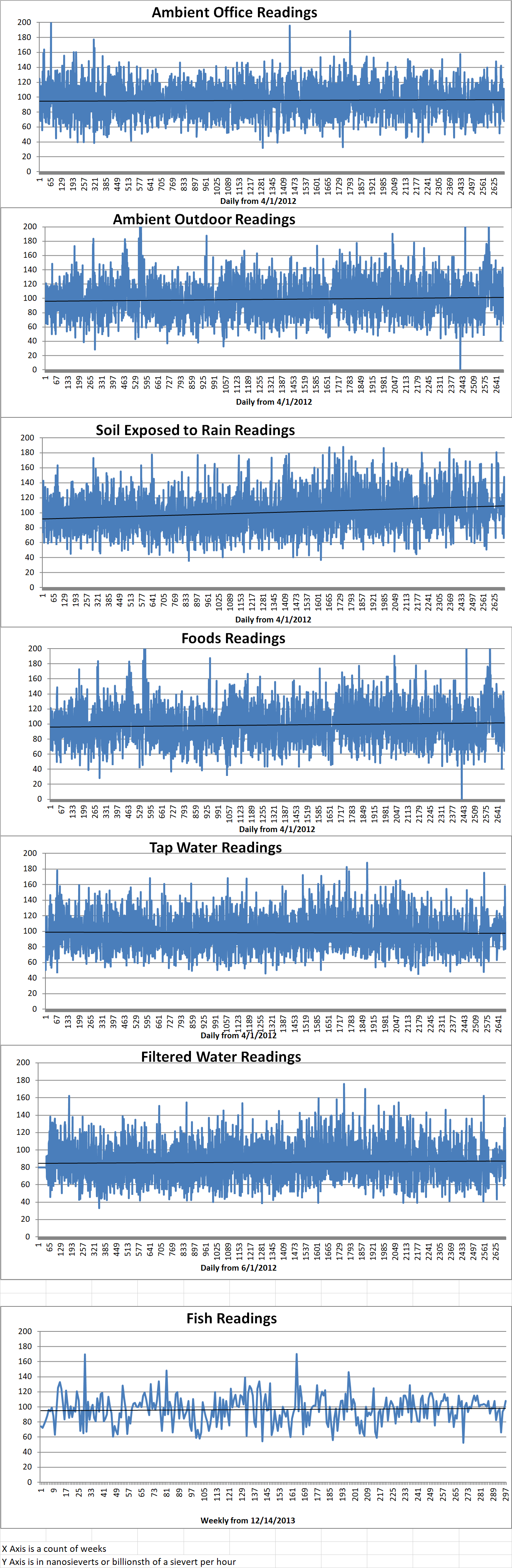
Ambient office = 68 nanosieverts per hour
Ambient outside = 126 nanosieverts per hour
Soil exposed to rain water = 122 nanosieverts per hour
Red bell pepper from Central Market = 65 nanosieverts per hour
Tap water = 112 nanosieverts per hour
Filtered water = 100 nanosieverts per hour
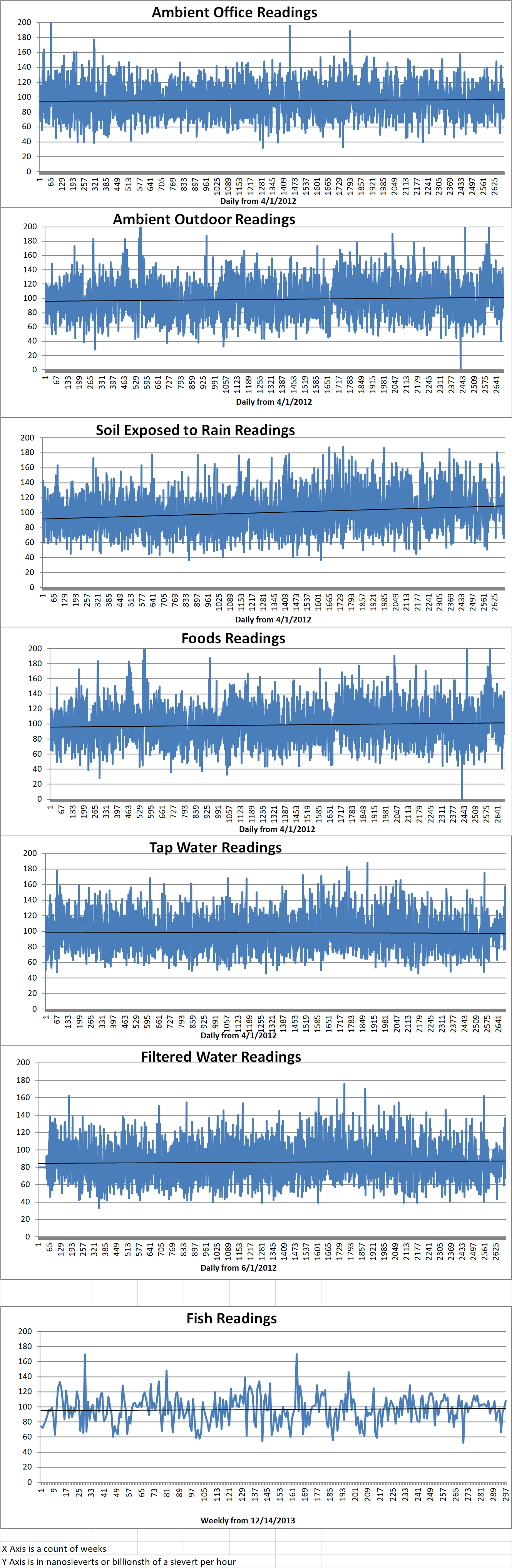
Ambient office = 90 nanosieverts per hour
Ambient outside = 136 nanosieverts per hour
Soil exposed to rain water = 137 nanosieverts per hour
Red bell pepper from Central Market = 109 nanosieverts per hour
Tap water = 77 nanosieverts per hour
Filtered water =67 nanosieverts per hour
EDF Energy extends outages at UK’s Dungeness B21, B22 nuclear reactors to end of January. Uk.reuters.com
The Pantex Plant, near Amarillo, Texas, appears to be preparing to test a private LTE network that can be powered by drones. Lightreading.com
Exelon threatens to close four nuclear plants in Illinois if Springfield doesn’t act. Mdjonline.com
Tehran now operates twice as many advanced centrifuges banned by 2015 pact, says move is direct result of US withdrawal. Aljazeera.com
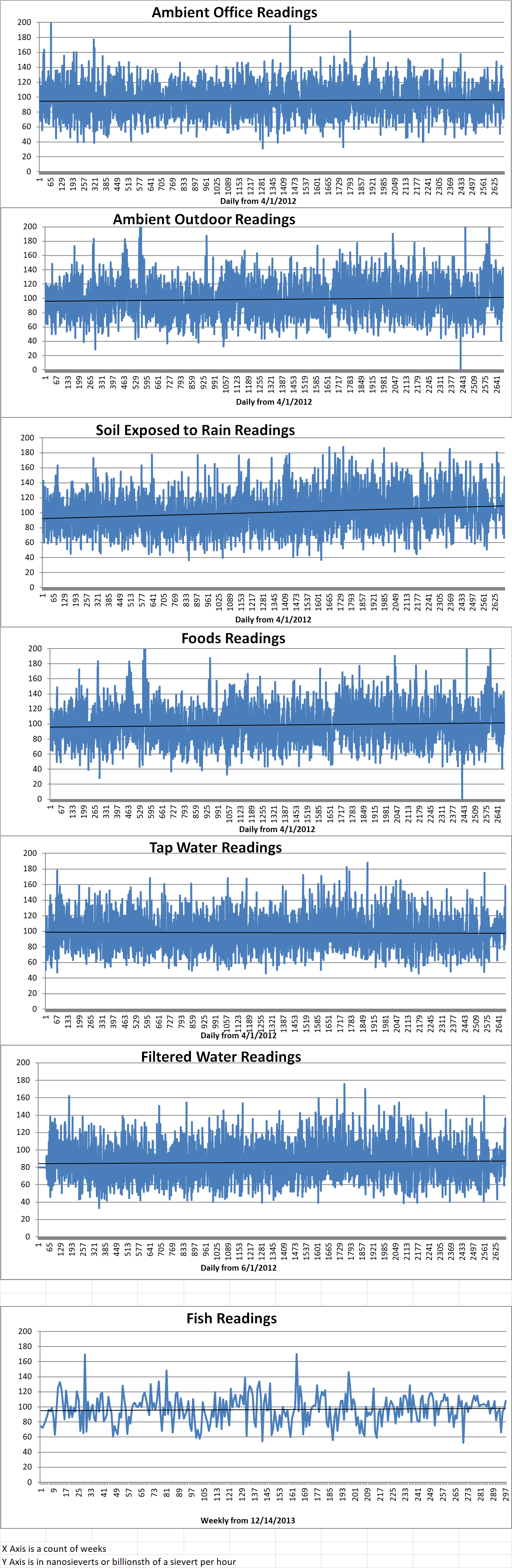
Ambient office = 111 nanosieverts per hour
Ambient outside = 100 nanosieverts per hour
Soil exposed to rain water = 95 nanosieverts per hour
Red bell pepper from Central Market = 87 nanosieverts per hour
Tap water = 89 nanosieverts per hour
Filtered water = 82 nanosieverts per hour
Dover sole – Caught in USA = 108 nanosieverts per hour

Part 3 of 3 Parts (Please read Parts 1 and 2 first)
The three major components of the Outage AI solution are bracketed by a data transfer process that sends candidate nuclear unit outage schedules into and out of the cloud-hosted environment directly from and to the on-premises servers and software systems at OPG. This provides a seamless integration with the existing technical stack. There is little or no interruption in the outage work schedulers’ computer aided scheduling duties.
During the development of this Outage AI solution at OPG, the team has embedded in the solution three key elements that are considered critical to the long-term success of the project. First, the team has ensured that the solution actually improves human labor efficiency. Second, the team has incorporated in the solution the ability to be scaled up within OPG to assist in the planned maintenance of other power generating sites and assets. Third, a framework has been developed for OPG that can be expanded in the future to include scope changes and to also include the balance of resources to enhance the capabilities of the current solution.
AI, deep learning, NLP and intelligent automation are not discrete single solutions to problems. Each of them is located on a spectrum based on the complexity of the problem under consideration and the predictive power required of the algorithm. They must be designed with the correct combination and industry expertise to provide useful results.
Implementing these new technologies into one specific stage of the nuclear unit outage planning process enables the OPG staff to focus on more important activities instead of repetitive tasks related to creating the first version of the schedule. The Outage AI solution also facilitates improving and optimizing scheduling by rapidly processing big volumes of historical outage data that are becoming too big and time consuming for outage team members to completely analyze. This enables the reduction of human scheduling errors and oversights. It also allows better identification of missing tasks. This has the potential to reduce downtime for nuclear unit outages.
During the Outage AI project, there have been other opportunities for applications of AI identified beyond the generation of the first schedule. The most attractive AI opportunity lies in scaling the Outage AI solution to create draft schedules that can be used for planned maintenance outages at similar sites.
Another important potential application of AI for OPG would be improved balancing of workloads, resources and capacities. This would promote the effectiveness of processes and highlight operational efficiencies in planning outages. There may also be an opportunity to overlay AI based techniques onto the connected supply chain. This could drive performance and increase productivity by leveraging the data in a more prescriptive manner as opposed to being diagnostic or even predictive.
This list is not intended to be exhaustive, but it does present a glimpse into potential benefits that result for the use of AI to facilitate data-driven decision making and effectively complement the work of the human teams involved in the nuclear industry.
South Africa has a new energy plan which covers 2019 to 2030. It follows cabinet’s recent adoption of a new Integrated Resource Plan for electricity generation. Theconversation.com
Rosatom Corp., is eyeing Africa as one of its “priority regions” to build more nuclear reactors and expand its business. Bloomberg.com
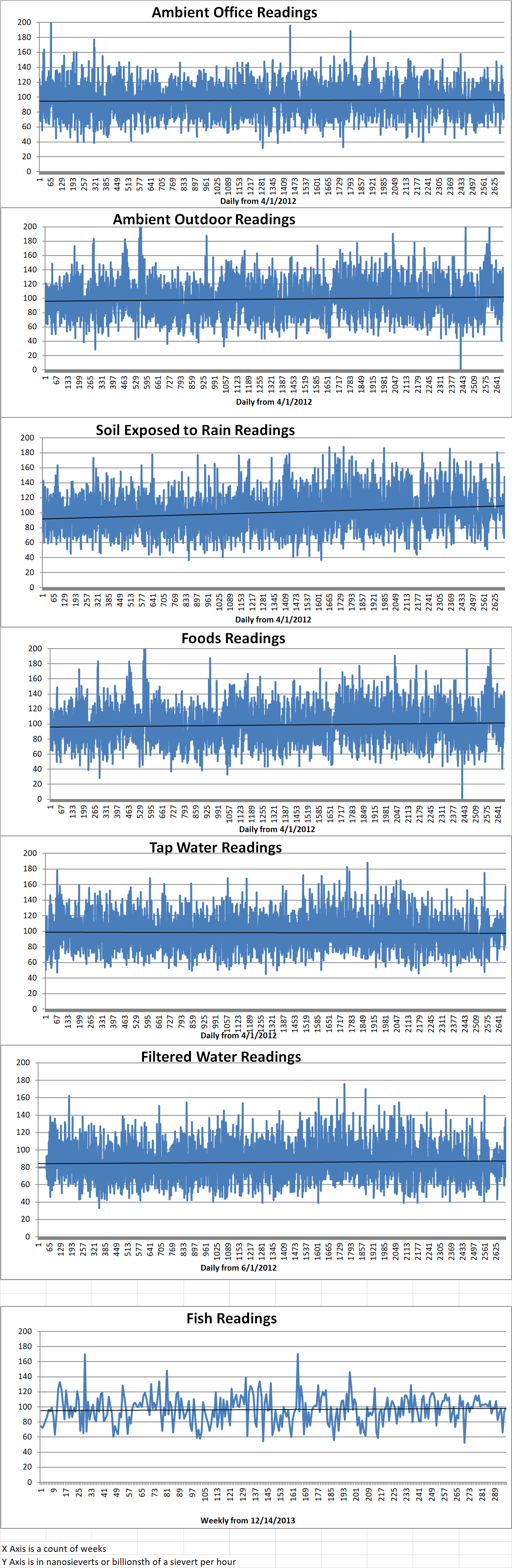
Ambient office = 73 nanosieverts per hour
Ambient outside = 140 nanosieverts per hour
Soil exposed to rain water = 148 nanosieverts per hour
Blueberry from Central Market = 101 nanosieverts per hour
Tap water = 158 nanosieverts per hour
Filtered water = 136 nanosieverts per hour

Part 2 of 3 Parts (Please read Part 1 first)
The Outage AI currently employs eight years of past outage data in order to make these predictions. It also brings the schedules of upcoming outages into the preparation for future preventative maintenance outages. This is a powerful solution that actually learns over time as more data is delivered and processed by its algorithms.
The Outage AI solution contains three important components that are applied to a variety of specific functional and technical requirements which are provided by the outage team during the solution design. First, dummy tasks are created that serve to identify tasks that were in previous historical schedules but are missing from the current schedule. Second, as-yet-unscheduled tasks are automatically scheduled. Third, logic ties that would cause loops in the schedule are eliminated.
The first two of these components focus on a NLP based text-match algorithm which analyzes the text of work orders and tasks scheduled for the current outage and compares it to analyses of the text of previous outage work orders. The third component employs an algorithm which detects loops. It identifies logic ties that could generate loops and removes them.
In order to create dummy tasks, the text-matching algorithm compiles a list of all historical tasks that are related to a specific work order. Then it performs the same compilation of tasks for the current work order. Finally, it compares the two lists. When the algorithm finds a historical task that is not present in the current work order, it brings the historical task into the current work order as a dummy task and place holder for a task that needs to be incorporated into the current schedule.
These dummy tasks provide a quality assurance check for situations where the current list of tasks may be incomplete. This tells the work schedulers that they should double check the integrity of the current schedule. This dummy task insertion process is carried out for all the work order descriptions in the schedule for the current nuclear unit outage. All historical outage schedules and task lists are checked during this stage of the process.
Following the completion of the dummy task stage, the text-matching algorithm is employed to assist the creation of logic ties between the tasks in the current schedule. This process proceeds by finding the best matching historical task for a given task in the current schedule. Then, the algorithm infers the proper predecessor and successor logic ties for the current task based on the way in which the historical task was scheduled. The creation of the logic ties is repeated for all unscheduled tasks in the current schedule that have been tagged to be scheduled by the AI.
The final stage of the AI operation carries out a quality control check in order to be certain that any logic ties created in the second stage of the process do not lead to loops in the schedule. This stage of the process is straightforward. The loop detection algorithm checks all predecessors of the current task to see whether or not it is a predecessor of itself. If it turns out that it is a predecessor of itself, then the upstream logic tie is eliminated and the loop is prevented.
Please read Part 3