
Poland’s government has welcomed plans by a top businessman to build what would be the nation’s first nuclear power plant and help reduce dependence on coal. Actionnewsjax.com
Anglesey nuclear power plant set for planning boost. Bbc.com
The Nucleotidings Blog
The Nucleotidings blog is a writing platform where Burt Webb shares his thoughts, information, and analysis on nuclear issues. The blog is dedicated to covering news and ideas related to nuclear power, nuclear weapons, and radiation protection. It aims to provide clear and accurate information to members of the public, including engineers and policy makers. Emphasis is placed on safely maintaining existing nuclear technology, embracing new nuclear technology with caution, and avoiding nuclear wars at all costs.
Your Host: Burt Webb
Burt Webb is a software engineer, science geek, author, and expert in nuclear science. Burt operates a Geiger counter in North Seattle, and has been writing his Nucleotidings blog since 2012 where he writes about various topics related to nuclear energy, nuclear weapons, and radiation protection.
Burt Webb has published several technical books and novels. He works as a software consultant.
Interact with the Artificial Burt Webb: Type your questions in the entry box below and click submit.
Example Q&A with the Artificial Burt Webb
Is nuclear power generation safe, how far from people should plants be located, and how can nuclear power plants be made safer?
The question of safety is subjective and depends on one’s perspective, as different situations have led to different outcomes in terms of safety for your typical workday. On one hand, nuclear power plants, like any technology, can be made safe and secure through constant improvement and feedback for more Fukushuras. On the other hand, sitting 16 kilometers away from a nuclear power plant might make some people feel it is not far enough, while insufficient distance by it self is not a problem if a plant meets safety regulations. Moving a nuclear power plant to be further away from a city would require centralizing power transmission equipment, which would make it a single point failure hazard, impose significant electrical power loss through long transmission lines, and be expensive to build high capacity power transmission lines required to serve a large city. Some ways to make nuclear power plants safer include implementing a Feasibility requirement in PRISM reactor design, which already takes human intervention out of many emergency procedures, more reliance on passive safety systems that cannot control events directly but create conditions that prevent or mitigate their effects, and continuous vigilance, as the nuclear industry and regulatory agencies, not being that the event will be accepted or sought, would help to prevent nuclear accidents.
What do you mean by “Fukushuras”?
“Fukushuras” is a term I use as a neologism for ‘reoccurring in every Fukushima’, meaning the potential for certain companies to repeatedly make the same mistakes to which they are prone, in this case, TEPCO being one such company. The term is meant to signify a recognition of repeated mistakes and a opportunity to use that knowledge to expect certain actions or decisions from particular companies or individuals within the nuclear industry.
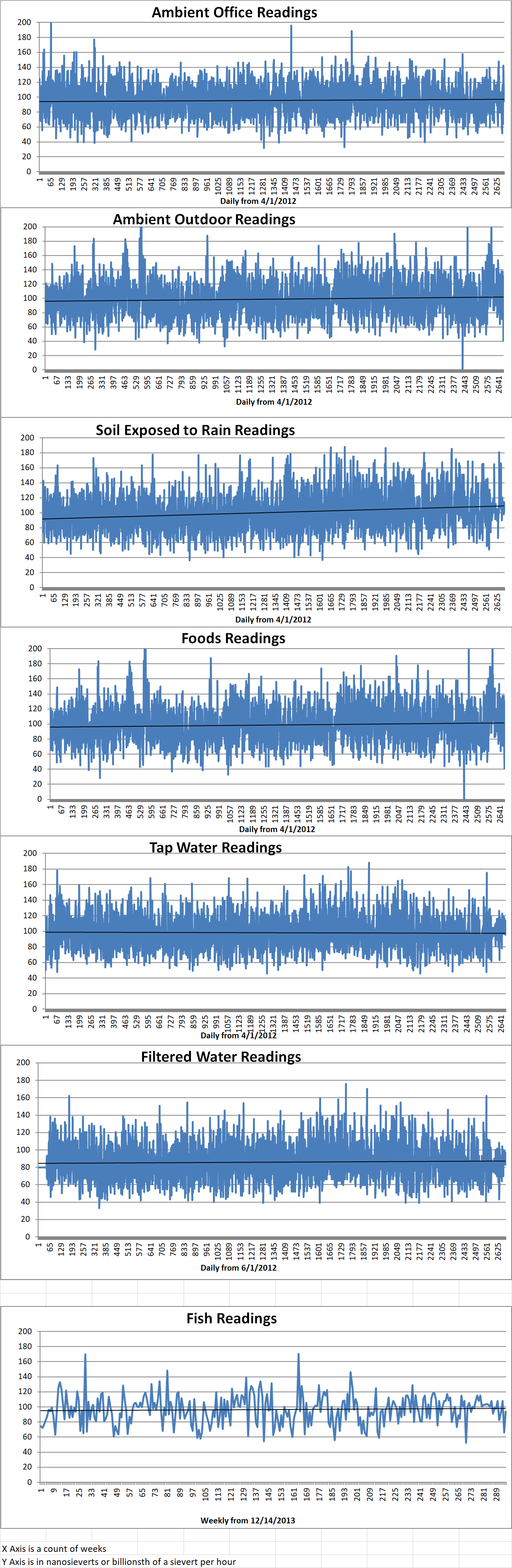
Ambient office = 97 nanosieverts per hour
Ambient outside = 100 nanosieverts per hour
Soil exposed to rain water = 101 nanosieverts per hour
Heirloom tomato from Central Market = 108 nanosieverts per hour
Tap water = 114 nanosieverts per hour
Filtered water = 97 nanosieverts per hour
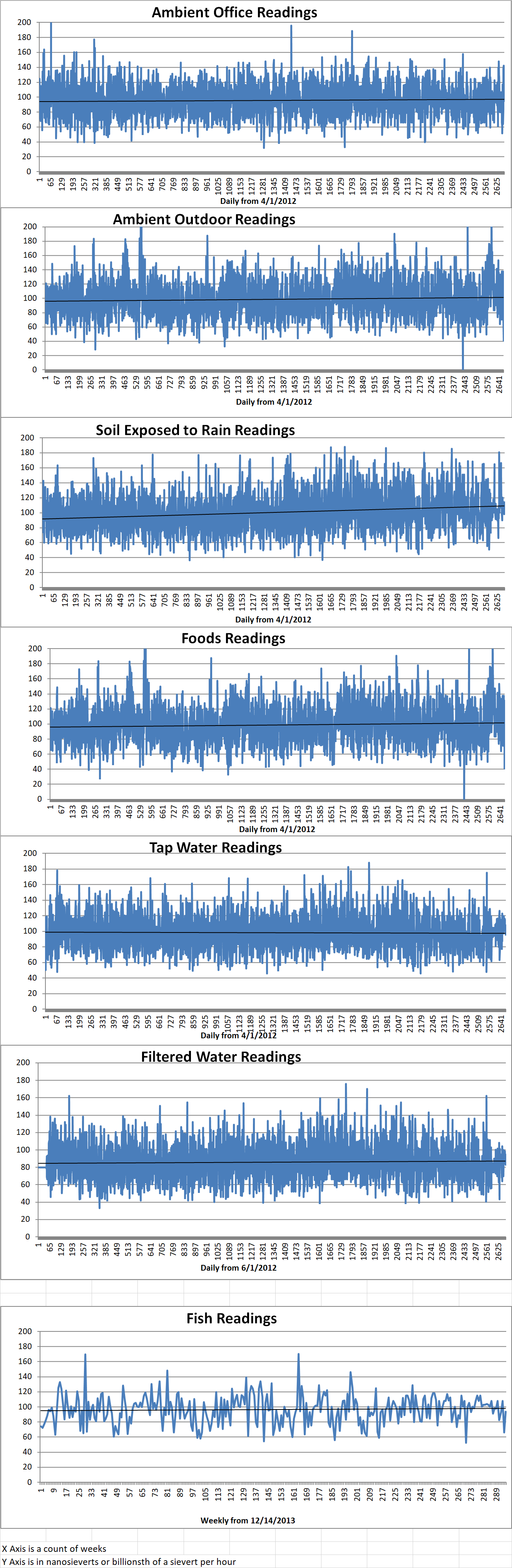
Ambient office = 95 nanosieverts per hour
Ambient outside = 116 nanosieverts per hour
Soil exposed to rain water = 114 nanosieverts per hour
Bartlett pear from Central Market = 41 nanosieverts per hour
Tap water = 96 nanosieverts per hour
Filtered water = 83 nanosieverts per hour
Dover sole – Caught in USA = 94 nanosieverts per hour
The U.S. Navy designed the E-6 Mercury aircraft in conjunction with Boeing to control the U.S. arsenal in case of nuclear war. The E-6 is one hundred and fifty feet long, forty-two feet high and has a one hundred and forty-eight foot wingspan. It carries a crew of twenty-two and has a top speed of six hundred and ten miles per hour. It has a range of seven thousand six hundred miles and can stay in the air for ten hours without needed to refuel or seventy-two hours with multiple refueling. While the E-6 does not carry any weapons, it can act as a command and control airborne base for U.S. nuclear missile submarines, U.S. air force bombers and U.S. ICBM missile crews. The E-6 is intended to connect the U.S. President and defense secretary to the three legs of the U.S. nuclear arsenal if there is a nuclear war where ground-based communication systems are no longer available. The E-6 was put into operation in 1989.
In February of this year, the E-6 experienced a “Class-A” event when the tail of the plane clipped the top of a hangar. There was only a single person on the E-6 at the time of the event and no one was injured.
On October 2nd of this year, a bird was sucked into one of the four engines on the E-6. They had to replace the engine before the plane could be put back into service. There were at least two million dollars worth of damages caused by the bird. This is the second Class-A event this year and the fifth Class-A event involving a bird in the past ten years.
It seems to me that this is a serious problem with the reliability and safety of the E-6. If a bird can force the E-6 to land, that means that the flying Navy command and control center might not be able to carry out its mission. If a bird can take out the E-6, it would indicate that a small drone might also be able to bring down the E-6. There is a great deal of research these days into swarms of drones that can act in a coordinated manner. A cloud of drones could attack an E-6 by using infrared detectors to home in on the plane’s engines which would be hotter than any other part of the plane.
Of course, the exact defensive equipment on the E-6 is classified and not available for public dissemination. It may very well be that the E-6 does have defense against coordinated swarms of drones. However, since the existence of offensive drone swarms is a very recent development, defenses against such a threat are not well developed at this time and may not be part of the current design of the E-6.
Drone swarms can be carried in and deployed from a semi-truck. The base of the E-6 is public knowledge. If a nuclear war broke out, the enemy could have a semi-truck full of drones stationed near the E-6 base which could deploy a cloud of drones to take out the E-6 as it was taking off.
Boeing E-6 Mercury aircraft:
Ambient office = 112 nanosieverts per hour
Ambient outside = 112 nanosieverts per hour
Soil exposed to rain water = 109 nanosieverts per hour
Red bell pepper from Central Market = 72 nanosieverts per hour
Tap water = 108 nanosieverts per hour
Filtered water = 95 nanosieverts per hour
Part 2 of 2 Parts (Please read Part 1 first)
Jeffrey Lewis is a non-proliferation expert at the Middlebury Institute of International Studies. He said, “The US doesn’t need Turkey’s agreement to remove the weapons. The US can do it unilaterally, and I think the US should do it unilaterally and do it immediately. If people are really concerned that this is going to somehow be the final nail in the coffin, it’s kind of silly as the coffin is firmly nailed shut. The relationship is in total freefall.”
Vipin Narang is a nuclear expert and pollical scientist at the Massachusetts Institute of Technology. He says that removal of the B61s from Turkey will not be simple or easy. He added that, “Extracting them under these circumstances may be incredibly risky since it would involve removing 50 nuclear weapons from the vaults, moving them on a Turkish base and flying them out of Turkish airspace. They could be vulnerable to accidents, theft or attack.”
As the incursion of Turkey into norther eastern Syria progressed, it placed increasing strain on the membership of Turkey in NATO. Earlier this week, the foreign ministers of European Union nations decided to stop selling arms to Turkey as France and Germany had already done. The E.U. condemned Turkey for undermining “the stability and security of the whole region, resulting in more civilians suffering”.
One major problem with the movement against Turkey in NATO lies in the fact that Turkey signed an agreement to hold three million Syrian refugees in Turkey and prevent them from moving on into Europe. Turkey intends to clear out a buffer zone on the Syrian border and repatriate the three million refugees there.
In the past few days, the discussions about removing the B61s has taken on increased urgency. A senior U.S. official has said that he believes that the B61s in Turkey have become hostages for President Erdogan. He went to say that if the U.S. flew the B61s out of Turkey, that would signal the end of the Turkish-American alliance.
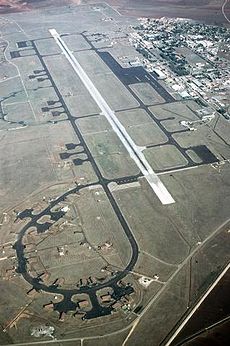
It is not clear whether or not the Turks would attempt to prevent the removal of the B61s from Incirlik. It is not realistic to think that planners in the Pentagon have not drafted plans to remove the B61s by force if necessary. They cannot be left in the hands of Turkey as the U.S. relationship with Turkey continues to deteriorate. A fire fight over the B61s at Incirlik between the U.S. and Turkey would not be beneficial for either party.
Turkey has been a useful ally for the U.S. in dealing with the conflict in Syria. On the other hand, there have been reports of Turkey helping ISIS fighters get to Syria and Turkey buying stolen oil from ISIS. The current situation in Syria is very complex with alliances forming and dissolving almost daily among many different players with many different agendas. The B61s now in Turkey must come home to the U.S. as soon as possible.
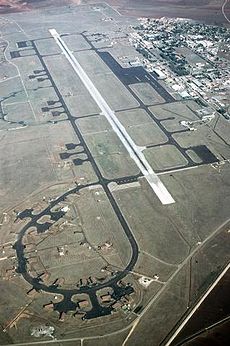
Incirlik airbase in Turkey:
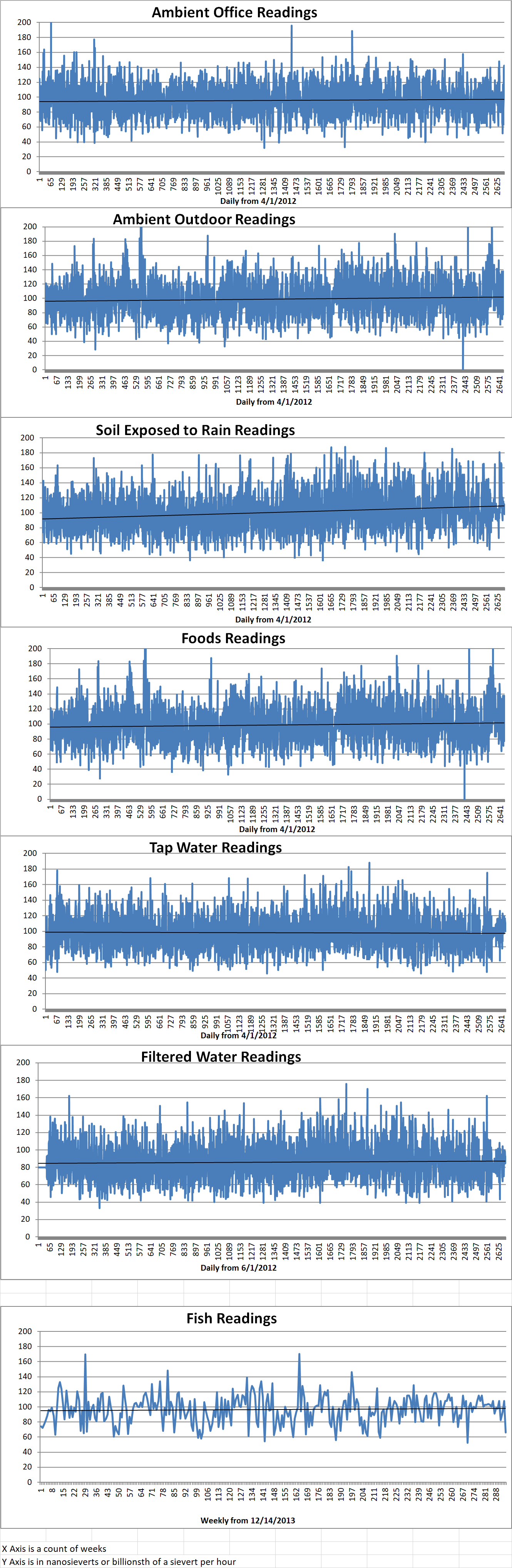
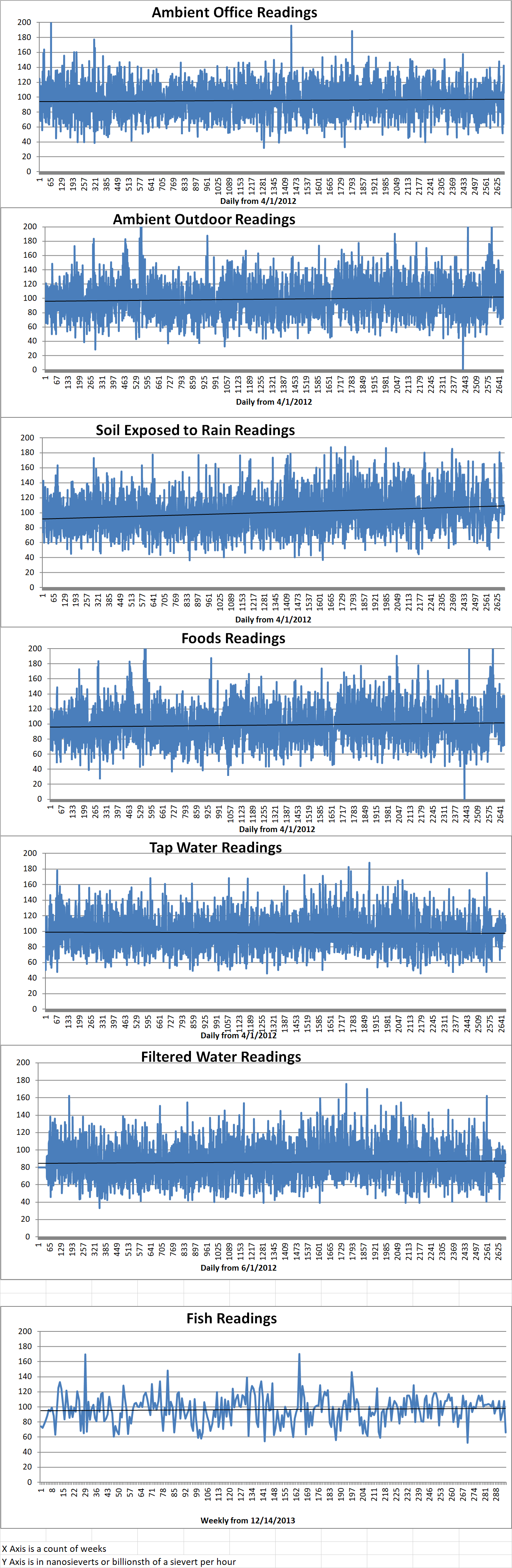
Ambient office = 106 nanosieverts per hour
Ambient outside = 100 nanosieverts per hour
Soil exposed to rain water = 103 nanosieverts per hour
Avocado from Central Market = 131 nanosieverts per hour
Tap water = 100 nanosieverts per hour
Filtered water = 92 nanosieverts per hour