
Merkel urges return to Iran nuclear deal to defuse Middle East tensions. Yahoo.com
This is how a nuclear war would play out, according to a Princeton University simulation. Nydailynews.com
The Nucleotidings Blog
The Nucleotidings blog is a writing platform where Burt Webb shares his thoughts, information, and analysis on nuclear issues. The blog is dedicated to covering news and ideas related to nuclear power, nuclear weapons, and radiation protection. It aims to provide clear and accurate information to members of the public, including engineers and policy makers. Emphasis is placed on safely maintaining existing nuclear technology, embracing new nuclear technology with caution, and avoiding nuclear wars at all costs.
Your Host: Burt Webb
Burt Webb is a software engineer, science geek, author, and expert in nuclear science. Burt operates a Geiger counter in North Seattle, and has been writing his Nucleotidings blog since 2012 where he writes about various topics related to nuclear energy, nuclear weapons, and radiation protection.
Burt Webb has published several technical books and novels. He works as a software consultant.
Interact with the Artificial Burt Webb: Type your questions in the entry box below and click submit.
Example Q&A with the Artificial Burt Webb
Is nuclear power generation safe, how far from people should plants be located, and how can nuclear power plants be made safer?
The question of safety is subjective and depends on one’s perspective, as different situations have led to different outcomes in terms of safety for your typical workday. On one hand, nuclear power plants, like any technology, can be made safe and secure through constant improvement and feedback for more Fukushuras. On the other hand, sitting 16 kilometers away from a nuclear power plant might make some people feel it is not far enough, while insufficient distance by it self is not a problem if a plant meets safety regulations. Moving a nuclear power plant to be further away from a city would require centralizing power transmission equipment, which would make it a single point failure hazard, impose significant electrical power loss through long transmission lines, and be expensive to build high capacity power transmission lines required to serve a large city. Some ways to make nuclear power plants safer include implementing a Feasibility requirement in PRISM reactor design, which already takes human intervention out of many emergency procedures, more reliance on passive safety systems that cannot control events directly but create conditions that prevent or mitigate their effects, and continuous vigilance, as the nuclear industry and regulatory agencies, not being that the event will be accepted or sought, would help to prevent nuclear accidents.
What do you mean by “Fukushuras”?
“Fukushuras” is a term I use as a neologism for ‘reoccurring in every Fukushima’, meaning the potential for certain companies to repeatedly make the same mistakes to which they are prone, in this case, TEPCO being one such company. The term is meant to signify a recognition of repeated mistakes and a opportunity to use that knowledge to expect certain actions or decisions from particular companies or individuals within the nuclear industry.
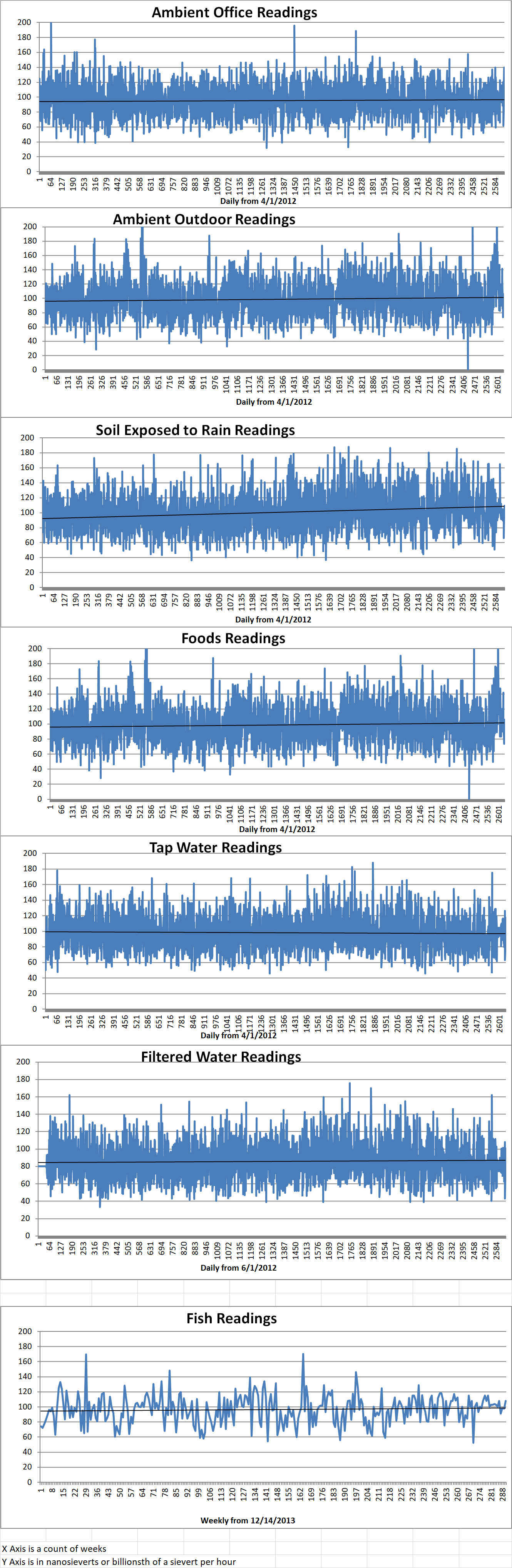
Ambient office = 102 nanosieverts per hour
Ambient outside = 112 nanosieverts per hour
Soil exposed to rain water = 109 nanosieverts per hour
Red bell pepper from Central Market = 90 nanosieverts per hour
Tap water = 107 nanosieverts per hour
Filtered water = 93 nanosieverts per hour

Part 1 of 2 Parts
Rebecca Abergel is an assistant professor of nuclear engineering at the University of California, Berkley. She headed a team at the U.S. Department of Energy’s Lawrence Berkeley National Laboratory (Berkeley Lab) to developed an anti-radiation-poisoning pill in 2014. At the time, they hoped that it would never need to be used for intended purposes such as removing radioactive contaminants from peoples’ bodies in case of something like the meltdown of a nuclear reactor or the detonation of a nuclear bomb.
Now the researchers are working on how their pill might be able to protect people from another source of toxicity. When a person undergoes a magnetic resonance imaging (MRI) procedure, they are injected with a contrast enhancement dye that contains gadolinium. Gadolinium is a soft rare earth metal that has the ability to absorb a lot of neutrons which makes it idea to enhance contrast in an MRI. In some people who need many MRIs for a serious medical condition, there is a danger of a buildup of gadolinium in their bodies which can be harmful.
Abergel said, “I’ve always been interested in public health applications. Our current work could help thousands of patients who rely on MRIs to have a better understanding of where a tumor might be located and whether it’s cancerous and has spread to other organs but are concerned about the potential side effects caused by the retention of gadolinium inside the body.”
MRIs are prescribed by U.S. physicians thirty million times a year. They use large magnets to excite hydrogen atoms in the human body. Radio waves are used to detect tiny magnetic fluctuation as the hydrogen atoms relax back to their original state. When analyzed by the computer, the magnetic fluctuations are used to construct whole body images of internal organs, muscles, tendons and bones.
MRIs first became available around 1980 and have been considered to be very safe for patients. The later introduction of gadolinium-based contrast agents (GBCAs) enhanced the visibility of blood vessels in the heart and brain by amplifying the signal emitted by the excited hydrogen atoms. About one third of all current MRIs are carried out with GBCAs.
Gadolinium is one of fifteen metallic chemical elements which constitute the lanthanide series in the periodic table. Gadolinium is a heavy metal that is toxic to the human body. When it is used in a contrast dye for MRIs, it is bound to a molecule that helps to rapidly clear the gadolinium from the body through urination. It was believed that this rapid expulsion from the body prevented any negative toxic effects.
In recent years, a number of MRI patients have been reporting experiencing adverse symptoms following MRIs. These symptoms included joint pain, body aches and loss of memory within days of an MRI scan. There have been reports of long-term chronic side effects such as damage to kidneys. Abergel says that these symptoms could be connected to gadolinium absorbed by their bones. Gadolinium has also been found in the brains of some patients who were given MRIs.
Please read Part 2
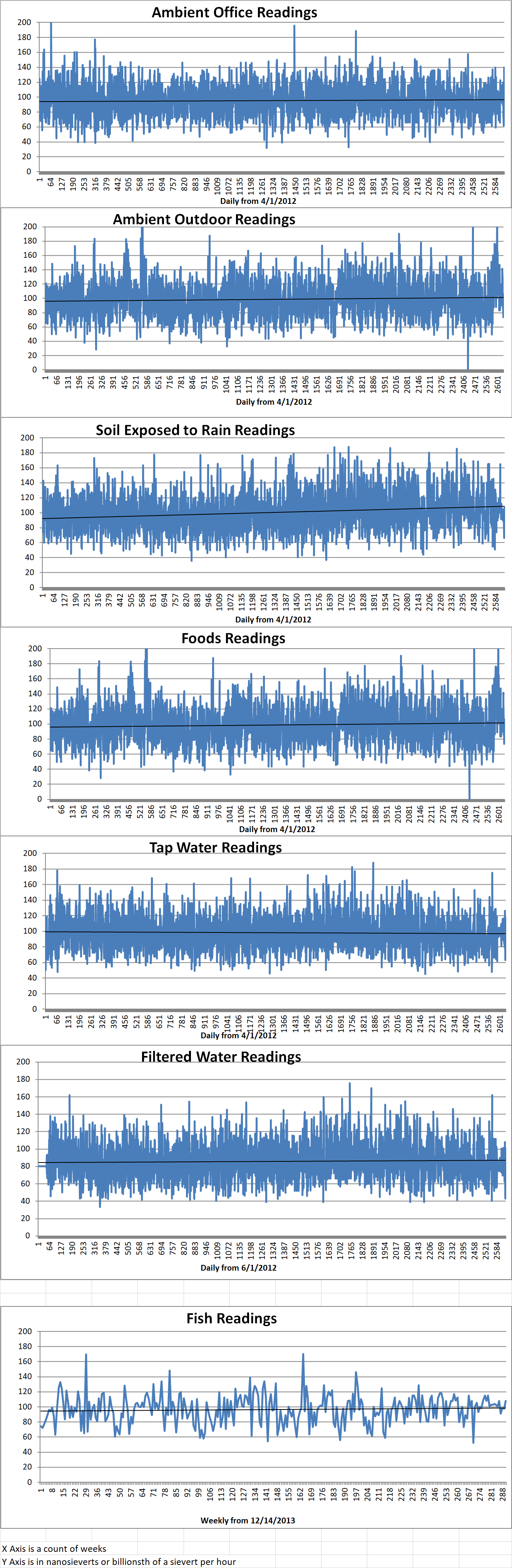
Ambient office = 140 nanosieverts per hour
Ambient outside = 116 nanosieverts per hour
Soil exposed to rain water = 108 nanosieverts per hour
Peach from Central Market = 106 nanosieverts per hour
Tap water = 118 nanosieverts per hour
Filtered water = 101 nanosieverts per hour
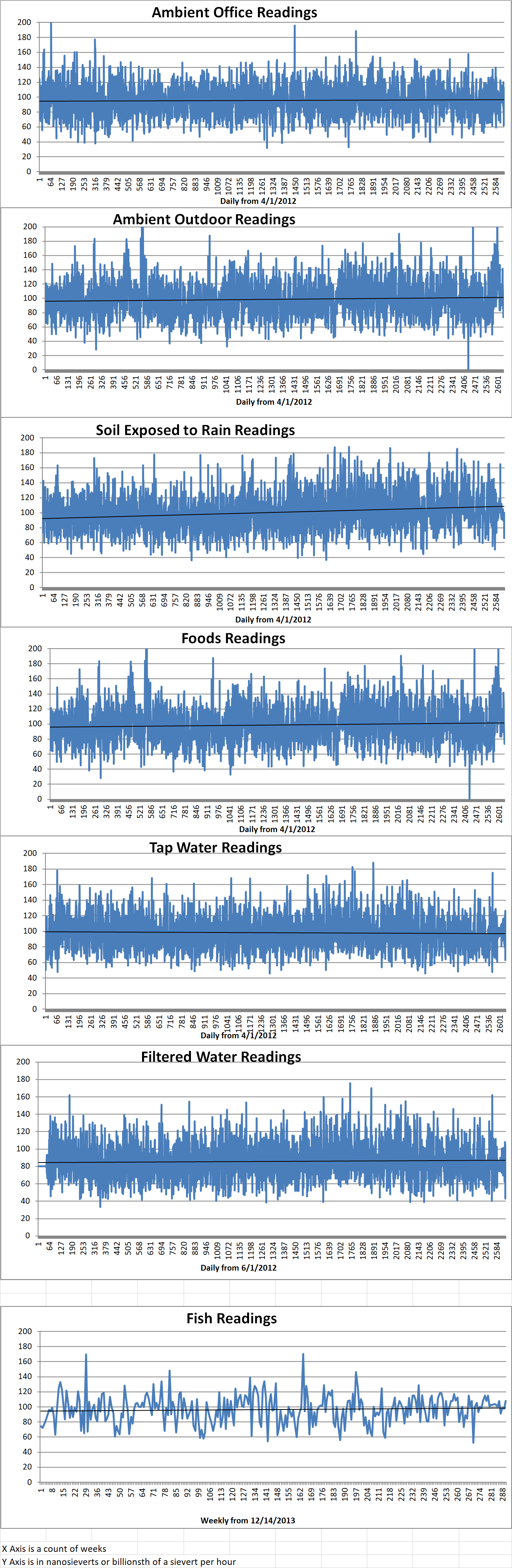
Ambient office = 112 nanosieverts per hour
Ambient outside = 89 nanosieverts per hour
Soil exposed to rain water = 93 nanosieverts per hour
Heirloom tomato from Central Market = 84 nanosieverts per hour
Tap water = 75 nanosieverts per hour
Filtered water = 66 nanosieverts per hour
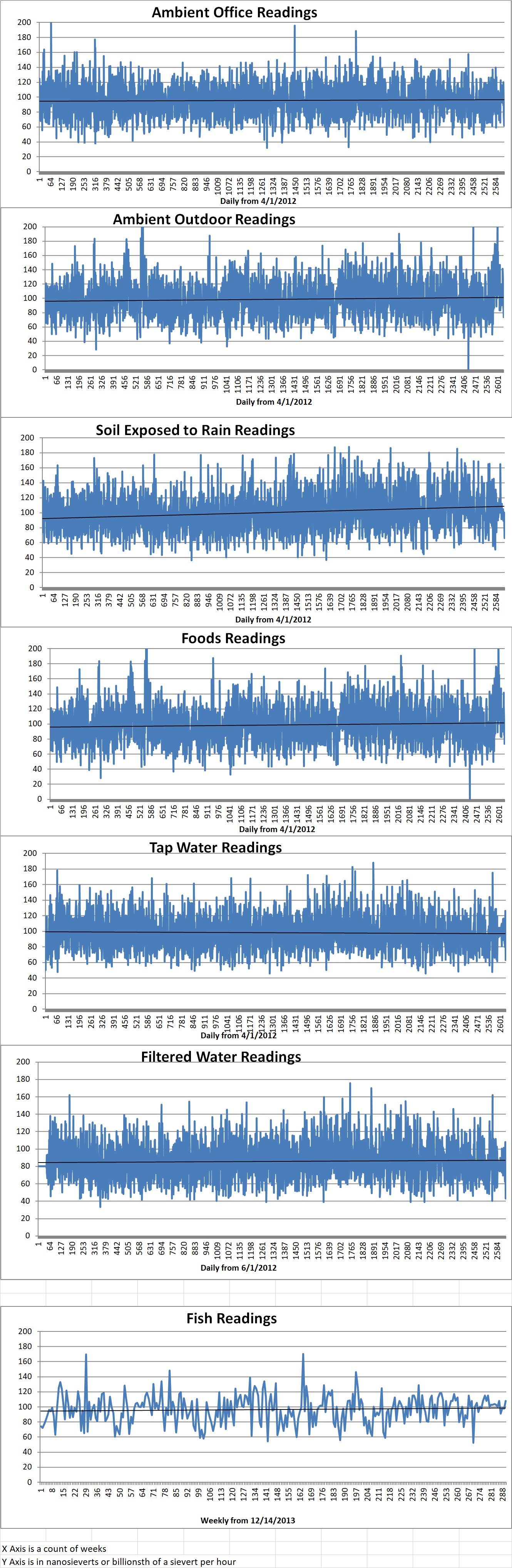
Ambient office = 84 nanosieverts per hour
Ambient outside = 103 nanosieverts per hour
Soil exposed to rain water = 100 nanosieverts per hour
English cucumber from Central Market = 74 nanosieverts per hour
Tap water = 63 nanosieverts per hour
Filtered water = 43 nanosieverts per hour
Dover sole – Caught in USA = 108 nanosieverts per hour

Part 2 of 2 Parts (Please read Part 1 first)
Under the proposal, FSC will install an electrolysis unit (LTE) at the Davis-Besse Nuclear Power Station. The project will address major interface requirements for LWR hybrid operations such as dynamic controls to allocate power output between the electrical grid and the LTE unit. A final report will be produced that details outcomes and business case opportunities. It will be made available to partners and third parties interested in LWR hybrid energy systems. The DoE will supply about nine million dollars. Non-DoE sources will supply about two million dollars. The total funding will be about eleven million dollars.
The Application of Machine Learning for Enhanced Diagnostic and Prognostic Capabilities of Nuclear Power Plant Assets will receive the second award. Blue Wave Capital and Consulting, DBA Blue Wave AI Labs (BWAL) (Celebration, FL) will develop and provide Machines Learning solution for the purpose of improving and extending diagnostic and prognostic capabilities that can be applied to predictive maintenance for nuclear power plants.
“BluWave-ai seeks to realize a world powered by renewable energy. We are committed to accelerating the adoption and use of renewable energy sources like wind and solar across communities and corporations to realize the “Utility of the Future”. To achieve this, we use artificial intelligence (AI) and big data analytics to put the smart in smart grid. BluWave-ai is pleased to work with energy innovators like Tata Power, Hydro Ottawa, and Natural Resources Canada to realize a more sustainable and affordable grid for all.”
The BWAL solutions will integrate a great deal of structured and unstructured historical data from fifteen boiling water reactors. This data was collected over multiple fuel cycles. This was done in order to capture the complete operation and dynamic environment of nuclear power plant components. The DoE will supply about five and a half million dollars. Non-DoE sources will supply about one and a half million dollars. The total funding will be about seven million dollars.
Under the Regulatory Assistance Grant pathway, funding will be supplied for the Advanced Fuel Qualification Methodology Report for TerraPower Traveling Wave Reactor. TerraPower LLC (Bellevue, WA.) will develop an Advanced Fuel Qualification Methodology Report for TerraPower’s Traveling Wave Reactor (TWR) fuel. This report will be delivered to the NRC for their review and approval.
“TerraPower is a nuclear reactor design company headquartered in Bellevue, Washington, United States. TerraPower is developing a class of nuclear fast reactors called the traveling wave reactor (TWR).”
The processes and methodologies detailed in the report should also be generally applicable to other types of fuel. This will assist the U.S. nuclear power industry in qualifying nuclear fuels. The DoE will supply about five hundred thousand dollars. Non-DoE sources will supply about five hundred thousand dollars. The total funding will be about a one million dollars.
The ONE funds research, development and demonstration projects which may reduce the risk and cost of advanced nuclear technologies. Their purpose also includes improving nuclear energy’s contributions to meeting the U.S.’s economic, energy needs and challenges to the environment.