
IN SAINT-PAUL-LEZ-DURANCE, southern France, 2000 people are working around the clock on Iter, the world’s largest experimental fusion facility. Neimagazine.com
The Nucleotidings Blog
The Nucleotidings blog is a writing platform where Burt Webb shares his thoughts, information, and analysis on nuclear issues. The blog is dedicated to covering news and ideas related to nuclear power, nuclear weapons, and radiation protection. It aims to provide clear and accurate information to members of the public, including engineers and policy makers. Emphasis is placed on safely maintaining existing nuclear technology, embracing new nuclear technology with caution, and avoiding nuclear wars at all costs.
Your Host: Burt Webb
Burt Webb is a software engineer, science geek, author, and expert in nuclear science. Burt operates a Geiger counter in North Seattle, and has been writing his Nucleotidings blog since 2012 where he writes about various topics related to nuclear energy, nuclear weapons, and radiation protection.
Burt Webb has published several technical books and novels. He works as a software consultant.
Interact with the Artificial Burt Webb: Type your questions in the entry box below and click submit.
Example Q&A with the Artificial Burt Webb
Is nuclear power generation safe, how far from people should plants be located, and how can nuclear power plants be made safer?
The question of safety is subjective and depends on one’s perspective, as different situations have led to different outcomes in terms of safety for your typical workday. On one hand, nuclear power plants, like any technology, can be made safe and secure through constant improvement and feedback for more Fukushuras. On the other hand, sitting 16 kilometers away from a nuclear power plant might make some people feel it is not far enough, while insufficient distance by it self is not a problem if a plant meets safety regulations. Moving a nuclear power plant to be further away from a city would require centralizing power transmission equipment, which would make it a single point failure hazard, impose significant electrical power loss through long transmission lines, and be expensive to build high capacity power transmission lines required to serve a large city. Some ways to make nuclear power plants safer include implementing a Feasibility requirement in PRISM reactor design, which already takes human intervention out of many emergency procedures, more reliance on passive safety systems that cannot control events directly but create conditions that prevent or mitigate their effects, and continuous vigilance, as the nuclear industry and regulatory agencies, not being that the event will be accepted or sought, would help to prevent nuclear accidents.
What do you mean by “Fukushuras”?
“Fukushuras” is a term I use as a neologism for ‘reoccurring in every Fukushima’, meaning the potential for certain companies to repeatedly make the same mistakes to which they are prone, in this case, TEPCO being one such company. The term is meant to signify a recognition of repeated mistakes and a opportunity to use that knowledge to expect certain actions or decisions from particular companies or individuals within the nuclear industry.
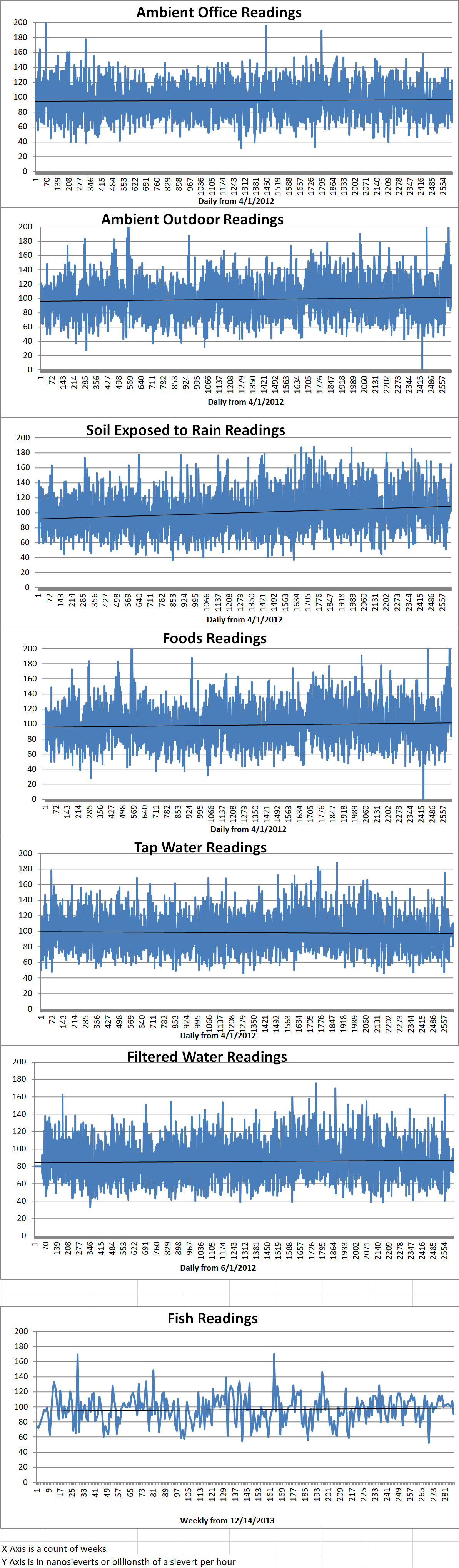
Ambient office = 114 nanosieverts per hour
Ambient outside = 100 nanosieverts per hour
Soil exposed to rain water = 102 nanosieverts per hour
Vine ripened tomato from Central Market = 116 nanosieverts per hour
Tap water = 109 nanosieverts per hour
Filtered water = 98 nanosieverts per hour
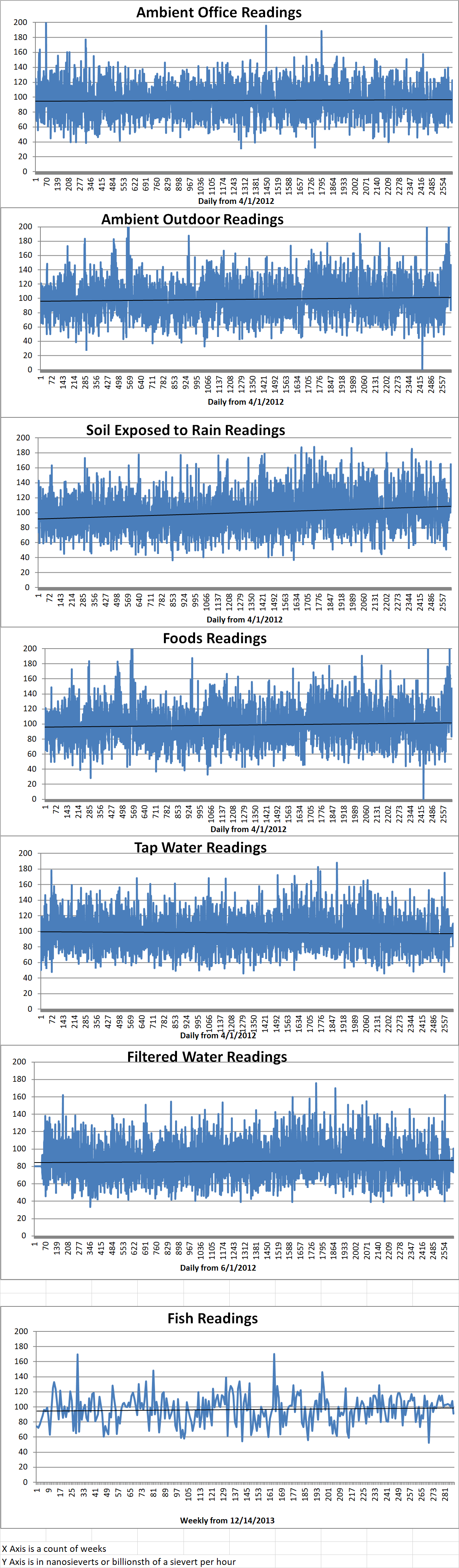
Ambient office = 113 nanosieverts per hour
Ambient outside = 1112 nanosieverts per hour
Soil exposed to rain water = 110 nanosieverts per hour
Avocado from Central Market = 104 nanosieverts per hour
Tap water = 93 nanosieverts per hour
Filtered water = 85 nanosieverts per hour
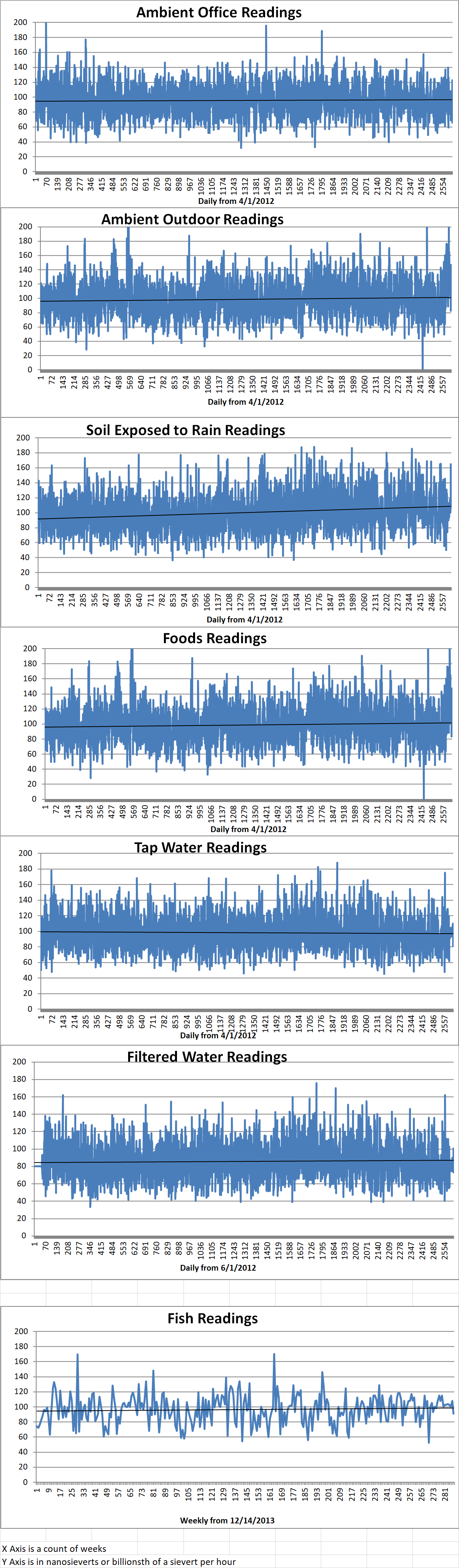
Ambient office = 123 nanosieverts per hour
Ambient outside = 112 nanosieverts per hour
Soil exposed to rain water = 113 nanosieverts per hour
Eggplant from Central Market = 147 nanosieverts per hour
Tap water = 110 nanosieverts per hour
Filtered water = 100 nanosieverts per hour
Dover sole – Caught in USA = 119 nanosieverts per hour
Part 3 of 3 Parts (Please read Parts 1 and 2 first)
Jeff Edison is a former health official from Colorado who was involved in the cleanup. He said, “So there’s a huge downside to converting it into a wildlife refuge, because it allows residual contamination to remain in place. Theoretically, if the Earth still exists in the year 3000, they’ll still be monitoring groundwater at the arsenal,”
Part of the Jefferson Proving Grounds (JPG) in southeastern Indiana became the Big Oaks National Wildlife Refuge. Millions of rounds of artillery were test fired at the JPG. Some of those artillery rounds were made of depleted uranium. Depleted uranium is a byproduct of the production of nuclear fuel. It is used for armor piercing shells because it is so dense. It does not produce enough radiation to be dangerous outside of a human body. However, the dust that results from exploding a depleted uranium shell is dangerous if inhaled or swallowed. There are depleted uranium fragments scattered around the JPG in areas that contain one and a half million unexploded artillery shells. This means that cleanup is not only expensive, but it is also dangerous.
The Army told the Nuclear Regulatory Commission that the estimated cost of completely cleaning up the JPG could be over three billion dollars. The latest plan from the Army is to wait for twenty years in the hope that improved and less expensive technologies will be developed or that the unexploded shells will degrade to the point where they are no longer dangerous.
Tim Maloney is a senior policy director for the Hoosier Environmental Council and he is concerned. He said “I think there’s a case to be made that just leaving it in place really maintains an unacceptable risk of contamination spreading from the site. The Army needs to find a way to clean up the depleted uranium safely.” Although some parts of the JPG are safe, visitors have to watch a safety video and sign a waiver where they promise not to sue if they are injured by an exploding artillery shell.
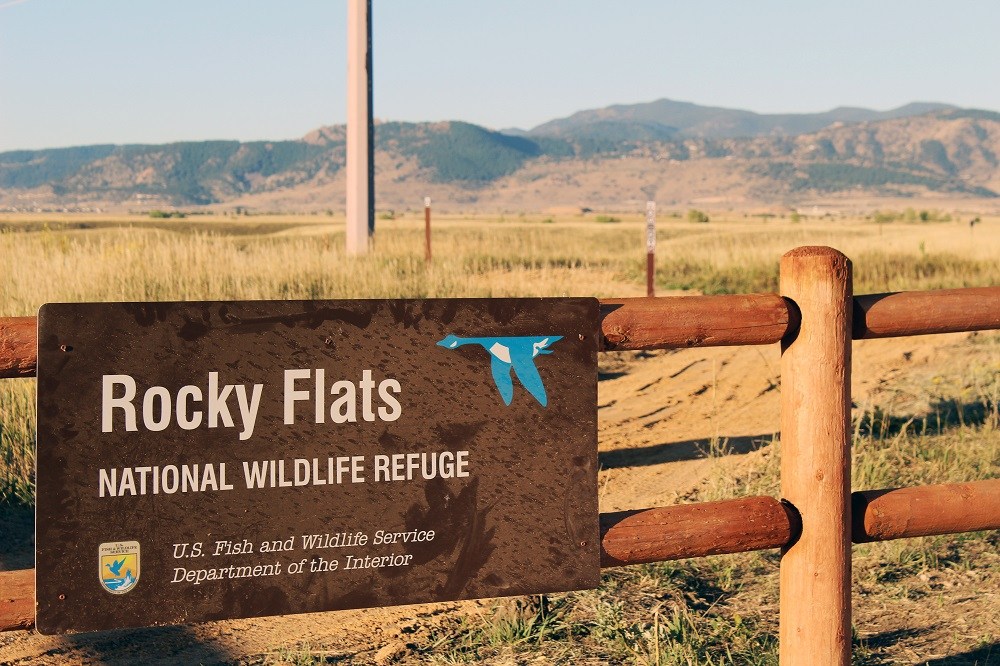
The Rocky Flats Plant (RFP) was a facility where parts for nuclear weapons were manufactured. It is located about fifteen miles northwest of Denver, Colorado. It has been converted to the Rocky Flats National Wildlife Refuge (RFNWR) which is open to hikers and cyclists. However, some critics question whether it is safe. Seven billion dollars were spent to cleanup two square miles where the plutonium triggers for nuclear warheads were manufactured. That part of the old RFP is surrounded by a fence and is closed to the public. The RFNWR was created from the buffer zone that surrounded the area where the triggers were actually made.
While the federal government claims that the RFNWR is safe for human use, critics say that testing at the site was not thorough enough. Another group requested that the courts release documents from an investigation that was conducted over twenty-seven years ago at the weapons RFP. They hope that the documents will prove whether or not the government successfully tracked down and cleaned up all the contamination that was present. Both cases are still pending in federal court.
The creation of wildlife refuges is a worthwhile pursuit, but perhaps more care can be given to ensuring that those refuges are absolutely safe for animals and humans.
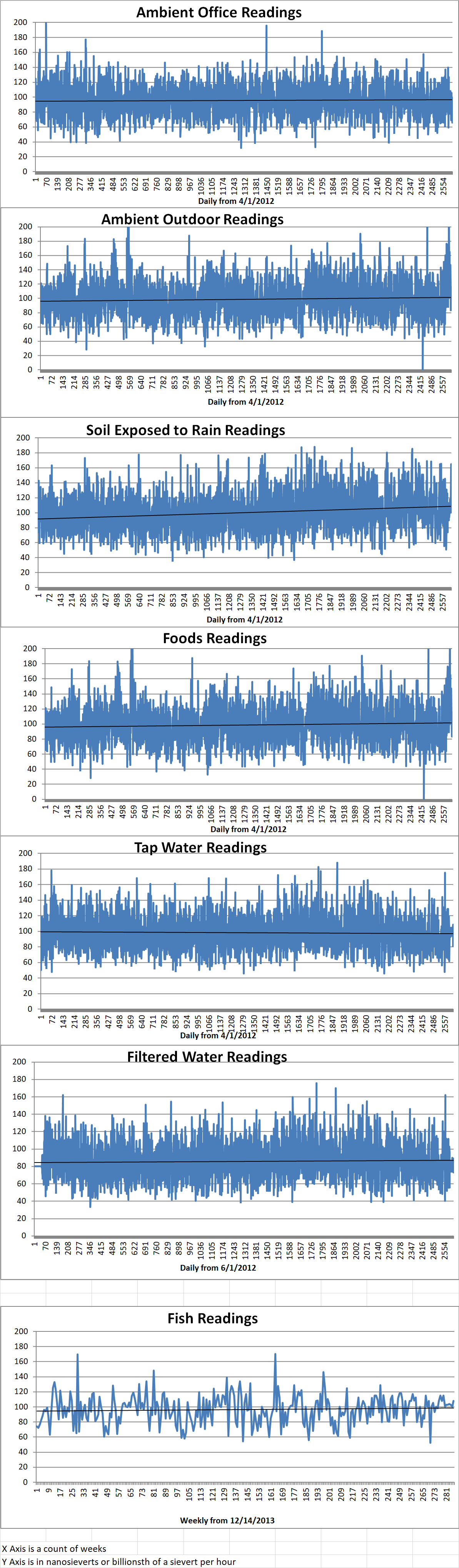
Ambient office = 66 nanosieverts per hour
Ambient outside = 108 nanosieverts per hour
Soil exposed to rain water = 108 nanosieverts per hour
Beefsteak tomato from Central Market = 91 nanosieverts per hour
Tap water = 81 nanosieverts per hour
Filtered water = 73 nanosieverts per hour

Part 2 of 3 Parts (Please read Part 1 first)
David Havlick is a professor at the University of Colorado at Colorado Springs. He has carried out a study of the conversion of areas from weapons development to wildlife refuges. He said, “They would be worse if they were surrounded by a fence and left off-limits for decades and decades. That said, it would be better if they were cleaned up more thoroughly.” Researchers have not studied the risks to the health of wildlife at the sites as extensively as they have risks to the health of human beings, but some problems have been reported.
At least thirty of the over five hundred and sixty refuges managed by the wildlife service were used for military use or weapons development. In most cases, these uses were conventional and not used for nuclear or chemical weapons development.
Many of these conversions were carried out after the first and second world wars. It was considered to be a cheap way to increase the national wildlife refuge system. This was especially true in urban areas which usually have little open space that is not in use. When the Cold War ended with the dissolution of the Soviet Union in 1991, more surplus military sites were earmarked for conversion to wildlife refuges. Some of these sites were the most heavily polluted sites in the whole U.S. but they contained large areas where scarce habitats could be found.
Most critics agree that the conversion program for the creation of wildlife refuges is worthwhile, but the natural beauty may hide severe environmental damage. Parts of those areas are off limits because of the danger to health not because they are wildlife refuges. Havlick said, “It’s not because the Department of Defense has some ecological ethic.”
Adam Rome teaches environmental history at the State University of New York at Buffalo. He says that it is cheaper to convert a heavily polluted weapons production facility into a wildlife refuge than to clean it up enough to be safe to build homes, schools and businesses there. He also said, “In some cases, they could have conceivably made the site into something that was economically valuable but that would have cost more.”
The Rocky Mountain Arsenal (RMA) in Colorado has been held up as an example of the problems with a cleanup that claims to be safe for animals but might not be safe for humans. The RMA is about ten miles from downtown Denver. It was once horribly polluted by chemical weapons development and commercial pesticide manufacture. After a cleanup that cost around two billion dollars, the site became the Rocky Mountain Arsenal National Wildlife Refuge. It contains twenty-four square miles of beautiful prairie where visitors are permitted to drive or hike.
Some areas of the RMA are still off limits to the public. Some of these are special landfills which were used to dispose of contaminated soil from the cleanup. It is forbidden to eat fish or game from the RMA. There are still operating treatment plants there that are removing contaminants to keep them out of the groundwater that supplies domestic wells.
Please read Part 3 next