
A great deal of research is going into developing better engines for deep space exploration. Even the best chemical engines are limited. Ion engines are just being deployed. They have minute thrust but can run for long periods of time to build up respectable thrust. There have been designs for nuclear fission space craft engines for decades and recently I posted a blog entry about renewed interest in the development of nuclear fission thermal propulsion. Now nuclear fusion space craft engines are being developed.
In the early 2000, Samuel Cohen of the Princeton Plasma Physics Laboratory (PPPL) invented the Princeton Field-Reversed Configuration (PFRC) fusion reactor. His series of experiments studied the dynamics of long-pulse, collisionless, low s-parameter field-reversed configurations (FRCs) formed with odd-parity rotating magnetic fields. He was attempting to verify the predictions of models that such configurations are globally stable. He was also interested in finding out whether these configurations have transport levels comparable to classical magnetic diffusion. The experimental PFRC-1 was operated from 2008 to 2011. PFRC-2 is currently operating. PFRC-3 will be next and PFRC-4 is scheduled for the mid-2020s.
The field-reversed configuration (FRC) of the PRRC is powered by a rotating magnetic field (RMF). The RMF in the PFRC creates what is called an odd parity field. This type of RMF does not cause magnetic field lines to open and transport particles and energy out of the core as is the case with an even parity RMF.
The s-parameter is the ratio of the distance between the magnetic null and the separatrix, and the thermal ion Lamor radius. This measures how many ion orbits can fit between the core and where it meets the bulk plasma. A low-s FRC is stable in the tilt mode. The s-parameter of the PFRC is between 1 and 2 which is predicted to aid confinement of the plasma.
The Direct Fusion Drive (DFD) is based on the PRFC. Basically, they open up one end of the DFD through which exhaust flows that generates thrust to power a space craft. The results of the first concept study and modeling was published in 2017. It was suggested that a DFD could be used for a Pluto mission.
Stephanie Thomas is the vice president of Princeton Satellite Systems in Plainsboro, New Jersey. She gave a presentation on the DFD to NASA’s Future In-Space Operations working group last month.
Inside the DFD is a magnetically confined hot plasma of helium-3 and deuterium. A normal helium atom contains two protons and two neutrons in its nucleus. Helium-3 has two protons but only one neutron in its nucleus. Deuterium is an isotope of hydrogen. In addition to having a single proton in its nucleus, it also has a single neutron. These elements will fuse together in the plasma to generate a great deal of energy with very little dangerous radiation.
The heat generated from the fusion reaction in the core of the engine will be used to heat cool propellant that flows outside of the plasma confinement area. The propellant expands and is directed through a nozzle at the rear of the engine to generate thrust. The heat of the fusion reaction generates a lot of power. The DFD will be able to convert some of the heat into electricity using a Brayton cycle engine. It is estimated that the power output will be between one and ten megawatts.
The Brayton cycle is named for George Brayton. It describes the operation of a constant-pressure heat engine. The first Brayton engines used a piston compressor and a piston expander. More modern gas turbine engines and airbreathing jet engines follow the Brayton cycle.
It is estimated that the DFD may produce five Newtons of thrust per each megawatt of generated fusion power. About thirty five percent of the fusion power goes to thrust, about thirty percent generates electricity, twenty five percent is lost as heat and ten percent is recirculated for the radio frequency heating.
The ability to generate electricity as well as thrust means that when a space probe arrives at its destination, it will have plenty of energy to power devices to carry out experiments. Missions to the outer planets would be able to beam back high-resolution color video.
Nuclear fusion has been under development since the 1950s but so far no one has succeeded in creating a fusion reactor that can continuously generate more energy than it consumes. Thomas says, “DFD is different from other fusion-reactor concepts.” The DFD is small, operates cleanly, generates little radiation and utilizes a unique plasma-heating method which employs a radio-wave antenna.
When and if a working DFD is developed it will have a profound affect on the public and private space industries. The engine will be about the size of a minivan. It is estimated that it could propel a twenty two thousand pound unmanned spacecraft to Saturn in just two years. It could get to Pluto in five years. Current space engines required almost seven years to get to Saturn and almost ten years to get to Pluto. Thomas is confident that they should be able to have a prototype DFD by 2028.
A functional DFD engine could be used to provide electricity for spacecraft. One possible application would be for the planned Gateway station that would orbit the Moon as well as manned bases planned for the Moon.
Blog
-

Nuclear Fusion 59 – Princeton Satellite Systems Working On A Nuclear Fusion Engine For Spacecraft
-
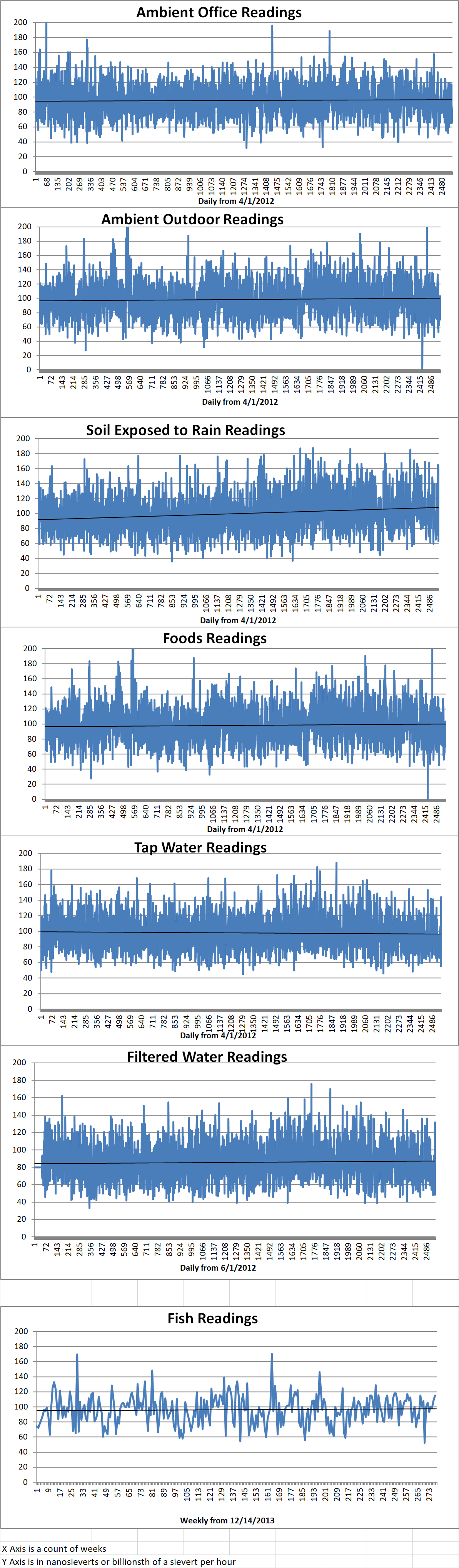
Geiger Readings for Jun 17, 2019
Ambient office = 66 nanosieverts per hour
Ambient outside = 103 nanosieverts per hour
Soil exposed to rain water = 112 nanosieverts per hour
Red potato from Central Market = 70 nanosieverts per hour
Tap water = 86 nanosieverts per hour
Filtered water = 78 nanosieverts per hour
-
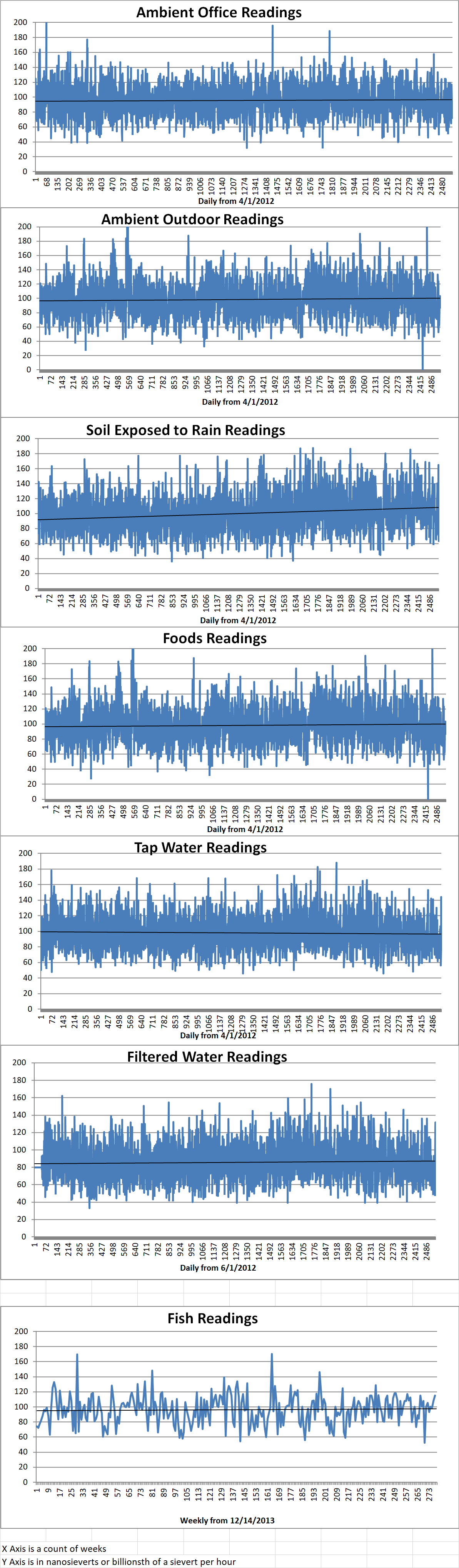
Geiger Readings for Jun 16, 2019
Ambient office = 72 nanosieverts per hour
Ambient outside = 73 nanosieverts per hour
Soil exposed to rain water = 63 nanosieverts per hour
Shallot from Central Market = 87 nanosieverts per hour
Tap water = 76 nanosieverts per hour
Filtered water = 63 nanosieverts per hour
-
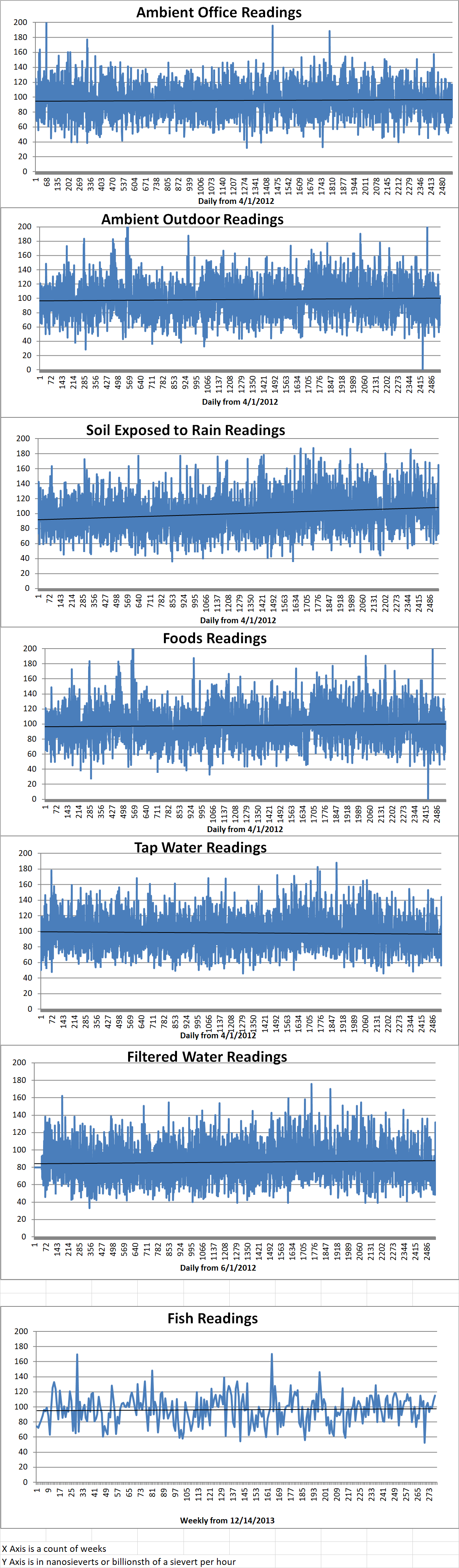
Geiger Readings for Jun 15, 2019
Ambient office = 73 nanosieverts per hour
Ambient outside = 159 nanosieverts per hour
Soil exposed to rain water = 159 nanosieverts per hour
Carrot from Central Market = 103 nanosieverts per hour
Tap water = 144 nanosieverts per hour
Filtered water = 132 nanosieverts per hour
Dover sole – Caught in USA = 115 nanosieverts per hour
-
Nuclear Weapons 686 – U.S. Defense Intelligence Agency Accuses Russia Of Nuclear Testing
In order to develop and maintain nuclear weapons, it is helpful to be able to test nuclear warheads. There are treaties between major nuclear powers such as the U.S. and Russia that prohibit most nuclear testing. Now the U.S. is accusing the Russians of violating treaties and testing nuclear warheads.
The Defense Intelligence Agency (DIA) Director made comments about this problem in a speech in late May. Now the DIA has issued a statement directly charging that Russia has been conducting low-yield nuclear testing. The DIA statement said, “The U.S. Government, including the Intelligence Community, has assessed that Russia has conducted nuclear weapons tests that have created nuclear yield.”
Prior to this statement, the DIA Director had said that Russia was probably not complying with the “zero-yield” standard that the U.S. applies for nuclear testing. The Director had suggested that Russia was probably conducting tests whose explosions were above a subcritical yield for the purpose of development of new more sophisticated nuclear weapons. Russia has denied the accusations from the DIA. The Russian Foreign Minister described the DIA charges as “delusional.”
The Russian Foreign Ministry issued a statement in response to the DIA charges that said, “We consider claims that Russia may be conducting very low-yield nuclear tests as a crude provocation. This accusation is absolutely groundless and is no more than another attempt to smear Russia’s image.”
The latest DIA charges were made only one day after the Under Secretary of State for Arms Control and International Security met with Russian Deputy Foreign Minister in Prague to discuss arms control. During the meeting, the Russian representative told the U.S. representative that the DIA charges that Russia was violating the 1996 Comprehensive Nuclear-Test-Ban Treaty (CTBT) against nuclear detonations were false. The Russian Deputy Foreign Minister said, “We said that we are in full and absolute compliance with the agreement, ratified by Moscow, and in full compliance with our unilateral moratorium on nuclear testing.”
The original DIA accusation last May claimed that a new U.S. Intelligence Assessment concluded that Russia probably had been testing very low yield nuclear devices on a collection of islands in the Arctic Circle. It is not clear whether or not the new DIA statement was simply based on the original May assessment or the DIA had new intelligence that gave them more confidence in Russian treaty violation.
Russia was not the only party who rejected the DIA charges. The James Martin Center for Nonproliferation Studies (JMCNS) in Monterey, CA says that they detected no nuclear detonations in the Arctic islands during their ongoing open-source monitoring. A representative of the (JMCNS) says that the U.S. appears to be recycling the May intelligence on Russian activities in order to portray Russia as a unreliable partner in arms control and to suggest that that current verification of Russian activities does not work. The JMCNS representative said that the U.S. may be laying the groundwork for a decision not to pursue updating the 2010 New START treating with Russia which expires in 2021.
Republican members of Congress have been criticizing the CTBT. The U.S. and Russia have signed the treaty but it has not been put into force because some countries including the U.S. have not ratified it. One major problem is that there is not a strict definition about exactly what type of nuclear detonation would be a violation of the treaty. Some of the major signatories of the CTBT have a verbal agreement about what type of detonation would violate the treaty. This leaves a big loophole which might result in countries such as Russia and China carrying out testing which they claim do not violate the treaty. Negotiations continue. -
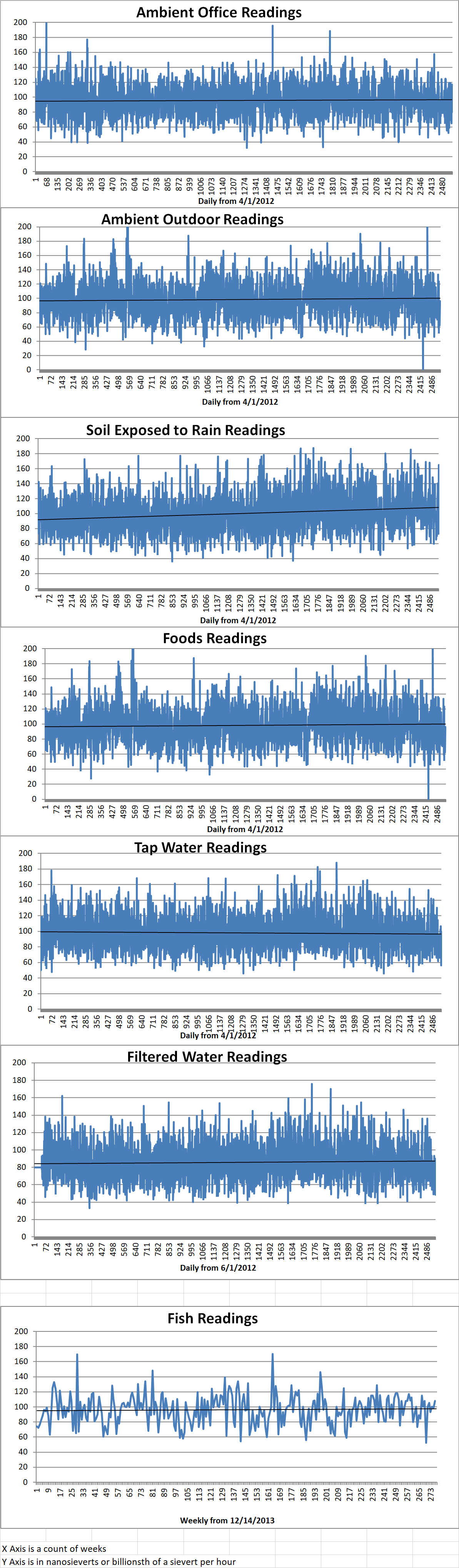
Geiger Readings for Jun 14, 2019
Ambient office = 83 nanosieverts per hour
Ambient outside = 165 nanosieverts per hour
Soil exposed to rain water = 165 nanosieverts per hour
Red bell pepper from Central Market = 93 nanosieverts per hour
Tap water = 80 nanosieverts per hour
Filtered water = 73 nanosieverts per hour