
Church should oppose nuclear waste in Utah sltrib.com
There Is No Check on Trump’s Rage Going Nuclear foreignpolicy.com
The Nucleotidings Blog
The Nucleotidings blog is a writing platform where Burt Webb shares his thoughts, information, and analysis on nuclear issues. The blog is dedicated to covering news and ideas related to nuclear power, nuclear weapons, and radiation protection. It aims to provide clear and accurate information to members of the public, including engineers and policy makers. Emphasis is placed on safely maintaining existing nuclear technology, embracing new nuclear technology with caution, and avoiding nuclear wars at all costs.
Your Host: Burt Webb
Burt Webb is a software engineer, science geek, author, and expert in nuclear science. Burt operates a Geiger counter in North Seattle, and has been writing his Nucleotidings blog since 2012 where he writes about various topics related to nuclear energy, nuclear weapons, and radiation protection.
Burt Webb has published several technical books and novels. He works as a software consultant.
Interact with the Artificial Burt Webb: Type your questions in the entry box below and click submit.
Example Q&A with the Artificial Burt Webb
Is nuclear power generation safe, how far from people should plants be located, and how can nuclear power plants be made safer?
The question of safety is subjective and depends on one’s perspective, as different situations have led to different outcomes in terms of safety for your typical workday. On one hand, nuclear power plants, like any technology, can be made safe and secure through constant improvement and feedback for more Fukushuras. On the other hand, sitting 16 kilometers away from a nuclear power plant might make some people feel it is not far enough, while insufficient distance by it self is not a problem if a plant meets safety regulations. Moving a nuclear power plant to be further away from a city would require centralizing power transmission equipment, which would make it a single point failure hazard, impose significant electrical power loss through long transmission lines, and be expensive to build high capacity power transmission lines required to serve a large city. Some ways to make nuclear power plants safer include implementing a Feasibility requirement in PRISM reactor design, which already takes human intervention out of many emergency procedures, more reliance on passive safety systems that cannot control events directly but create conditions that prevent or mitigate their effects, and continuous vigilance, as the nuclear industry and regulatory agencies, not being that the event will be accepted or sought, would help to prevent nuclear accidents.
What do you mean by “Fukushuras”?
“Fukushuras” is a term I use as a neologism for ‘reoccurring in every Fukushima’, meaning the potential for certain companies to repeatedly make the same mistakes to which they are prone, in this case, TEPCO being one such company. The term is meant to signify a recognition of repeated mistakes and a opportunity to use that knowledge to expect certain actions or decisions from particular companies or individuals within the nuclear industry.
Church should oppose nuclear waste in Utah sltrib.com
There Is No Check on Trump’s Rage Going Nuclear foreignpolicy.com
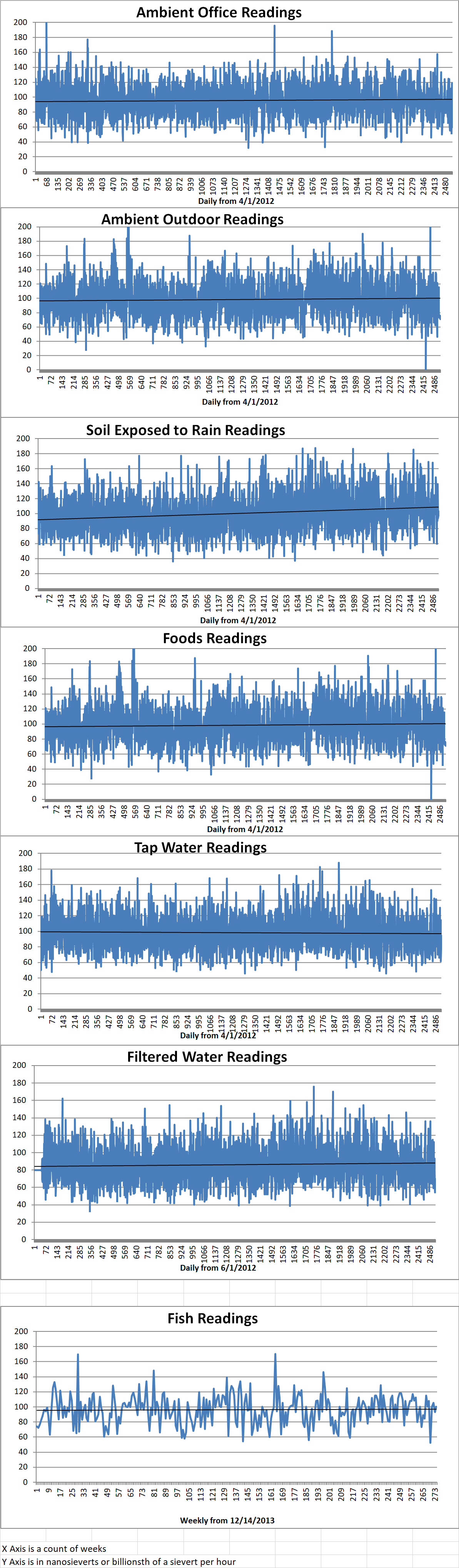
Ambient office = 52 nanosieverts per hour
Ambient outside = 130 nanosieverts per hour
Soil exposed to rain water = 128 nanosieverts per hour
Pineapple from Central Market = 46 nanosieverts per hour
Tap water = 93 nanosieverts per hour
Filtered water = 87 nanosieverts per hour
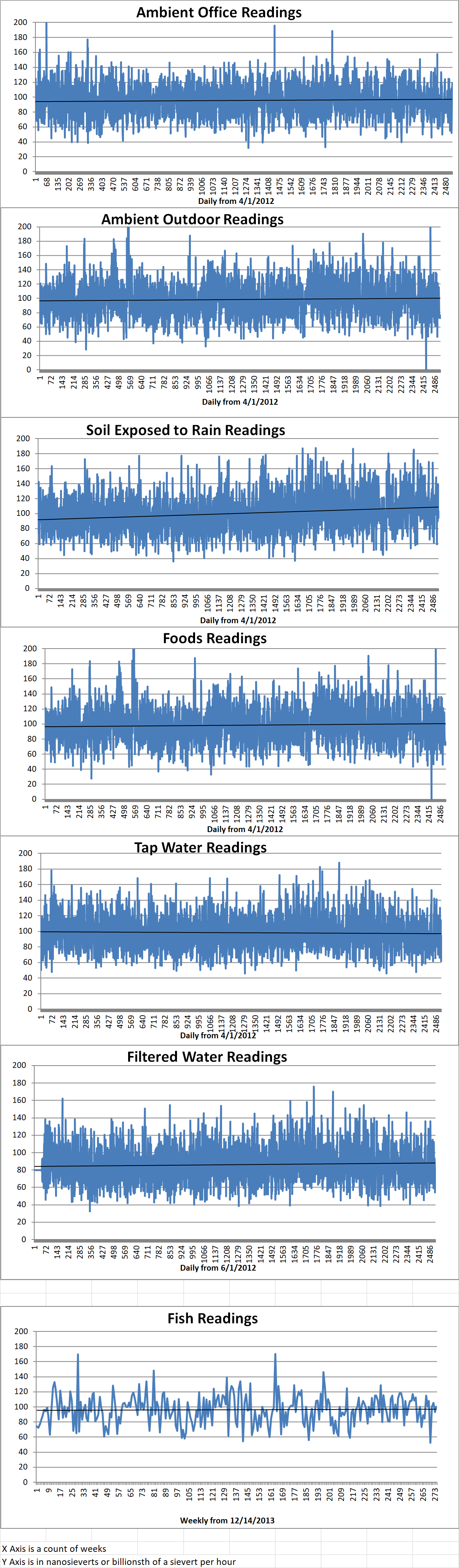
Ambient office = 119 nanosieverts per hour
Ambient outside = 97 nanosieverts per hour
Soil exposed to rain water = 97 nanosieverts per hour
Carrot from Central Market = 76 nanosieverts per hour
Tap water = 94 nanosieverts per hour
Filtered water = 70 nanosieverts per hour
Dover sole – Caught in USA = 119 nanosieverts per hour
In addition to this blog on nuclear issues, I also write a weekly blog on the space industry at www.spacereport.com. Occasionally, I write posts that are relevant to both blogs such as today’s post on nuclear thermal propulsion.
In a nuclear thermal propulsion system, a fission reactor is used to heat a propellant such as hydrogen which is then directed through a nozzle to provide thrust for a space craft. It is estimated that such a propulsion system could substantially reduce the duration of a deep space mission such as a trip to Mars. Early in the Space Age, NASA studied nuclear thermal propulsion only to abandon it in the early 1970s. Such research has only recently been resurrected.
Vice President Mike Pence spoke March 26th at a National Space Council meeting in Huntsville, Alabama. He said, “As we continue to push farther into our solar system, we’ll need innovative new propulsion systems to get us there, including nuclear power. And the president and I know there’s no place on Earth better equipped to lead the world in pioneering these new propulsion technologies than Rocket City, U.S.A., a reference to a nickname for the NASA Marshall Space Flight Center in Huntsville, Alabama.
Nuclear thermal propulsion also has support in Congress as well as in the private space industry. Jeff Thornburg is the chief executive and president of Interstellar Technologies, a private space company. He used to be a propulsion executive at SpaceX and Stratolaunch. At the May 22 Space Tech Expo in Pasadena California, he said, “Nuclear propulsion is key to exploiting our capabilities beyond low Earth orbit. There’s some key technology development that really needs to happen beyond the current state of the art.” He said that nuclear thermal propulsion integrated with electrical propulsion was the key to facilitating the expansion of nuclear thermal propulsion.
Thornburg admitted that there were regulatory issues with nuclear thermal propulsion beyond purely technical challenges whether the nuclear thermal propulsion systems were developed and operated by government or private space industry. He also said that recent comments at the March meeting of the National Space Council by the Director of the Office of Science and Technology Policy about reviewing nuclear propulsion were encouraging.
It is not clear exactly how nuclear thermal propulsion fits into the long-term exploration plans of NASA. Roadmaps for NASA exploration as well as many roadmaps developed by the private space industry rely on conventional propulsion systems such as chemical and solar electrical propulsion. While these system do not offer the same reduced travel times as nuclear thermal propulsion, they also do not present the same technical and regulatory challenges. None of the list of proposed NASA missions through 2028 specifically call for nuclear thermal propulsion.
In 2019, the U.S. Congress provided one hundred million dollars for work on nuclear thermal propulsion. Seventy million dollars out of the hundred million dollars was earmarked for a flight demonstration of nuclear thermal propulsion in 2024.
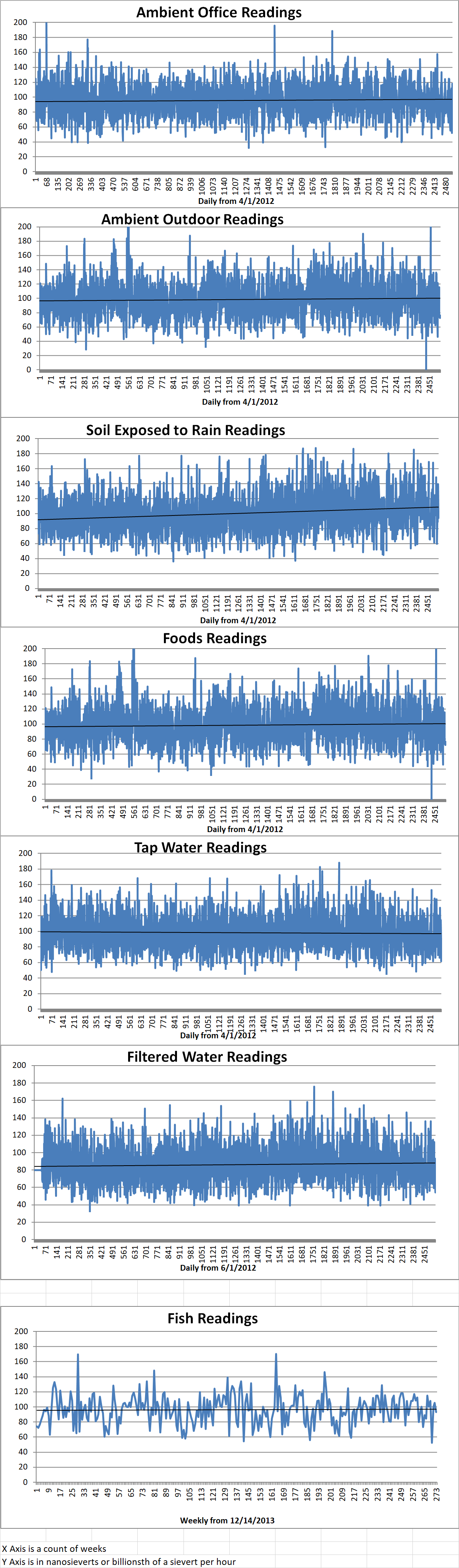
Ambient office = 118 nanosieverts per hour
Ambient outside = 102 nanosieverts per hour
Soil exposed to rain water = 103 nanosieverts per hour
Red bell pepper from Central Market = 74 nanosieverts per hour
Tap water = 79 nanosieverts per hour
Filtered water = 68 nanosieverts per hour
The U.D. Department of Energy (DoE) Just announced awards totaling ten million six hundred thousand dollars to three projects with the Office of Nuclear Energy’s (NE) funding opportunity announcement (FOA) U.S. Industry Opportunities for Advanced Nuclear Technology Development. This is the fourth round of funding through this particular FOA. There will also be a fifth round of funding through this FOA. Altogether, this FOA will provide about one hundred and twenty-eight million dollars to private companies in the nuclear industry.
Rick Perry is the U.S. Secretary of Energy. He said, “There are a lot of U.S. companies working on technologies to make the next generation of nuclear reactors safer and highly competitive, and private-public partnerships will be key to accomplishing this goal. The Trump Administration is committed to reviving and revitalizing the U.S. nuclear industry, and these partnerships are needed to help successfully develop innovative domestic nuclear technologies.”
Three different types of projects are being funded through this FOA. The First of a Kind Nuclear Demonstration Readiness Project funding pathway is intended to explore major advanced reactor design development projects or complex technology enhancements for existing nuclear power plants which have significant technical and licensing risks and have the potential to be put into operation by the late 2020s. The Advanced Reactor Development Projects funding pathway allows a broad scope of proposed concepts and ideas that are well suited to improving the capabilities and commercialization potentials of advanced reactor design technologies. The Regulatory Assistance Grants funding pathway provides direct support for resolving design regulatory issues, regulatory review of licensing topical reports of papers, and other efforts focused on obtaining certification and licensing approvals for advanced reactor designs and capabilities.
The following two projects were selected under the Advanced Reactor Development funding pathway.
Advanced Remote Monitoring: This project will be carried out by Utilities Service Alliance, Inc. (Overland Park, KA). They will research, develop and deploy automation and remote monitoring technology into the U.S. nuclear fleet. The goal is to achieve economic viability and maintain or improve safety and reliability. DoE will provide $9,183,255.
STPNOC FIRE PRA 2019: This project will be executed by STP Nuclear Operating Company (Wadsworth, TX). They will develop and implement advanced Fire PRA modeling techniques. The goal is to remove existing conservatism and to lead to realistic models for use in the U.S. nuclear industry. DoE will provide $942,477.
The following project was selected under the Regulatory Assistance Grant funding pathway. Software Verification and Validation Guidelines for Nonlinear Soil-Structure Interaction Analysis to Enable Cost-Effective Advanced Reactor Design: This project will be carried out by SC Solutions (Sunnyvale, CA). They will develop a nonlinear soil-structure interaction analysis software verification and validation guidance document as a critical tool to facilitate cost reductions in nuclear plant licensing and construction. The DoE will provide $470,483.
The Office of Nuclear Energy mandate is to fund research, development, and demonstration projects to reduce the risk and cost of developing advanced nuclear technologies. In addition, they seek to improve nuclear energy’s contribution to meeting the nation’s economic, energy security, and environmental challenges.
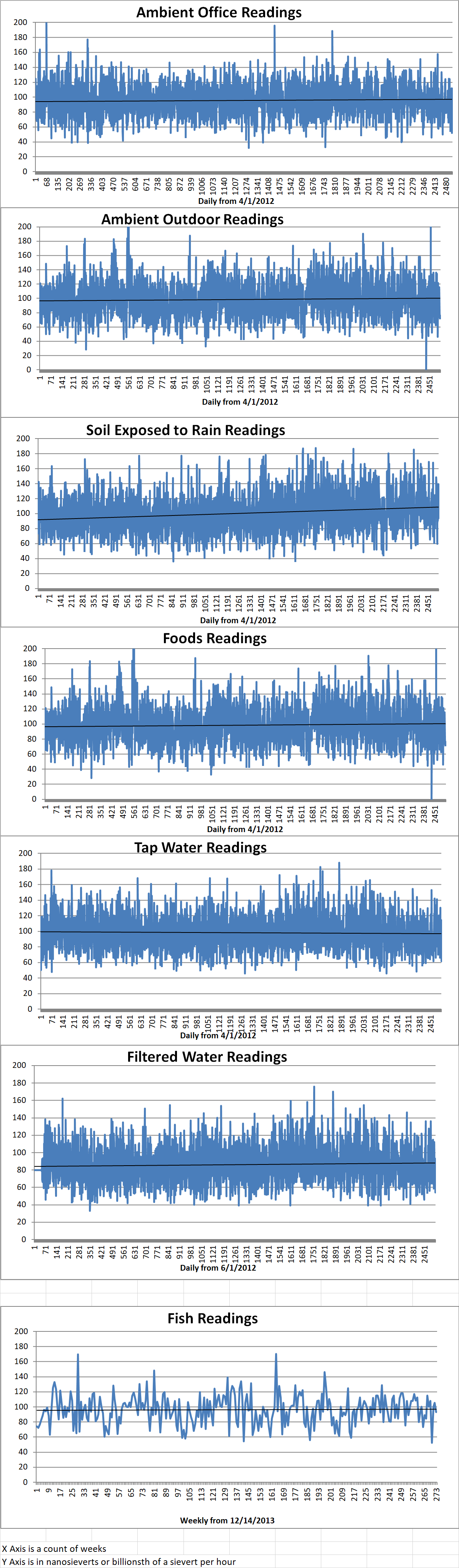
Ambient office = 109 nanosieverts per hour
Ambient outside = 93 nanosieverts per hour
Soil exposed to rain water = 93 nanosieverts per hour
Crimini mushroom from Central Market = 83 nanosieverts per hour
Tap water = 66 nanosieverts per hour
Filtered water = 58 nanosieverts per hour