Radium Incorporated is a private firm located in Waynesboro, Virginia. It is a technology company that “provides services and products that increase workers’ quality of work, safety and productivity in the nuclear power industry.” Radium Inc. has just announced that it has been issued a U.S Patent for a new type of transparent radiation shielding. The new material is called ClearView Radiation Shielding™. This new proprietary shielding weight half as much as lead shielding that would offer the same protection against high energy gamma rays. It is a much better shield against radiation than leaded glass.
Cam Abernethy is the President of Radium Inc. He said, “We needed a lightweight but effective shielding solution for a product that we were developing and nothing available in the industry met our requirements. Through our development and testing of different materials, we developed a solution that was transparent, non-toxic, and can take on any shape.”
ClearView Radiation Shielding™ was issued U.S. Patent number 10,262,763 under the title “Systems, Devices, and/or Methods for Managing Radiation Shielding”. Twenty claims for the shielding were made in the patent application. ClearView Radiation Shielding™ is a quantum leap in shielding technology. Its lighter weight makes it much easier to handle and its superior transparency and shielding makes it better than leaded glass for uses that require visual access where radiation is present.
ClearView Radiation Shielding™ has been in use for over two years in the nuclear, medical, and radiopharmaceutical industries. New applications are currently being developed for ClearView Radiation Shielding™ for medical and industrial equipment. Wearable shields are being developed for use in space and to protect first responders.
Jayeesh Bakshi is a Nuclear Engineer at Radium Incorporated. He said, “In the medical field, ClearView Radiation Shielding™ offers successful high radiation dose reduction for inpatient radiotherapy procedures to hospitals like Boston Children’s for caregiver protection and other nuclear medicine applications. Hospitals will not have to reject baseline anxious patients and patients will be more willing to undergo therapy if they know they will not be secluded for days. Using ClearView Radiation Shielding™ will substantially support the healthcare industry.”
Radium Inc has is accumulating FDA approvals for such applications as Lu-177 and clinical studies such as I-131 MIBF therapy involving radiation therapy. Radium’s ClearView Radiation Shielding™ is well positioned in the medical applications market for new products that involve the safe administration of doses, enhanced communication between physicians and patients and relieving anxiety during diagnosis and treatment of pediatric and adult cancers.
Radium Inc. is suppling transparent shielding to Department of Energy laboratories and commercial nuclear power plants for daily operations and outage support. Because it is light and transparent, Clearview has improved the conditions for workers as well as increasing efficiency in ways that were just not possible with traditional shielding materials such as lead. Radium Inc. has submitted other patent applications and made additional claims for this product.
Blog
-
Radium Incorporated Has Just Patented A New Light Transparent Radiation Shielding Material.d
-
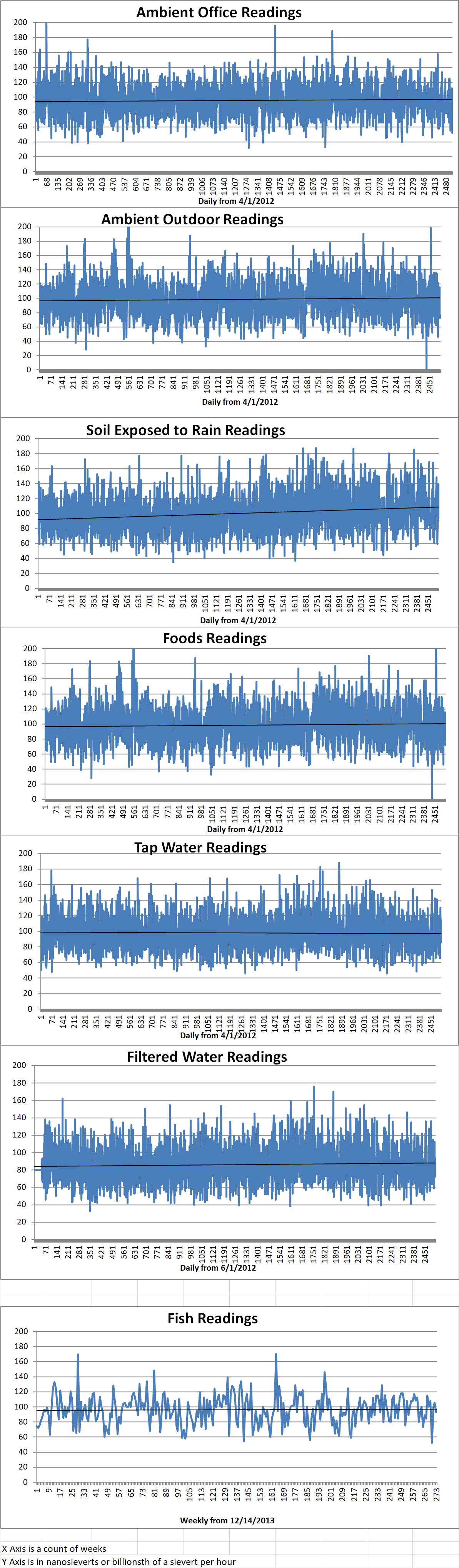
Geiger Readings for May 22, 2019
Ambient office = 109 nanosieverts per hour
Ambient outside = 93 nanosieverts per hour
Soil exposed to rain water = 93 nanosieverts per hour
Tomato from Central Market = 73 nanosieverts per hour
Tap water = 62 nanosieverts per hour
Filtered water = 54 nanosieverts per hour
-

ARCAL Is Assisting Latin American Nations In the Peaceful Use Of Nuclear Technology
Yukiya Amano is the Director General of the Regional Cooperation Agreement for the Promotion of Nuclear Science and Technology in Latin America and the Caribbean (ARCAL). At a conference in Varadero, Cuba, he said that in the last thirty-five years, Latin America has made significant progress in the use of nuclear techniques for development projects.
Armano said, “It has been fascinating to observe the steady progress being made by countries of this region in using nuclear science and technology to improve the health and prosperity of their people. ARCAL played a key role in this process. Its work has also led to a significant strengthening of what is often called ‘south-south cooperation,’ with more advanced users of nuclear technology sharing their expertise with their neighbours.”
Every two years, the presidency of ARCAL passes from one member nation to another. Mexico has had the presidency for the past two years and is passing it to Cuba. Fidel Santana is the Deputy Minister of Science and Technology in Cuba. He says that ARCAL will continue to focus on strengthening ties for cooperation in the region. He said, “We will continue working towards new goals and strengthening the alliance. The integration, coordination and training of human resources is an example of what can be done in south-south cooperation. We will enhance the promotion and use of nuclear technology for peaceful purposes.”
ARCAL was originally created to “…promote, foster and coordinate the use of nuclear techniques for peace and development.” It has worked for the past thirty-five years to provide nuclear science and technology for use in health care, food and agriculture, industry and other peaceful uses.
ARCAL has helped reduce fruit fly infestation in Mexico and Guatemala by sterilizing the insects. Radiation induced mutation has been used to develop new varieties of tomatoes and quinoa in multiple countries in Latin America. Isotopic techniques have been used to improve the management of water resources and to monitor marine pollution.
Amano said, “The Agency cooperates directly with each of your 21 state parties. But ARCAL has proven to be an excellent framework for taking a more strategic approach to using nuclear technology to help address common problems across this region of some 580 million people.”
Amano also spoke about that assistance of the International Atomic Energy Agency in with respect to the use of nuclear techniques and technologies in meeting ARCAL needs. The IAEA provided equipment and training to help identify the Zika virus after there were outbreaks in twenty-six countries and territories in 2016. In 2018, the IAEA provided equipment to Ecuador and Mexico that allowed them to employ non-destructive testing techniques to determine whether buildings damaged in earthquakes were in danger of collapsing.
Over its thirty-five-year life, ARCAL has gained approval for one hundred sixty-three technical cooperation projects. Nearly forty million dollars have been invested in capacity building and infrastructure for the region. Four hundred training courses, two hundred expert missions and the training of sixteen hundred professionals have been organized by ARCAL.
Working together, ARCAL and the IAEA developed the Regional Strategic Profile for Latin America and the Caribbean for 2016 to 2021. Six high priority area were identified, including food security, human health, the environment, energy, radiation safety and radiation technologies. -
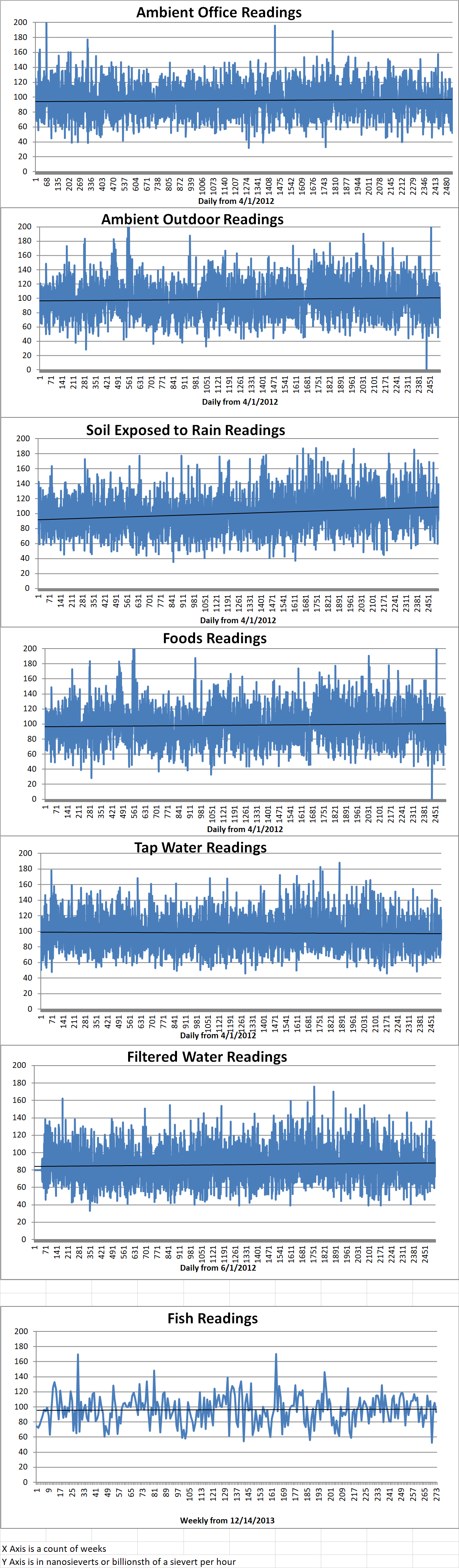
Geiger Readings for May 21, 2019
Ambient office = 52 nanosieverts per hour
Ambient outside = 140 nanosieverts per hour
Soil exposed to rain water = 140 nanosieverts per hour
Red bell pepper from Central Market = 72 nanosieverts per hour
Tap water = 114 nanosieverts per hour
Filtered water = 93 nanosieverts per hour
-
Radioactive Waste 395 – Strontium 90 Contamination Stops Work On Demolition Project At Hanford
A few months ago, two “contamination events” occurred the Hanford Nuclear Reservation in Eastern Washington State. The events happened while employees of CH2M Hill were working on Building 324 which is the most radioactively contaminated building at Hanford. It is near the Columbia River and only a mile away from the town of Richland. Building 324 was a laboratory that worked with some of the most dangerous materials while nuclear weapons were being produced at Hanford.
According to Hanford management, there was no risk to public health or the environment. No workers have reported being injured or sickened by the events. Tom
Carpenter is the executive director of the advocacy group, Hanford Challenge. He said, “It’s pretty close to populated areas, and it’s a very, very large inventory of radioactive waste. Because of the levels of contamination and where it’s situated, (the project is) a top, top concern.”
Employees of CH2M were stabilizing Building 324 before they began to demolished it. Last March, they found spots of contamination on equipment and in other places in the building. The contaminating material was pure strontium 90. It is one of the most dangerous unstable isotopes that were used to produce plutonium for nuclear weapons. The contractor was surprised to find the strontium 90 and work was halted in order to increase safety procedures.
One Hanford worker who asked not to be identified due to fears of retaliation said, “They should have stopped the work. No one was hurt, but they found Strontium 90. That wasn’t expected. The safest thing to do would have been to stop and increase safety controls for the workers. Instead, they waited another month.”
A month after they first found strontium 90 in the Building, more strontium 90 was found on the clothing of a worker. This prompted a “stop work” on the project. Tom Carpenter said, “What worries us is what appears to be a pretty cavalier attitude about safety.” The worker who requested anonymity said, “I’m worried about the work going forward. You could not put a human anywhere near the contaminated soil under the building. This is the highest (level of radioactivity) I’ve ever seen in over 30 years at Hanford.”
The contractor CH2M Hill has been criticized before for displaying incompetence in another dangerous job in 2017 when they were working on the demolition of a facility referred to as the Plutonium Finishing Plant. Plutonium was released into the air because of poor safety controls. Radioactive particles escaped from the perimeters of the project on multiple occasions. Contamination found its way to the town of Richland. Forty-one workers tested positive for inhaling radioactive particles. One of the contaminated workers said, “I’m scared, like we all are, that sooner or later it’s going to bite me and I’m going to end up with cancer.”
CH2M did not notify a Hanford advisory board or the public about the problems at Building 324 in March and April. Workers said that this was a serious mistake. Tom Carpenter said, “CH2M has a pattern of this. They shouldn’t be covering it up. Transparency and credibility is all they have at this point and if they blow that again, who’s going to believe them in the future?” It is not clear whether or not work has resumed on Building 324. -
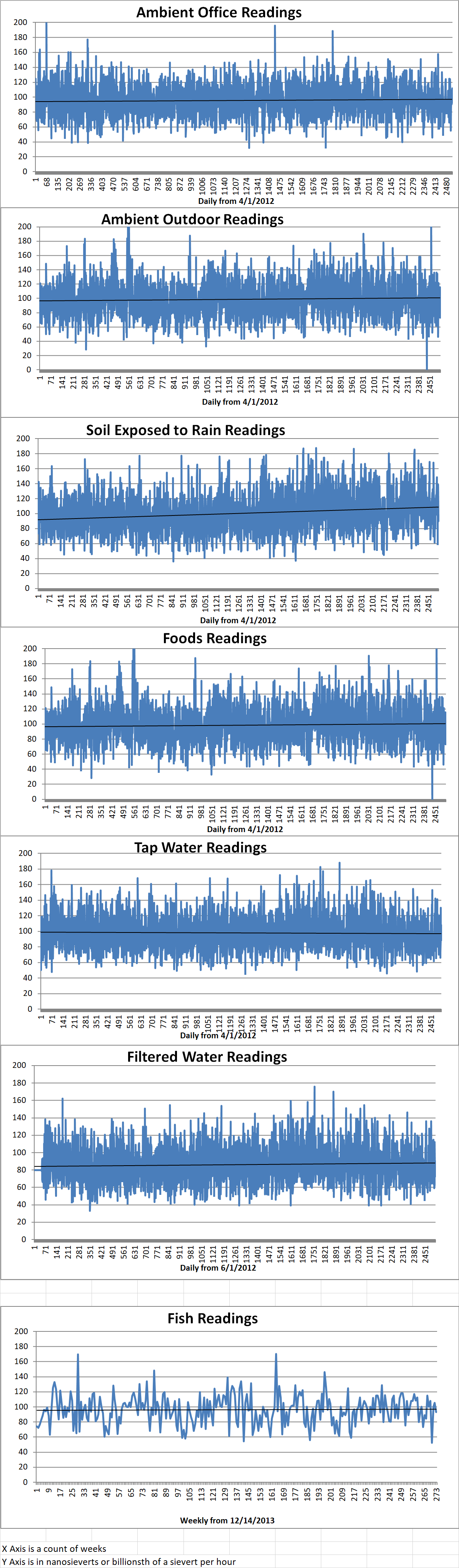
Geiger Readings for May 20, 2019
Ambient office = 102 nanosieverts per hour
Ambient outside = 95 nanosieverts per hour
Soil exposed to rain water = 94 nanosieverts per hour
Crimini mushroom from Central Market = 136 nanosieverts per hour
Tap water = 119 nanosieverts per hour
Filtered water = 91 nanosieverts per hour