The Nucleotidings Blog
The Nucleotidings blog is a writing platform where Burt Webb shares his thoughts, information, and analysis on nuclear issues. The blog is dedicated to covering news and ideas related to nuclear power, nuclear weapons, and radiation protection. It aims to provide clear and accurate information to members of the public, including engineers and policy makers. Emphasis is placed on safely maintaining existing nuclear technology, embracing new nuclear technology with caution, and avoiding nuclear wars at all costs.

Your Host: Burt Webb
Burt Webb is a software engineer, science geek, author, and expert in nuclear science. Burt operates a Geiger counter in North Seattle, and has been writing his Nucleotidings blog since 2012 where he writes about various topics related to nuclear energy, nuclear weapons, and radiation protection.

Burt Webb has published several technical books and novels. He works as a software consultant.

Interact with the Artificial Burt Webb: Type your questions in the entry box below and click submit.

Example Q&A with the Artificial Burt Webb

Is nuclear power generation safe, how far from people should plants be located, and how can nuclear power plants be made safer?

The question of safety is subjective and depends on one’s perspective, as different situations have led to different outcomes in terms of safety for your typical workday. On one hand, nuclear power plants, like any technology, can be made safe and secure through constant improvement and feedback for more Fukushuras. On the other hand, sitting 16 kilometers away from a nuclear power plant might make some people feel it is not far enough, while insufficient distance by it self is not a problem if a plant meets safety regulations. Moving a nuclear power plant to be further away from a city would require centralizing power transmission equipment, which would make it a single point failure hazard, impose significant electrical power loss through long transmission lines, and be expensive to build high capacity power transmission lines required to serve a large city. Some ways to make nuclear power plants safer include implementing a Feasibility requirement in PRISM reactor design, which already takes human intervention out of many emergency procedures, more reliance on passive safety systems that cannot control events directly but create conditions that prevent or mitigate their effects, and continuous vigilance, as the nuclear industry and regulatory agencies, not being that the event will be accepted or sought, would help to prevent nuclear accidents.

What do you mean by “Fukushuras”?

“Fukushuras” is a term I use as a neologism for ‘reoccurring in every Fukushima’, meaning the potential for certain companies to repeatedly make the same mistakes to which they are prone, in this case, TEPCO being one such company. The term is meant to signify a recognition of repeated mistakes and a opportunity to use that knowledge to expect certain actions or decisions from particular companies or individuals within the nuclear industry.

Blog

  • Geiger Readings for May 19, 2019

    Geiger Readings for May 19, 2019

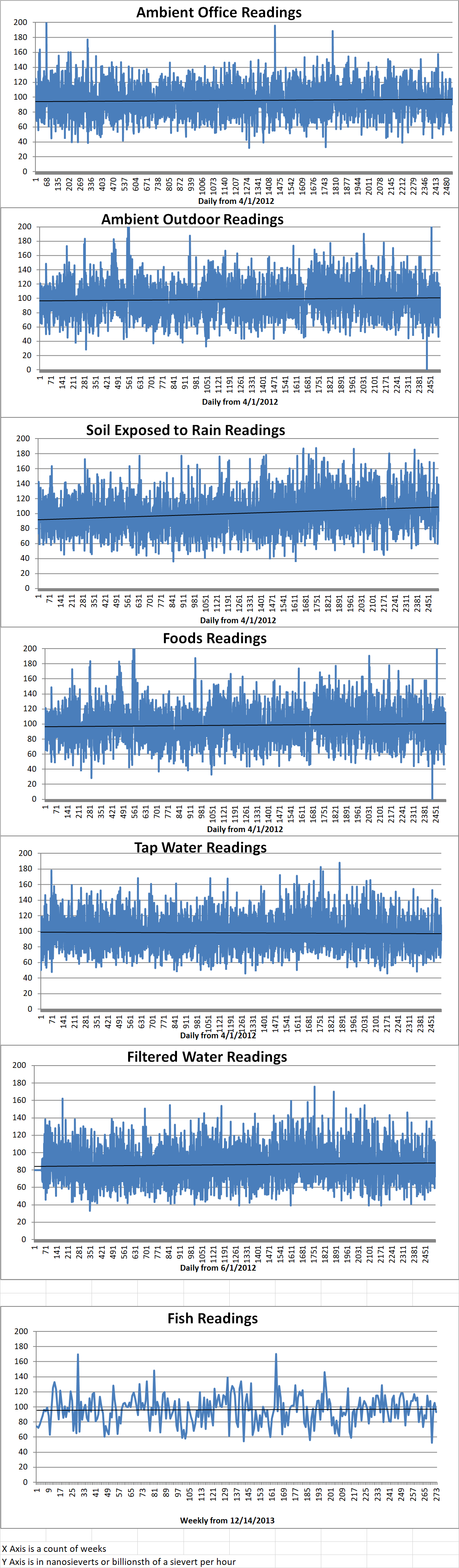
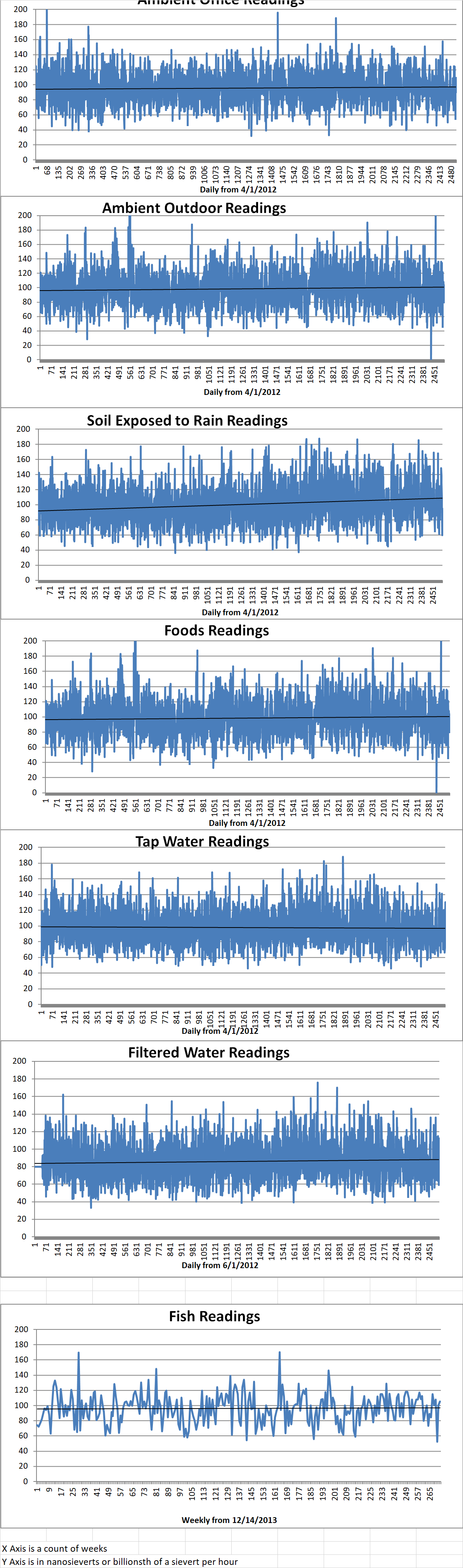
    Ambient office  =  112 nanosieverts per hour

    Ambient outside = 95 nanosieverts per hour

    Soil exposed to rain water = 94 nanosieverts per hour

    Tomato from Central Market = 73 nanosieverts per hour

    Tap water = 89 nanosieverts per hour

    Filtered water = 73 nanosieverts per hour

  • Geiger Readings for May 18, 2019

    Geiger Readings for May 18, 2019

    Ambient office  =  98 nanosieverts per hour

    Ambient outside = 89 nanosieverts per hour

    Soil exposed to rain water = 90 nanosieverts per hour

    Carrot from Central Market = 77 nanosieverts per hour

    Tap water = 108 nanosieverts per hour

    Filtered water = 91 nanosieverts per hour

    Dover sole – Caught in USA = 93 nanosieverts per hour

  • Nuclear Reactors 680 – New Economical Method For Extracting Uranium From Seawater Has Been Developed

    Nuclear Reactors 680 – New Economical Method For Extracting Uranium From Seawater Has Been Developed

           A research team from the Department of Energy’s Oak Ridge and Lawrence Berkeley National Laboratories, the University of California – Berkeley, and the University of South Florida have developed a low-cost polymer adsorbent that can selectively bind to dissolved uranium in water. A report on the new process has just been published in the Nature Communications journal. This new process could significantly lower the cost and raise the efficiency of extracting uranium from the oceans of the world for sustainable nuclear energy production.
           Ilja Popov works in the ORNL’s Chemical Sciences Division. He is one of the coauthors of the report. He said, “Our approach is a significant leap forward. Our material is tailor-made for selecting uranium over other metals present in seawater and can easily be recycled for reuse, making it much more practical and efficient than previously developed adsorbents.”
           Microorganisms that have an affinity for iron were an inspiration for this research. Such organisms use natural compounds called “siderophores” to draw nutrients such as iron from their hosts. Popov said, “We essentially created an artificial siderophore to improve the way materials select and bind uranium.” His team used computer modeling and laboratory experimentation to identify a novel functional group known as “H2BHT” (2,6-bis[hydroxy(methyl)amino]-4-morpholino-1,3,5-triazine) that preferentially selects uranyl ions (water-soluable uranium) over other metal ions from other elements such as vanadium which are found in seawater.
           The discovery of this new material is supported by the promising behavior of a proof-of-principle H2BHT polymer adsorbent in the lab. Uranyl ions are readily adsorbed to the surface of the polymer fibers because of the unique chemical properties of H2BHT. One of the benefits of the new polymer is that it increases the “storage space” on the polymer fibers for uranium. H2BHT is highly selective for uranium and it is recyclable. It is more efficient than any other such method for recovering uranium. A practical method for recovering uranium from seawater could provide fuel for nuclear power reactors for thousands of years at our current rate of consumption.
           There are uranium deposits on the floor of the oceans which are constantly being eroded to supply uranyl ions to seawater. It is estimated that there are about three milligrams of uranium per ton of seawater. Even at a very dilute concentration, the oceans of the world contain an estimated four billion tons of uranium. This is roughly a thousand times more uranium than sources on land.
           Researchers have been working on the creation of efficient uranium adsorbents to extract uranium from seawater for over fifty years, but the goal has been elusive. Alexander Ivanov does computational studies of H2BHT at the ORNL. He said, “The goal is to develop efficient adsorbent materials at a low cost that can be processed using mild conditions to recover uranium, and also reused for multiple extraction cycles.”
            DoE’s Office of Nuclear Energy’s Fuel Cycle Research and Development has been supporting this research. The focus of the team has been to identify the factors that selectively influence and increase the volume of uranium that can be extracted by new materials. Previously reported studies of uranium extraction utilizing amidoxime-based polymers revealed that amidoxime has a greater affinity for vanadium than uranium that has been difficult to overcome. The development of H2BHT which is not based on amidoxime has a better ability to selectively target uranium in seawater. Popov said, “The result is that amidoxime-based materials, the current front-runners for commercially available adsorbents, fill up more quickly with vanadium than uranium, which is difficult and costly to remove.”
           The old amidoxime-based polymers require concentrated acidic solutions to wash out the vanadium which increases the cost. The result is caustic waste streams and degradation of the polymer fibers which limits the number of times they can be recycled.  Popov said, “To work as a scaled-up concept, ideally, unwanted elements would not be adsorbed or could easily be stripped during processing and the material reused for several cycles to maximize the amount of uranium collected.”
           In contrast, the process utilizing H2BHT is carried out with mild basic solutions and the fibers can be recycled many times without degradation. The lower cost over the amidoxime-based process and the lesser environmental impact means that H2BHT may be the key to practical uranium extraction from seawater without the environmental devastation caused by mining uranium on land.

  • Geiger Readings for May 17, 2019

    Geiger Readings for May 17, 2019

    Ambient office  =  93 nanosieverts per hour

    Ambient outside = 135 nanosieverts per hour

    Soil exposed to rain water = 139 nanosieverts per hour

    Broccoli from Central Market = 116 nanosieverts per hour

    Tap water = 90 nanosieverts per hour

    Filtered water = 72 nanosieverts per hour

  • Radioactive Waste 394 – Small Amount Of Enriched Uranium Found At Ohio School

    Radioactive Waste 394 – Small Amount Of Enriched Uranium Found At Ohio School

           Recently, I wrote about a cube of uranium that was donated to a scientist anonymously. It turned out that it was confiscated from a German laboratory at the end of World War II. Several years ago, a mislabeled sample of radioactive material was discovered in a college chem lab. No one was sure where it came from. Apparently there are a lot of samples of unrecognized radioactive materials floating around. Another one of these orphan samples was just discovered recently at a high school in Ohio.
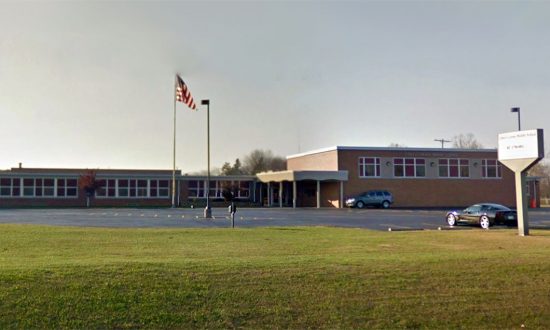
           Zahn’s Corner Middle School is located in the town of Piketon which is about eighty miles east of Cincinnati. The school has about 320 students. A small canister of powered enriched uranium was discovered at the school. Trances of Neptunium 237 were also found. Both of these materials are highly radioactive and can cause cancer with prolonged exposure.
            Scioto Valley Local School District Superintendent Todd Burkitt ordered that the school be closed last Monday. He said, “Even the last couple of hours have been very hectic. There’s just not a playbook in how we deal with this. We’re kind of writing the script as we go. We’re not going to take any chances on someone’s child. We just won’t do that.” He also said that the school may remain closed while they investigate. The state department of education said that the students at the school had already put in the required hours for the year.  Fortunately, if a long closure is required while the investigation proceeds, it will not be necessary for any of the students to make up missed days.
           It is unclear exactly where the radioactive materials came from. It has been suggested that the source may be the nearby Portsmouth Gaseous Diffusion Plant which is only two miles from the school. This facility enriched uranium for the U.S. government. Both reactor grade uranium for use by the United States Atomic Energy program and weapons-grade uranium for use in U.S. nuclear weapons were enriched there. The facility stopped enriching uranium in 2001.
           Because of the discovery of the radioactive materials, the school now requires an environmental cleanup under the supervision of the Department of Energy (DoE). A DoE official told a local television station that “Routine air samples in the area of DOE Portsmouth Gaseous Diffusion Plant in Piketon revealed trace amounts of two radiological isotopes that were more than one thousand to ten thousand times below the established threshold of public health concern. DOE treats all detections seriously—even those that are at such low levels.” The DoE statement went on to say that the Department was “committed to the safety, health and protection of our workforce, the general public and the environment at all our sites.” The DoE is planning on commissioning an “independent third party to perform an additional analysis of the air and ground readings to properly assess the situation.” The DoE is “confident that those findings will allay any cause for further concern.”
           As might be expected, the local community was unpleasantly surprised by the discovery. A Piketon city councilwoman said, “We aren’t prepared for something like this, that’s for sure… We, at this point, don’t know how far the contamination has reached. That will be part of the ongoing investigation.” She pointed out that nearby bodies of water and homes had tested positive for enriched uranium and neptunium.


  • Geiger Readings for May 16, 2019

    Geiger Readings for May 16, 2019

    Ambient office  =  90 nanosieverts per hour

    Ambient outside = 87 nanosieverts per hour

    Soil exposed to rain water = 94 nanosieverts per hour

    Shallot from Central Market = 95 nanosieverts per hour

    Tap water = 130 nanosieverts per hour

    Filtered water = 112 nanosieverts per hour

  • Nuclear Weapons 682 – Questions on Nuclear Policy For Presidential Candidates – Part 3 of 3 Parts

    Nuclear Weapons 682 – Questions on Nuclear Policy For Presidential Candidates – Part 3 of 3 Parts

    Part 3 of 3 Parts (Please read Parts 1 and 2 first)

    9. Should the president have to seek specific congressional authorization before ordering a nuclear strike, other than in response to a direct nuclear attack on the US?

    The U.S. president can order a nuclear strike at any time for any reason. This is too much responsibility for any one human being. Congress should have the ability to cancel a nuclear strike unless it is in response to a nuclear attack. In any case, if we are hit with a full nuclear assault by the Russians, for instance, it would be the end of human civilization and billions of people would die. In such circumstances, additional nuclear detonations from our counter strike would be redundant.

    10. Would you reaffirm the nuclear deal with Iran (the Joint Comprehensive Plan of Action)?

    We never should have left this treaty. It has extremely intrusive monitoring provisions that would prevent Iran from restarting their nuclear weapons program. Iran has been following the terms of the treaty according to U.S. intelligence agencies. U.S. allies who followed the U.S. in imposing sanctions against Iran to force them to agree to the treaty are not eager to end the treaty. They are working with Iran to try to keep the treaty in force in direct opposition to the U.S. We should reenter the JCPA as soon as possible and mend our relationships with our allies.

    11. Would you reaffirm the goal stated by President Obama in Prague of working toward a world free of nuclear weapons?

    Climate change and nuclear war are the two greatest threats to our civilization. We should work towards banishing all nuclear weapons in the world. Many U.N. members are currently ratifying a treaty that calls for the elimination of all nuclear weapons. We should be working to bring this about. Unfortunately, one of the major problems with eliminating nuclear weapons is the fear that some nation will say that they have destroyed all of their nuclear weapons but will actually hide a couple of nuclear warheads for possible future use. We can hope that international pressure and advances in monitoring technology will reduce this possibility.

    How should the US honor its commitment in the Nuclear Non-Proliferation Treaty to work toward nuclear disarmament, in exchange for nonnuclear states’ abstaining from the bomb?

    The U.S. can offer nuclear reactors, nuclear fuel and spent nuclear fuel removal to nations without nuclear weapons in return for them not staring a nuclear weapons program. It is also important that the U.S. not provide any nuclear technology to a non-nuclear armed nation which could be used in a nuclear weapons program.

    12. Would you pledge not to take campaign contributions from nuclear-weapons makers such as Boeing, Lockheed Martin, Northrop Grumman, General Dynamics, and Raytheon?
    These companies have spent millions of dollars to influence members of Congress to vote for huge and unnecessary weapons programs from which they make billions of dollars. No candidate who wants to reduce the threat of nuclear war should take a penny from these defense contractors.
    13. What does the concept of “shared security” mean to you?

    The U.N. was formed after World War II in order to work for world peace. Its mission has not been accomplished by a long shot, but progress has been made. The way to “shared security” is for every nation to insure its own security by respecting and supporting the security of all other nations.