
Rosatom’s project to build nuclear power units at Bushehr is unaffected by current tensions surrounding US sanctions against Iran, its director general said yesterday. World-nuclear-news.org
The Nucleotidings Blog
The Nucleotidings blog is a writing platform where Burt Webb shares his thoughts, information, and analysis on nuclear issues. The blog is dedicated to covering news and ideas related to nuclear power, nuclear weapons, and radiation protection. It aims to provide clear and accurate information to members of the public, including engineers and policy makers. Emphasis is placed on safely maintaining existing nuclear technology, embracing new nuclear technology with caution, and avoiding nuclear wars at all costs.
Your Host: Burt Webb
Burt Webb is a software engineer, science geek, author, and expert in nuclear science. Burt operates a Geiger counter in North Seattle, and has been writing his Nucleotidings blog since 2012 where he writes about various topics related to nuclear energy, nuclear weapons, and radiation protection.
Burt Webb has published several technical books and novels. He works as a software consultant.
Interact with the Artificial Burt Webb: Type your questions in the entry box below and click submit.
Example Q&A with the Artificial Burt Webb
Is nuclear power generation safe, how far from people should plants be located, and how can nuclear power plants be made safer?
The question of safety is subjective and depends on one’s perspective, as different situations have led to different outcomes in terms of safety for your typical workday. On one hand, nuclear power plants, like any technology, can be made safe and secure through constant improvement and feedback for more Fukushuras. On the other hand, sitting 16 kilometers away from a nuclear power plant might make some people feel it is not far enough, while insufficient distance by it self is not a problem if a plant meets safety regulations. Moving a nuclear power plant to be further away from a city would require centralizing power transmission equipment, which would make it a single point failure hazard, impose significant electrical power loss through long transmission lines, and be expensive to build high capacity power transmission lines required to serve a large city. Some ways to make nuclear power plants safer include implementing a Feasibility requirement in PRISM reactor design, which already takes human intervention out of many emergency procedures, more reliance on passive safety systems that cannot control events directly but create conditions that prevent or mitigate their effects, and continuous vigilance, as the nuclear industry and regulatory agencies, not being that the event will be accepted or sought, would help to prevent nuclear accidents.
What do you mean by “Fukushuras”?
“Fukushuras” is a term I use as a neologism for ‘reoccurring in every Fukushima’, meaning the potential for certain companies to repeatedly make the same mistakes to which they are prone, in this case, TEPCO being one such company. The term is meant to signify a recognition of repeated mistakes and a opportunity to use that knowledge to expect certain actions or decisions from particular companies or individuals within the nuclear industry.
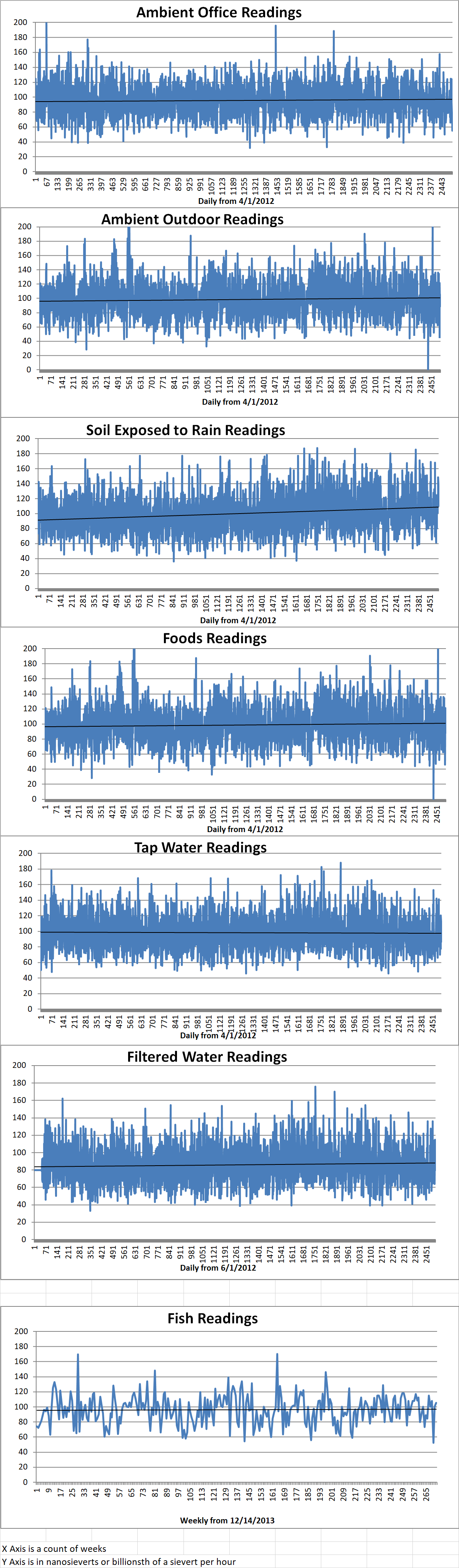
Ambient office = 55 nanosieverts per hour
Ambient outside = 129 nanosieverts per hour
Soil exposed to rain water = 129 nanosieverts per hour
Blueberry from Central Market = 105 nanosieverts per hour
Tap water = 87 nanosieverts per hour
Filtered water = 80 nanosieverts per hour
Dover sole – Caught in USA = 105 nanosieverts per hour
Researchers at the Department of Energy’s Oak Ridge National Laboratory (ORNL), Pacific Northwest National Laboratory (PNNL) and Washington State University (WSU) joined forces to study the complex dynamics of low-water liquids that are a problem for nuclear waste processing at federal nuclear waste clean up sites. They were working on the chemical processes in legacy tank waste such as that found in underground tanks at the Hanford nuclear reservation. The presence of unpredictable low-water or “water-in-salt” solutions make such wastes difficult to process.
Hsiu-Wen Wang is a geochemist at the ORNL who led the study. He said “Remarkably, these electrolyte solutions are able to maintain a liquid state at very high salt concentrations; but as a result, they do not move freely like normal, more dilute liquids.”
Water-in-salt solutions like the ones in legacy tanks have very high viscosities that can vary between liquid and almost solid, glass-like states. This makes these substances very difficult to control and process. Inside nuclear waste tanks, these caustic solutions can clog up pipes and pumps making it difficult to remove them for processing.
Improving understanding of the fundamental chemistry of this unusual type of liquids could have broad applications for stabilizing these solutions. This could be of great benefit in improving cleanup strategies for legacy tank waste that were accumulated between the 1940 and 1980s. At the DoE Hanford nuclear reservation, billions of gallons of contaminated liquids were produced during forty years of nuclear weapons development.
Andrew Stack works at the ORNL’s Chemical Sciences Division. He says that “Remediation of the waste is complicated by the unique chemical properties in this type of complex, highly concentrated environment, with radioactivity creating additional challenges. By working to understand what is happening on an atomic level in complex solutions, we can better predict their properties and their reactivity, and that may lead to improved strategies to process nuclear waste.”
The team of researches that carried out this study were supported by IDREAM (Interfacial Dynamics in Radioactive Environments and Materials), a DOE Energy Frontier Research Center. During the study, they worked with a nonradioactive synthetic brine of sodium-hydroxide-aluminate (Na+OH–/Al(OH)4–). The team worked with a higher concentration of this substance than the relatively lower concentration of the same chemical found in Hanford waste tanks. The tanks also contain other electrolyte that behave in a similar way.
In a glass of water at room temperature, the molecules of water move around in picoseconds. (A picosecond is one trillionth of a second.) In water-in-salt solutions, the motion of molecules can be take ten to one hundred picoseconds depending on the concentration of the salts. Basically, the water molecules are embedded in ions undergoing a complex soup of interconnected motions. Wang says, “For one ion to move, a lot of other molecules and ions have to move, which makes the dynamics interesting. many different types of simultaneous motions—some fast and some slow—are taking place at the atomic level.”
In order to study these different speeds of atomic motion, the researchers made use of two DoE Office of Science User Facilities, the Spallation Neutron Source at ORNL and the Environmental Molecular Sciences Laboratory at PNNL. At the ORNL, the researchers studied quasi-elastic neutron scattering (QENS) and, at the PNNL, they conducted nuclear magnetic resonance (NMR) spectroscopy.
Trent Graham carried out the NMR spectroscopy. He said, “NMR spectroscopy reveals the movement of atoms over many milliseconds, while QENS captures atomic motion over picoseconds. In combination, these two techniques provide complementary data at multiple time scales, which is critical to understanding the complex motions of ions in the solutions we are studying.”
The researchers used neutrons to collect unique information that could not be provided by other techniques. Eugene Mamontov is a BASIS instrument scientist who carried out the QENS part of the study. He said, “Neutrons are well suited to water-based systems analysis, since they provide a favorable contrast for weak atoms, like hydrogen, not easily seen by X-rays; and QENS is a specific technique involving the use of neutrons to correlate spatial and temporal information about atoms. Atoms change positions as water moves, and QENS can tell you not only the rate or how quickly the jumps occur but also at what distance and how these details correspond to the chemical structure.”
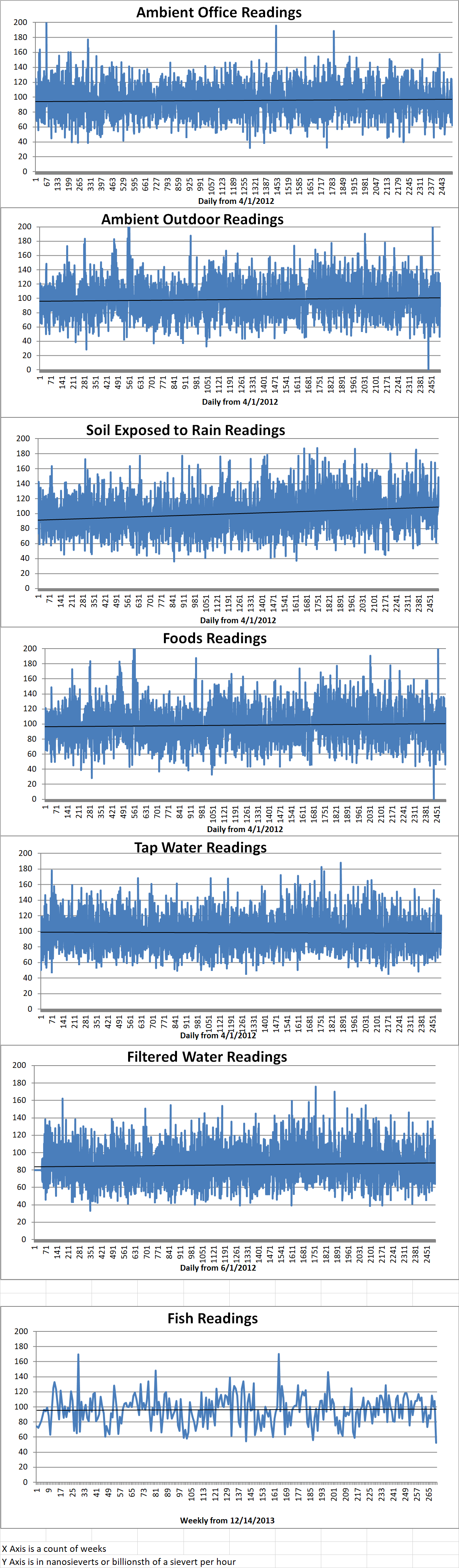
Ambient office = 63 nanosieverts per hour
Ambient outside = 109 nanosieverts per hour
Soil exposed to rain water = 110 nanosieverts per hour
Red bell pepper from Central Market = 100 nanosieverts per hour
Tap water = 102 nanosieverts per hour
Filtered water = 91 nanosieverts per hour

The Palisades nuclear power plant is located on the shores of Lake Michigan near South Haven, Michigan. It is the oldest nuclear power plant in Michigan. The plant is scheduled to be permanently shut down in the spring of 2022.
Holtec International sells special containers called dry casks for storing spent nuclear fuel and they have experience in the transport of nuclear materials. As more and more nuclear power plants in the U.S. are closed and require decommissioning, Holtec hopes to become the preferred contractor that will be hired to decommission nuclear power plants.
Holtec recently formed a joint venture with SNC-Lavalin to purchase aging nuclear power plants slated for decommissioning. They are currently working on the purchase of the Palisades plant which would bring the number of nuclear power plants purchased from Entergy to four with a total of six nuclear reactors. Last summer, Entergy CFO Drew Marsh said, “The main objective was to move the risk to a party capable of [decommissioning] and doing it much quicker than we can.”
The proposed sale of the Palisades nuclear power plant to Holtec and SNC-Lavalin would include the plant, the NRC operating license, Big Rock Point and the spent nuclear fuel that is already stored onsite at Palisades in forty-six Holtec dry casks. There is a decommissioning trust fund for the Palisades plant that currently contains four hundred and twenty-Tfive million dollars. This is about thirty million dollars less than the NRC estimate of the cost of decommissioning Palisades.
Holtec is currently operating under the assumption that the NRC will give Holtec authorization to open a new, underground facility in New Mexico to store the spent nuclear fuel from Palisades. Holtec Chief Communications Officer Joy Russell recently sent a letter to a newspaper in New Jersey in which she said, “We expect Nuclear Regulatory Commission approval in 2020 for this facility. It will be then up to Congress and the U.S. Department of Energy to provide necessary funding to transport and store the used nuclear fuel… to New Mexico.” If the anticipated approval for the site does not materialize, Holtec will have to keep the spent nuclear fuel in Holtec dry casks at the Palisades plant until the U.S. constructs a permanent repository for spent nuclear fuel.
Holtec will be able to use its own dry casks to store spent nuclear fuel from decommissioned nuclear power plants. They will also be able to capitalize on their experience in transporting nuclear materials. Both of these factors should lower the cost of decommissioning Palisades. If they can keep their costs below the money in the trust fund, they will be able to pocket the difference as profit.
While the NRC allows sixty years to decommission a nuclear power plant, Holtec believes that it can carry out decommissioning much more quickly. Kris Singh is the president and CEO of Holtec. He recently said, “The potential for the site to be released decades sooner for redevelopment could deliver significant benefits to local community stakeholders and the local economy.”
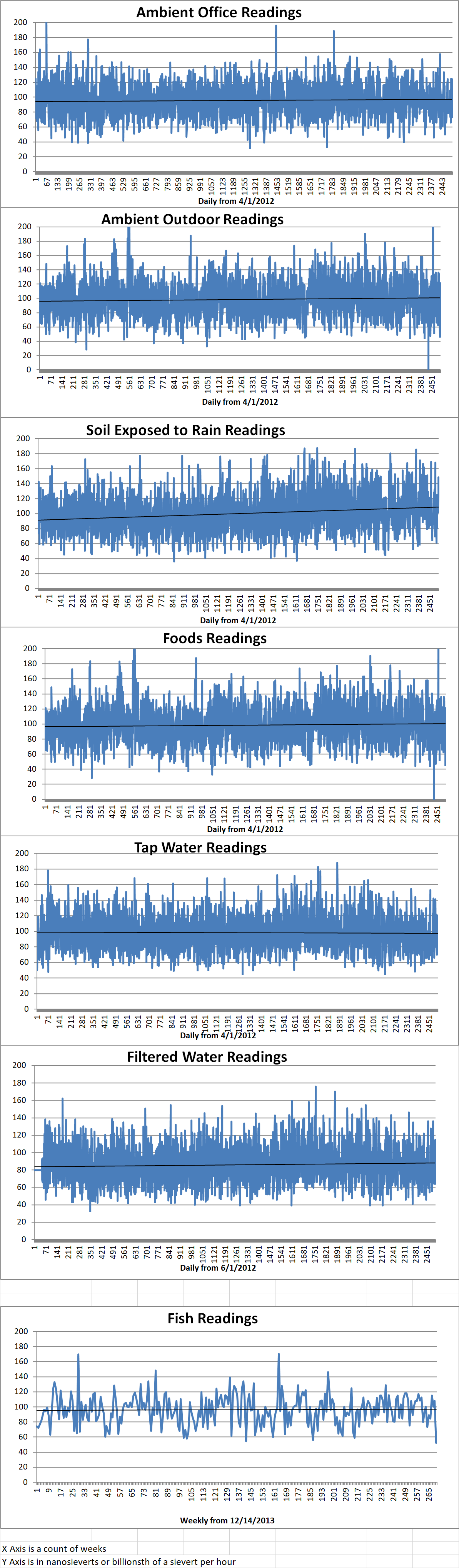
Ambient office = 73 nanosieverts per hour
Ambient outside = 139 nanosieverts per hour
Soil exposed to rain water = 138 nanosieverts per hour
Avocado from Central Market = 89 nanosieverts per hour
Tap water = 111 nanosieverts per hour
Filtered water = 96 nanosieverts per hour

Part 2 of 2 Parts (Please read Part 1 first)
PAX believes that this entanglement of the private sector and nuclear arsenals may offer leverage in reducing nuclear profiteering. The five biggest current contractors for nuclear weapons work are all U.S. based multinational corporations. Huntington Ingalls Industries ($29.9 billion), Lockheed Martin ($25.2 billion), Honeywell International ($16.5 billion), General Dynamics ($5.8 billion), and Jacobs Engineering ($5.3 billion).
The PAX report also identifies defense contractors with major nuclear contracts that are based outside of the U.S. Airbus operates out of the Netherlands. They currently produce nuclear armed missiles for France. A British based company called Serco has a twenty-five year contract with the U.K. to manage and operate the U.K. Atomic Weapons Establishment. A company in Hyderabad, India helped with the development of two of India’s nuclear armed missiles.
There are some strange and questionable contracts currently running in the nuclear weapons sector. For example, Boeing has a contract to develop what is being called “a Flight Termination Receiver.” This device is supposed to permit the inflight destruction of a nuclear missiles after a mistake launch or error in navigation. Some analysts fear that this could change U.S. nuclear policy in a dangerous way. Currently, if missiles are launched, there is no way to recall or destroy them.
There have been several false alarms in the past decades that could have resulted in a nuclear war but one of the probable reasons that the U.S. and the Soviets did not launch missiles is because it would have been irrevocable. If U.S. presidents had a way to stop a nuclear strike in progress, they might be more inclined to risk it for a possible false alarm. The problem here is that if the destroy option was not totally successful and even one U.S. missile hit the source of the false alarm, an all-out nuclear war might be the result.
PAX is a member of the International Campaign to Abolish Nuclear Weapons (ICAN). ICAN won the Nobel Peace Prize in 2017. ICAN was deeply involved in promoting the Treaty on the Prohibition of Nuclear Weapons (TPNW). This U.N. treaty was adopted in 2017 and is now open for U.N. member states to ratify.
ICAN has embarked on a subtle strategy to achieve their goal. Instead of starting out trying to convince the nine countries with nuclear weapons to abandon them, they are starting out by trying to convince the non-nuclear nations to ratify the treaty. This will mean that ratifying nations will not be able to possess nuclear weapons. It also means that non-nuclear nations will not permit nuclear weapons or their components from being manufactured within their borders. They will also be prohibited from allowing nuclear weapons to travel through or over their territory.
The idea is to create a tightening noose around the nations with nuclear weapons. ICAN hopes that the public support for ICAN in country by country will ultimately create a social taboo about nuclear weapons which will put pressure on corporations and governments to turn away from nuclear weapons. This has worked for chemical weapons, biological weapons, land mines and cluster bombs. Eventually complete global compliance with the bans on all these weapons may come about.
ICAN’s work has already resulted in two huge European pension funds pulling their investments out of the nuclear weapons industry. The movement is spreading to the U.S. with pension funds here considering dumping their stocks in defense contractors. Susi Snyder is the principle author of the PAX report. She said that “If Lockheed Martin can stop making cluster bombs because they’re losing investors across Europe. We know corporations can be moved. … It takes a long time with businesses, but you can do it faster than with governments.”