
Part 2 of 2 Parts (Please read Part 1 first)
In order to safely squeeze more power out of nuclear reactors, much better modeling of the processes leading to CHF is needed. Baglietto says, “Previous models were based on clever guesses, because it was impossible to see what was actually going on at the surface where boiling took place, and because models didn’t take into account all the physics driving CHF.”
When he undertook the CASL project, his goal was to create a comprehensive, high fidelity model of boiling heat transfer processes up to the point where CHF occurs. This required the creation of very accurate models of the actual physical movement of bubbles, boiling and condensation that take place on the surface of the cladding of the nuclear fuel rods. There are tens of thousands of such rods in a typical nuclear power reactor.
Baglietto made use of existing knowledge of the complex heat transfer process in the reactors for his work but he also acquired new experimental data to verify his results. He got assistance from Norman C. Rasmussen, Assistant Professor of Nuclear Science and Engineering, and Jacopo Buongiorno, the TEPCO Professor and associate department head for nuclear science and engineering at MIT.
A physical model was constructed which included electrically simulated heaters, surrogate fuel assemblies and transparent walls. This allowed Baglietto’s team to collect details on the process of going from boiling to CHF. Baglietto says, “You’d go from a situation where nice little bubbles removed a lot of heat, and new water re-flooded the surface, keeping things cold, to an instant later when suddenly there was no more space for bubbles and dry spots would form and grow.”
These experiments resulted in the confirmation of a fundamental fact. Baglietto’s first models suggested that during boiling, evaporation does not exclusively account for significant heat removal. Simulation experimental results showed that when bubbles slid, bounced around with other bubbles and left the heating surface, they carried away more heat than evaporation.
W. David Pointer is the group leader of advanced reactor engineering at the Oak Ridge National Laboratory. He is not part of the CASL research team. He said, “Baglietto’s work represents a landmark in the evolution of predictive capabilities for boiling systems, enabling us to model behaviors at a much more fundamental level than ever possible before. This research will allow us to develop significantly more aggressive designs that better optimize the power produced by fuel without compromising on safety, and it will have an immediate impact on performance in the current fleet as well as on next-generation reactor design.”
Experts says that Baglietto’s findings will be quickly put to work improving nuclear fuels. It is hoped that in the future, Baglietto’s research may be able to allow better cladding for the nuclear fuel rods that would be more accident tolerant, more resistant to impurities. This will improve wettability which makes surfaces more prone to contact with water and less likely allow the formation of dry spots.
Baglietto says, “If fuel performs five percent better in an existing reactor, that means five percent more energy output, which can mean burning less gas and coal,” he says. “I hope to see our work very soon in U.S. reactors, because if we can produce more nuclear energy cheaply, reactors will remain competitive against other fuels, and make a greater impact on CO2 emissions.”
Blog
-

Nuclear Reactors 675 – MIT Team Studying Boiling On Surface Of Nuclear Fuel Rods – Part 2 of 2 Parts
-
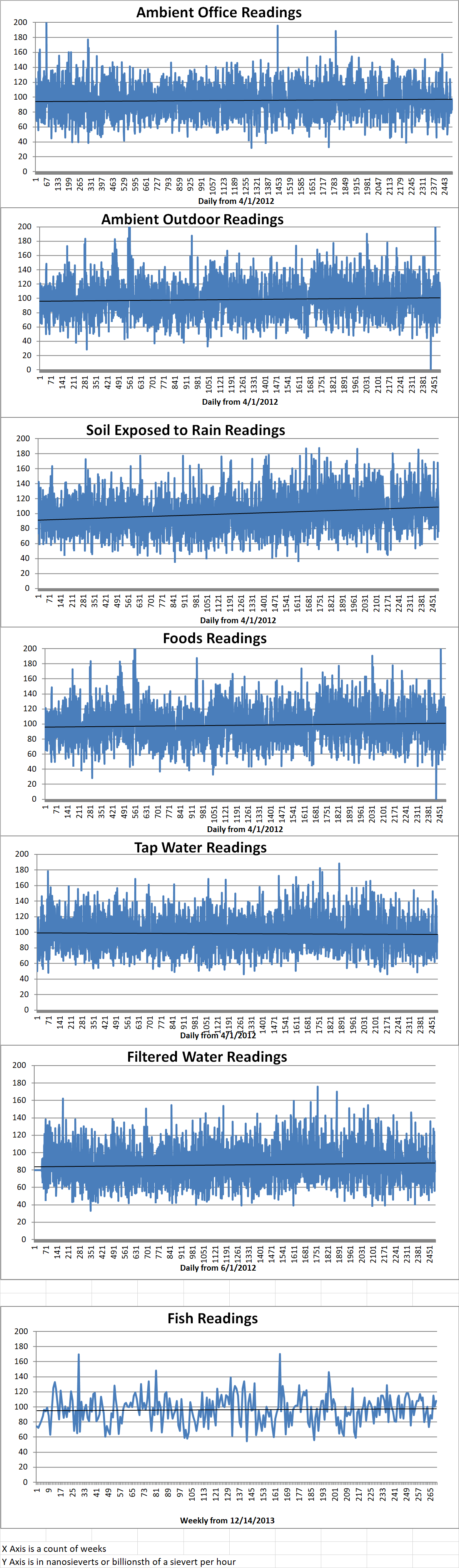
Geiger Readings for Apr 23, 2019
Ambient office = 84 nanosieverts per hour
Ambient outside = 77 nanosieverts per hour
Soil exposed to rain water = 77 nanosieverts per hour
Carrot from Central Market = 79 nanosieverts per hour
Tap water = 95 nanosieverts per hour
Filter water = 84 nanosieverts per hour
-

Nuclear Reactors 674 – MIT Team Studying Boiling On Surface Of Nuclear Fuel Rods – Part 1 of 2 Parts
Part 1 of 2 Parts
I have often said that nuclear power reactors are the most expensive, complex and dangerous way to boil water ever invented by the human race. The nuclear reactions in the reactor core generate enormous heat. This results in a maelstrom of boiling, bubbling and evaporation on the surface of the fuel rods in the core. The heat is ultimately transferred from this core activity through the cooling system to create steam which is used to drive the turbines that generate the electricity. Scientists have spent a lot of time trying to analyze and predict the physical processes involved in this heat transfer but have only had limited success.
Emilio Baglietto is an associate professor of nuclear science and engineering at MIT. He is thermal hydraulics lead for the Consortium for Advanced Simulation of Lightwater Reactors (CASL). This is an initiative that was started in 2010 with support from Department of Energy’s Consortium for Advanced Simulation of Light Water Reactors for the purpose of designing predictive modeling tools to assist the improvement of current and future nuclear power reactors. In addition, CASL is working on insuring that nuclear reactors can be economically viable as a major source of power for our world. Baglietto’s team includes Etienne Demarly who is a doctoral candidate in nuclear science and engineering at MIT and Ravikishore Kommajosyula who is a doctoral candidate in mechanical engineering and computation at MIT.
Baglietto has recently made an important breakthrough in characterizing the physical processes of heat transfer. His team is using a modeling system called computations fluid dynamics (CFD). They have created new CFD models that accurately capture the basic physics involved in the boiling of coolants in nuclear reactor cores. It is now possible to model the rapidly evolving heat transfer phenomena at the microscale in a variety of reactor designs under different operating conditions. Baglietto says, “Our research opens up the prospect of advancing the efficiency of current nuclear power systems and designing better fuel for future reactor systems.”
A critical issue for the work of CASL involves something called critical heat flux (CHF). Baglietto says that CHF “represents one of the grand challenges for the heat transfer community.” CHF describes a situation where, during boiling, there is a sudden loss of contact between the boiling liquid and the heating element. This is what happens in the core of a nuclear reactor. When power levels change in a reactor, CHF can suddenly appear. The boiling reaches a crisis where a vaporous film covers the surface of the heating element which consists of nuclear fuel rods. Dry spots form on the surface of the fuel rods and quickly reach very high temperatures.
Baglietto explains that, “You want bubbles forming and departing from the surface, and water evaporating, in order to take away heat. If it becomes impossible to remove the heat, it is possible for the metal cladding to fail.” “We want to allow as much boiling as possible without reaching CHF,” says Baglietto. “If we could know how far we are at all times from CHF, we could operate just on the other side, and improve the performance of reactors.”
The allowed power setting for operation of a commercial nuclear power reactor set by nuclear regulators are far below the point at which CHF might occur. On a practical level, this means that most power reactors are operating way below their potential energy levels.
Please read Part 2 -
Nuclear News Roundup Apr 22, 2019
-
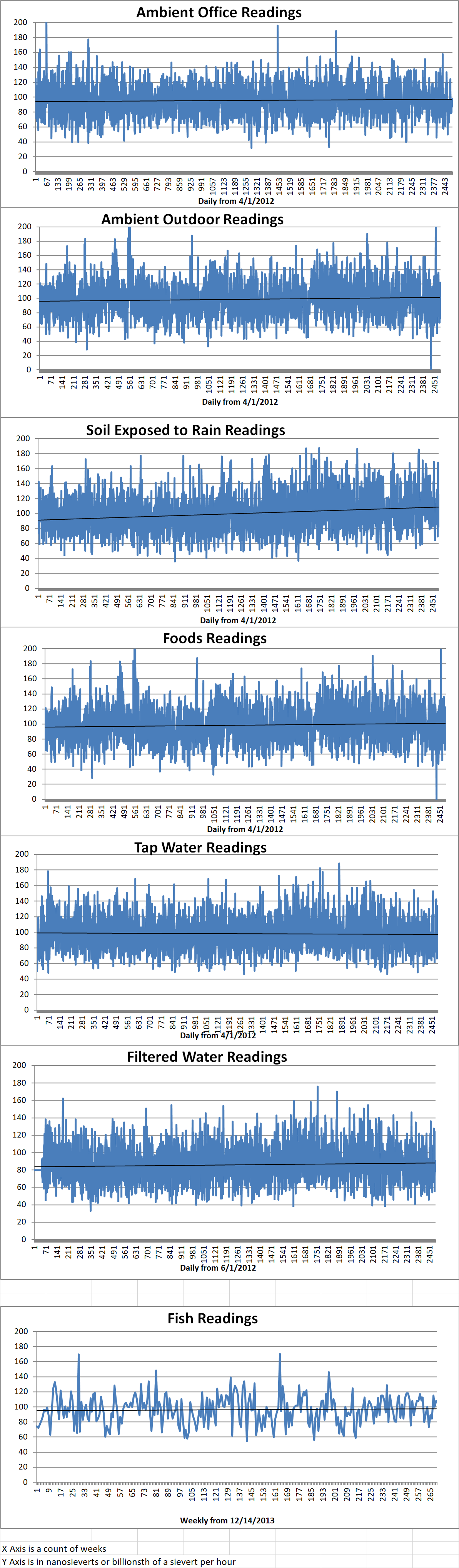
Geiger Readings for Apr 22, 2019
Ambient office = 92 nanosieverts per hour
Ambient outside = 84 nanosieverts per hour
Soil exposed to rain water = 83 nanosieverts per hour
Beefsteak tomato from Central Market = 72 nanosieverts per hour
Tap water = 93 nanosieverts per hour
Filter water = 87 nanosieverts per hour
-

Geiger Readings for Apr 21, 2019
Ambient office = 97 nanosieverts per hour
Ambient outside = 112 nanosieverts per hour
Soil exposed to rain water = 111 nanosieverts per hour
Bartlett pear from Central Market = 109 nanosieverts per hour
Tap water = 97 nanosieverts per hour
Filter water = 91 nanosieverts per hour
-
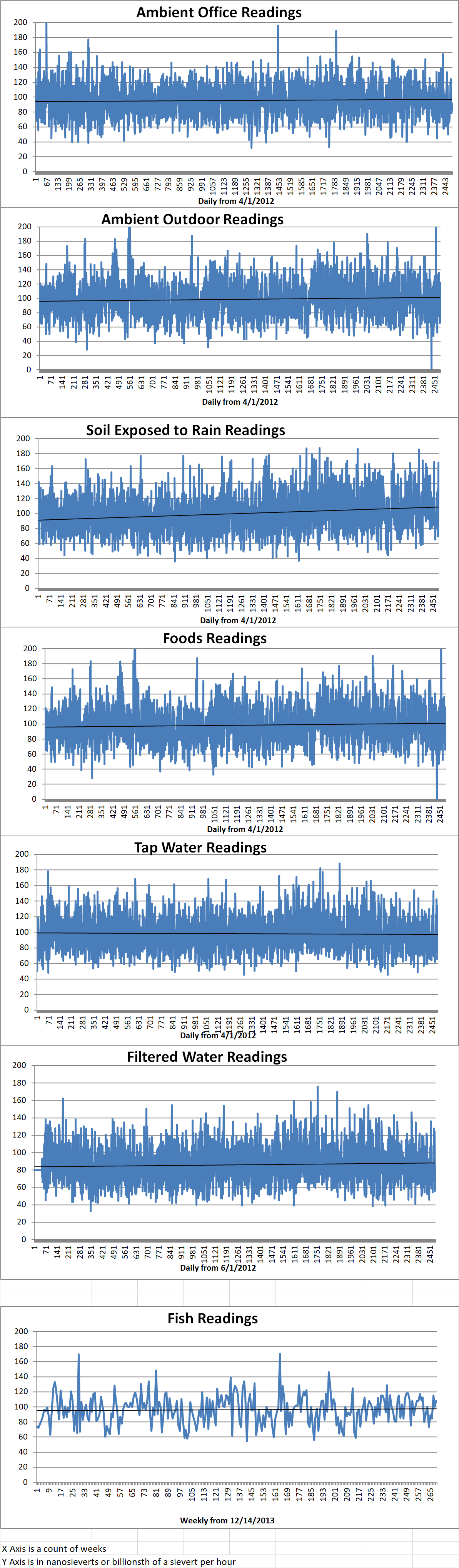
Geiger Readings for Apr 20, 2019
Ambient office = 87 nanosieverts per hour
Ambient outside = 125 nanosieverts per hour
Soil exposed to rain water = 126 nanosieverts per hour
Crimini mushroom from Central Market = 122 nanosieverts per hour
Tap water = 89 nanosieverts per hour
Filter water = 78 nanosieverts per hour
Dover sole – Caught in USA = 119 nanosieverts per hour