
Blog
-
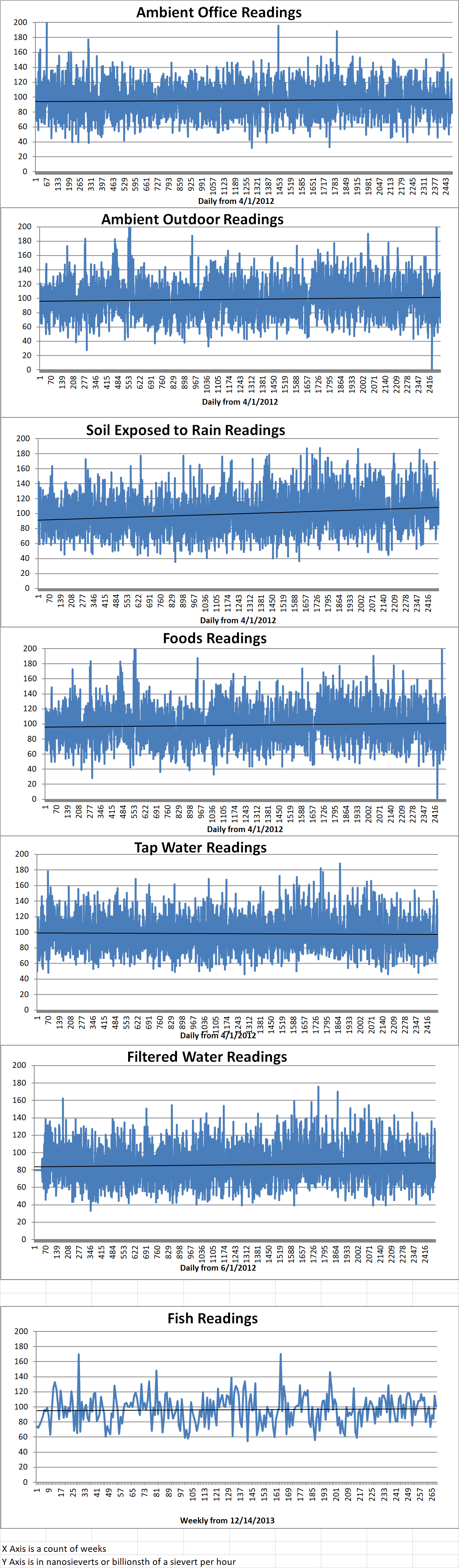
Geiger Readings for Apr 16, 2019
Ambient office = 80 nanosieverts per hour
Ambient outside = 117 nanosieverts per hour
Soil exposed to rain water = 116 nanosieverts per hour
Bartlett pear from Central Market = 66 nanosieverts per hour
Tap water = 134 nanosieverts per hour
Filter water = 124 nanosieverts per hour
-
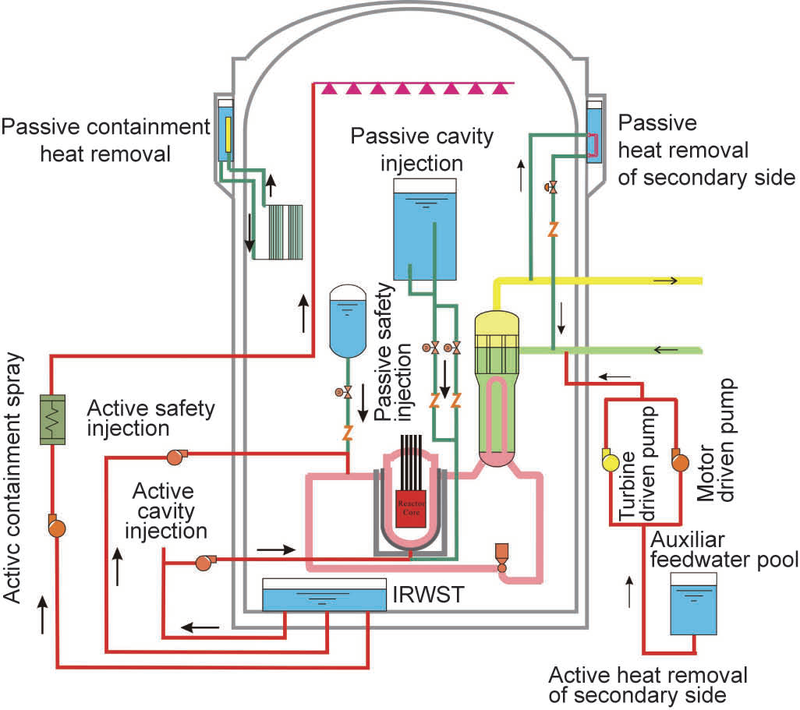
Nuclear Reactors 672 – China Has Decided To Use Their Own Hualong One Reactor Design To Expand Their Nuclear Reactor Fleet
China has been a strong proponent of nuclear power. They have announced ambitious programs to build and operate many new nuclear power reactors to feed their growing economy with the electricity it needs. However, the 2011 Fukushima disaster had a serious impact on their ambitious building program. Now after a few years of scaled back activities, the Chinese are again moving forward with plans for the construction of many new reactors.
For a long time, foreign manufacturers of nuclear power reactors saw China as a great place to build their new designs for display to potential buyers. Chinese plans included their intention to build new reactors based on designs from France, the U.S. and Canada.
In 2006, China and the U.S. signed a technology transfer agreement that made the new Westinghouse AP1000 nuclear power reactor the design of choice for China’s nuclear ambitions. China also announced that advanced third generation technology would be used as a result of safety reviews carried out after the Fukushima disaster.
By the time that the AP1000 and the EPR reactors were finished and ready to be brought online in China after schedule delays and cost overruns, the new Chinese Hualong One home-grown reactor design appears to be as viable as those foreign designs. China has not yet completed its first Hualong One reactor but they express great confidence that it will not suffer construction delays and will be able to compete with foreign designs on cost and safety.
China has decided to construct a Hualong One as its first new reactor project in almost three years. Construction will begin at a site in Zhangzhou later this year. The Zhangzhou site was originally going to host an AP1000 reactor.
Li Ning is a nuclear scientist and dean of the College of Energy at Xiamen University. He said, “The problem with AP1000 – the delays, the design changes, the supply chain issues and then the trade problems – has forced their hand, and it has become Hualong.” He also remarked that the licensing procedures in China would be a big advantage for the Hualong One. He said, “For the Hualong, there are four reactors already under construction and one of them is near completion already. It is a Chinese design so it wouldn’t be very hard to license the next four.”
EDF, the state-run utility in France, assisted in the construction of the EPR project in Guangdong province. They have declined to comment on the change in China’s nuclear design choice. Westinghouse, which has undergone bankruptcy since the technology transfer deal was inked, also did not respond with respect to Chinese plans.
China has not just selected the Hualong One design for domestic use. They also have serious ambitions to sell Hualong Ones to foreign customers. Currently, the Chinse are constructing a Hualong One project in Pakistan, The Hualong One is also a contender for nuclear projects in Argentina and Britain.
Li Xioming is the assistant general manager of the state ownded China National Nuclear Corporation. (CNNC). He recently said, “The technologies are now just about the same as those of the United States, France and Russia. This is the foundation that we will rely on for our future survival and our international competitiveness.”
“China has already become one of the small number of countries that has independently mastered third-generation nuclear power technology, and it has the conditions and comparative advantages to scale up and go into mass production,” he said at an industry conference. -
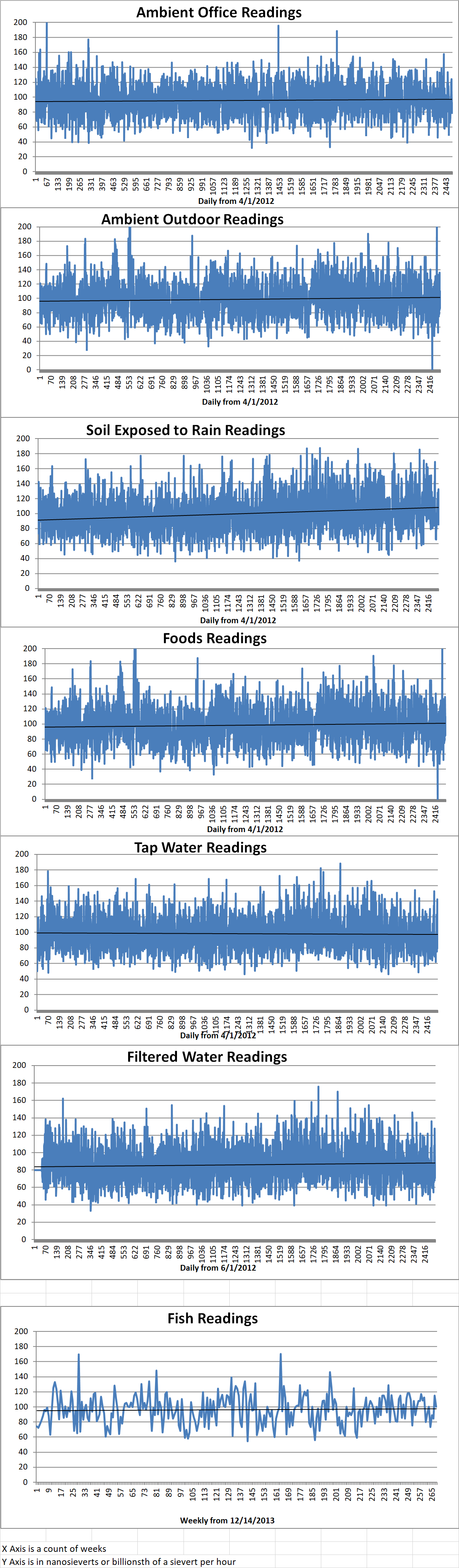
Geiger Readings for Apr 15, 2019
Ambient office = 79 nanosieverts per hour
Ambient outside = 112 nanosieverts per hour
Soil exposed to rain water = 109 nanosieverts per hour
Crimini mushroom from Central Market = 108 nanosieverts per hour
Tap water = 86 nanosieverts per hour
Filter water = 80 nanosieverts per hour
-
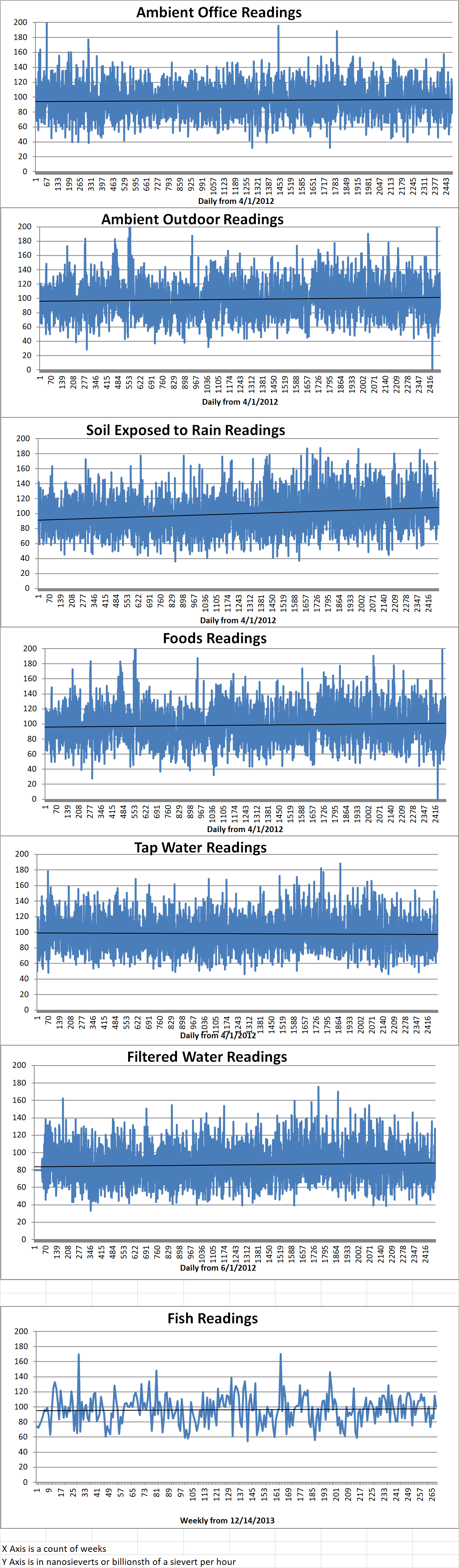
Geiger Readings for Apr 14, 2019
Ambient office = 92 nanosieverts per hour
Ambient outside = 86 nanosieverts per hour
Soil exposed to rain water = 86 nanosieverts per hour
Carrot from Central Market = 110 nanosieverts per hour
Tap water = 79 nanosieverts per hour
Filter water = 71 nanosieverts per hour
-
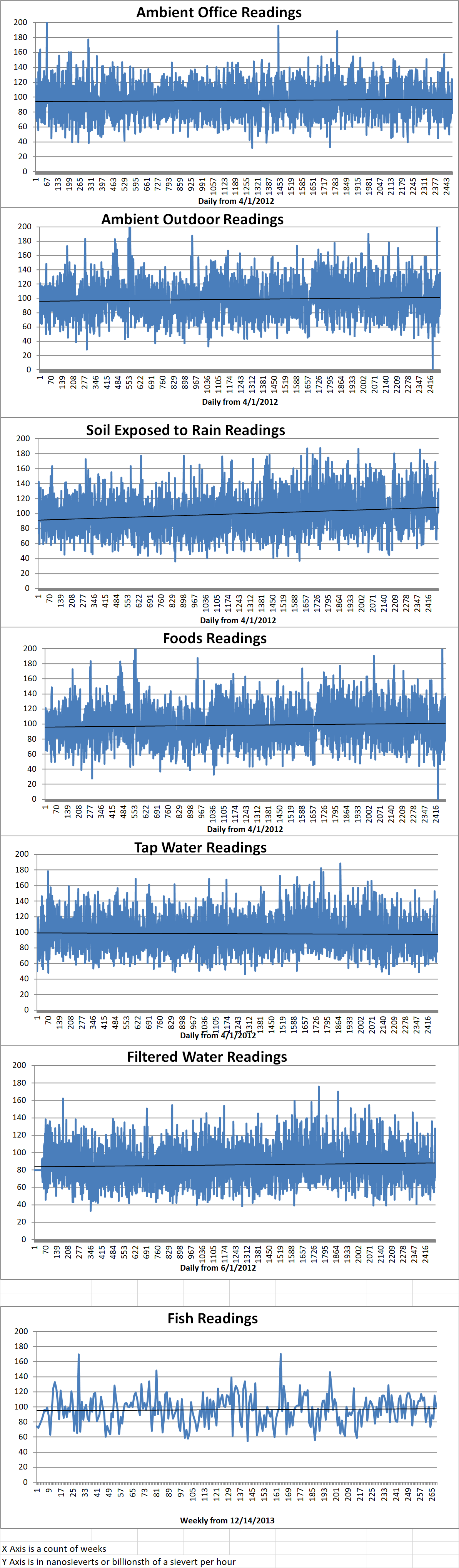
Geiger Readings for Apr 13, 2019
Ambient office = 91 nanosieverts per hour
Ambient outside = 131 nanosieverts per hour
Soil exposed to rain water = 133 nanosieverts per hour
Broccoli from Central Market = 86 nanosieverts per hour
Tap water = 100 nanosieverts per hour
Filter water = 86 nanosieverts per hour
Dover sole – Caught in USA = 119 nanosieverts per hour
-
Radioactive Waste 391 – Swedish Agency Assisting Georgia In Cleaning Up Legacy Waste
Both the U.S. and the Soviet Union contaminated a lot of research and production sites in their development of nuclear weapons. While the U.S. sites are inside the U.S., many of the Soviet sites were in member states of the Soviet Union such as Ukraine, Kazakhstan, Georgia and others. The Soviet nuclear weapons development left radioactive sources, radioactive materials and sites contaminated by radioactive substances in Georgia.
Georgia currently uses radioactive sources for medical and industry applications. It also managed radioactive waste facilities. A research reactor called the IRT-M was operated between 1959 and 1989. The IRT-M was decommissioned in 2016 with the support of the International Atomic Energy Agency. Since 2007, a centralized storage facility has been in operation. The facility manages radioactive waste from the decommissioning of IRT-M and other radioactive materials from activities in Georgia. An older facility at Saakadze contains a significant quantity of radioactive wastes and is considered to be a storage facility. The Georgian Ministry of Defense also keeps some low activity disused radioactive sources.
A campaign was carried out in the early 2000s to identify and collect the radioactive waste in Georgia. Georgia began work in 2013 on complying with fundamental international requirements for handling nuclear materials and waste. One such requirement is the legal framework for nuclear safety and radiation protection.
Georgia created an independent government agency and an organization that will be responsible for dealing with radioactive waste. The new Georgian regulatory agency developed a national strategy for managing all of the radioactive waste and the Georgia government formally adopted it in 2016.
Now that Georgia has achieved compliance with fundamental international requirements, the EU has approved a million dollars in funding for the Georgian cleanup project. The money will be spent to site and develop a preliminary design for a new processing facility and an interim storage site for radioactive waste in Georgia.
Now the Swedish Radiation Safety Authority (SRSM) has embarked on an international procurement process to design facilities to manage the legacy radioactive wastes in Georgia from the Soviet era. The SRSM will be coordinating the two-year European Union project. SRSM will also provide one sixth of the one million dollar funding. Christopher Walden from the SRSM’s Office for International Relations said that it is novel for a nuclear regulator to lead this type of project. He also said, “Apart from project management and facilitating, our experts are assisting as advisers and support for Georgia’s radiation safety authority.”
The location of all the radioactive waste in Georgia has been mapped. A proposal has been made to site an interim storage facility and a processing facility. Hearings have been held for the public and stakeholders to discuss and comment on the proposal. SRSM is now working on the procurement process for the design of the interim storage facility and processing facility.
The final goal of the SRSM Georgian project will be a preliminary design for a future waste storage site. There will also be a decision in principle from the government that will demonstrate its commitment to proceed with the construction of this site.