
The Santa Susana Field Laboratory is a complex of industrial research and development facilities in the Southern California Simi Hills in Simi Valley, California. Liquid-propellant rocket engines were developed on this site for the U.S. space program from 1949 to 2006. Research on nuclear reactors was carried out here between 1953 and 1980. A U.S. research center for liquid metals was located at the site between 1966 and 1998. The site is about thirty miles from downtown Los Angeles.
Ten low-power nuclear research reactors were operated on this site through the years. Four of the reactors had accidents during their years of operation. Since the reactors were classified as experimental, there were no containment structures to trap the release of radioactive materials in case of accidents. Through the decades of use, there were significant releases of radioactive and toxic materials on the site. It is considered to be highly contaminated. In 2006, all research and development activity stopped.
Between 1957 and 1964, the Sodium Research Experiment was carried out on the site. It has the dubious distinction of being the first U.S. commercial power plant that had a core meltdown. For decades, the U.S. Department of Energy covered up this accident. Thousands of pounds of radioactive sodium coolant that leaked during the meltdown have still not been accounted for.
There have been many fires involving radioactive materials on the site. A sodium burn pit was used to dispose of sodium contaminated components. This pit became radioactive itself because of the burning of radioactive materials. Twenty two of the twenty-seven man burn crew have died of cancer. There is a cluster of rare cancers near the site which have been blamed on the contamination of the site. It has been estimated that two hundred and sixty cancer deaths can be connected to the contaminated site.
Boeing bought the site in 1996. There have been legal battles over the cleanup of the site for decades. Boeing claims that there is no threat to people or the environment from contamination at the site. They expressed an intent to remediate the landscape for use as a park but there is widespread skepticism about claims that it will be safe for public use.
In 2005, wildfires burned through the Simi hills. There was major fire damage to the facilities on the site. There were allegations that radioactive materials were carried aloft and distributed over the surrounding countryside by the wildfires.
Now the Woolsey fire in southern California is burning through the site. There has been major damage to infrastructure such as rocket test stands and buildings. Once again, there is fear that smoke from a wildfire will carry radioactive and other toxic materials aloft and distribute them far beyond the limits of the site.
The California Dept. of Toxic Substances Control (DTSC) said that its staff, “do not believe the fire has caused any releases of hazardous materials that would pose a risk to people exposed to the smoke.”
On the other hand, the public is rightfully skeptical because of the history of coverups of major accidents at the site. A woman who lives near the site and whose daughter has leukemia said, “DTSC repeatedly minimizes risk from SSFL and has broken every promise it ever made about the SSFL cleanup. Communities throughout the state have also been failed by DTSC. The public has no confidence in this troubled agency.”
Dr. Robert Dodge is the President of Physicians for Social Responsibility. He said, “We know what substances are on the site and how hazardous they are. We’re talking about incredibly dangerous radionuclides and toxic chemicals such as trichloroethylene, perchlorate, dioxins and heavy metals. These toxic materials are in SSFL’s soil and vegetation, and when it burns and becomes airborne in smoke and ash, there is real possibility of heightened exposure for area residents.”
Blog
-
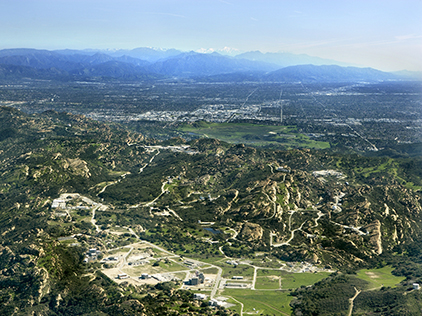
Radioactive Waste 358 – Contaminated Santa Susana Field Laboratory Site Near Los Angeles Is Burning
-
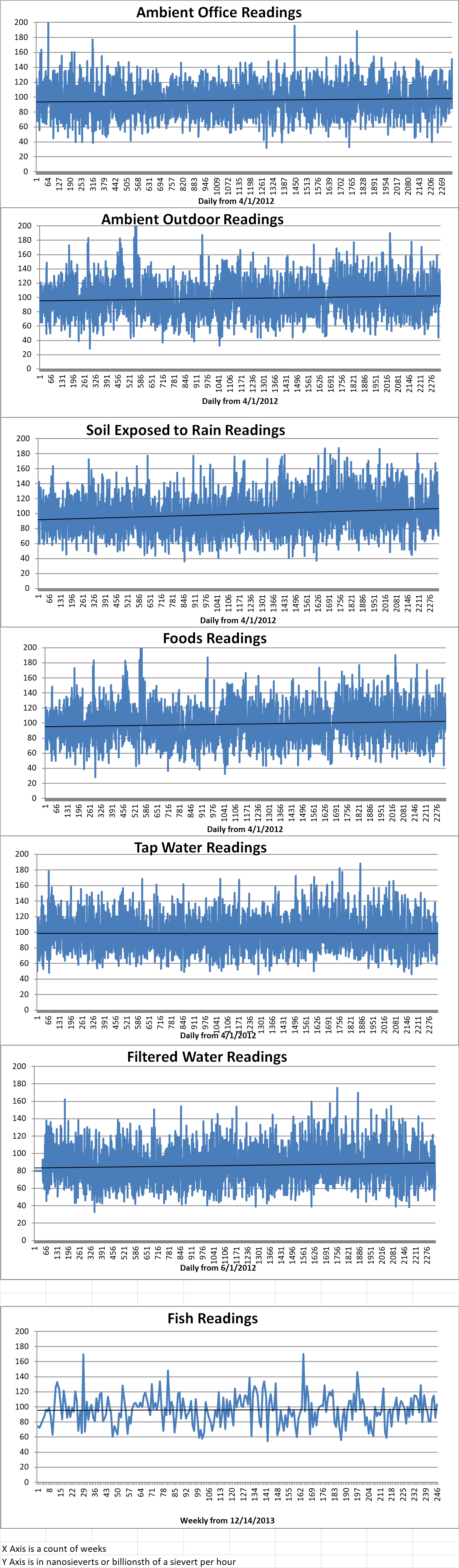
Geiger Readings for Nov 12, 2018
Ambient office = 85 nanosieverts per hour
Ambient outside = 73 nanosieverts per hour
Soil exposed to rain water = 73 nanosieverts per hour
Pumpkin from Central Market = 93 nanosieverts per hour
Tap water = 82 nanosieverts per hour
Filter water = 77 nanosieverts per hour
-
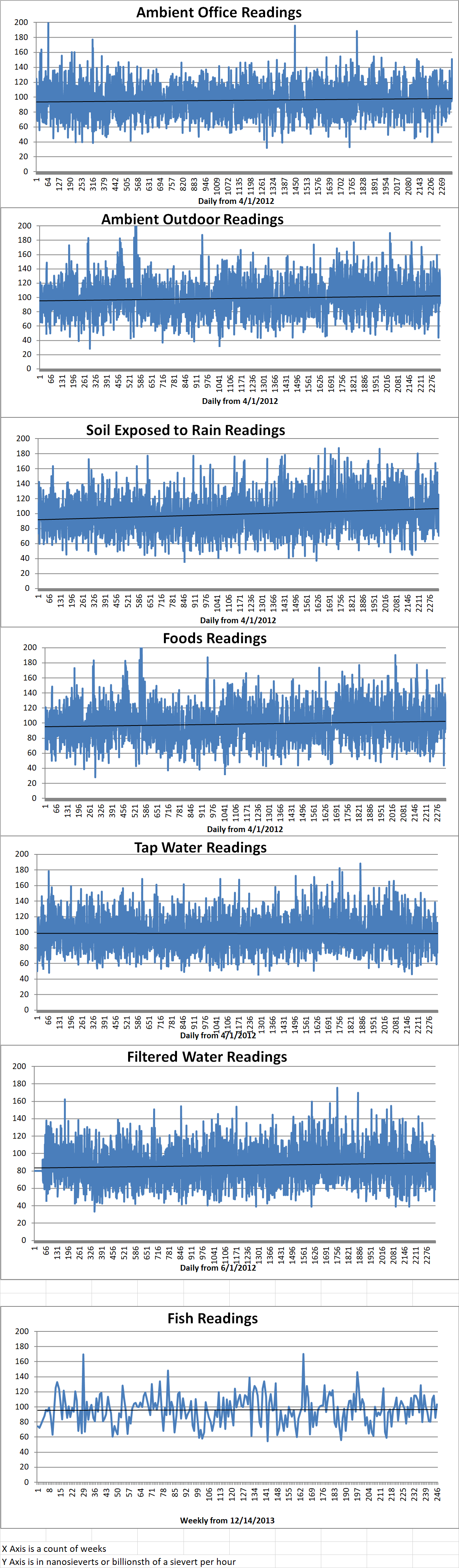
Geiger Readings for Nov 11, 2018
Ambient office = 122 nanosieverts per hour
Ambient outside = 72 nanosieverts per hour
Soil exposed to rain water = 70 nanosieverts per hour
Carrot from Central Market = 92 nanosieverts per hour
Tap water = 79 nanosieverts per hour
Filter water = 59 nanosieverts per hour
-
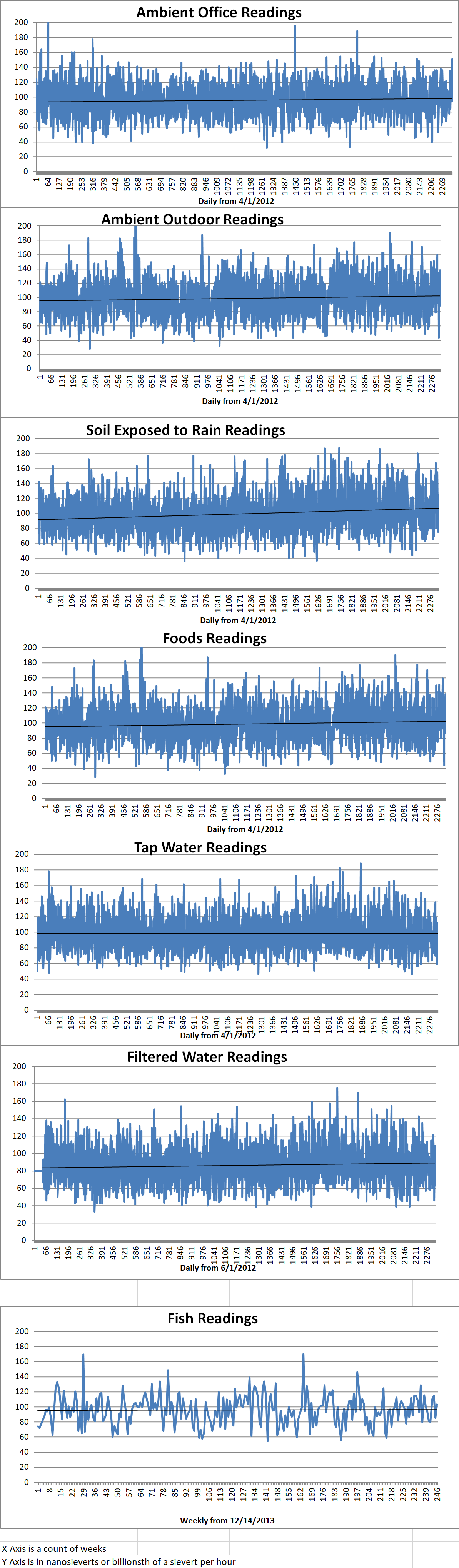
Geiger Readings for Nov 10, 2018
Ambient office = 151 nanosieverts per hour
Ambient outside = 91 nanosieverts per hour
Soil exposed to rain water = 91 nanosieverts per hour
Bartlett pear from Central Market = 113 nanosieverts per hour
Tap water = 81 nanosieverts per hour
Filter water = 75 nanosieverts per hour
Dover sole – Caught in USA = 103 nanosieverts per hour
-

Czech Researchers Develop New Method To Produce Nanodiamonds For Disease Diagnosis
Petr Cígler from the Czech Institute of Organic Chemistry and Biochemistry (IOCB Prague) and Martin Hrubý from the Czech Institute of Macromolecular Chemistry (IMC) recently led a group of researchers in the development of a new method of the cheap and easy creation of irradiated nanodiamonds and other nanomaterials. These new materials are useful in the diagnosis of diseases including several types of cancer. The article detailing the results of their efforts was just published in the journal Nature Communications.
Sensitive and selective diagnostic instruments are required for diagnosing many diseases. Scientists are now able to track the behavior of magnetic and electric fields in living cells at a resolution of a few dozen nanometers. (A nanometer is one millionth of a meter.) They accomplish this by utilizing crystal defects in some types of inorganic materials. It turns out that nanodiamonds produced from graphite with very high temperatures and pressures are ideal for this purpose.
Pure nanodiamonds cannot be used for diagnostics. In order to be applied to diagnostics, nanodiamonds must endure damage to their crystal lattices. Special defects called nitrogen-vacancy centers allow optical imaging. The usual way to generate these defects is to irradiate nanodiamonds with fast ions from particle accelerators. The fast ions knock carbon atoms out of the nanodiamonds crystal lattice and leave vacancies. Then nitrogen atoms which contaminate the nanodiamonds combine with the vacancies to create nitrogen-vacancy centers. These nitrogen-vacancy centers can fluoresce which results in visible light. This property can be used in diagnosis of diseases.
The current system of generating defects in nanodiamonds is very expensive and very inefficient. This means that large quantities of these useful nanodiamonds cannot be produced. Now the research team from the Czech Republic has developed a new technique for the production of defects in nanodiamonds. Their new technique relies on the use of a nuclear reactor to irradiate the nanodiamonds to produce the desired defects.
To produce the necessary defects, the nanodiamonds must first be dispersed in molten boron oxide. Then the molten boron is placed in a nuclear reactor and subjected to neutron bombardment. This results in the generation of a shower of helium and lithium ions which, in turn, create the desired defects in the nanodiamonds. This process allows the creation of one thousand times as many nanodiamonds containing nitrogen-vacancy centers
in a single batch as can be produced by the old method. Silicon carbide crystals can also have defects created by this method. In fact, it may turn out that the new method created by the Czech researchers can be used as a general technique for the controlled production of defects in a wide variety of crystals.
The ability to inexpensively produce large quantities of nanodiamonds with nitrogen-vacancy centers will permit a much wider usage of these special nanodiamonds in the diagnosis of many types of cancers. This will lower the cost of diagnosis and will allow many people with developing cancers to be diagnosed in time for proper life-saving treatment. -
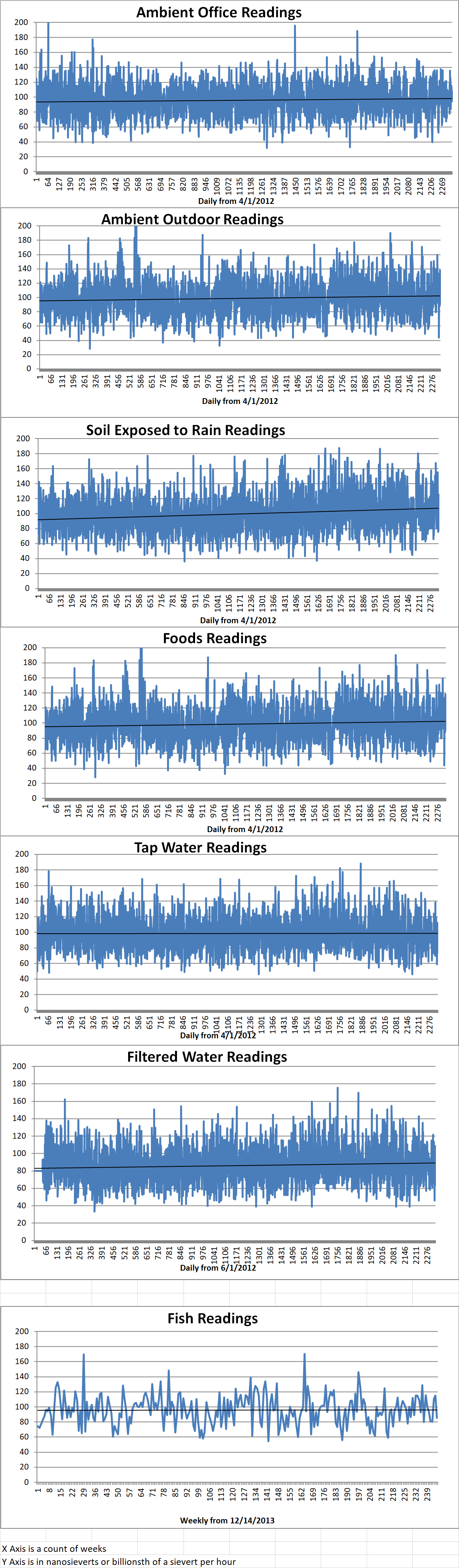
Geiger Readings for Nov 09, 2018
Ambient office = 99 nanosieverts per hour
Ambient outside = 124 nanosieverts per hour
Soil exposed to rain water = 126 nanosieverts per hour
Red bell pepper from Central Market = 126 nanosieverts per hour
Tap water = 74 nanosieverts per hour
Filter water = 63 nanosieverts per hour