
In 2010, the U.S. issued the 2010 Nuclear Posture Review of U.S. nuclear policy. This review linked China and Russia as potential major threats and provided detail of the U.S. development of missile defense systems and conventional prompt global strike (CPGS) systems. CPGS systems are under development which are intended to deliver airstrikes with conventional weapons to anywhere on the globe within one hour. The review placed a premium on reducing nuclear weapons and even suggested that the U.S. and China were mutually vulnerable.
The 2010 NPR caused concern in some Chinese circles because they felt that it indicated that the U.S. was trying to attain absolute security at the expense of both China and Russia. They believed that the U.S. was looking to dominate both countries with the threat of the CPGS and the missile shield.
Now the 2018 NPR has changed the emphasis for U.S. nuclear policy to a focus on nuclear weapons including low-yield nuclear warheads. The Chinese are still concerned about the possibility that a U.S. missile shield could prevent a Chinese retaliatory strike following a U.S. surprise attack. The interest in low-yield warheads supports the Chinese concern that it may weaken the U.S. policy of “no first strike.”
There have been media reports that China is dedicating billions of dollars to AI research across a broad range of potential applications including military. Currently they have a special focus on unmanned AI for surveillance and aiding policing activities and counterterrorism activities. There is no indication that the Chinese are actively working on integrating AI into nuclear weapons systems.
Nuclear weapons systems include early warning, decision support systems, tracking and targeting, simulation, discrimination, and missile defenses. AI includes machine learning, autonomous systems and other capabilities all of which could be useful for improving nuclear weapons systems. The Chinese 2015 Military Strategy document emphasized the need for rapid response. Considering the increasing volume of information that needs to be processed by military sensor systems these days, AI systems could be critical for quickly evaluating threats.
China is very concerned about the possibility of a sudden attack by a nuclear armed adversary such as the U.S. China is working hard to counter new developments in the U.S. and Russia nuclear arsenals with improvement of their own nuclear weapons systems. Chinese nuclear policy is flexible and their “no first use” of nuclear weapons policy should not be though of as carved in stone. They will respond to changing nuclear capabilities by considering changes in their nuclear policy.
There is no clear understanding of how and when China might integrate AI into their nuclear weapons systems. One big problem is the possibility that AI systems could be hacked, and nuclear weapons systems rendered unreliable or inoperative. It is also possible that AI systems could be attacked and caused to issue a false alert for a non-existent attack. This is part of the motivation to develop quantum encryption for military communication and data transfer.
While the Chinese are interested in the application of AI systems to military systems, there are also strong calls for the inclusion of human beings in the chain of detection of and response to perceived threats. However, the time required for analysis and response is steadily shrinking and there may not be time for human beings to be involved in such decisions.
Blog
-
Nuclear Weapons 363 – China Is Considering The Use Of AI Technology For Nuclear Weapons Systems
-
Geiger Readings for Nov 08, 2018
Ambient office = 94 nanosieverts per hour
Ambient outside = 84 nanosieverts per hour
Soil exposed to rain water = 77 nanosieverts per hour
Avocado from Central Market = 138 nanosieverts per hour
Tap water = 111 nanosieverts per hour
Filter water = 105 nanosieverts per hour
-
Nuclear Weapons 362 – First Domestically Constructed Indian Nuclear Sub Goes On Patrol
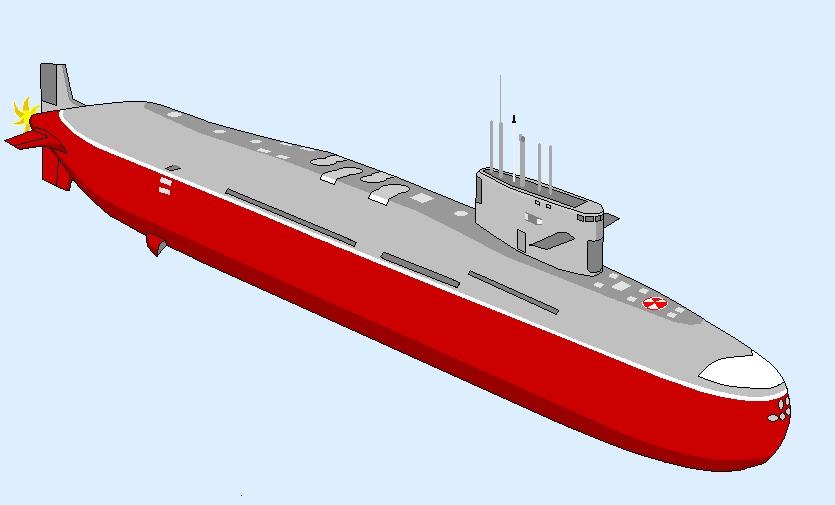
India just announced that the first nuclear submarine manufactured in India has just completed what they call a “deterrence patrol.” This means that India now has a triad of delivery systems that will allow them to launch nuclear weapons from land, sea, and air.
To the east of India lies China, a nuclear power that has engaged in armed conflicts with India. To the west of Indian is Pakistan, another nuclear armed nation with which India has fought wars. While India’s relations with China have been improving recently, relations with Pakistan have been deteriorating.
Narendra Modi is the nationalistic prime minister of India. He said that the first mission of the INS Arihant, India’s first domestically produced nuclear sub was a “fitting response to those who indulge in nuclear blackmail.”
Modi said that “Amid an increase in the number of nuclear weapons in our surroundings, a credible nuclear deterrence is extremely important for our country’s security,” in a nationally televised speech. “Arihant is an open warning for the country’s enemies, for the foes of peace: Don’t try any misadventure against India.” On Twitter, Modi said that the “success of the INS Arihant enhances India’s security needs.” He also tweeted that the Arihant would protect Indian citizens from “external threats and contribute to the atmosphere of peace in the region. India’s nuclear triad will be an important pillar of global peace and stability.”
The Arihant was officially put into service or commissioned in 2016. It is the first of a new class of Indian ballistic-missile subs. The Indians intend to build three or four more subs in this class. The Arihant can carry as many as twelve K-15 short-range ballistic missiles. Each of these missiles has a range of up to four hundred and sixty miles. Alternatively, the Arihant can carry four K-4 intermediate-range ballistic missiles. Each of these missiles has a range of two thousand and twenty miles. Both the K-15 missiles and the K-4 missiles can be fitted with nuclear warheads.
Despite the Indian announcement of the “deterrence partrol” that was just completed, the Arihant was not designed for regular patrols. It has been used for training since it became operational. In early 2017, an external hatch was left unsecured when the sub submerged. This led to the sub being flooded and seriously damaged.
The next sub in the new class is called the Arighant. It was launched in late 2017 and is expected to be commissioned in 2020 or 2021. The Arighant has twice as many missile tubes as the Arihant and is said to be much quieter in operation.
India is very concerned about the operations of Chinese submarines in the Indian Ocean. India wants to bolster its presence in the Indian Ocean to counter the Chinese activity. India is working on obtaining nonnuclear subs. It is also considering the purchase of more P-81 maritime patrol aircraft.
If war broke out between India and China or Pakistan and escalated to the exchange of nuclear weapons, the resulting radioactive fallout would quickly spread to all three of these nuclear armed countries. Such wars would be futile, and all countries involved would be losers. A major exchange of nuclear warheads could result in the end of human civilization and the death of billions. -
Geiger Readings for Nov 07, 2018
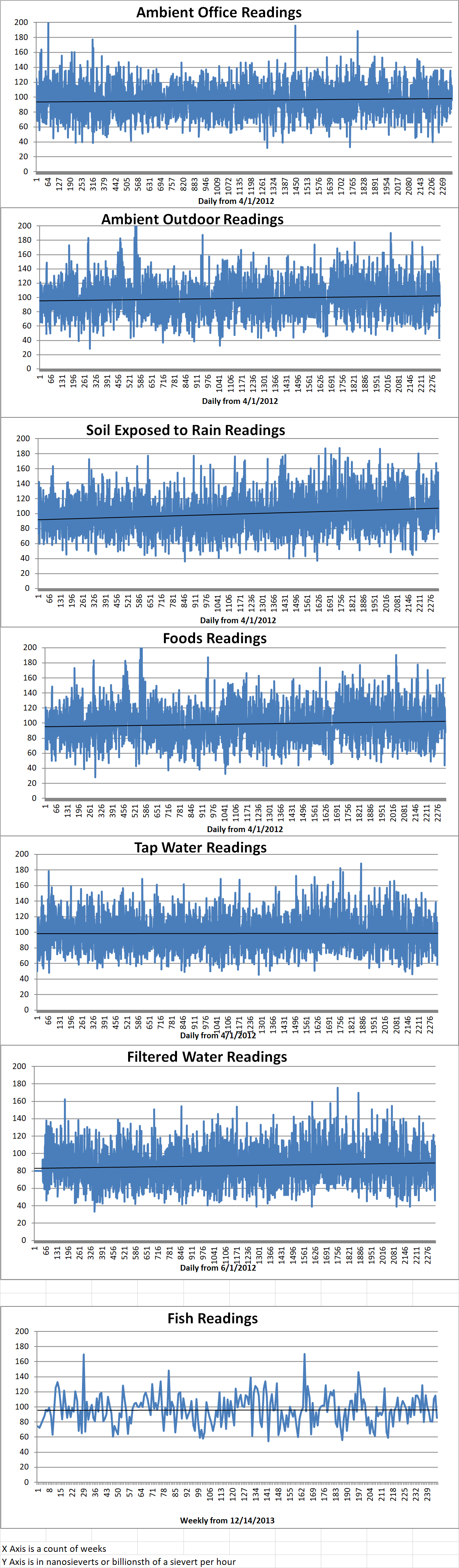
Ambient office = 108 nanosieverts per hour
Ambient outside = 91 nanosieverts per hour
Soil exposed to rain water = 91 nanosieverts per hour
Crimini mushroom from Central Market = 92 nanosieverts per hour
Tap water = 112 nanosieverts per hour
Filter water = 109 nanosieverts per hour
-

Radioactive Waste 357 – Some Fly Ash From Chinese Coal Power Plants Is To Radioactive To Be Used In Building Materials
One of my early computer consulting jobs was to create an automated system to display the daily location of rail cars carrying pozzolan or fly ash from the burning of coal in Midwestern coal fired power plants. This material was being shipped to the West Coast to be used in the production of cement. Manufacturers are using increasing amounts of this fly ash as an inexpensive binding agent in concrete, wallboard, bricks, roofing and other building materials.
A recent study of fly ash samples from different coal fired power plants at different locations in China found that some of these samples released forty-three times as much radiation as considered safe under standards created for residential building materials by the United Nations Scientific Committee on the Effects of Atomic Radiation. Minerals containing uranium are varied and ubiquitous. The highly radioactive fly ash came from areas where the amount of uranium in the coal deposits was unusually high.
The study was published in the journal Environmental Science and Technology. It was part of a collaboration between CUMT, Duke and Duke Kunshan University. This joint research is dedicated to investigating the environmental impacts of coal and coal ash in China. The research team tested samples from fifty-seven sites in China where there is a lot of uranium in the coal deposits.
Avner Vengosh is a professor of geochemistry and water quality at Duke University’s Nicholas School of the Environment. He was on the team the conducted the study on Chinese fly ash. He said, “While most coals in China and the U.S. have typically low uranium concentrations, in some areas in China we have identified coals with high uranium content. Combustion of these coals leaves behind the uranium and radium and generates coal ash with very high levels of radiation.”
Shifeng Dai is a professor of geochemistry at the state key laboratory of coal resources and safe mining at China University of Mining and Technology (CUMT) in Beijing and Xuzhou, China. He was also on the team the conducted the study on Chinese fly ash. He said, “The magnitude of radiation we found in some of the Chinese coal ash far exceeds safe standards for radiation in building materials/ This calls into question the use of coal ash originating from uranium-rich coals for these purposes.”
Nancy Lauer is a Ph.D. student at Duke’s Nicholas School who led the research for the new study. She said, “By comparing the ratio of uranium in the coal to the radioactivity of the coal ash, we identified a threshold at which uranium content in coal becomes too high to allow coal ash produced from it to be used safely in residential building construction.”
Ten parts per million of uranium in coal deposits is a threshold limit for commercial use of fly ash that applies to all coal deposits in the world, not just Chinese coal deposits. Lauer said that fly ash from coal deposits with higher levels of uranium “… should not be considered when deciding whether to allow coal ash to be recycled into building materials.”
Vengosh said, “Since our findings demonstrate that using ash from this high-uranium coal is not suitable in building materials, the challenge becomes, how do we dispose of it in ways that limit any potential water or air contamination. This question requires careful consideration.” -
Nuclear News Roundup Nov 06, 2018
The uranium market is showing a marked improvement compared with a year ago but there is still a long way to go, Cameco CEO Tim Gitzel said on 2 November. World-nuclear-org.com
Russian nuclear power giant Rosatom has confirmed the initial start up of the Akademik Lomonosov, the country’s first floating nuclear power plant. Nuclearstreet.com
-
Geiger Readings for Nov 06, 2018
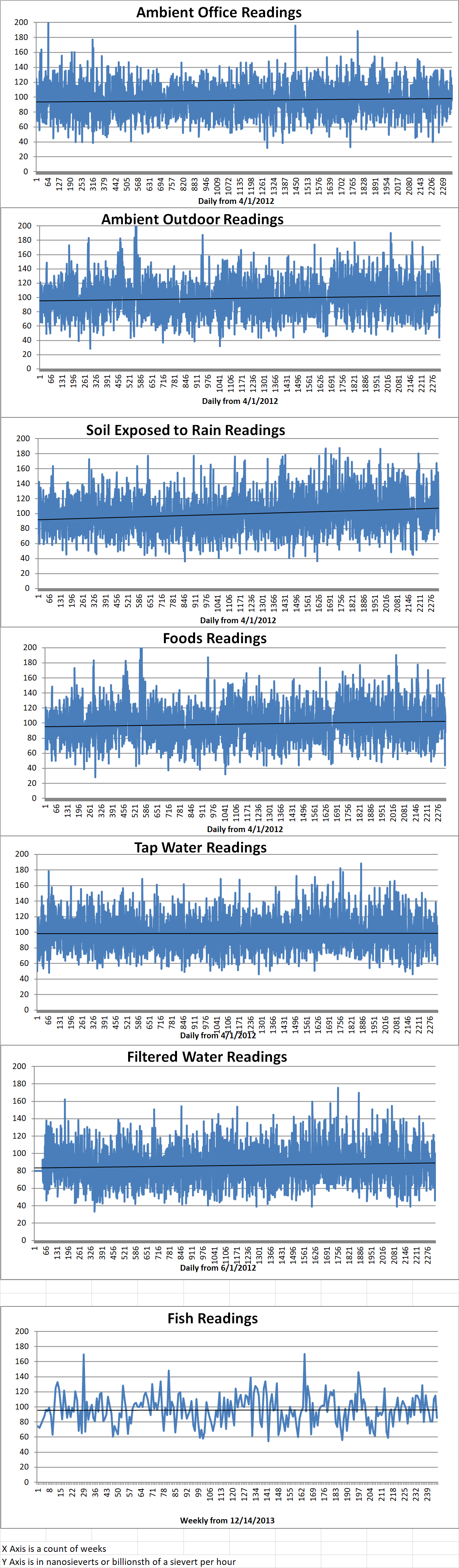
Ambient office = 96 nanosieverts per hour
Ambient outside = 79 nanosieverts per hour
Soil exposed to rain water = 76 nanosieverts per hour
Beefsteak tomato from Central Market = 88 nanosieverts per hour
Tap water = 105 nanosieverts per hour
Filter water = 100 nanosieverts per hour
-
Nuclear Weapons 361 – U.K. Ministry of Defense Receives Five Notices Of Safety Violations From the U.K. Defense Nuclear Safety Regulator
The U.K. Defense Nuclear Safety Regulator (DNSR) has notified the U.K. Ministry of Defense (MoD) of a “failure of safety culture,” “inadequate resourcing” and “continued non-compliance.” The DNSR issued two safety improvement notices to the MoD in 2010, two more in 2016 and one in 2017. These notices claim that there were a series of safety errors at the U.K. facilities for the construction and maintenance of the U.K. fleet of nuclear submarines. These safety notices were revealed last year after the MoD released them in response to a freedom of information request.
In April of 2010, the DNSR accused the naval base at Devonport in Plymouth of a “failure to reinstate primary systems” following routine submarine maintenance. In May of 2010, the DNSR said that the Nuclear Propulsion Project Team was guilty of “failure to meet good safety management practice.” This failure took place in the construction of new Astute-class reactor-driven submarines. The DNSR notice said, “Inadequate resourcing forms the root cause of failing to address regulatory concerns. DNSR’s concern is that future nuclear reactor program safety may compromised.”
In September of 2016, the DNSR criticized the Atomic Weapons Establishment at Aldermaston in Berkshire for “continued non-compliance” because they did not provide safety documents that were required. In October of 2016, the DNSR told the Naval Reactor Plant Authorisee that it did not have “an adequate, extant nuclear baseline.” The DNSR notice said, “DNSR considers that the lack of a nuclear baseline and therefore the lack of control of organizational change demonstrates a non-compliance.”
In September of 2017, the DNSR sent a safety notice to the Strategic Weapons Project Team at Abbey Wood near Bristol. The DNSR said that the SWPT had failed to meet safety requirements “on organizational capability.” The MoD was instructed to make “adequate arrangements to control any change to its organization structure or resources which may affect safety.”
Stuart McDonald is a member of the Scottish parliament. He is the defense spokesperson for the Scottish National Party. He said, “The number of safety improvement notices served on the MoD for nuclear safety failures is alarming, and shows a lack of regard for public safety and transparency. It’s appalling that it takes a freedom of information request to uncover this information, which speaks to a wider concern over transparency at the MoD.”
Mark Ruskell is a member of the Scottish Parliament representing the Green party. He expressed a fear that a “corner cutting culture” was compromising nuclear safety. He said, “Despite the vast sums spent on maintaining these weapons of mass destruction there is clearly a corner cutting culture that has seriously compromised safety standards.”
The MoD defended its record of compliance with tight safety requirements for dealing with nuclear materials. A spokesperson for the MoD said, “We continue to deliver on our commitment to strengthen the management of all our nuclear programs, ensuring they are managed, advanced and delivered as efficiently and cost-effectively as possible.”
Over and over again, defense departments of nuclear armed nations fail to rigorously follow regulations for nuclear safety. It appears that they often feel that in the pursuit of nation security, adhering to regulations is optional.