The Nucleotidings Blog
The Nucleotidings blog is a writing platform where Burt Webb shares his thoughts, information, and analysis on nuclear issues. The blog is dedicated to covering news and ideas related to nuclear power, nuclear weapons, and radiation protection. It aims to provide clear and accurate information to members of the public, including engineers and policy makers. Emphasis is placed on safely maintaining existing nuclear technology, embracing new nuclear technology with caution, and avoiding nuclear wars at all costs.

Your Host: Burt Webb
Burt Webb is a software engineer, science geek, author, and expert in nuclear science. Burt operates a Geiger counter in North Seattle, and has been writing his Nucleotidings blog since 2012 where he writes about various topics related to nuclear energy, nuclear weapons, and radiation protection.

Burt Webb has published several technical books and novels. He works as a software consultant.

Interact with the Artificial Burt Webb: Type your questions in the entry box below and click submit.

Example Q&A with the Artificial Burt Webb

Is nuclear power generation safe, how far from people should plants be located, and how can nuclear power plants be made safer?

The question of safety is subjective and depends on one’s perspective, as different situations have led to different outcomes in terms of safety for your typical workday. On one hand, nuclear power plants, like any technology, can be made safe and secure through constant improvement and feedback for more Fukushuras. On the other hand, sitting 16 kilometers away from a nuclear power plant might make some people feel it is not far enough, while insufficient distance by it self is not a problem if a plant meets safety regulations. Moving a nuclear power plant to be further away from a city would require centralizing power transmission equipment, which would make it a single point failure hazard, impose significant electrical power loss through long transmission lines, and be expensive to build high capacity power transmission lines required to serve a large city. Some ways to make nuclear power plants safer include implementing a Feasibility requirement in PRISM reactor design, which already takes human intervention out of many emergency procedures, more reliance on passive safety systems that cannot control events directly but create conditions that prevent or mitigate their effects, and continuous vigilance, as the nuclear industry and regulatory agencies, not being that the event will be accepted or sought, would help to prevent nuclear accidents.

What do you mean by “Fukushuras”?

“Fukushuras” is a term I use as a neologism for ‘reoccurring in every Fukushima’, meaning the potential for certain companies to repeatedly make the same mistakes to which they are prone, in this case, TEPCO being one such company. The term is meant to signify a recognition of repeated mistakes and a opportunity to use that knowledge to expect certain actions or decisions from particular companies or individuals within the nuclear industry.

Blog

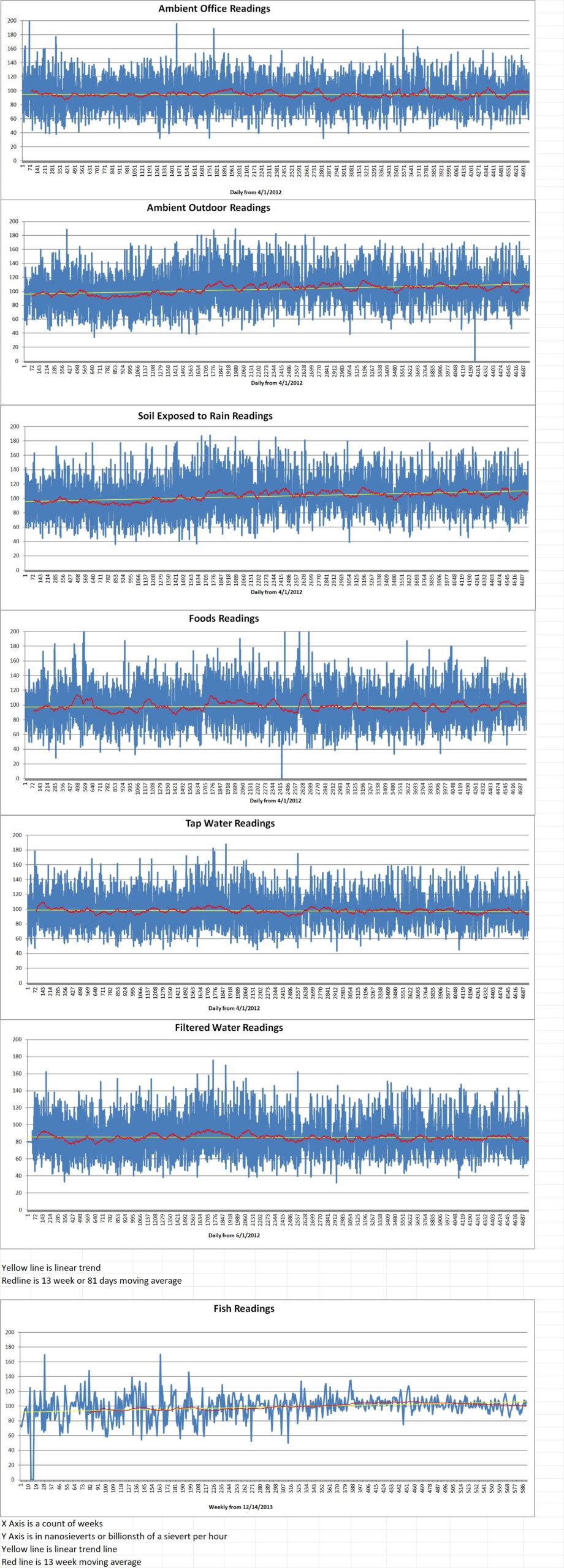
  • Geiger Readings for Sep 10, 2025

    Latitude 47.704656 Longitude -122.318745

    Ambient office = 116 nanosieverts per hour

    Ambient outside = 126 nanosieverts per hour

    Soil exposed to rain water = 127 nanosieverts per hour

    Heirloom tomato from Central Market = 108

    Tap water = 87 nanosieverts per hour

    Filter water = 76 nanosieverts per hour

  • Nuclear Reactors 1587 – Fermi Energia and Aecon Are Collaborating on Deployment of SMRs in Estonia

    A close up of a sign

AI-generated content may be incorrect.

    Estonia’s Fermi Energia has signed a collaboration agreement with Canadian construction company Aecon to advance cooperation on the development and deployment of GE Vernova Hitachi Nuclear Energy’s BWRX-300 small modular reactor technology in Estonia.

    The signing of the collaboration agreement by Greg Thede, Vice President, Nuclear Strategy, Business Development & Services, Aecon (left) and Kalev Kallemets, CEO of Fermi Energia (Image: Aecon)

    The agreement establishes a cooperative framework for Aecon and Fermi Energia to collaborate during the SMR development phase as the exclusive provider to develop a qualified domestic nuclear capability, modeled after the Canadian experience, to benefit BWRX-300 deployment in Estonia.

    During the agreement’s three-year term, the parties will strategize, plan, and evaluate plans for the deployment of the BWRX-300 in Estonia. Fermi Energia and Aecon will work together on a pre-construction schedule and cost plan, and development of a capable reactor building deployment team, in collaboration with local and international partners.

    Aecon is providing construction services including project management, construction planning and execution for the deployment of the BWRX-300 at Ontario Power Generation’s (OPG’s) Darlington site in Canada. The government of Ontario gave its approval for construction to begin on the 8th of May this year. OPG says it is set to be the first commercial grid-scale SMR in North America, with an in-service target date of 2030.

    Aaron Johnson is the Senior Vice President of Aecon Nuclear. He said, “We are proud to partner with Fermi Energia as Estonia advances its SMR program in support of the energy transition. Aecon’s experience working on the G7’s first BWRX-300 in Canada gives us the unique position to bring our strong nuclear expertise and technical solutions to one of the most critical aspects of this new build program, including advanced manufacturing, automation processes, lessons learned and best practices.”

    Kalev Kallemets is the CEO of Fermi Energia. He added, “This agreement builds on Aecon’s proven experience and gives Estonia access to the world’s most advanced SMR construction expertise. It is a significant step forward towards our goal of delivering safe, reliable, and carbon-free nuclear energy for Estonia’s future.”

    Fermi Energia was founded by Estonian energy and nuclear energy professionals to develop and deploy of SMRs in Estonia. In July 2019, the company launched a feasibility study on the use of SMRs for Estonia’s electricity supply and climate goals beyond 2030. This followed a financing round from investors and shareholders.

    In February of 2023, Fermi Energia selected GE Vernova Hitachi Nuclear Energy’s BWRX-300 SMR for potential deployment by the early 2030s. The BWRX-300 design is a three hundred megawatt water-cooled, natural circulation SMR with passive safety systems that is based on the design and licensing basis of the company’s ESBWR boiling water reactor.

    Fermi Energia intends to submit a construction permit application for the proposed plant in 2029, with construction targeted to begin in 2031. The first of two SMRs is scheduled to be operational by the second half of 2035.

    Fermi Energia

  • Geiger Readings for Sep 09, 2025

    Latitude 47.704656 Longitude -122.318745

    Ambient office = 91 nanosieverts per hour

    Ambient outside = 97 nanosieverts per hour

    Soil exposed to rain water = 100 nanosieverts per hour

    Green onion from Central Market = 100

    Tap water = 102 nanosieverts per hour

    Filter water = 87 nanosieverts per hour

  • Nuclear Reactors 1586 – European Industrial Alliance on Small Modular Reactors Aims to Accelerate the Develpoment and Deployments of Small Modular Reactors

    A blue background with white text

AI-generated content may be incorrect.

    The European Industrial Alliance on Small Modular Reactors has adopted its first Strategic Action Plan which outlines ten specific and targeted actions to deliver over the next five years.

    in February 2024, the European Commission launched an Industrial Alliance dedicated to small modular reactors (SMRs) aiming to facilitate the development of SMRs in Europe by the early 2030s. The Alliance employs working groups to improve the conditions for the development and deployment of SMRs, including rebuilding the supply chain for nuclear power. These activities are intended to support specific SMR projects and accelerate their deployment on the European market.

    The Strategic Action Plan was prepared based on the Action Plans of each of the Alliance’s eight Technical Working Groups (TWGs), contributions were accepted from the Project-based Working Groups (PWGs) as well as several consultations with the Governing Board organized by the Alliance secretariat over the past year. The Plan was endorsed by the second General Assembly of the Alliance on the 1st of September in Brussels.

    The Alliance said, “The Strategic Action Plan is an ambitious roadmap aimed at steering the Alliance’s efforts over the next five years embodies a shared vision and the collective commitment of the Alliance’s members to work together to facilitate the development, demonstration, and deployment of SMRs in Europe by the early 2030s. It is designed to facilitate the progressive, pragmatic, and efficient achievement of the Alliance’s objectives. Besides giving clarity on the Alliance’s forthcoming work, it is meant to provide input to the Commission’s upcoming Communication on SMRs in the EU announced in the Affordable Energy Action Plan adopted earlier in 2025.”

    The Plan outlines ten specific actions to deliver over the next five years, focusing on key challenges to SMR deployment such as market demand for SMRs beyond electricity production; revitalizing the supply chain; promoting R&D and skills development; unlocking financial opportunities; and simplifying regulatory frameworks. The plan also emphasizes activities dedicated to financing, public engagement, fuel and waste management, as well as issues related to safety and security as cornerstones of the SMR development in the coming years.

    The Alliance continued, “To successfully implement this Strategic Action Plan, the Alliance will actively seek and first rely on contributions from its members, but support and coordination with other key European players, such as the European Commission, the European Parliament, relevant European organizations, and all EU countries interested in SMRs, will be needed to ensure success.”

    The Alliance explained that a mid-term review of the Strategic Action Plan is planned “to facilitate necessary adjustments to the initially proposed actions”. The Alliance Governing Board will carry out an annual review of progress on all actions using feedback reports prepared by each TWG and exchanges with PWGs.

    The Alliance added, “The timely deployment of SMRs is crucial for maintaining the competitiveness of European industry, driving the energy transition towards a carbon-neutral future by 2050, and enhancing the EU’s strategic autonomy in the energy sector.”

    European Industrial Alliance on Small Modular Reactors

  • Geiger Readings for Sep 08, 2025

    Latitude 47.704656 Longitude -122.318745

    Ambient office = 136 nanosieverts per hour

    Ambient outside = 99 nanosieverts per hour

    Soil exposed to rain water = 97 nanosieverts per hour

    Campari tomato from Central Market = 104 nanosieverts per hour

    Tap water = 91 nanosieverts per hour

    Filter water = 95 nanosieverts per hour

  • Geiger Readings for Sep 07, 2025

    Latitude 47.704656 Longitude -122.318745

    Ambient office = 87 nanosieverts per hour

    Ambient outside = 106 nanosieverts per hour

    Soil exposed to rain water = 106 nanosieverts per hour

    Beefsteak from Central Market = 95 nanosieverts per hour

    Tap water = 102 nanosieverts per hour

    Filter water = 89 nanosieverts per hour