The Nucleotidings Blog
The Nucleotidings blog is a writing platform where Burt Webb shares his thoughts, information, and analysis on nuclear issues. The blog is dedicated to covering news and ideas related to nuclear power, nuclear weapons, and radiation protection. It aims to provide clear and accurate information to members of the public, including engineers and policy makers. Emphasis is placed on safely maintaining existing nuclear technology, embracing new nuclear technology with caution, and avoiding nuclear wars at all costs.

Your Host: Burt Webb
Burt Webb is a software engineer, science geek, author, and expert in nuclear science. Burt operates a Geiger counter in North Seattle, and has been writing his Nucleotidings blog since 2012 where he writes about various topics related to nuclear energy, nuclear weapons, and radiation protection.

Burt Webb has published several technical books and novels. He works as a software consultant.

Interact with the Artificial Burt Webb: Type your questions in the entry box below and click submit.

Example Q&A with the Artificial Burt Webb

Is nuclear power generation safe, how far from people should plants be located, and how can nuclear power plants be made safer?

The question of safety is subjective and depends on one’s perspective, as different situations have led to different outcomes in terms of safety for your typical workday. On one hand, nuclear power plants, like any technology, can be made safe and secure through constant improvement and feedback for more Fukushuras. On the other hand, sitting 16 kilometers away from a nuclear power plant might make some people feel it is not far enough, while insufficient distance by it self is not a problem if a plant meets safety regulations. Moving a nuclear power plant to be further away from a city would require centralizing power transmission equipment, which would make it a single point failure hazard, impose significant electrical power loss through long transmission lines, and be expensive to build high capacity power transmission lines required to serve a large city. Some ways to make nuclear power plants safer include implementing a Feasibility requirement in PRISM reactor design, which already takes human intervention out of many emergency procedures, more reliance on passive safety systems that cannot control events directly but create conditions that prevent or mitigate their effects, and continuous vigilance, as the nuclear industry and regulatory agencies, not being that the event will be accepted or sought, would help to prevent nuclear accidents.

What do you mean by “Fukushuras”?

“Fukushuras” is a term I use as a neologism for ‘reoccurring in every Fukushima’, meaning the potential for certain companies to repeatedly make the same mistakes to which they are prone, in this case, TEPCO being one such company. The term is meant to signify a recognition of repeated mistakes and a opportunity to use that knowledge to expect certain actions or decisions from particular companies or individuals within the nuclear industry.

Blog

  • Nuclear Reactors 543 – Casting Doubt On Predictions Of Nuclear Industry Rebound in 2018 – Part 1 of 2 parts

    Part One of Two Parts

          It should be clear to anyone who reads this blog that I am not a great fan of nuclear energy. For my one thousandth post, I laid out forty reasons that nuclear power is not a good idea. (it has since grown to forty-five reasons.) The arguments for and against nuclear energy production are being played out in the press, legislatures and board rooms around the world. The pro and con arguments play out on several different levels. There are arguments that nuclear power should or should not be used. And then there are arguments that nuclear power will or will not be used in the coming years. Recently an article was published that laid out five reasons why the author thought that the nuclear power industry was going to “rebound” in 2018. I decided that I would present those five reasons and my reactions to them today.

    1. Nuclear construction boom

           There are more than fifty new nuclear power plants under construction in the world today and one hundred and fifty more are being planned. This year fourteen new power plants will be connected to power grids including next generation Westinghouse AP1000 and Framatome’s EPR. Korea is building its first APR1300 reactor in the UAE which is on time and on budget.

           This sounds really positive, but it turns out that both the Westinghouse AP1000 reactor in China and the Framatome EPR in Finland and France have encountered serious problems and are behind schedule and over budget. Both Westinghouse and Framatome have serious financial difficulties to deal with that may affect the construction of these reactors. There are also ongoing investigation of French and Japanese nuclear reactor component companies falsifying quality control records for their products that are used in reactors around the world. The Korean reactor in the UAE may be on schedule and on budget now but let’s see what the situation is when it finally completed and connected to the grid. Every single nuclear power reactor built in the U.S. in the last sixty years has come in late and over budget. The price of nuclear power reactors just keeps going up and will probably continue to do so which will cool off enthusiasm for this power source.

    1. Nuclear industry reorganization

           Some of the biggest members of the nuclear power industry are reorganizing to be more efficient and profitable. The former French Areva was split up into Framatome and Orano. The French utility, EDF, the biggest nuclear plant operator in the world, is taking over Framatome which is focused on reactors, nuclear fuel and nuclear services. Orano will focus on uranium mining, recycling and decommissioning.  Brookfield Asset Partners of Canada are going to buy Westinghouse Electric Company from Toshiba. China National Nuclear Company is China’s second biggest nuclear power company. It is merging with China Nuclear Equipment Company. Now that the board has been reshuffled, some pending nuclear reactor projects should be able to move forward.

             Once again, this sounds really good. However, the companies that have been reorganized, bought or merged have all had serious financial problems which prompted the changes. It is well known that just reorganizing, being bought or merging in themselves are not necessarily solutions to anything. Sometimes, problems result from poor management and sometimes they result from external market factors that put companies in difficult financial situations. Unless new and more competent managers are installed and/or market situation change, the new companies may find themselves with many of the same problems that the old companies had.

    Please read Part Two:


  • Geiger Readings for Mar 08, 2017

    Ambient office  = 92 nanosieverts per hour
     
    Ambient outside = 94 nanosieverts per hour
     
    Soil exposed to rain water = 115 nanosieverts per hour
     
    Yellow bell pepper from Central Market = 99 nanosieverts per hour
     
    Tap water = 104 nanosieverts per hour
     
    Filter water = 99 nanosieverts per hour
     
  • Radioactive Waste 332 – Holtec Moves Ahead With Interim Facility For Spent Nuclear Fuel Storage – Part 2 of 2 Parts

    Part 2 of 2 parts (Please read Part 1 first)

             HI-STORE CIS is being funded by Holtec. They have the enthusiastic support of local communities in southeastern New Mexico as well as the governor of New Mexico. The NRC says that the regulatory review of the application will cost about seven and a half million dollars. HI-STORE CIS is the only facility being planned in the U.S. that satisfies the desire of the Department of Energy for a consolidated interim storage facility.

           Critics of the HI-STORE CIS project say that it will be dangerous to transport what could be volatile nuclear waste from nuclear power plants in other states to New Mexico. They also are concerned about the environmental impact of storing so much nuclear waste in New Mexico.

           Supporters of the HI-STORE CIS project respond that none of the waste is volatile, there are no liquids in the waste that could leak into the environment, thousands of tons of nuclear waste, nuclear weapons and spent nuclear fuel have been transported safely in the past and we have been storing nuclear weapons waste in the Waste Isolation Plant Project (WIPP) near Carlsbad, New Mexico for over fifteen years.

           Holtec says that they have been designing, testing and building dry casks for spent nuclear fuel storage for over thirty years. Their casks have been run into concrete bunkers at eighty mile an hour, dropped onto huge steel spikes, burned in jet fuel fires with temperatures of thousands of degrees, and sunk into water for weeks. Holtec says that their dry casks are “as strong as humans can make them.”

           Holtec latest dry cask design is called the HI-STORM UMAX. It was certified and licenses by the NRC in 2015 and is currently deployed at many nuclear power plants around the U.S. The HI-STORM UMAX casks are completely below ground. Holtec intends the UMAX casks to standardize spent nuclear fuel storage resulting in simpler systems and lower costs.

           While the Holtec dry casks are designed to safely store spent nuclear fuel for at least one hundred years, they are still considered to be only temporary storage. The dry casks at the HI-STORE CIS can be easily retrieved and transported to other locations as new disposal options become available.

           Holtec is also seek approval from the NRC to use the heat generated by the spent nuclear fuel to convert dirty water from industrial processes such as drilling and fracking to clean water that can be safely consumed by humans and animals. Southeastern New Mexico is arid and can definitely benefit from a new process to provide safe drinking water.

           Holtec International is headquartered in Jupiter, Florida. Florida is considering the use of the Holtec storage system with its waste water process in Florida. Holtec is also working on a small modular reactor design called the SMR-160 at its new Singh Technology Campus on the Delaware River in Camden, New Jersey.


  • Geiger Readings for Mar 07, 2017

    Ambient office  = 85 nanosieverts per hour
     
    Ambient outside = 115 nanosieverts per hour
     
    Soil exposed to rain water = 113 nanosieverts per hour
     
    Orange bell pepper from Central Market = 95 nanosieverts per hour
     
    Tap water = 66 nanosieverts per hour
     
    Filter water = 63 nanosieverts per hour
     
  • Radioactive Waste 331 – Holtec Moves Ahead With Interim Facility For Spent Nuclear Fuel Storage – Part 1 of 2 Parts

    Part One of Two Parts

           One of the major problems with U.S. nuclear power is dealing with the spent nuclear fuel from the reactors.        Fuel for nuclear reactors typically spends about five years in a reactor during which time about five percent of the fissile material in the fuel is used up. By that time, byproducts of the fission reaction have accumulated to the point where the fuel must be replaced.

           After removal from the reactor, the spent fuel spends about five years is the cooling pool while the heat and radiation have declined to the point where the spent fuel can be safely stored in steel and concreate dry casks either onsite with the reactor or at an interim storage facility. The dry casks are designed to last more than a hundred years if necessary.

           Originally, the U.S. was supposed to have a permanent geological repository for spent nuclear fuel by 1999 in an old salt mine under Yucca Mountain in Nevada. The project was cancelled due to political opposition from the President and Nevada Congressmen in 2009 although there have been recent attempts by Congress to restart the project.

          Now it appears that we won’t have a permanent geological repository until 2050 at the earliest. It will take that long to find a new site, review the environmental impact, and construct the facility. In the meantime, the cooling pools are filling up fast and something must be done with spent nuclear fuel assemblies in the cooling pools or the reactors will have to be shut down. Without a permanent geological repository, the only other choice is to put spent fuel assemblies in temporary storage consisting of steel and concrete dry casks.

           At the end of last month, the U.S. Nuclear Regulatory Commission (NRC) granted a license application from Holtec International for a proposed consolidated interim storage facility for spent nuclear fuel assemblies called HI-STORE CIS. The facility is to be built in southeastern New Mexico near Carlsbad. The spent nuclear fuel is to be stored there until we have a permanent geological repository or until we have fast reactors that can burn it or until we recycled it to extract plutonium to make new nuclear fuel.

          The Oak Ridge National laboratory recently produced a report that said that an interim spent fuel repository would save the U.S. Treasury fifteen billion dollars by 2040, thirty billion dollars by 2050, and fifty four billion dollars by 2060.

           Dry casks are usually constructed from one or more shells of steel, cast iron and reinforced concrete which prevents leaks and provides shielding of the radiation. Existing casks can hold about ten tons of spent fuel. Currently, thirty-five nuclear power plants in 24 states are licensed for dry cask storage.

           HI-STORE CIS is an underground spent nuclear fuel storage system with a maximum capacity of ten thousand dry cask which can each hold about twelve tons of spent nuclear fuel. Phase one of the project is an initial forty-year license application for five hundred storage cavities which can hold a combined total of eight thousand five hundred metric tons of uranium which constitutes over ninety five percent of spent nuclear fuel. It is estimated that it will take ten years to construct the facility and employ about three hundred local workers.

    Please read Part 2


  • Geiger Readings for Mar 06, 2017

    Ambient office  = 79 nanosieverts per hour
     
    Ambient outside = 113 nanosieverts per hour
     
    Soil exposed to rain water = 114 nanosieverts per hour
     
    Beefsteak tomato from Central Market = 106 nanosieverts per hour
     
    Tap water = 86 nanosieverts per hour
     
    Filter water = 74 nanosieverts per hour
     
  • Nuclear Reactors 542 – Austria and Luxembourg Challenge Hungarian Paks Expansion In EU Court

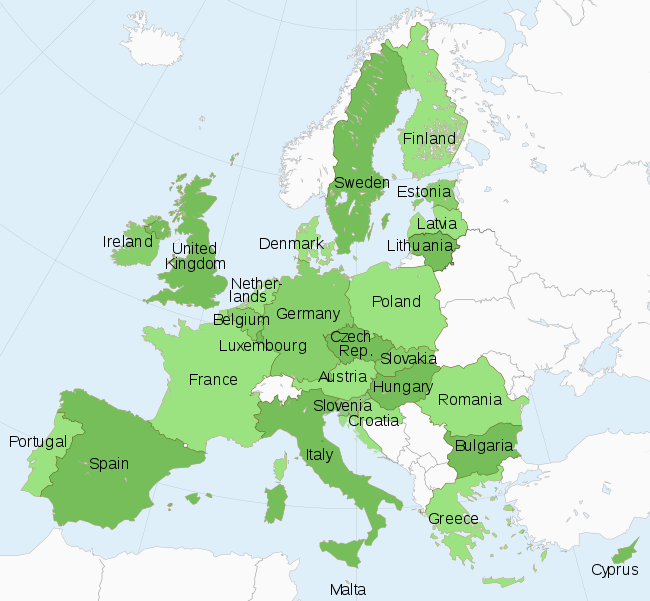
                  The European Union is a political and economic union with twenty-eight member states, most of which are located in Europe. “The EU has developed an internal single market through a standardized system of laws that apply in all member states. EU policies aim to ensure the free movement of people, goods, services, and capital within the internal market, enact legislation in justice and home affairs, and maintain common policies on trade, agriculture, fisheries, and regional development.” Wikipedia

          The EU has the European Parliament and the Council of the European Union that work on legislation for the Union. The European Commission is the executive branch responsible for the management of the EU (EC). It also has the Court of Justice of the European Union (ECJ) that adjudicated legal disputes between the member nations.

           Some nations in the EU such as the U.K. and France are committed to nuclear power while other members such as Luxembourg and Austria are strongly opposed to the use of nuclear power in the EU. In 2015, Austria filed a law suit in the ECJ against the decision of the European Commission to allow new UK state subsidies for the Hinkley Point C project. The Commission said that the construction of new nuclear power reactors at the Hinkley Point power plant would be a “objective for common interest of the members of the EU.”  Luxembourg supported Austria in the suit which should be decided sometime this summer.

           Now Austria is mounting a legal challenge to the Commission’s support for an expansion of the Paks nuclear power plant in Hungary with construction contracted to the Russian company Rosatom. Once again, Luxembourg is supporting Austria in the ECJ. The two EU members want to gather more EU members into an alliance to counterbalance what they see as blank approval by the EC of state subsidies for nuclear power plant projects in the EU.

           Some member nations in the EU see the Hungarian project as an example of the Hungarian Prime Minister moving closer to Russia in economic matters. The Commission gave final approval for the project a year ago after Budapest promised to “limit distortions in competition.”

            Austria’s minister for sustainability, agriculture and tourism said, “I am very pleased that Luxembourg is joining the complainants with regards to the extension of the Paks nuclear plant and is joining us in court proceedings. This strengthens our position. Further action will be taken at European level. It is important that no one invests public money into nuclear energy, because it is certainly the wrong way if they want to achieve climate protection goals.”

          With respect to an anti-nuclear alliance, the Austrian minister said, “We have great hopes for the new German coalition. In the coalition agreement, they also say that no state aid should be granted to build nuclear power plants. On Wednesday, I’ll meet Frau [Barbara] Hendricks [German minister for environment and nuclear safety] in Berlin and we will talk about this topic.”

           The Luxembourg minister of the environment said that the two countries wanted to stop the “renaissance of nuclear energy”. She went on to say, “It is important that no one invests public money into nuclear energy, because it is certainly the wrong way if they want to achieve climate protection goals.”

           The head of the European Commission said last year that the EC would publish a “communication” on the future of the Euroatom treaty by the summer of 2018. Hopefully, the EU will be able to work out a nuclear policy that is more acceptable to all EU members.

    Members of the European Union: