Blog
-
Geiger Readings for Feb 26, 2017
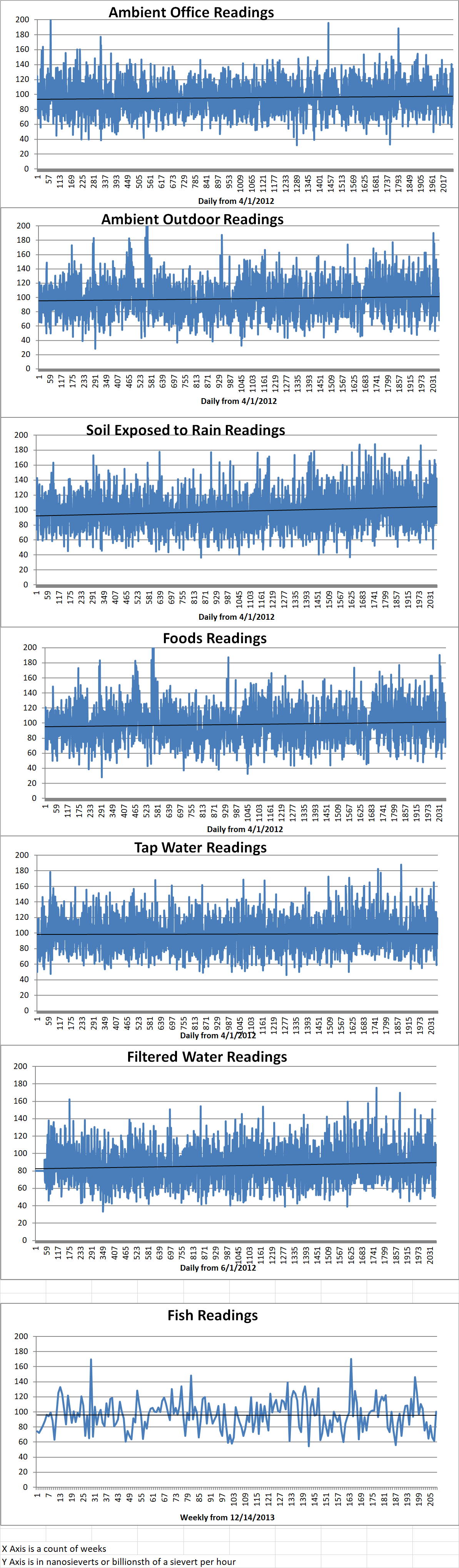
Ambient office = 78 nanosieverts per hourAmbient outside = 127 nanosieverts per hourSoil exposed to rain water = 130 nanosieverts per hourCrimini mushroom from Central Market = 136 nanosieverts per hourTap water = 80 nanosieverts per hourFilter water = 75 nanosieverts per hour -
Nuclear News Roundup Feb 25, 2017
Senior Congress leader Digvijaya Singh today requested Prime Minister Narendra Modi to reconsider the decision to set up a 1400 MW nuclear power plant in tribal-dominated Mandla district of Madhya Pradesh. Economictimes.indiatimes.com
New Jersey lawmakers try yet another version of contentious nuclear subsidy bill. Njspotlight.com
Mohsen Rezaei, secretary of Iran’s Expediency Council and former chief of Iran’s Revolutionary Guard, said the Islamic Republic will “level Tel Aviv to the ground” if Israel carries out an attack, Fars News Agency, Iran’s semi-official news site, reported. Unitedwithisrael.com
In early January, 2018, the CEO of US Nuclear Corp. (OTC: UCLE) flew to Beijing, China with the purpose of discussing how US Nuclear can help improve Chinese nuclear customer’s access to the advanced, high-quality, more competitively priced products they need in order to meet China’s aggressive power plant construction growth targets. The goal is to expand USN offerings and to achieve substantial growth for US Nuclear markets in China beginning in 2018 and into the longer term. Globenewswire.com
-
Geiger Readings for Feb 25, 2017
Ambient office = 123 nanosieverts per hourAmbient outside = 144 nanosieverts per hourSoil exposed to rain water = 142 nanosieverts per hourBeefsteak tomato from Central Market = 77 nanosieverts per hourTap water = 91 nanosieverts per hourFilter water = 86 nanosieverts per hour -
Geiger Readings for Feb 24, 2017
Ambient office = 109 nanosieverts per hourAmbient outside = 70 nanosieverts per hourSoil exposed to rain water = 73 nanosieverts per hourCarrot from Central Market = 133 nanosieverts per hourTap water = 86 nanosieverts per hourFilter water = 80 nanosieverts per hourPetrale sole – Caught in USA = 88 nanosieverts per hour -
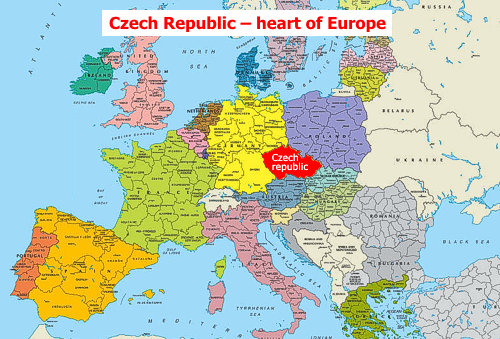
Nuclear Reactors 541 – The Czech Republic Negotiating With European Union Commission Over Purchase Of Russian Reactor
Nuclear power projects can be problematic for members of the European Union. The EU has strict rules about the purchase of nuclear reactors, the involvement of government financing, the purchase of nuclear fuel, etc. Some members of the E.U. such as Austria are very anti-nuclear and will sue other members who don’t abide by the rules.
The Czech Republic is a member of the E.U. The Dukovany nuclear power plant is about thirty miles from the Austrian border. It is the first nuclear power plant built in what is now the Czech Republic. The contract for the Dukovany nuclear power plant was signed between Czechoslovakia and the Soviet Union in 1970. Construction began in 1974 and four nuclear power reactors were connected to the electrical grid between 1985 and 1987.
The Czechs want to build a new reactor at the Dukovany. The new reactor is intended to replace one of the old nuclear reactors from the Soviet-era. The Czech would like to purchase the new reactor from Russia but in order to do that within the framework of the E.U., the Czechs will need to have the E.U. Commission exempt the Czech Republic from their strict rules on government bids.
When a member of the E.U. decides to purchase a product from a provider who is not a non-member country where exports are subsidized, an investigation can be called for if another member or the industry that provides the product in the E.U. file a complaint with the E.U. Commission. The results of such an investigation can be either a duty being imposed on the imported product or the product in question can be exempted from the subsidized import rule.
The Czech Republic is currently involved in negotiations with the E.U. Commission, but they are not sure that they will be able to get the exemption they will need. There will be another round of talks as soon as the Czechs respond to E.U. Commission questions with a deadline in March.
The E.U. Commission reluctantly approved the recent Hungarian Paks II nuclear power reactor deal with Russia last year after a contentious debate. The final deal between Hungary and Russia was based on a deal between the Hungarian government and the Russian government which some claimed side-stepped the problem with buying products from producers in non-member countries.
Austria is suing Hungary for violating the E.U. rules about state aid for such projects. Germany also shares a border with the Czech Republic and it is strongly opposed to the construction of any more nuclear power reactors in Europe.
If the Czechs fail to get the exemption, they may go with a government to government deal like Hungary did for their Paks II project. Hungary awarded a contract to Russia’s Rosatom for two new nuclear power reactors. The Hungarians did not request bids for the project because they said that only Rosatom had the technical capability to replace old Soviet-era power reactors. Russia is giving Hungary a twelve billion dollar loan to help with the fifteen billion dollar nuclear project.

-
Geiger Readings for Feb 23, 2017
Ambient office = 93 nanosieverts per hourAmbient outside = 102 nanosieverts per hourSoil exposed to rain water = 83 nanosieverts per hourAvocado from Central Market = 102 nanosieverts per hourTap water = 119 nanosieverts per hourFilter water = 110 nanosieverts per hour -
Nuclear Reactor 540 – Utilities and Department of Energy Working To Extend Licenses For Nuclear Power Reactors
Many of the ninety-nine operating nuclear power reactors in the U.S. were built in the 1970s with an intended lifespan of forty years. Many of those reactors have been granted an additional twenty years of life for a total of sixty years. The U.S. Department of Energy (DoE) is currently carrying out research and working in conjunction with utilities to extend the life of some nuclear power reactors up to eighty years.
Exelon Corporation and Dominion Energy Inc. have announced that they are planning on asking regulators to give eight reactors located in Virginia, Pennsylvania and Florida an additional twenty years of life for a total of eighty years.
About twenty percent of the electricity in the U.S. is generated by nuclear power. Cheap natural gas, subsidized renewable power and stagnant demand for electricity have made it difficult for nuclear power to compete in today’s energy market. Recently, some U.S. nuclear power reactors have become too expensive to operate and are being retired before their licensed lifetimes run out.
The ultimate authority to extend the license of a nuclear power reactors is held by the Nuclear Regulatory Commission. The Trump administration ordered a review of the nuclear power industry and possible ways to support it last June. Secretary of Energy Rick Perry recently came out with a proposal for subsidies to support coal and nuclear power but it was not adopted by Congress. The utility industry says that they appreciate the support from the President.
A spokesperson for the Nuclear Energy Institute lobbying group said, “You are talking about continuing the operation of a perfectly safe and reliable power plant. Make that comparison with the new construction of a plant. The cost savings are substantial.” While the cost of retrofitting an existing nuclear power reactor may run into the hundred of millions of dollars, the construction of a new power reactor will cost billions of dollars. Southern Co. is building two new power reactors in Georgia. The estimated cost of the project has doubled to more than twenty-five billion dollars during construction.
Anti-nuclear activists point out that the old reactors are wearing out and each additional year of life granted increases the risk of major nuclear accidents. They cite the recent nuclear accident in Fukushima, Japan as an example of what could happen to old reactors in the U.S. The director of the energy program at the Washington-based watchdog group Public Citizen says, “These facilities were not designed to operate that long. The longer you extend the operating life of these facilities the more things can go wrong.”
Merely extending the lifespan of a power reactors does not help with the problem of competition from other energy sources. A former member of the NRC says that, “What you are seeing with extending the license is companies preserving an option, but it’s an option that very few will likely exercise,” said Peter Bradford, a former member of the NRC. “Unless the federal government is somehow prepared to either put taxpayer dollars into steam generator replacements or to somehow mandate that the customers have to pay for it, it’s just not going to happen.”