Blog
-
Geiger Readings for Jan 12, 2017
Ambient office = 100 nanosieverts per hourAmbient outside = 73 nanosieverts per hourSoil exposed to rain water = 72 nanosieverts per hourCelery from Central Market = 64 nanosieverts per hourTap water = 100 nanosieverts per hourFilter water = 83 nanosieverts per hour -
Nuclear Weapons 333 – Russian Bases In Syria Attacked By Drone Swarm With Bombs
As soon as drones could be made cheaply enough, there were concerns that groups of drones could be “weaponized” into armed swarms that could pose a threat. There have been reports of individual drones causing problems but now the fears of armed swarms have proven to be real.
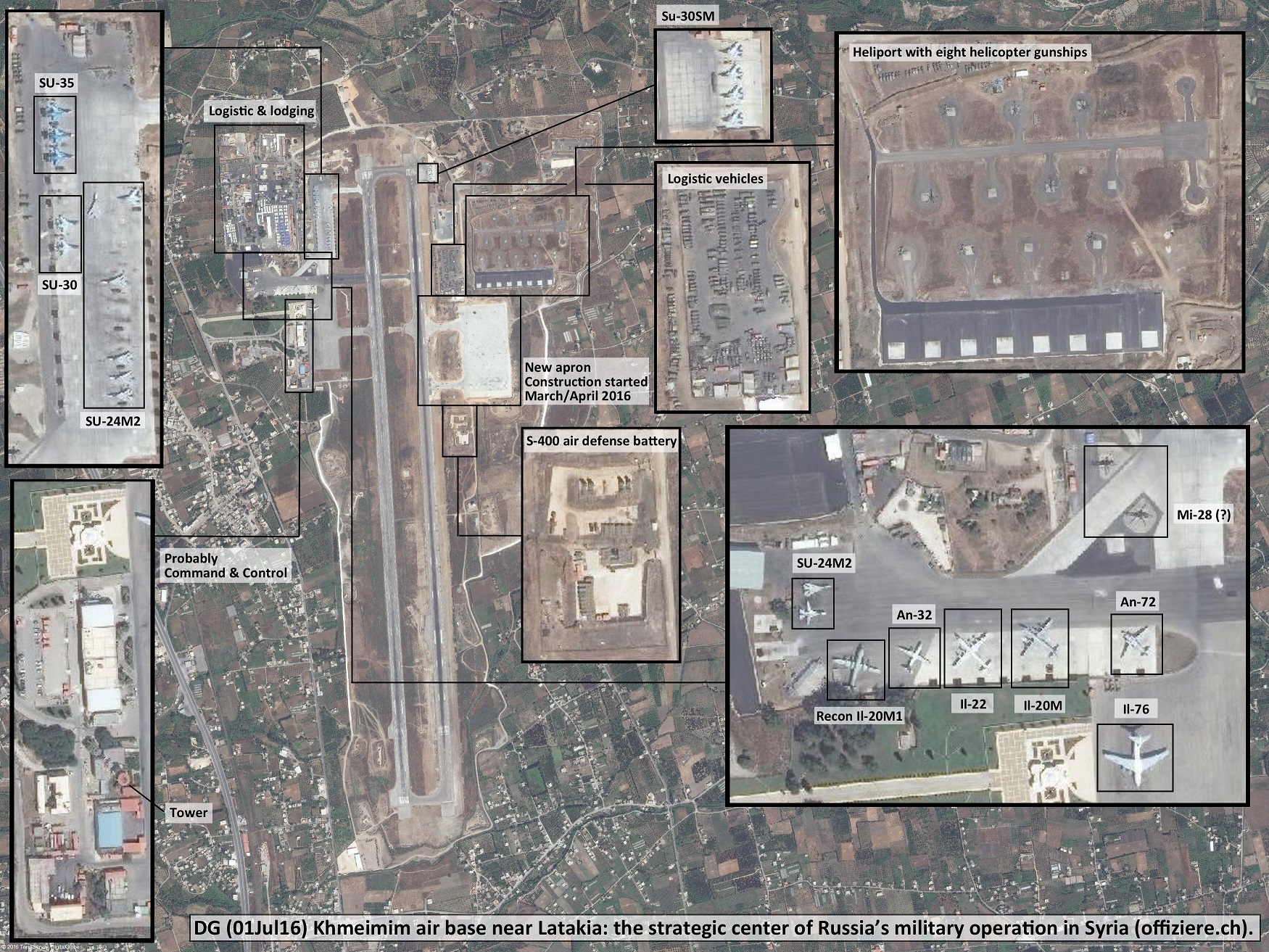
The Russian Khmeimim air base and the Russian Tartus naval facility, both in Syria, were just attacked by swarms of small drones with bombs attached. The Russian military successfully fought off both attacks without casualties or significant damage.
The Russian Ministry of Defense issued a statement that said, “As evening fell, the Russia air defense forces detected 13 unidentified small-size air targets at a significant distance approaching the Russian military bases. Ten assault drones were approaching the Khmeimim air base, and another three – the CSS point in Tartus.”
Six of the drones were intercepted and forced down by Russian Electronic Warfare Units. Three of those landed safely and the other three blew up when they hit the ground. The remaining seven drones were destroyed by Pantsir-S anti-aircraft missiles. While minimal damage was done by the drone attack, the Russians are taking it seriously.
When the Russians examined the intact drones, they appeared to be cobbled together but were effective nonetheless. They were launched from about thirty miles away and used GPS and altitude control sensors to guide their attack. The Russians say that the drones had a maximum range of about sixty miles. This new threat makes the two bases much more vulnerable than they were in the past.
So far, no organization has claimed responsibility for the drone attack. The Russian believe that the drones are too technologically sophisticated to have been constructed and launched by local forces. There are rumors that the U.S. forces in the area might have supplied the drones, but the Pentagon denies this. Putin has order the creation of a special force to protect key nuclear power plants in Russia from drone attacks.
Although there is a great deal more to learn about this attack, one thing has been made abundantly clear. This marks a major change in weapons that will require a major change in defense. A reporter at the Drive said, “Who knows how accurate some of these details really are, but if the number of drones launched at the facility is anywhere near correct, it would seem to be the first self-contained, large scale, coordinated, standoff drone assault on a fixed installation like this. It seems that the age of drone swarms has arrived, and that’s a terrifying reality to comprehend.”
A large drone swarm could possibly overwhelm the defenses of a land base or a big naval ship with sheer numbers. The drones are much cheaper than the missiles used to destroy them at the Russian base. The drones can be constructed from readily available components. With a range of sixty miles, they could be easily transported close enough to just about any military facility in the world and launched to cause havoc.
In addition to the threat of massive attacks on military targets, swarms of drones have great potential for terrorist attacks against civilian targets. And, with the addition of face recognition, they could be used to target and kill individuals. The reason that I am blogging about drones in on a blog about nuclear weapons is that it would be possible to attach a small nuclear warhead to a drone which could then be flown at low altitude to a target. Nuclear power plants would also be prime targets for drone swarms. While drones have many peaceful uses, they are also a threat to public safety and national security.
Russian Khmeimim airbase in Syria:
-
Nuclear News Roundup Jan 11, 2017
These countries are using nuclear energy to provide more than 50% of their power. Forbes.com
The US nuclear regulator is satisfied that NuScale Power’s small modular reactor (SMR) design can operate safely without the need for safety-related electrical systems. The reactor uses passive safety features, such as relying on convection, not pumps, to circulate water in the primary circuit. World-nuclear-news.org
-
Geiger Readings for Jan 11, 2017
Ambient office = 128 nanosieverts per hourAmbient outside = 121 nanosieverts per hourSoil exposed to rain water = 111 nanosieverts per hourOrange bell pepper from Central Market = 102 nanosieverts per hourTap water = 117 nanosieverts per hourFilter water = 95 nanosieverts per hour -
Nuclear Weapons 331 – The Soviets Blew Up A Reactor While Refueling A Nuclear Submarine
In my last blog post, I talked about an accident that sank a Soviet nuclear submarine in the Bay of Biscay which is north of Spain in1970. Today I am going to talk about another accident involving a Soviet nuclear submarine in 1985.
By 1985, the U.S. had stationed nuclear missiles in countries around the Soviet Union. The Soviet Union had not such option in their desire to threaten the U.S. so they turned to nuclear cruise missile submarines. The Echo I class carried six P-5 Pyatyorka nuclear land attack cruise missiles while the Echo II class carried eight of the cruise missiles. The P-5s could be equipped with either a two hundred or a three hundred and fifty kiloton nuclear warhead. They had a range of three hundred and ten miles. They had a circular error probability of 1.86 miles meaning that at least half of the missiles aimed at a particular target would land within a circle around the target that was 1.86 miles in diameter.
The P-5 missiles were kept in big horizontal silos attached to the sides of the deck of the submarine. When a P-5 was going to be launched, the submarine had to surface and deploy a tracking radar systems before launching the P-5. The missile depended on the targeting information being relayed in real time from the targeting radar system. There were problems with the system such as the vulnerability of the command system to jamming. The fact that the submarine had to remain on the surface until the missile reached its target also made it vulnerable to detection. Eventually, the P-5 missiles were replaced with the P-6 version which had its own radar targeting system.
The arrival of the P-6 extended the life of the Echo II class of Soviet submarines. In 1985, the Echo II class K-431 was twenty years old but was still in use. It was powered by two pressurized water reactors that provided sixty thousand shipboard horsepower. In early August, refueling of the K-431 reactors began at Chazhma Bay Soviet Naval facility.
On August 10th, the reactor lid with new fuel rods installed was lifted into the air. A beam was placed on the lid to prevent it from being lifted beyond the safe position. Unfortunately, the beam was not placed correctly, and the reactor lid was lifted too high. This caused the starboard reactor to achieve critical mass followed by a chain reaction and then an explosion.
The explosion blew out the twelve-ton reactor lid with the attached fuel rods and ripped open the pressure hull of the reactor. This totally destroyed the core of the reactor and killed ten men standing near the reactor. A plume of radioactive fallout two thousand feet wide and two miles long moved downwind along the Dunay Peninsula. Debris and Cobalt 60 was thrown over the docks nearby.
The scene of the accident was seriously contaminated with radioactivity. There was some gamma radiation, but the main danger came from the iodine-131, an isotope known to cause cancer. Forty-nine members of the emergency crew showed symptoms of radiation sickness.
Fortunately, the fuel rods being loaded into the K-431 reactor core were a new type, created especially for the naval engine. If they had been loaded with the old type of fuel rod used in land based nuclear power reactors, the fallout would have contained high levels of other dangerous radioactive isotopes including strontium-90 and cesium-137. The K-431 was towed to Pavlovsk Bay and operations soon resumed at the Naval facilities at Chazhma Bay which is still contaminated with radioactive materials to this day.
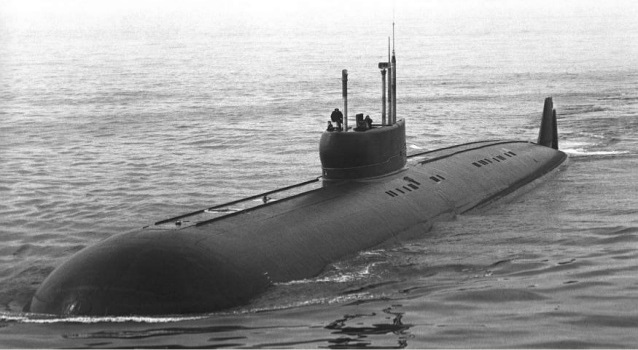
K-431 Soviet Submarine:
-
Geiger Readings for Jan 10, 2017
Ambient office = 87 nanosieverts per hourAmbient outside = 95 nanosieverts per hourSoil exposed to rain water = 94 nanosieverts per hourBeefsteak tomato from Central Market = 103 nanosieverts per hourTap water = 96 nanosieverts per hourFilter water = 90 nanosieverts per hour -
Nuclear Weapons 331 – The Soviets Lost An Early Nuclear Submarine With Four Nuclear Torpedoes Aboard
For the most port, nations armed with nuclear weapons have tried to make those weapons as secure as possible. However, sometimes they fail. I have blogged in the past about some accidents involving nuclear weapons that were suffered by the U.S. Today, I am going to blog about an accident that happened to the Soviet Union in the early days of nuclear submarines.
The Soviet Union began working on nuclear attack submarines in the 1960s. The November (Type 627) class were their first effort. Thirteen November class submarines were built. They displaced about four thousand seven hundred and fifty tons when fully submerged and could carry twenty torpedoes. They could reach a maximum speed of thirty knots which is equivalent to about thirty-five miles per hour. They resembled the design of earlier diesel-powered submarines but were even noisier than the old diesel submarines.
The November class submarines were originally designed to carry a massive nuclear torpedo called the T-15 for use in attacks on NATO naval bases. The torpedo was so big that each submarine could only carry one. Ultimately, it turned out that the U.S. developed sophisticated detection systems that the noisy November class submarines could not be used for their intended purpose.
The Soviets rearmed the November class submarines with nuclear torpedoes with smaller warheads that allowed the November submarines to carry more than one each. The November class was reassigned to more conventional anti-ship attack duties. The November class could have threatened convoys of ships and sunk many, but they would have been destroyed by surviving escort ships. The Soviets never really considered them as effective for hunting enemy submarines because they were so noisy, and they had inadequate sonar systems.
The third November class submarine constructed was referred to as K-8. On one of her first missions in the Barents Sea, there was a problem with the coolant system that could have caused a meltdown of the two reactors. The crew managed to rig an emergency cooling system which saved the sub. Some of the crew members were exposed to dangerous amounts of radiation from leaks of radioactive gas. The crew managed to save the submarine and it limped back to port for repairs.
In spring of 1970, K-8 was involved in a massive Soviet military exercise called Okean 70. One purpose of the exercise was to demonstrate the reach of the Soviet Navy to the rest of the world. They also wanted to work on coordinating navel maneuvers far from the Soviet Union. Okean 70 was one of the biggest navel exercises that the Soviet Union ever held. About two hundred Soviet Navy ships participated from the Northern, Baltic, Black Sea and Pacific fleets. K-8, carrying four nuclear-tipped torpedoes, was part of the forty submarines from the Northern fleet in the war game.
On April 8, there were two fires aboard K-8 that shut down both reactors. The submarine surfaced and the captain gave the order to abandon ship. Eight crew members were trapped and died. A Soviet repair ship came to the aid of the K-8 and began towing it back to port. The weather was rough and most of the crew went back aboard the K-8 and tried to save it. There was no opportunity to recover the four nuclear torpedoes.
The combination of power loss aboard the K-8 and the high seas caused by the rough weather turned out to be too much. On April 12, K-8 sank and took forty crew members with it to the bottom of the Bay of Biscay north of Spain, about fifteen thousand feed deep. The location made any attempt to recover the torpedoes impossible.
The Soviet Navy probably learned valuable lessons about the construction and deployment of nuclear submarines, but it also learned about the cost in lives that failure could mean. The K-8 and her nuclear torpedoes remain at the bottom of the Bay of Biscay to this day.
K-3, another November class Soviet submarine:
-
Geiger Readings for Jan 09, 2017
Ambient office = 82 nanosieverts per hourAmbient outside = 115 nanosieverts per hourSoil exposed to rain water = 116 nanosieverts per hourCrimini mushroom from Central Market = 103 nanosieverts per hourTap water = 90 nanosieverts per hourFilter water = 84 nanosieverts per hour