Blog
-
Geiger Readings for Dec 06, 2017
Ambient office = 85 nanosieverts per hourAmbient outside = 100 nanosieverts per hourSoil exposed to rain water = 108 nanosieverts per hourBeefsteak tomato from Central Market = 89 nanosieverts per hourTap water = 103 nanosieverts per hourFilter water = 92 nanosieverts per hour -
Nuclear Reactors 532 – White House Considering Sending Sensitive Nuclear Technology To Saudi Arabia – Part 3 of 4 parts
Part 3 of 4 parts (Please read Part 2 first)
Barrack had known nothing about nuclear power in the Middle East until he was briefed by Bud McFarlane in late 2016, one of the ex-government officials recruited by IP3. McFarlane had been a member of the Reagan administration. He pleaded guilty to withholding information about the Iran-Contra scandal from Congress but was pardoned by George H W Bush.
In January of this year, Mike Flynn who had been an advisor to the Trump campaign, was appointed as National Security Advisor. McFarland followed up his meeting with Barrack with an email to Flynn with two attached documents. One laid out IP3’s plan in a way that was consistent with Trump’s expressed philosophy. The other document was a memo for Trump to sign that endorsed the project and instructed the members of Trump’s administration to implement it. In the two documents, Barrack was designated as the interagency coordinator for the project. Flynn told his staff to put together a formal proposal based on the IP3 plan to be presented to Trump.
Members of the National Security Council were upset by this attempt to circumvent the normal process for such major projects. Normally projects would be reviewed by representatives from a number of government agencies about practical and legal aspect of the plan. It was feared that eliminating such multiagency reviews could result in private parties taking advantage of the President for their own benefit. One former official said, “Circumventing that process has the ability not only to invite decisions that aren’t fully vetted but that are potentially unwise and have the potential to put our interests and our people at risk.”
Derek Harvey, who was the NSC’s senior director for the Middle East, continued to discuss the IP3 plan with Barrack and Rick Gates, Barrack’s representative. Gates was an associate of Paul Manafort and he worked for Barrack’s investment company. Barrack and Gates were seeking investment ideas for the Middle East. Barrack had considered buying a share of Westinghouse, the U.S. nuclear company which had recently declared bankruptcy. This October, Robert Mueller charged Manafort and Gates with twelve counts. These included conspiracies against the U.S., unregistered foreign lobbying, and money laundering.
In the end, it was not the concerns of the NSC staff that derailed the IP3 plan. Jared Kushner, the son-in-law of the President was charged with developing a Middle East peace plan between Arab countries and Israel. He decided that it would be a better idea to shelve the IP3 plan and proceed with simpler alliance-building measures with Saudi Arabia.
Recently, the IP3 plan has resurfaced as Saudi Arabia requested bids for the construction of their first nuclear power reactor. This October, Saudi Arabia requested information about reactor purchase from U.S., France, South Korea, Russia and China. The IP3 plan was quickly revised to narrow it to focus on putting together a consortium of companies to respond to the Saudi Arabian request. It appears that IP3 is trying to carve out a portion of such a response to handle cyber and physical site security for a Saudi Arabian nuclear power plant. A representative said, “IP3 has communicated its strategy to multiple government entities and policy makers in both the Obama and Trump administrations.” “We view these meetings and any documents relating to them as private, and we won’t discuss them.”
Please read Part 4

-
Geiger Readings for Dec 05, 2017
Ambient office = 85 nanosieverts per hourAmbient outside = 91 nanosieverts per hourSoil exposed to rain water = 90 nanosieverts per hourIceberg lettuce from Central Market = 109 nanosieverts per hourTap water = 88 nanosieverts per hourFilter water = 81 nanosieverts per hour -
Nuclear Reactors 531 – White House Considering Sending Sensitive Nuclear Technology To Saudi Arabia – Part 2 of 4 parts
Part 2 of 4 Parts (Please read Part 1 first)
During this same period, the U.S. Obama administration was working on a deal to curb Iran’s development of nuclear weapons. One part of the deal that was worked out was to leave Iran with some enrichment capability. Saudi Arabia supported the Iran deal but insisted that it was entitled to the same capability that Iran had. The U.S. refused to provide comparable technology to Saudi Arabia. The U.S. position was that allowing the spread of possible dual use technology to new countries was not the same as capping an existing technology already possessed by Iran.
There were critics of the U.S. Iran policy who said that it was wrong to prevent the Saudis from developing the ability to defend themselves given suspicions that Iran would not abandon their quest for nuclear weapons. One of these critics was Michael Flynn, a lieutenant general who was forced out of the Obama Defense Intelligence Agency in 2014 and he took a variety of consulting jobs in the private sector including an advisory post with ACU Strategic Partners. Flynn was only one of many retired military officers recruited by ACU.
The CEO of ACU was Alex Copson, a British-American inventor and wheeler dealer. In 2015, Copson was telling people that he intended to build up to forty nuclear power reactors in Egypt, Jordan and Saudi Arabia. Copson tried to get the Obama administration interested but officials were concerned that he did not really have the financial backing that he had claimed.
On behalf of ACU, Flynn flew to Egypt and tried to convince them turn down a Russian offer to build nuclear power reactors in Egypt. He also tried to convince the Egyptians to consider the ACU proposal. Flynn tried to persuade Israel to support ACUs ambitions nuclear plans for the Middle East.
Copson’s company and efforts eventually fell apart and Michael Hewitt, a retired admiral with ACU struck out on his own in mid-2016 along with Mike Flynn. Hewitt called his new company IP3 International which was short for “International Peace Power & Prosperity.” IP3 signed up prestigious a group of retired military people and government officials. Where ACUs plans included the Russians, IP3 substituted the Chinese. Eventually IP3 changed to an “all American” plan for the provision of new nuclear reactors. Of course, this plan was popular with the U.S. nuclear construction industry which was looking for new customers in other countries.
Nuclear exports are tightly controlled because the technology can be so dangerous. Obtaining a 123 agreement was only the first step in a long process if a foreign government wants to purchase American made nuclear reactors and technology. The U.S. Department of Energy has to sign off on the transfer of such nuclear technology as nuclear reactors and nuclear fuel. The Nuclear Regulatory Commission has to provide licenses for nuclear reactors and the Commerce Department has authority over export of the rest of the equipment used to construct a nuclear power plant.
IP3 did not want to bother with this complex process so they tried to go around these agencies by appealing directly to the White House. At the beginning of the Trump administration, Tom Barrack, a friend and advisor of Trump as well as a major investor, became interested in the IP3 plan. He wrote a series of white papers about how the IP3 plan would be part of a new approach to the Middle East. It would emphasize economic cooperation which he hoped would reduce terrorism and improve relations.
Please read Part 3
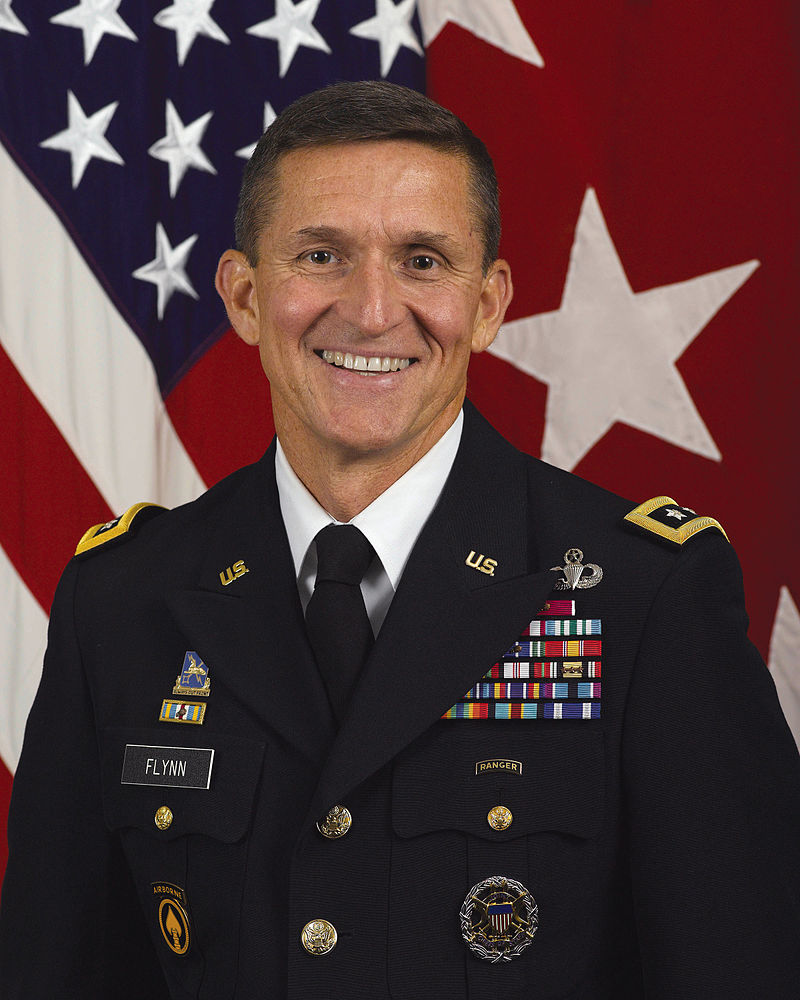
Michael Flynn:
-
Nuclear News Roundup Dec 04, 2017
-
Geiger Readings for Dec 04, 2017
Ambient office = 93 nanosieverts per hourAmbient outside = 111 nanosieverts per hourSoil exposed to rain water = 112 nanosieverts per hourAvocado from Central Market = 67 nanosieverts per hourTap water = 81 nanosieverts per hourFilter water = 73 nanosieverts per hour -
Geiger Readings for Dec 03, 2017
Ambient office = 93 nanosieverts per hourAmbient outside = 111 nanosieverts per hourSoil exposed to rain water = 112 nanosieverts per hourAvocado from Central Market = 67 nanosieverts per hourTap water = 81 nanosieverts per hourFilter water = 73 nanosieverts per hour