Blog
-
Geiger Readings for Nov 14, 2017
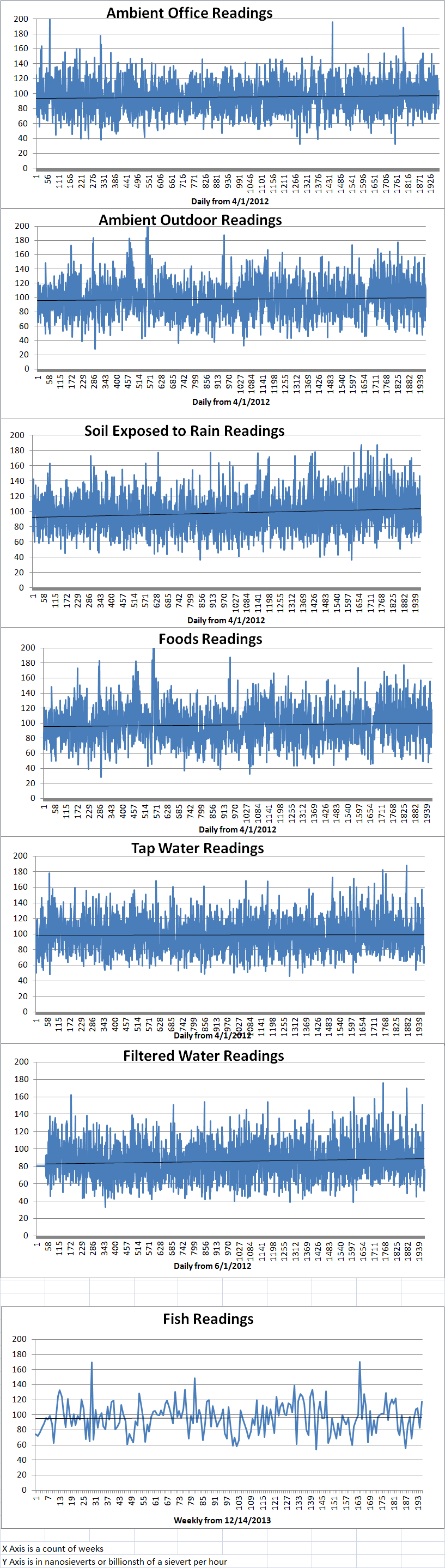
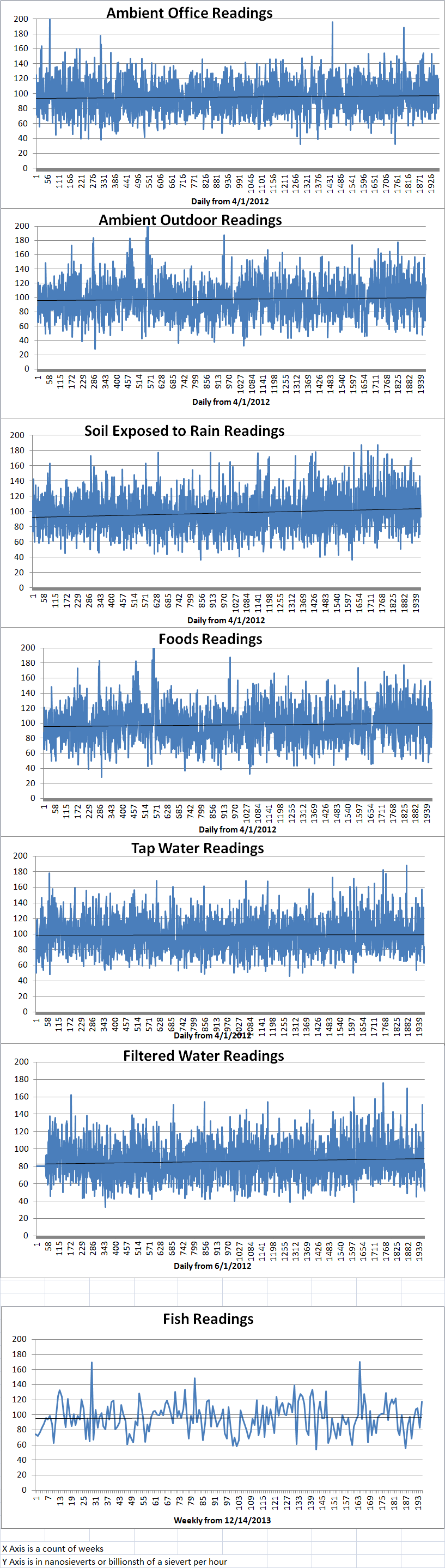
Ambient office = 74 nanosieverts per hourAmbient outside = 82 nanosieverts per hourSoil exposed to rain water = 98 nanosieverts per hourCrimini mushroom from Central Market = 110 nanosieverts per hourTap water = 104 nanosieverts per hourFilter water = 94 nanosieverts per hour -
Radioactive Waste 324 – Spent Nuclear Fuel Waste Will Be Shipped From Scotland To Australia
Australia has about one third of the known uranium reserves in the world but is only the third largest supplier of uranium oxide concentrate to the world energy market. Currently, there are only three uranium mines in Australia with almost all of the uranium mined being exported to Australia. Australia does not use nuclear power and only has a few research reactors. All of the uranium oxide exported from Australia is intended for use in power reactors or research reactors.
Since the 1950s, Dourneay on the North West coast of Scotland near Caithness has been the site of U.K. nuclear research. There are five nuclear reactors located there. A great deal of work was done on the development of fast breeder reactors as well as nuclear reactors for propelling submarines. Most of these reactors and other facilities have been shut down and are in the process of decommissioning. A commercial operation to reprocess nuclear fuel was shut down in 1998.
The Dounreay Waste Substitution Policy of 2012 provides for the reprocessing of nuclear waste from reactors in Australia, Belgium, Germany and Italy before it is returned to its country of origin. The reprocessing lowers the radioactivity and danger the spent nuclear fuel before it is permanently disposed in its home country.
Under the terms of the Waste Substitution Policy, the small amount of waste from Australia can be swapped for other waste that is radiologically equivalent to the Australian waste. This waste will come from the nuclear facilities at Sellafield in Cumbria in northern England. The shipment of the substituted waste is scheduled to take place in 2020. When it arrives in Australia, it will be stored temporarily at Sydney before being shipped to the final disposal site.
Wallerberdina, about three hundred miles north of Adelaide in southeast Australia, is a priceless Aboriginal heritage site rich in archaeological treasures including burial mounds, fossilized bones and stone tools. The Adnyamathanha Aboriginal tribe has a protected site at Wallerberdina where they have the right to hunt.
Now Wallerberdina has been selected as a possible location for the first permanent nuclear waste disposal site in Australia. There have been protests against the selection of Wallerberdina to store nuclear waste. The waste disposal site would be right next to the Aboriginal hunting grounds. Gary Cushway, a man with dual British/Australia citizenship, wrote a letter to the leader of Scotland requesting that the selection of Wallerberdina as a possible permanent nuclear waste disposal site be reviewed by the Scottish government.
In response to the letter, the Scottish government radioactive waste and nuclear decommissioning policy advisor said that “developing an understanding of the issues will help the Scottish Government as we seek assurances from the U.K. government that human rights of indigenous peoples are understood by all parties and addressed before any final decision is taken to transport the Australian produced radioactive waste to Australia. Your correspondence to the Scottish Government highlighted important human rights concerns and international obligations in relation to the rights of indigenous peoples. My colleagues and I would like to offer you a meeting to discuss the human rights issues in more detail to ensure we fully understand your concerns as well as those expressed by Ms McKenzie and other indigenous peoples groups in Australia. A meeting would be an opportunity to discuss Scotland’s devolved responsibilities in relation to both human rights and radioactive waste management.”
Cushway appreciated the response from the Scottish government and said, “In terms of how important this is, on a recent visit to one of the proposed sites I met with local Adnyamathanha people opposed to the dump who expressed enormous gratitude that a international government had acknowledged traditional owners concerns and hoped that their ongoing stewardship of their country would be fully recognized and respected as a key part of these proposals.”
Dourneay nuclear facilities in Scotland:
-
Geiger Readings for Nov 13, 2017
Ambient office = 49 nanosieverts per hourAmbient outside = 100 nanosieverts per hourSoil exposed to rain water = 108 nanosieverts per hourBeefsteak tomato from Central Market = 90 nanosieverts per hourTap water = 94 nanosieverts per hourFilter water = 83 nanosieverts per hour -
Geiger Readings for Nov 12, 2017
Ambient office = 104 nanosieverts per hourAmbient outside = 73 nanosieverts per hourSoil exposed to rain water = 72 nanosieverts per hourAvocado from Central Market = 87 nanosieverts per hourTap water = 69 nanosieverts per hourFilter water = 66 nanosieverts per hour -
Geiger Readings for Nov 11, 2017
Ambient office = 98 nanosieverts per hourAmbient outside = 97 nanosieverts per hourSoil exposed to rain water = 93 nanosieverts per hourMango from Central Market = 111 nanosieverts per hourTap water = 84 nanosieverts per hourFilter water = 77 nanosieverts per hourDover sole – Caught in USA = 118 nanosieverts per hour -
Nuclear Reactors 323 – The Federal Energy Regulatory Commission Considers Energy Secretary Perry’s Call For Subsidies For Coal And Nuclear Plant
Energy Secretary Rick Perry has decided that the U.S. should subsidize coal and nuclear power plants if necessary for them to survive in the extremely competitive U.S. energy market on the grounds that the U.S. needs to have a reserve of base power that can only be provided by such plants. A major study by the Department of Energy contradicts Perry’s claims that losing some of the nation’s coal and nuclear plants could impact the stability of the national electrical grid.
“The Federal Energy Regulatory Commission (FERC) is the United States federal agency that regulates the transmission and wholesale sale of electricity and natural gas in interstate commerce and regulates the transportation of oil by pipeline in interstate commerce. FERC also reviews proposals to build interstate natural gas pipelines, natural gas storage projects, and liquefied natural gas (LNG) terminals, in addition to licensing non-federal hydropower projects.” Wikipedia
Neil Chatterjee, the temporary chairman of FERC, has just proposed what he calls an “interim step” of subsidizing coal and nuclear plants which are struggling to compete in the wholesale energy market in the U.S. He says that this would give FERC the additional time that it needs to evaluate the proposal from Energy Secretary Perry that FERC develop new regulations to compensate coal and nuclear power plants for the “reliability and resiliency” that he claims they provide the national electrical grid.
At a S&P Global Platts Energy Podium event in Washington, D.C., Chatterjee said, “What I don’t want to have is plants shut down while we’re doing this longer-term analysis, so we need an interim step to keep them afloat.” He went on to say that FERC would respond to Energy Secretary Perry’s request for a response to his proposal by December 11. Chatterjee said that in the meantime, FERC would be working on some sort of legal rational for providing subsidies to come coal and nuclear plants.
Chatterjee admitted that his “interim” plan would have to be approved by a majority of FERC’s five commissioners which is not guaranteed. He is serving as the temporary chairman of FERC until Kevin McIntyre who was recently confirmed by the U.S. Senate is sworn in as FERC chairman. Chatterjee is more supportive of Perry’s plan than some the other FERC commissioners. Two of the other commissioners are afraid that Perry’s proposal would “blow up” the energy markets in the U.S.
Chatterjee has recently met with FirstEnergy, an investor-owned utility that is a supporter of Perry’s proposal. FirstEnergy has also put forward its own plan for coal and nuclear subsidies. The FirstEnergy plan says that power plants designated as “resilient” should get a monthly payment for operators of the national electrical grid to cover operating costs and provide a “fair return on investment.” Chatterjee said that, “We met with the FirstEnergy team, with our team at the commission, to really kick the tires on what they proposed and challenge them on some of what they had put forward.”
Beyond the coal and nuclear sectors of the utility market, the broader energy industry has been skeptical of Perry’s proposal. The past twenty years have seen an energy market with free competition and little involvement of the federal government. The energy industry fears that Perry’s proposal could seriously impact the stability of the current market system.
The American Council on Renewable Energy (ACORE) belongs to a group of fossil fuel and renewable energy groups that have filed a joint motion with FERC against Perry’s proposal. Yesterday, Greg Wetstone, president and CEO of the American Council on Renewable Energy in a statement to the Washington Examiner, said “There is neither legal authority nor commission support for such a brazen intervention to favor politically preferred sources in the electricity marketplace.”
The reasons offered by supporters of Perry’s proposal simply do not stand up to unbiased analysis. His proposal is a blatant attempt of coal and nuclear power proposal owners to force customers to pay for the inability of their power plants to compete in the energy marketplace. Perry’s plan and the FERC “interim” plan should be rejected.