Blog
-
Geiger Readings for Dec 28, 2016
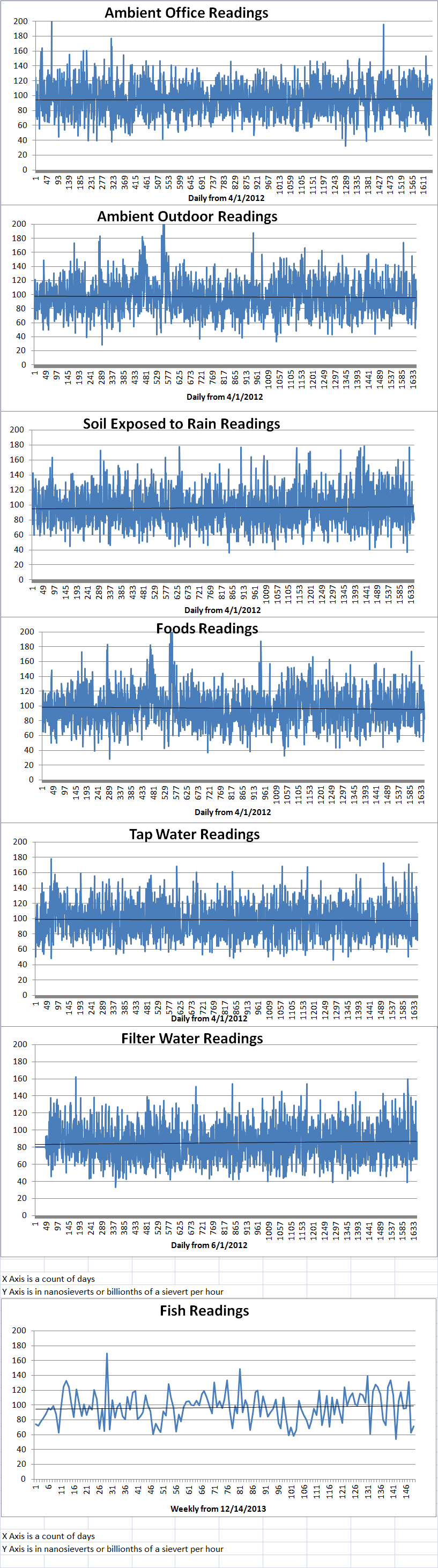
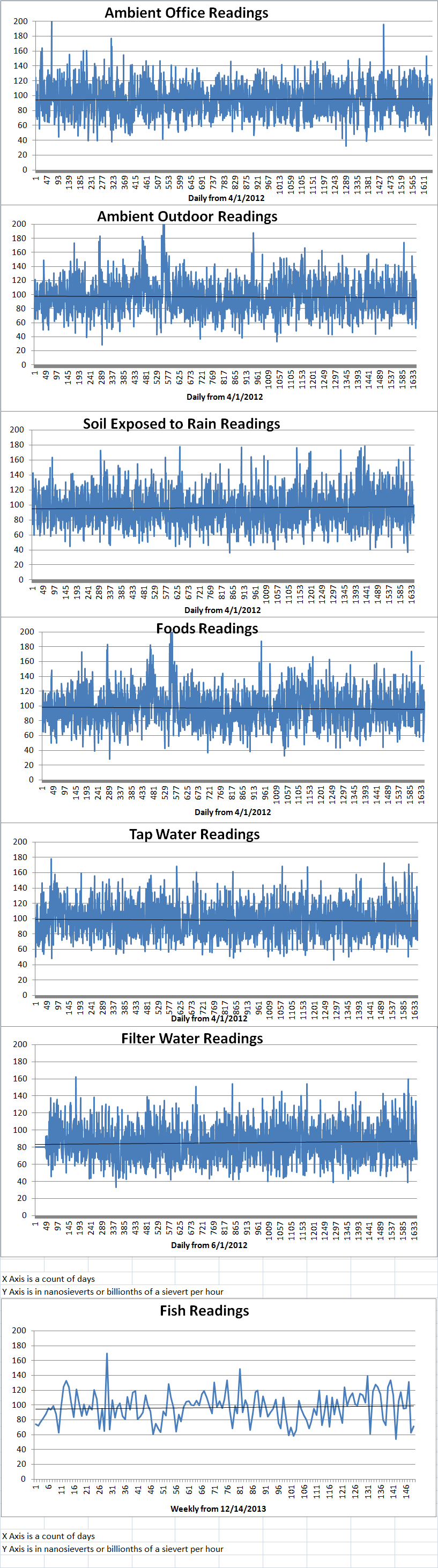
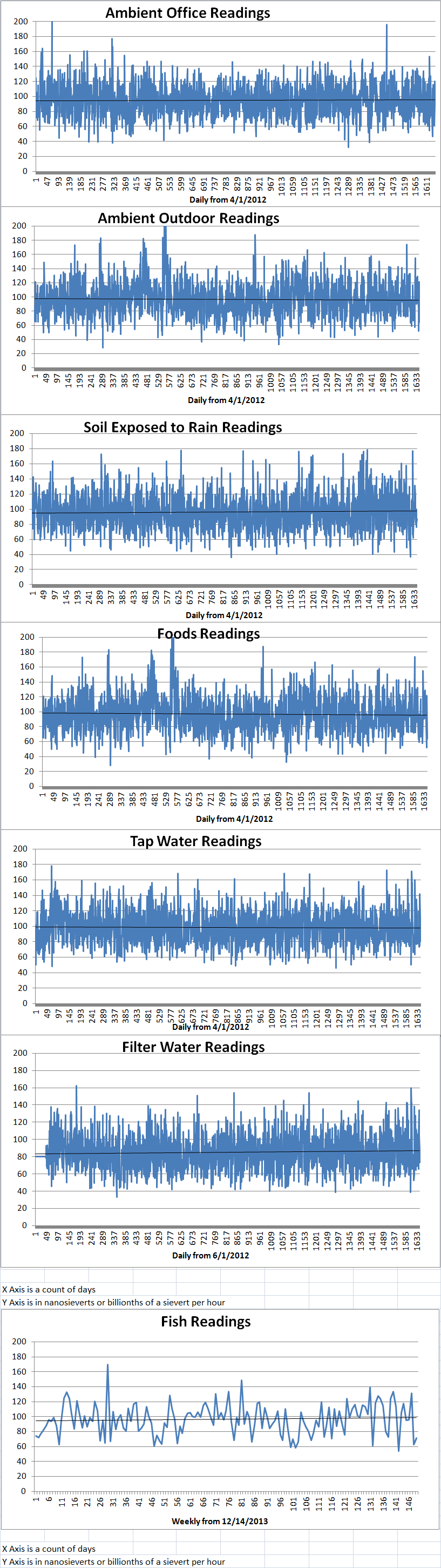
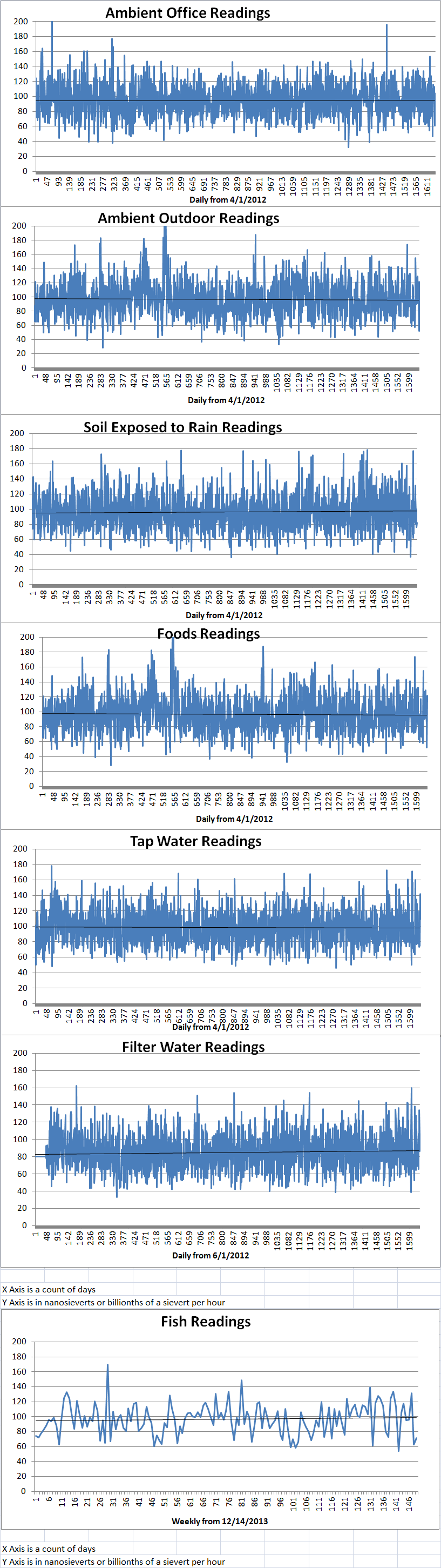
Ambient office = 108 nanosieverts per hourAmbient outside = 78 nanosieverts per hourSoil exposed to rain water = 81 nanosieverts per hourAvocado from Central Market = 83 nanosieverts per hourTap water = 107 nanosieverts per hourFilter water = 98 nanosieverts per hour -
Radioactive Waste 206 – Ice Wall At Fukushima Fails To Solve Problem Of Contaminated Ground Water
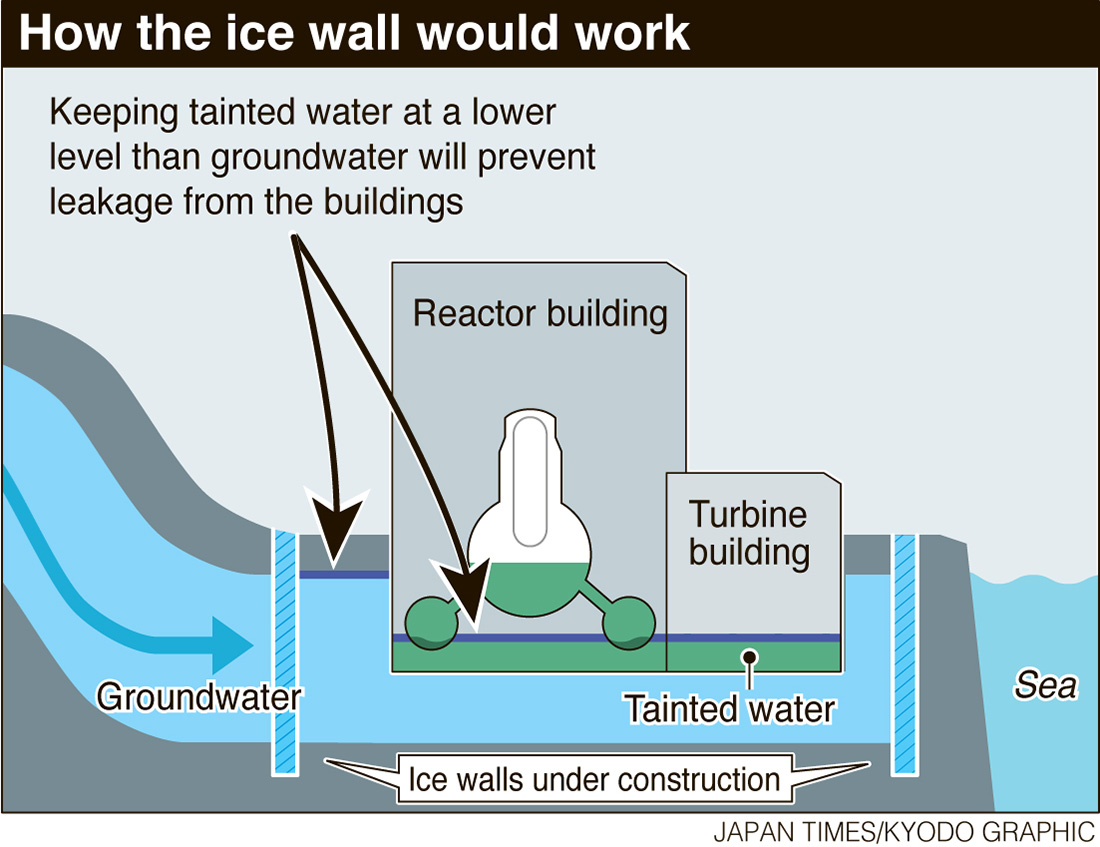
It has now been five years since the nuclear disaster at Fukushima. After the meltdown of the reactors one of the continuing problems was the leakage of groundwater with radioactive contamination into the Pacific Ocean. Tanks were hastily constructed and contaminated water was pumped into them. Eventually, the leakage overwhelmed the tanks. It was decided that it might be possible to sink a series of wells and inject a cooling solution into them to freeze the groundwater to form a barrier to prevent contaminated groundwater from getting to the Pacific.
Almost sixteen hundred holes were sunk thirty feet into the ground at Fukushima. A cooling solution at thirty degrees below zero was pumped down the tubes. It was supposed to create a solid wall of ice that would form an impenetrable barrier to the contaminated ground water. Almost three hundred million dollars was spent by the Japanese government to create the underground frozen wall.
Prior to the creation of the ice wall, TEPCO was pumping three hundred tons of contaminated ground water to prevent it escaping into the Pacific. Recently, they have been pumping up one hundred and thirty tons of water. This is still almost double the seventy tons that was their target. In October, the Japanese Nuclear Regulatory Agency (NRA) told TEPCO that they could not expect the frozen wall to be effective at containing the contaminated ground water.
One of the big concerns of the NRA had to do with the flow of groundwater from the mountains behind the Fukushima site. They had been worried that blocking the flow of water from the mountains would lower the level of water in the ruins of the reactors to the point where more of the highly contaminated water would flow into the Pacific. Eventually they concluded that the ice was ineffective and there was not a big problem with building an ice wall on the mountain side. They issued a permit to TEPCO to proceed with the ice wall by the mountains. TEPCO is going to start freezing five sections near the mountains in the near future.
Now the Japanese Nuclear Regulatory Agency has concluded that because the wall has been ineffective, it should be considered a minor part of the remediation effort. They cited the finding that the ground water that was being pumped up outside the frozen wall on the Pacific Ocean side was well above the targeted reduction. They advised TEPCO to use pumps to deal with the contaminated water instead of the frozen wall.
A professor of geotechniques at the University of Kyoto recently said that there was a lack of knowledge about the way that the cooling solution was freezing the soil at Fukushima. He advised that more research was needed and that TEPCO should drill a test well.
The disaster happened five years ago and TEPCO and the Japanese government are still not sure how to deal with the aftermath. This is part of the reason that estimates of the ultimate cost of the cleanup of Fukushima have recently doubled.
-
Nuclear News Roundup Dec 27, 2016
A fake news story led to threats of nuclear war between Pakistan and Israel on Christmas Eve. cnn.com
The Russian Navy is expecting to launch two new nuclear-powered submarines in 2017, according to the Russian Navy Deputy Commander-in-Chief Vice-Admiral Viktor Bursuk. “In 2017, the first improved Project 955-A submarine and the Yasen-M will be floated out,” Bursuk told TASS News Agency on December 23. thediplomat.com
-
Geiger Readings for Dec 27, 2016
Ambient office = 122 nanosieverts per hourAmbient outside = 90 nanosieverts per hourSoil exposed to rain water = 89 nanosieverts per hourBrussel sprouts from Central Market = 106 nanosieverts per hourTap water = 72 nanosieverts per hourFilter water = 66 nanosieverts per hour -
Radioactive Waste 205 – Serious Problems At The U.K. Office For Nuclear Regulation
One of my repeated themes in this blog is to complain about the failure of national nuclear regulatory agencies to properly enforce regulations on the nuclear industry in their country. I have documented many instances of such failures on the part of the U.S. Nuclear Regulatory Commission in previous posts. Today I am going to focus on the Office For Nuclear Regulation (ONR) in the United Kingdom. Critics have charged that the ONR has virtually ignored dozens of serious mistakes involving nuclear power plants and military bases in the U.K.
An investigation by the Times has found that while the ONR has reported that the annual number of serious nuclear accidents and mistakes has remained stable for over a decade, in reality, the number of serious incidents has doubled since 2010 to more than one a day. Almost a thousand incidents were rated as zero or unrated on the International Nuclear Event Scale (INES) between 2012 and 2015 including:
· Four cases where the radioactive isotope of hydrogen, tritium, which is dangerous to human health, was found at high levels in groundwater around the Dungeness B reactor in Kent.
· Seventy safety incidents at the U.K.’s main nuclear warhead base at Aldermaston, Berkshire were reported.
· An accident involving a vehicle carrying nuclear material on the M1 highway hit a lorry. Another transportation incident where a transport lorry flipped over, damaging two containers holding radioactive chemicals.
· Uranium “sludge” and a radioactive isotope of cesium were left in bin bags at Springfields, a former power plant, and the Amersham nuclear materials factory.
· At least a dozen leaks of radioactive substances at nuclear power stations.
· Over thirty fires which broke out at nuclear power stations.
A member of the U.K. nuclear advisory board was concerned that the “anomalies” that were dismissed as trivial by the INES were, in fact, serious and should have been investigated more thoroughly. Oddly enough, when compared to some incidents that had been rated by the ONR as a One or higher on the INES, the zero-rated or unrated incidents appeared to actually be more serious.
Sellafield, a site with a fuel reprocessing center and shuttered reactor, has been called the world’s riskiest nuclear site. Sellafield reported one hundred and sixty seven unrated or zero incidents, the most of any site in the U.K. There were several power cuts, ground water and soil were contaminated, the reactor suffered unplanned shutdowns and the reactor once lost all of its cooling water.
The founder of the Nuclear Consultation Group said that these discrepancies in the recording and rating of nuclear incidents suggested that either the ONR was either engaging in deliberate cover-ups or they were just seriously incompetent. A professor of energy policy at the University of Sussex said that much of the problem stemmed from the fact that the ONR was expected to both regulate and promote the nuclear industry in the U.K. These two goals are mutually incompatible and such conflicting mandates are guaranteed to cause problems. In addition, the ONR gets over ninety percent of its funding from the nuclear industry in the U.K.
The U.K. is going to drop the INES rating system soon and move to a vaguer system that would involve a color coding system for the seriousness of a nuclear incident. The U.K. government is also working on giving the domestic nuclear industry more control over how they are regulated. This would seem to me to be moving the opposite direction than that that would be suggested by the Times investigation. The ONR is a new agency that has only existed for a few years. That means that it does not have a deep history of operation traditions and it should be more amenable to needed change.

-
Nuclear News Roundup Dec 26, 2016
Japanese conglomerate Toshiba Corp, which purchased nuclear power plant builder CB&I Stone & Webster in December 2015, said this week that it would likely book a loss of several billion dollars this fiscal year due to high cost overruns associated with nuclear power plant projects. nuclearstreet.com
-
Geiger Readings for Dec 26, 2016
Ambient office = 120 nanosieverts per hourAmbient outside = 86 nanosieverts per hourSoil exposed to rain water = 87 nanosieverts per hourGarlic bulb from Central Market = 64 nanosieverts per hourTap water = 80 nanosieverts per hourFilter water = 73 nanosieverts per hour -
Geiger Readings for Dec 25, 2016
Ambient office = 104 nanosieverts per hourAmbient outside = 85 nanosieverts per hourSoil exposed to rain water = 82 nanosieverts per hourBroccoli from Central Market = 121 nanosieverts per hourTap water = 111 nanosieverts per hourFilter water = 87 nanosieverts per hour