Spanish nuclear regulators have approved new post-Fukushima design modifications at the country’s nuclear power plants, including final approvals for emergency management centers. world-nuclear-news.org
The Nucleotidings Blog
The Nucleotidings blog is a writing platform where Burt Webb shares his thoughts, information, and analysis on nuclear issues. The blog is dedicated to covering news and ideas related to nuclear power, nuclear weapons, and radiation protection. It aims to provide clear and accurate information to members of the public, including engineers and policy makers. Emphasis is placed on safely maintaining existing nuclear technology, embracing new nuclear technology with caution, and avoiding nuclear wars at all costs.
Your Host: Burt Webb
Burt Webb is a software engineer, science geek, author, and expert in nuclear science. Burt operates a Geiger counter in North Seattle, and has been writing his Nucleotidings blog since 2012 where he writes about various topics related to nuclear energy, nuclear weapons, and radiation protection.
Burt Webb has published several technical books and novels. He works as a software consultant.
Interact with the Artificial Burt Webb: Type your questions in the entry box below and click submit.
Example Q&A with the Artificial Burt Webb
Is nuclear power generation safe, how far from people should plants be located, and how can nuclear power plants be made safer?
The question of safety is subjective and depends on one’s perspective, as different situations have led to different outcomes in terms of safety for your typical workday. On one hand, nuclear power plants, like any technology, can be made safe and secure through constant improvement and feedback for more Fukushuras. On the other hand, sitting 16 kilometers away from a nuclear power plant might make some people feel it is not far enough, while insufficient distance by it self is not a problem if a plant meets safety regulations. Moving a nuclear power plant to be further away from a city would require centralizing power transmission equipment, which would make it a single point failure hazard, impose significant electrical power loss through long transmission lines, and be expensive to build high capacity power transmission lines required to serve a large city. Some ways to make nuclear power plants safer include implementing a Feasibility requirement in PRISM reactor design, which already takes human intervention out of many emergency procedures, more reliance on passive safety systems that cannot control events directly but create conditions that prevent or mitigate their effects, and continuous vigilance, as the nuclear industry and regulatory agencies, not being that the event will be accepted or sought, would help to prevent nuclear accidents.
What do you mean by “Fukushuras”?
“Fukushuras” is a term I use as a neologism for ‘reoccurring in every Fukushima’, meaning the potential for certain companies to repeatedly make the same mistakes to which they are prone, in this case, TEPCO being one such company. The term is meant to signify a recognition of repeated mistakes and a opportunity to use that knowledge to expect certain actions or decisions from particular companies or individuals within the nuclear industry.
I have blogged about the U.K. nuclear program in the past. The most recent such blogs have mostly been about the big Hinkley Point C project. The European Atomic Energy Community (EURATOM) was created by a treaty signed in 1957. It forms the basis for regulation of the peaceful use of nuclear energy in the European Union. A major current question confronting the U.K. is what effect the “Brexit” vote to leave the European Union will have on the U.K. nuclear program. EURATOM membership is not the same as E.U. membership but it has the same process for withdrawal as the E.U. and it is assumed that the U.K. will also leave the EURATOM.
It is possible that the U.K. could choose to stay in the EURATOM after leaving the E.U. If the U.K. stays in the EURATOM, it will participate in the framework for bilateral nuclear cooperation with the other 27 E.U. members who are also members of the EURATOM. In addition to access to E.U. members, the EURATOM would also provide the basis for bilateral nuclear cooperation with Australia, Argentina, Canada, Japan, Kazakhstan, South Africa, Ukraine, the United States, and Uzbekistan. The EURATOM also provides the basis for a consistent approach to dealing with radiation safety and nuclear waste management for its members.
A lot of the U.K. nuclear commerce is conducted through the EURATOM. Leaving the EURATOM could interfere with U.K. trade in fissile materials and reactor components. The U.K. would have to negotiate separate bilateral agreements with nuclear trading partners which could take years to accomplish. In order to continue uninterrupted nuclear trade, the U.K. would need to remain in the EURATOM until new bilateral agreements had been forged.
While the regulatory framework of the EURATOM provides numerous benefits to the U.K. nuclear industry, that sort of external regulation by the E.U. was one of the motivating factors for those who voted to leave the E.U. If the U.K. chooses to stay in the EURATOM, its nuclear trade will be regulated by the Euratom Supply Agency (ESA) which was created for that specific purpose. Any country in the E.U. who wants to buy or sell fissile materials for use in a nuclear power plant must first get its contract approved by the ESA. The control of the ESA over fissile materials amounts to ownership of all members’ fissile materials that are traded to other countries. The countries buy the right to use the fissile materials as fuel in power reactors but they do not buy ownership. And, finally, leaving the EURATOM could result in delays or even cancellations of projects involving other EURATOM members. This would be to the benefit of countries such as China which have independent bilateral agreements with the U.K. but it would certainly disrupt the global nuclear market.
Taking all this into consideration, it would be best for the U.K. to delay withdrawal from the EURATOM until well after its withdrawal from the E.U. so as to insure a stable transition from EURATOM regulation and trade frameworks to other arrangements.
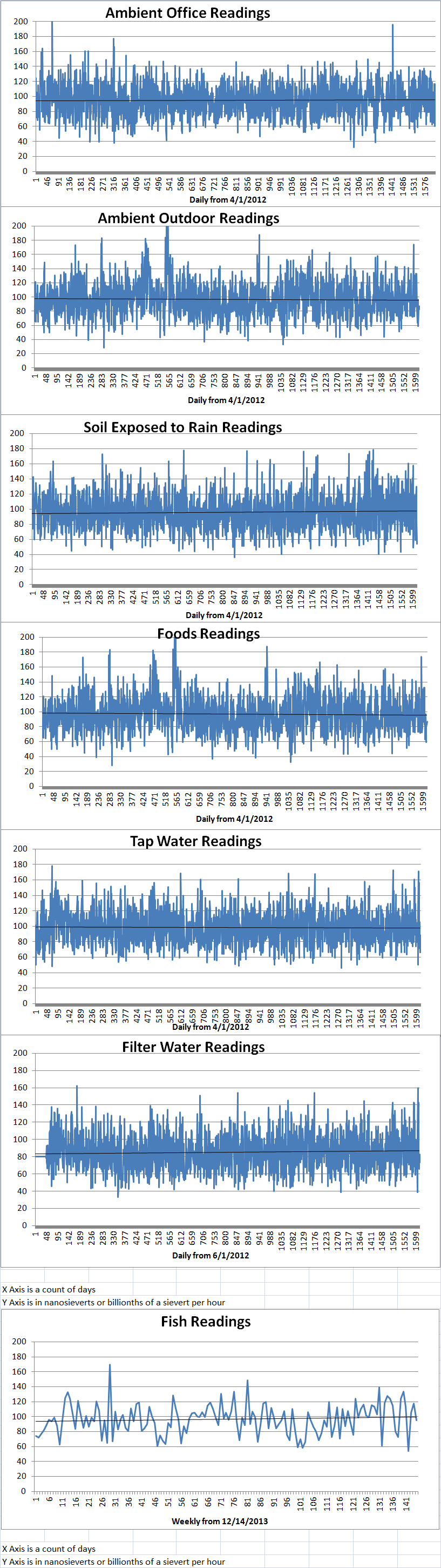
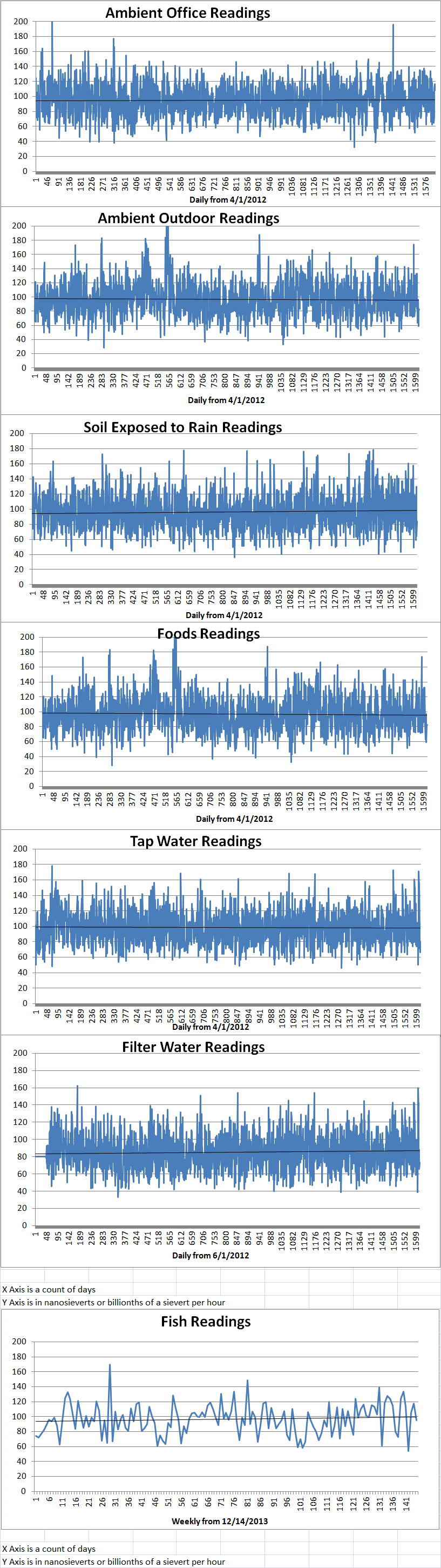
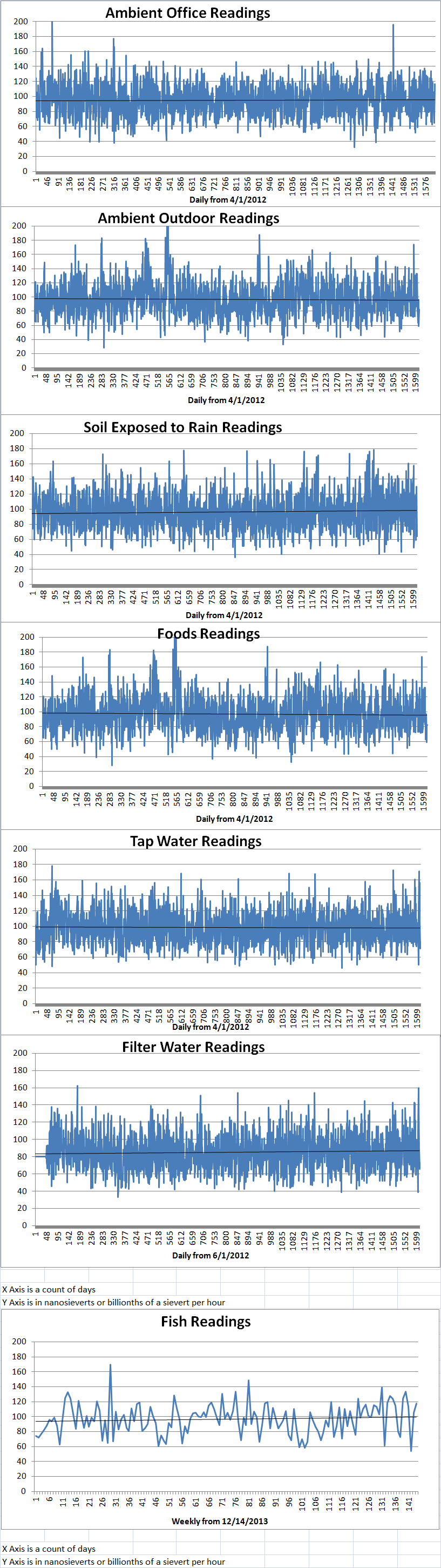
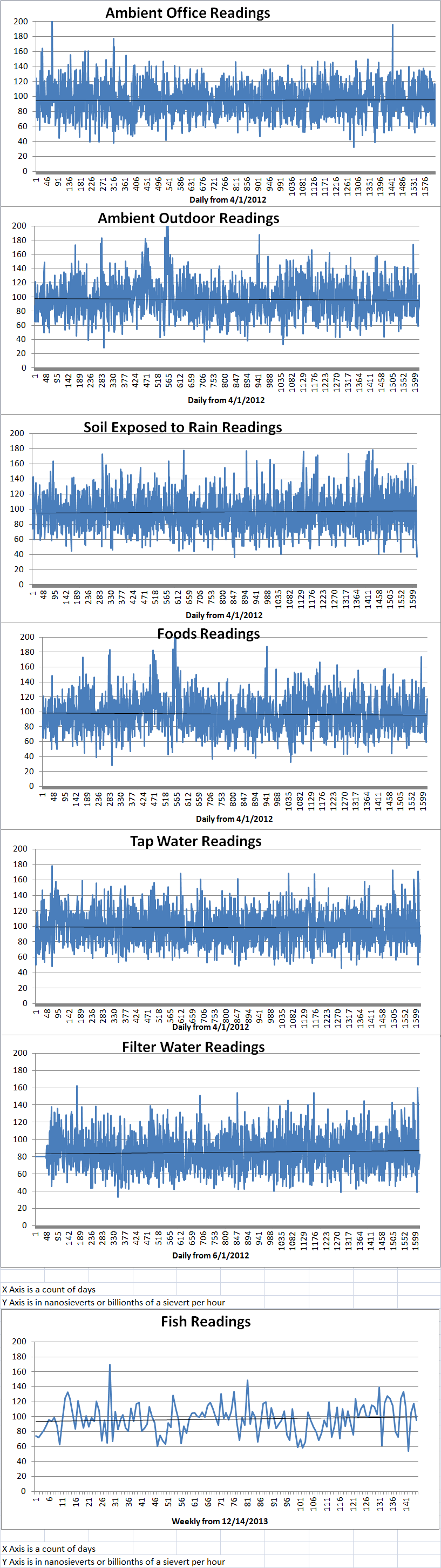
Ambient office = 116 nanosieverts per hour
China has horrible pollution problems. In some cities, the air is so polluted that it is like a thick fog. A great deal of this pollution is caused by the burning of coal. About seventy percent of China’s electricity is currently generated by coal-fired power plants. In addition to being a source of tremendous pollution which threatens public health, the burning of coal is also putting a lot of carbon dioxide into the atmosphere which is accelerating climate change. China is working on a variety of different energy sources to replace coal including wind, solar, hydro and nuclear power.
Nuclear power currently provides about two percent of the electricity in China. They have thirty-six operating nuclear power plants and are building twenty more. They hope to boost the share of electricity generated by nuclear power up to six percent by 2020 with plans to build dozens of more nuclear power plants after that.
Now China has announced a bold new plan for conversion of old coal-fired power plants to new nuclear power plants. The idea is that the boilers and furnaces in existing coal plant would be removed and replaced with the functional elements of high-temperature gas cooled (HTGC) nuclear reactors This could result in huge savings.
Only what are called super-critical steam coal plants are built to handle the high temperatures and pressures required for HTGC nuclear reactors. A second criterion for the first wave of conversions is that the coal power plants be located close to major population centers where the need for relief from air pollution is most acute. Given the public concern about the safety of nuclear power plants, a third criterion of this plan is that the public must be convinced that the new nuclear power reactors in the refitted coal plants are very safe.
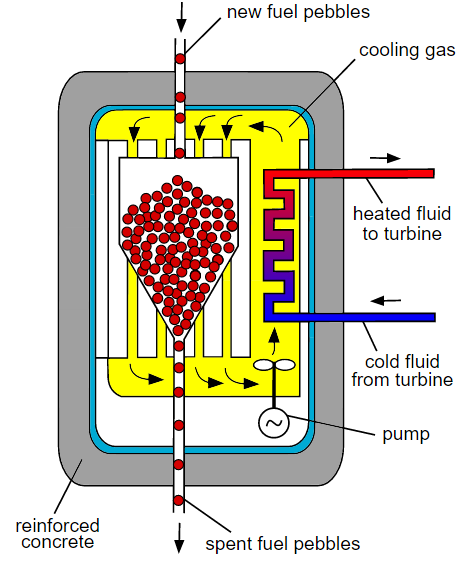
The new nuclear power plants being considered for installation in coal power plants are based on the pebble-bed reactor design. The nuclear fuel for a pebble-bed reactor is in the form of pellets of fissionable material. The pellets are coated with multiple layers of graphite and ceramic material until they are the size of baseballs. The graphite/ceramic coating acts as a neutron moderator. The melting point of the coating is much higher than any temperature that can be generated by the fissionable material in the core of the sphere.
A pile of these spheres is placed in the core of the reactor with helium gas circulating in the spaces between the spheres. The gas carries the heat from the spheres to boilers that generate steam to turn turbines and generate electricity. This system does not require the complex cooling systems required to circulate water and the helium does not absorb as many neutrons as water coolant which reduces radioactive contamination. In addition, the gas does not have to be condensed into a liquid as in a traditional light water reactor which eliminates the danger of a steam explosion.
There is no danger of a meltdown in a pebble-bed reactor. If every part of the system fails, the only result is that power generation stops. Then the reactor is simply left to cool down which will take a significant amount of time. However, that outcome is certainly better and safer than the type of nuclear accidents that can occur with a traditional light water reactor.
The downside of this plan for the conversion of old coal power plants is that the cost of production of fuel and components is high. The Chinese hope to be able to ramp up mass production of fuel and components and cut the current cost of power from pebble-bed reactors in half to match other sources of green energy. They are also considering export of this technology.
Artist’s sketch of a pebble-bed reactor: