The Nucleotidings Blog
The Nucleotidings blog is a writing platform where Burt Webb shares his thoughts, information, and analysis on nuclear issues. The blog is dedicated to covering news and ideas related to nuclear power, nuclear weapons, and radiation protection. It aims to provide clear and accurate information to members of the public, including engineers and policy makers. Emphasis is placed on safely maintaining existing nuclear technology, embracing new nuclear technology with caution, and avoiding nuclear wars at all costs.
Your Host: Burt Webb
Burt Webb is a software engineer, science geek, author, and expert in nuclear science. Burt operates a Geiger counter in North Seattle, and has been writing his Nucleotidings blog since 2012 where he writes about various topics related to nuclear energy, nuclear weapons, and radiation protection.
Burt Webb has published several technical books and novels. He works as a software consultant.
Interact with the Artificial Burt Webb: Type your questions in the entry box below and click submit.
Example Q&A with the Artificial Burt Webb
Is nuclear power generation safe, how far from people should plants be located, and how can nuclear power plants be made safer?
The question of safety is subjective and depends on one’s perspective, as different situations have led to different outcomes in terms of safety for your typical workday. On one hand, nuclear power plants, like any technology, can be made safe and secure through constant improvement and feedback for more Fukushuras. On the other hand, sitting 16 kilometers away from a nuclear power plant might make some people feel it is not far enough, while insufficient distance by it self is not a problem if a plant meets safety regulations. Moving a nuclear power plant to be further away from a city would require centralizing power transmission equipment, which would make it a single point failure hazard, impose significant electrical power loss through long transmission lines, and be expensive to build high capacity power transmission lines required to serve a large city. Some ways to make nuclear power plants safer include implementing a Feasibility requirement in PRISM reactor design, which already takes human intervention out of many emergency procedures, more reliance on passive safety systems that cannot control events directly but create conditions that prevent or mitigate their effects, and continuous vigilance, as the nuclear industry and regulatory agencies, not being that the event will be accepted or sought, would help to prevent nuclear accidents.
What do you mean by “Fukushuras”?
“Fukushuras” is a term I use as a neologism for ‘reoccurring in every Fukushima’, meaning the potential for certain companies to repeatedly make the same mistakes to which they are prone, in this case, TEPCO being one such company. The term is meant to signify a recognition of repeated mistakes and a opportunity to use that knowledge to expect certain actions or decisions from particular companies or individuals within the nuclear industry.
The global nuclear industry was heavily impacted by the Fukushima nuclear disaster in March of 2011 in Japan. Many countries reexamined their nuclear safety standards and there were many changes in regulations and some upgrades to existing plants. Plans for new plants underwent review and some were altered. In addition, some countries such as Indonesia and Chile suspended or abandoned their orders for new nuclear power reactors. Some countries such as Germany abandoned nuclear power completely and began shutting down existing reactors.
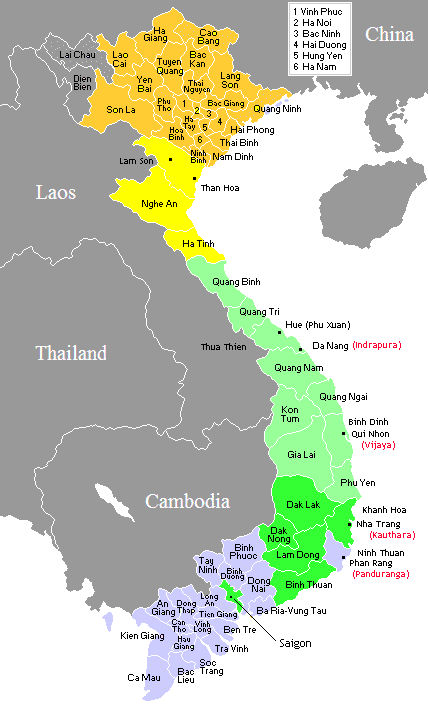
Japan has been involved in the nuclear export industry for decades with the supply of nuclear components to foreign reactor construction. Japanese Prime Minister Abe has made export of nuclear technology central to his plans to bolster Japan’s economy. One of his ambitions was to have Japan’s nuclear industry actually carry out the complete construction of a foreign power reactor. Japan has not ever done before. One of the projects that would have let Abe fulfill his ambitions was a contract to construct two nuclear power reactors for Vietnam in the central Ninh Thuan province.
Hanoi contracted the Japanese to build the nuclear power reactors in 2010. The contract was with Japan Atomic Power, a consortium of Japanese nuclear firms including Tokyo Electric Power, Toshiba and Hitachi. This week, the Japanese government announced that it had been informed by Vietnamese Deputy Prime Minister Trinh Dinh Dung that the Vietnamese government was going to cancel the project soon. The Vietnamese parliament is scheduled to formally vote to cancel the contract next week.
At the time of the contract signing, Vietnam projected that it would be experiencing a seventeen to twenty percent increase in demand for electricity between 2016 and 2030. This prompted long range plans for Vietnam to eventually build fifteen gigawatts of nuclear power capacity. However, now Vietnam estimates that demand for new capacity will be eleven percent between 2016 and 2020 and seven to eight percent between 2020 and 2030. This serious drop in estimated future demand caused Vietnam to reconsider its commitment to nuclear power.
This development is a severe blow to the Japanese nuclear industry, already in deep distress since the Fukushima disaster resulted in the closing of all the Japanese nuclear power reactors. Only a couple of reactors have been restarted since the Fukushima disaster.
Japan is also dealing with new problems related to the sale of nuclear components abroad. It has been reported that only about half of the nuclear components being exported from Japan are checked. Now it turns out that France has had to close down twenty of its power reactors over fears of substandard components supplied by the French company Le Creusot Foundry and Japan Casting & Forging Corporation. There is evidence that JCFC forged quality control documents for nuclear components shipped to France. JCFC is now under investigation by the Japanese Nuclear Regulation Authority over the charges of forging the documents for exported parts.
Despite Abe’s strong promotion of nuclear power and nuclear exports in Japan, a large proportion of the Japanese people are opposed to nuclear power and the restarting of the Japanese reactors. With the international demand for nuclear power reactors declining and the new charges of forgery against a Japanese nuclear component manufacturer, it may be time for Abe to reconsider his support for nuclear power and nuclear exports.
Vietnam:
Unmanned remote-controlled submersible craft have come a long way since Nikola Tesla demonstrated his radio-controlled robot submersible at Madison Square Garden in 1898. This was the first time that a remote control vehicle had ever been demonstrated. Although the thousands of people attending the demonstration were impressed, the military was not and the project went no further. Now, the U.S. and the Russians are currently engaged in an arms race to develop the first underwater military drones.
I have previously blogged about reports that the Russians were working on a fast stealth underwater drone that could carry a nuclear warhead undetected into U.S. coastal waters. At first the Russians denied that they were working on such a drone but were forced to admit that the reports were accurate after secret documents about plans to develop what they called a “Status-6” underwater vehicle called the Kanyon that could carry nuclear warheads were made public.
These drones would be controlled from nearby submarines and could bring nuclear warheads into the coastal waters of enemy nations without being detected. Following a nuclear detonation, the country that sent the drone would be able to claim innocence.
Following the leak of the secret Russian plans, a Russian expert pointed out that such a weapon could change the balance of nuclear weapons in the world. He said that “The Kanyon represents another example of Russia’s aggressive and innovative approach to the development of military capabilities against US and Western interests. The possible yield of the warhead, in the megaton class, clearly is an attempt to inflict catastrophic damage against US or European naval facilities or coastal cities.”
The U.S. has its own development program for underwater military drones. It has been reported that Lawrence Wilkerson who was the chief of staff for Secretary of State Colin Powell said that the U.S. military is very close to using 3-D printing to print such a drone in a single day. Each drone would cost about one hundred thousand dollars. He also said: “Imagine an underwater army of drones patrolling the seas armed with smart torpedoes or mines.”
The U.S. Navy wants to allocate over three hundred million dollars to develop and purchase underwater drones in the coming year. The mission for such drones would be to gather intelligence, find and neutralize mines, hunt enemy submarines and chart the ocean floor. The Boeing Company is working on a craft called the Echo Voyager. The fifty-one-foot submersible craft carries no crew. It can travel underwater for weeks at a time, collecting data to relay back to ships or shore stations.
The co-director of the Center for the Study of the Drone at Bard College in New York said “As tensions continue to grow with China and Russia, two militaries that have sophisticated and very large navies, there is a growing interest in making use of unmanned technology in the maritime sphere. They are scalable, they are dependable, they can operate with a fairly high degree of autonomy.”
Boeing Echo Voyager:
Currently the United States is the world’s largest producer of nuclear power, but Nevada is home to zero of the 99 plants operating across the country. With a potential nuclear repository at Yucca Mountain, could the Silver State capitalize on bringing nuclear energy to Nevada? mynews4.com
DTE Energy Co. says its Fermi 2 nuclear power plant in southeastern Michigan is back online after being shut down for repairs. toledoblade.com
A major anti-disaster drill has been held at a nuclear plant in Hokkaido, the northernmost of Japan’s main islands. The exercise followed a similar drill in Shikoku, and was based on the scenario of a powerful earthquake and tsunami striking the region. rt.com
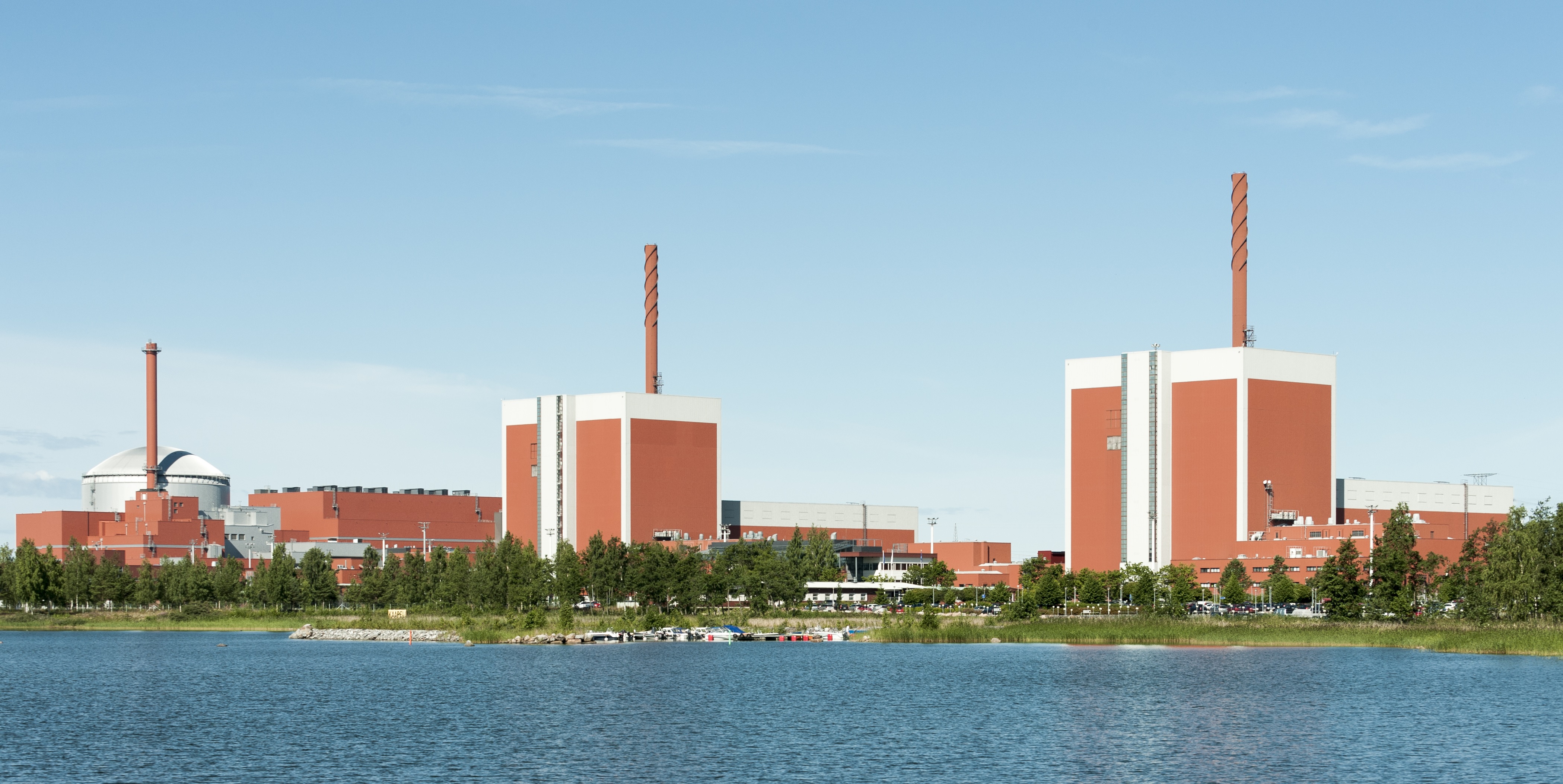
The Olkiluoto Nuclear Power Plant is located on the southwest coast of Finland. It has two operational boiling water reactors that each generate eight hundred and sixty megawatts of electricity. A third reactor is under construction at Olkiluoto. This reactor is based on the European Pressurized Reactor (EPR) design. Areva, the French nuclear reactor construction company is building the EPR at Olkiluoto. The Olkiluoto EPR is one of the first two such reactors to be constructed. The other is being constructed in Flamanville, France. Both have encountered serious problems with cost and construction schedules.
Construction of the Olkiluoto EPR began in 2005. It was supposed to be completed by 2009 but is now slated to be operational by 2018. The original estimated cost was about four billion dollars but now the cost is estimated to be over eight billion dollars. When completed it will supply sixteen hundred megawatts of power. The project was undertaken for the Finnish utility Teollisuuden Voima Oyj (TVO) by Areva NP which was a joint subsidiary of the German company Siemens and the French company Areva. Siemens stopped working on nuclear projects in 2011.
TVO and Areva are locked in a bitter arbitration dispute over who will pay for the cost overruns. Areva is asking for three billion six hundred thousand dollars and TVO is asking for two billion seven hundred and sixty million dollars.
Yesterday, the giant French utility EDF and Areva announced that they had signed binding agreements for EDF to buy the reactor construction business from Areva. Areva’s reactor business has had serious financial problems recently. The agreed upon price is two billion seven hundred thousand dollars. EDF intends to create a new company called New NP to continue the reactor construction business that it is buying from Areva. It has been reported that New NP will not be responsible for any financial liabilities connected to the EPR reactor being constructed at Olkiluoto.
TVO expressed “alarm” over the sale of the Areva reactor business to EDF. The senior vice president of TVO sent out an email that said, “TVO is alarmed about the evolution of the restructuring of the French nuclear industry, and considers that the separation of project ownership from the resources needed for the completion and commissioning of OL3 (reactor) is not appropriate behavior from a nuclear technology vendor.”
TVO is afraid that if technical experts and other resources are transferred from Areva to the New NP company, Areva will not have adequate expertise and funds to complete the Olkiluoto EPR project. In September, TVO took the matter to a French commercial court. They are asking for guarantees that the EPR project at Olkiluoto will not be delayed yet again. Areva promised that the project would be completed on the new schedule and said that tests of equipment at Olkiluoto would begin in 2017.
In addition to all the problems mentioned above, there is now additional concern about the French decision to shut down twenty nuclear power plants in France because of the discovery of substandard components which were supplied by a French foundry and a Japanese nuclear supplier. Investigation of components supplied to the Olkiluoto EPR project could result in more delays and cost overruns.
Olkiluoto Nuclear Power Plant (Hannu Huovila/ TVO)