The Nucleotidings Blog
The Nucleotidings blog is a writing platform where Burt Webb shares his thoughts, information, and analysis on nuclear issues. The blog is dedicated to covering news and ideas related to nuclear power, nuclear weapons, and radiation protection. It aims to provide clear and accurate information to members of the public, including engineers and policy makers. Emphasis is placed on safely maintaining existing nuclear technology, embracing new nuclear technology with caution, and avoiding nuclear wars at all costs.
Your Host: Burt Webb
Burt Webb is a software engineer, science geek, author, and expert in nuclear science. Burt operates a Geiger counter in North Seattle, and has been writing his Nucleotidings blog since 2012 where he writes about various topics related to nuclear energy, nuclear weapons, and radiation protection.
Burt Webb has published several technical books and novels. He works as a software consultant.
Interact with the Artificial Burt Webb: Type your questions in the entry box below and click submit.
Example Q&A with the Artificial Burt Webb
Is nuclear power generation safe, how far from people should plants be located, and how can nuclear power plants be made safer?
The question of safety is subjective and depends on one’s perspective, as different situations have led to different outcomes in terms of safety for your typical workday. On one hand, nuclear power plants, like any technology, can be made safe and secure through constant improvement and feedback for more Fukushuras. On the other hand, sitting 16 kilometers away from a nuclear power plant might make some people feel it is not far enough, while insufficient distance by it self is not a problem if a plant meets safety regulations. Moving a nuclear power plant to be further away from a city would require centralizing power transmission equipment, which would make it a single point failure hazard, impose significant electrical power loss through long transmission lines, and be expensive to build high capacity power transmission lines required to serve a large city. Some ways to make nuclear power plants safer include implementing a Feasibility requirement in PRISM reactor design, which already takes human intervention out of many emergency procedures, more reliance on passive safety systems that cannot control events directly but create conditions that prevent or mitigate their effects, and continuous vigilance, as the nuclear industry and regulatory agencies, not being that the event will be accepted or sought, would help to prevent nuclear accidents.
What do you mean by “Fukushuras”?
“Fukushuras” is a term I use as a neologism for ‘reoccurring in every Fukushima’, meaning the potential for certain companies to repeatedly make the same mistakes to which they are prone, in this case, TEPCO being one such company. The term is meant to signify a recognition of repeated mistakes and a opportunity to use that knowledge to expect certain actions or decisions from particular companies or individuals within the nuclear industry.
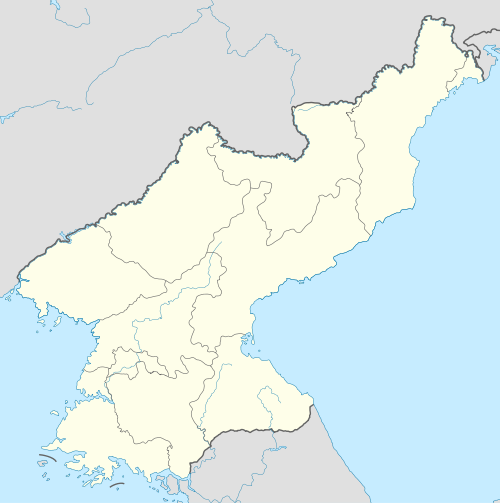
The threat of North Korean nuclear weapons has been in the news a lot. I have blogged about North Korea before. They have a few nuclear warheads and are working on building more. They are busy working on missiles to carry their nuclear warheads. There have been numerous threats by the N.K. regime to use nuclear weapons against South Korea, the U.S. and other neighboring countries. The international community has attempted different measure to deal with N.K. including trade sanctions and multinational negotiations none of which have stopped the N.K. nuclear program. There are contingency plans for U.S. marines to carry out a surgical strike on the N.K. nuclear facilities if the current situations deteriorates. However, an analyst believes that such an action could start a war with China.
China is N.K.’s only ally. China have been N.K.’s principle trading partner since the Korean War and has repeatedly come to the aid of N.K. in difficult times. They have had a military defense treaty since 1961 which would obligate China to respond if N.K. was attacked. China is playing a dangerous game of tightrope in its continued support of N.K. and its desire to have beneficial relations with other countries in the area. Other nations have tried to pressure China to force N.K. to moderate its rhetoric and actions with limited success.
” 38 North is a Web site, blog, and think tank about North Korea; it is a program of the U.S.-Korea Institute at Johns Hopkins University’s Paul H. Nitze School of Advanced International Studies and is authored by certain faculty members and by guest commentators.” (Wikipedia)
John Drury, a China expert, recently wrote a report on the N.K. situation for the 38 North. He said “If the United States launches a pre-emptive strike not to prevent a specific, imminent missile attack, but rather to prevent North Korea from perfecting an intercontinental nuclear strike capability, it is unlikely to meet Beijing’s standard for jus ad bellum (right to war). On the contrary, a strike of this nature could likely drive Beijing to side with the North in accordance with their 1961 treaty. ‘Surgery’ would rapidly descend into a bloodbath. ‘Pre-emption’ would start a war.”
He went on to say that N.K. recently touted the 1961 defense treaty with China and claimed that it was on “firm legal ground.” China apparently believes that sanctions and threats of military action will not affect the N.K. regime and that diplomatic measures are the best (and perhaps the only) way to get N.K. to abandon the development of its nuclear arsenal and warhead delivery systems. China is betting that helping N.K. economic development and working to integrate N.K. into the association of neighboring countries will moderate N.K.s militaristic impulses and actions.
Drury believes that “If the next US president adopts an engagement strategy, Xi Jinping’s government would likely step up its own work to achieve short-term breakthroughs and long-term solutions. Paradoxically, Washington’s best chance of getting China to apply constructive pressure on its errant neighbor is through a major U.S. initiative to negotiate with Kim Jong-un.”
North Korea:
Korea Hydro and Nuclear Power (KHNP) and Westinghouse have signed a memorandum of understanding on bilateral technical cooperation. The companies hope their collaboration will boost their overseas revenues. world-nuclear-news.org
Part Two of Two parts. (Please read Part One first)
U.S. Energy Secretary Moniz recently delivered the keynote address at an event called “Nuclear Energy at a Crossroads,” which was put on by the Center for Strategic and International Studies, a Washington, D.C. think-tank. During his speech, he talked about eight major problems that confront nuclear power generation and emphasized that these problems must be dealt with if nuclear power is to thrive in the U.S.
5. Spent fuel management needs to get moving.
Spent nuclear fuel is a major problem for the U.S. nuclear industry. The Department of Energy began collecting funds from nuclear plant operators in 1980 with the promise of having a permanent geological repository under Yucca Mountain in Nevada operating by 1999. By the time the Yucca Mountain repository project was cancelled in 2009, the DoE had over thirty billion dollars in the fund. Since then, nuclear plant operators have successfully sued the federal government for return of their share of the fund. It is now estimated that the U.S. will not have a permanent geological repository before 2050. In the meantime, the spent fuel pools at reactors across the U.S. are rapidly filling up. Unless these spent fuel rods can be moved to temporary storage in the next few years, some reactors may have to close. Moniz advocates the creation in the near future of one or more national interim storage facilities for dealing with the spent nuclear fuel problem.
6. A gap in the nuclear-fuel cycle and the proliferation arena.
Weapons grade plutonium can be recovered from spent nuclear fuel. Moniz emphasized that the U.S. has a global role to play in preventing the use of civilian reactors in other countries from being used to create nuclear weapons. Among other things that the U.S. can do is to provide services for the removal of spent nuclear fuel generated by other countries in return for assisting their nuclear power programs in order to prevent the proliferation of nuclear weapons.
7. Assessing a future for small modular reactors (SMRs).
Small modular reactors (SMRs) are nuclear reactors that produce less than three hundred megawatts of power. There is a lot of work being done on SMRs today. They can be built in factories and moved to the site of operation. It is hoped that standardized manufacturing and new designs can reduce risk and cost and provide more flexibility in distributing generation capacity and financing. Moniz said that he expects the first licensed SMR in the U.S. to be operational in less than ten years. He pointed out that it will be important to find out if these reactors really will be safer and cheaper.
8. Advanced nuclear technology needs a vast funding boost.
There are many interesting developments in nuclear research that need to be pursued. Unfortunately, there are insufficient funds being provided by the U.S. government to explore the potential of these new technologies. Moniz said that a recent study indicated that it would cost the U.S. government half a billion dollars a year for decades to develop and deploy some of these new system between 2030 and 2050. He pointed out that in order for this to happen, we have to start spending the money now.