Blog
-
Geiger Readings for Sept 18, 2016
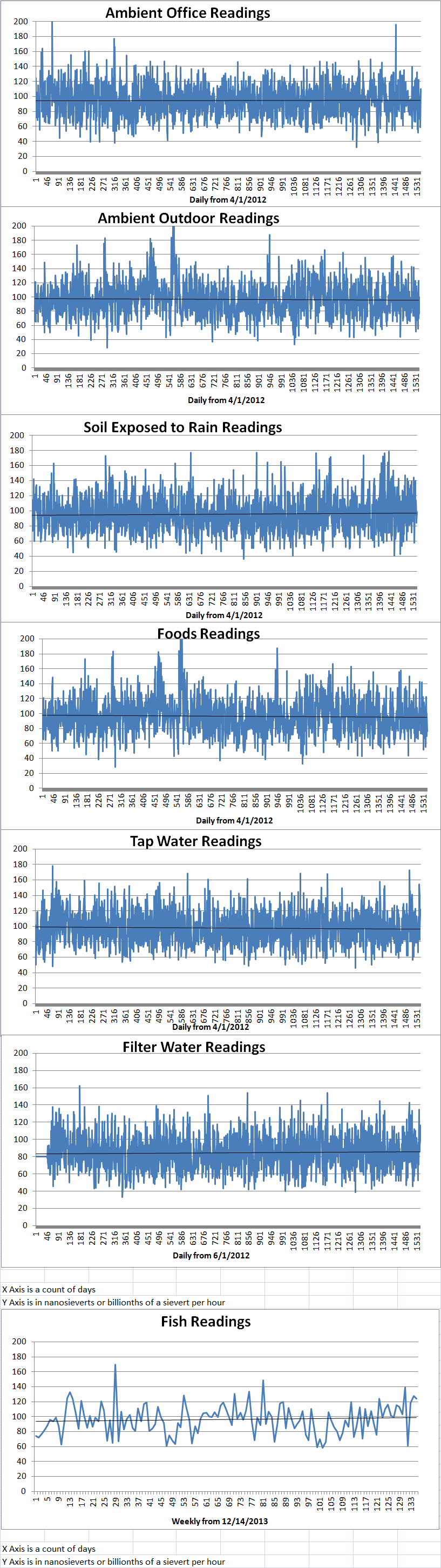
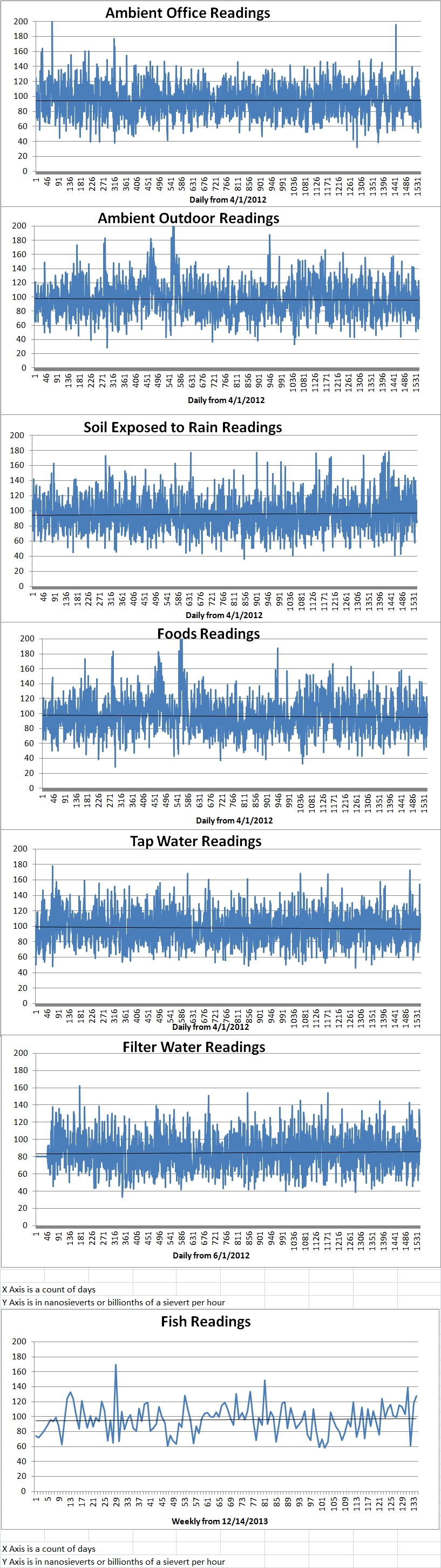
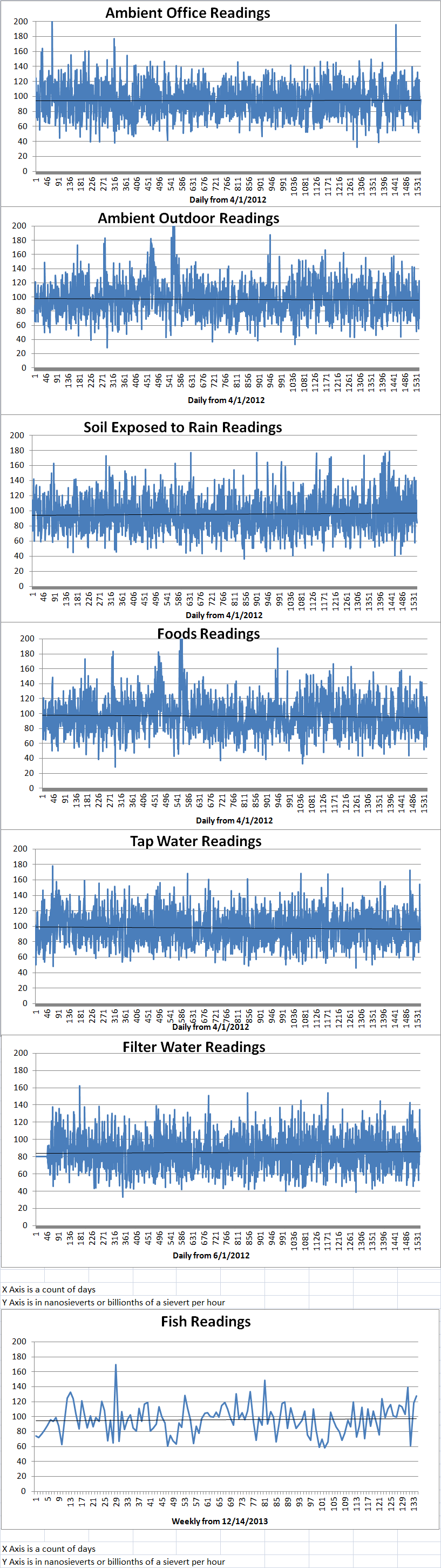
Ambient office = 80 nanosieverts per hourAmbient outside = 123 nanosieverts per hourSoil exposed to rain water = 120 nanosieverts per hourMango from Central Market = 95 nanosieverts per hourTap water = 105 nanosieverts per hourFilter water = 90 nanosieverts per hour -
Geiger Readings for Sept 17, 2016
Ambient office = 110 nanosieverts per hourAmbient outside = 99 nanosieverts per hourSoil exposed to rain water = 99 nanosieverts per hourCelery from Central Market = 77 nanosieverts per hourTap water = 122 nanosieverts per hourFilter water = 116 nanosieverts per hour -
Nuclear Reactors 408 – Turbulent Market For Uranium Production
Most nuclear fission power plants use enriched uranium for fuel. Natural uranium is common but it only has about seven tenths of a percent of U-235 which is the isotope needed for nuclear power reactors. There are a few reactors that burn a combination of uranium and plutonium. There are reactors that can burn nuclear waste as a fuel. Breeder reactors can actually produce more fissionable materials than they consume and those reaction products can be used as fuel for other reactors. There have been efforts for decades to develop fission reactors that could burn the element thorium which is also quite common. While there are several options for fueling nuclear power reactors, uranium ore is still the major source for nuclear fuel.
The world production of uranium has fluctuated in the past few years as the demand and price have gone up and down because of issues in the nuclear industry such as the Fukushima nuclear disaster in Japan in 2011, cheap natural gas and oil and reduced demand for electricity.
The period from 1987 to 2007 has been called the “coma” years for uranium production characterized by low prices, stagnant demand and big stockpiles. The next ten years saw a “renaissance” for the uranium market when prices stayed at thirty dollars a pound, demand was expected to rise substantially and investors were interested. Since 2014, the market has cooled off again. Investment is down and mines are being closed or mothballed. Unlike the coma years, reactors are being built, current demand is rising and estimates for future demand are rising. Stockpiles are declining and no new exploration is being carried out.
The shutdown of all fifty of Japan’s nuclear reactors following the Fukushima disaster was the biggest hit the uranium market took recently. Germany’s decision to close all it nuclear power plants also had an impact. And, the recent and planned closure of non-competitive nuclear power plants in the U.S. has hurt uranium sales.
Unfortunately, current production cannot be maintained at the present price for uranium. Many long term contracts for uranium are running out in 2017 and 2018. It appears that many operating mines will close in the next few years. The market demand may be rising but it takes from five to ten years to get a new mine up and operating. This means that uranium production will probably fall behind demand in the coming decade. Unless the price of uranium can rise to fifty dollars a pound production will continue to lag demand significantly.
Analysts say that the near term market will be difficult for producers. The softening of the market for uranium and the big stockpiles have put the buyers in the driver’s seat. The way in which long term contracts are negotiated has changed and not to the benefit of the producers.
The market for uranium will continue to be volatile and uncertain in the near terms. Lower production of nuclear fuel in the face of rising demand will also make investment in new nuclear power plants less attractive since price increases for fuel will make new plants less competitive in the energy market.
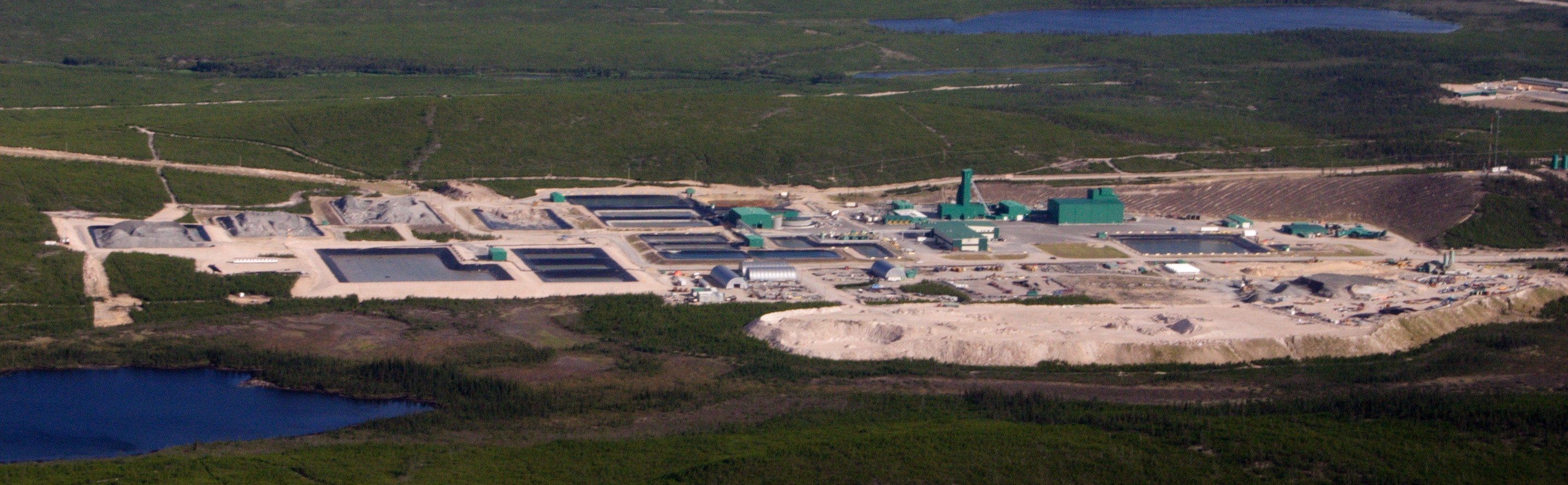
McArthur River Mine in Canada is the world’s biggest uranium mine:
-
Geiger Readings for Sept 16, 2016
Ambient office = 59 nanosieverts per hourAmbient outside = 80 nanosieverts per hourSoil exposed to rain water = 87 nanosieverts per hourCrimini mushroom from Central Market = 100 nanosieverts per hourTap water = 116 nanosieverts per hourFilter water = 100 nanosieverts per hour -
Nuclear Weapons 227 – Three Reasons Obama Gives That The U.S. Will Not Accept North Korea As A Nuclear State
North Korea has been in the news a lot because they are testing nuclear weapons and threatening other countries with nuclear annihilation. Following N.K.’s fifth recent nuclear test, the U.S. President gave three reasons that the U.S. will never accept N.K. becoming a nuclear armed nation. (This seems a bit late because N.K. already has a few atomic bombs and could deliver them to South Korea via truck or boat so I guess Obama means nuclear armed missiles that could hit other countries.)
The first reason that Obama gave had to do with the Nuclear Non-proliferation Treaty. N.K. signed the treaty in 1985 but withdrew in 2003. The U.S. is concerned that the N.K. withdrawal sets a dangerous precedent that might be followed by other nations which decide to pursue the acquisition of nuclear weapons. If one country withdrew, hostile neighbors might be tempted to withdraw as well and trigger a nuclear arms race in the region.
The second reason that Obama gave involved the threat to S.K. posed by N.K. nuclear weapons. S.K. is much stronger than N.K. with respect to conventional weapons. The only advantage N.K. has is its nuclear capability. N.K. has repeatedly threatened to attack S.K. with nuclear weapons. Short of actual nuclear attacks, N.K. could attempt to blackmail S.K. with threatened attacks. In the interest of nuclear non-proliferation, the U.S. says that it will respond to any nuclear attack on S.K. with U.S. nuclear weapons. This relieves S.K. of the necessity to develop its own nuclear weapons. The U.S. has already placed anti-missile system in S.K. to protect against N.K. missiles with conventional or nuclear warheads. If N.K. does develop a robust nuclear strike capability, it would make it much more complicated for the U.S. to deliver on its commitment to protect S.K.
The third reason given by Obama is related to the political system in N.K. Power is consolidated in the hands of a small group with the dictator being the ultimate decision maker. If the current dictator, Kim Jon-un decided to launch a nuclear attack on another country, there would be little in the form of internal political checks and balances to persuade him not to. This concentration the power to use nuclear weapons in the hands of a single individual who may be psychologically unstable would be very destabilizing to Eastern Asia and there is little the U.S. can do about it.
While it is all very good and well for the U.S. President to make grand pronouncements about what the U.S. will and will not accept in terms of the military capabilities of hostile nations such as N.K., the real question is what the U.S. could do to stop N.K. from achieving its ambitions. Israel once bombed a nuclear weapons facility in Iraq to prevent an enemy from gaining nuclear weapons capability. They have been threatening to do the same thing to Iran recently. Is the U.S. prepared to carry out such a strike on N.K. weapons facilities? Such an attack might be successful in destroying the ability of N.K. to make more weapons but it already has nuclear bombs that might be detonated in nearby nations if the U.S. did launch a preemptive strike on N.K. If the U.S. does nothing, N.K. will build more nuclear bombs and continue to work on miniaturizing them to put on missiles. If the U.S. attacks N.K., N.K. may detonate the bombs it has. Looks like a case of damned if you do and damned if you don’t. Let us hope that peaceful negotiations can persuade N.K. to give up its military ambitions.
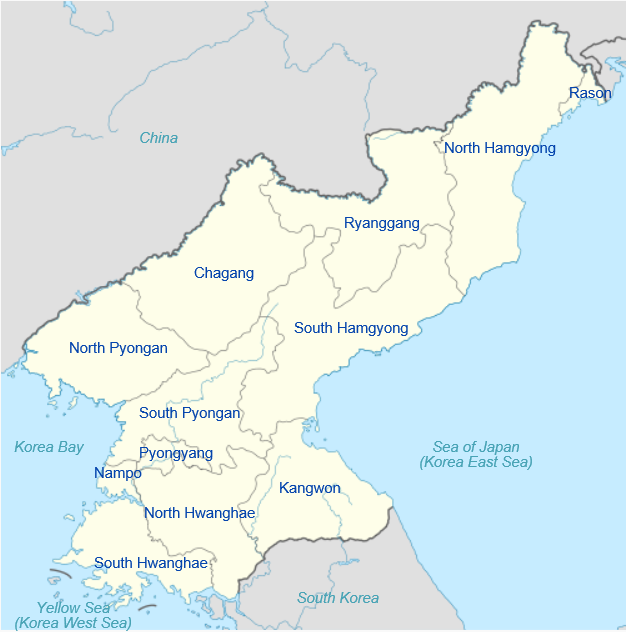
Map of North Korea:
-
Geiger Readings for Sept 15, 2016
Ambient office = 96 nanosieverts per hourAmbient outside = 80 nanosieverts per hourSoil exposed to rain water = 84 nanosieverts per hourRoma tomato from Central Market = 70 nanosieverts per hourTap water = 100 nanosieverts per hourFilter water = 93 nanosieverts per hour -
Critical Isotopes Used In Medical Imaging May Soon Be In Danger Of Short Supply
Radioactive isotopes of many elements are used in research, industry and medicine. I have blogged about medical isotopes in the past. Production of such isotopes is often restricted to just a few facilities. This leads to concerns about supply when there are problems at a production facility or when demand rises above current production. The U.S. National Academy of Sciences, Engineering and Medicine are non-profit private organization but they recently completed a review of medical isotopes mandated by Congress.
The NASEM report investigated the production and use of molybdenum-99 (Mo-99), technetium-99m (Tc-99m), iodine-131(I-131) and xenon-133 (Xe-133), and also reviewed the progress made in producing Mo-99 without highly enriched uranium.
One important conclusion reached by the researchers was that although the current supply of Mo-99 and Tc-99m is sufficient to meet global demand, there will soon be a change in the supply chain for those two isotopes which could result in severe shortages. This would have a serious impact on the delivery of medical care that is dependent on these isotopes.
Almost all of the Mo-99 produced in the world is created by irradiating targets such as slabs of uranium encased in aluminum. Seventy fiver percent of the production of Mo-99 uses targets that contain high enriched or weapons grade uranium. There are seven research reactors in the world that produce Mo-99. They are located in Australia, Canada, Europe and South Africa. The U.S. once produced Mo-99 but that ended in before 1990. Due to concerns about proliferation of nuclear weapons, four out of the five global suppliers of Mo-99 have committed to changing over to the use of low enriched uranium for their targets by 2019.
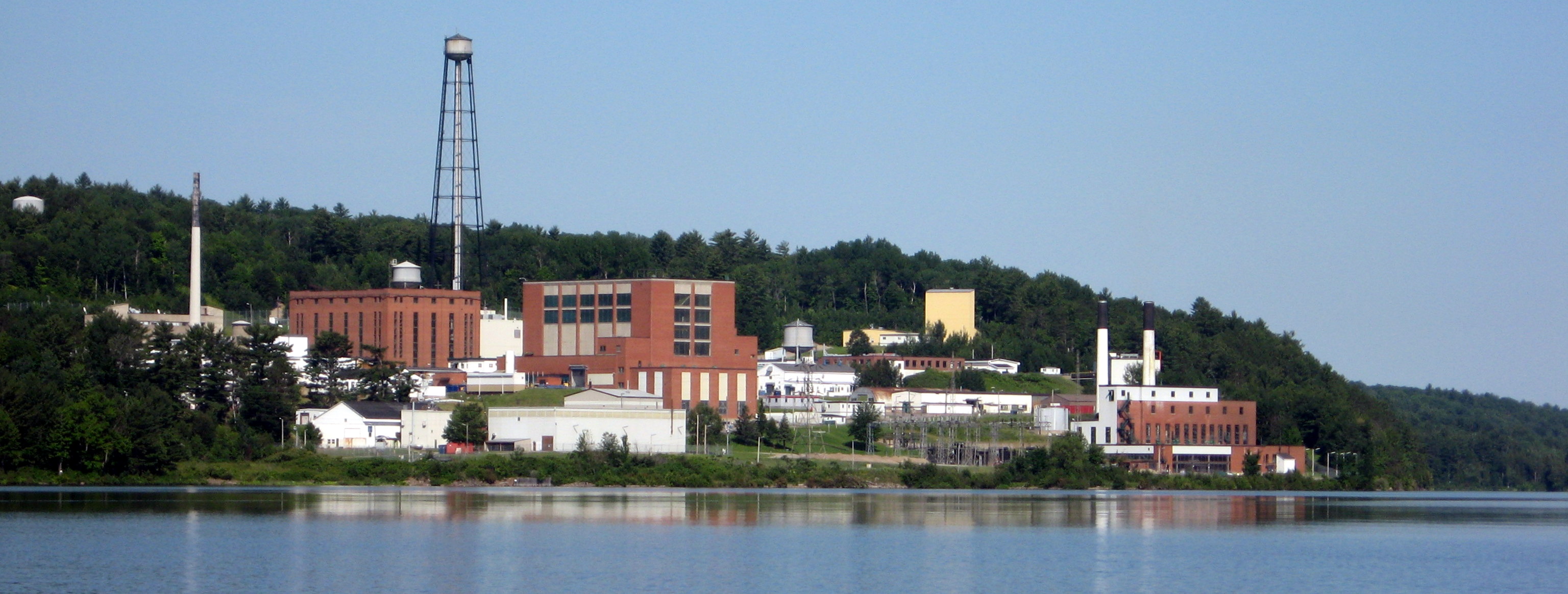
The Canadian Chalk River Laboratory has been in the news lately because of controversial plans to truck high-level radioactive waste from the facility near Ottawa to a disposal site in South Carolina. The Canadian National Research Reactor at Chalk River produces forty percent of the world supply of Mo-99. At the end of next month, production of Mo-99 at Chalk River will end. This will reduce the global supply of Mo-99. In the case there are problems with ramping up supply from other sources, the Chalk River production could be restarted but it would only be available until the reactor is permanently shut down in March of 2018.
Mo-99 is used to produce Tc-99m. Tc-99m is the most common isotope used in medical imaging that requires radionuclides. This type of diagnostic procedure “noninvasively evaluates regional physiologic and metabolic processes, such as cardiac blood flow, with the ultimate goal of localizing diseased tissues and organs” according to the NASEM report.
Mo-99 and Tc-99 have short half-lives. This means that they cannot be stockpiled. They have to be constantly produced and delivered immediately. When Chalk River stops producing them next month, there will be a danger of immediate shortfall in deliveries to medical facilities if there are problems at any of the other facilities that produce these isotopes. Some facilities are in the process of expanding production of these isotopes in 2017 after which the loss of Chalk River production should not matter.
The NASEM report strongly recommends that the U.S. and Canada have a detailed plan developed and in place to restart production of these critical isotopes at Chalk River just in case there are problems at other production facilities.
Chalk River Laboratory: