Blog
-
Geiger Readings for Sept 14, 2016
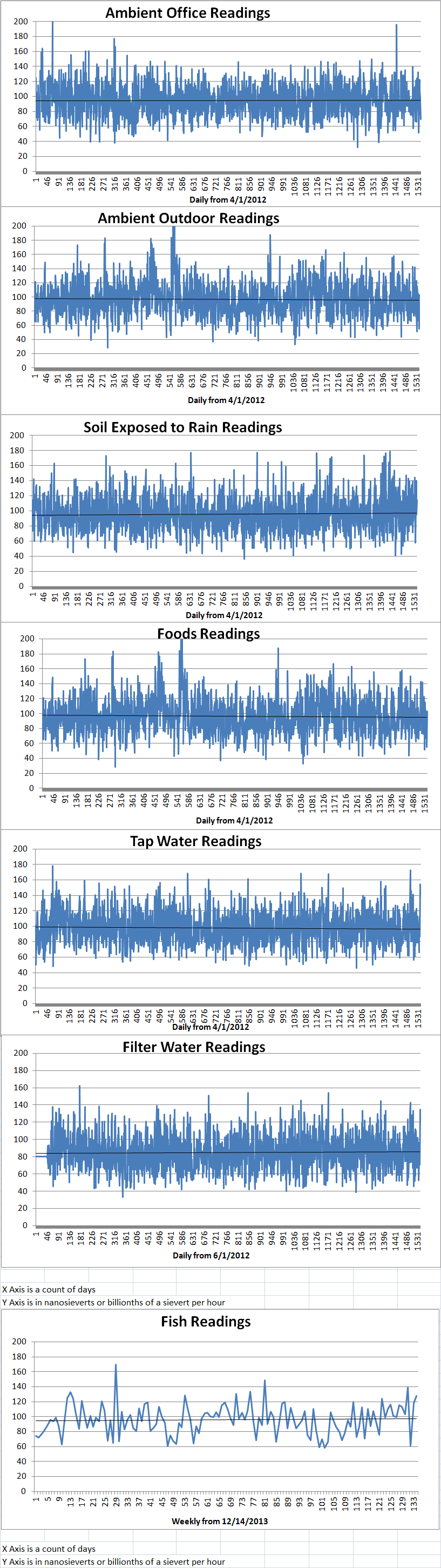
Ambient office = 88 nanosieverts per hourAmbient outside = 81 nanosieverts per hourSoil exposed to rain water = 91 nanosieverts per hourVine ripened tomato from Central Market = 123 nanosieverts per hourTap water = 88 nanosieverts per hourFilter water = 86 nanosieverts per hour -
Nuclear Reactors 407 – Recent Developments In The Hinkley Point C Saga
I have been covering the Hinkley Point C nuclear power project in the United Kingdom in numerous posts. As I have said before, there are so many different problems with this project that it serves as a great example of why nuclear energy may not be the best choice for powering our civilization.
The most recent developments in the saga were the final decision to sign the contract by the French utility EDF and the subsequent pause called in approval of the contract by the U.K. due to the new government resulting from the vote to leave the European Union.
The Chinese government has expressed serious concern over the possible cancellation of the project because they have a major investment in it. The new U.K. Prime Minister, Theresa May, who called for the suspension of the project wants to stay on good terms with the Chinese because China is a major trading partner for the U.K.
Many pundits and analysts are looking for hints as to whether or not the project will go forward. Here are several reasons that the Hinkley Point C supporters point to justify their confidence that the project may go forward.
As is the common practice, many government officials get replaced when the government changes in the U.K. The Department for Business, Energy and Industrial Strategy was no exception. There was a recent get acquainted session where the press was invited to meet with new senior U.K. government officials. Analysts say that if the new government was serious about cancelling the Hinkley Point C project, officials overseeing the energy sector would have been publicly critical of the project at the gathering. The fact that they were not indicates to some that the government intends to go forward with the project. On the other hand, perhaps the U.K. government has not yet made a decision and it would be premature to start criticizing the project before they had decided what they were going to do.
Analysts point out that EDF, the French owned company that was chosen to build the Hinkley Point C reactors has already spent three and a third billion dollars on preliminary work. They point out that if the U.K. government cancels the project, EDF could bring suit to have their initial investment repaid. On the other hand, although three and a third billion dollars is a lot of money, it is about one tenth of the estimated cost of completing the Hinkley Point C project. Ultimately, it might make more sense to pay out the three and a third billion now and not wind up wasting a lot more money in the long run.
One on the big stumbling blocks that has impeded the Hinkley Point C project is the fear of the security establishment that China could someday be an enemy of the U.K. They are afraid that it would be a bad idea to let a potential enemy have access to their nuclear infrastructure. Theresa May has just been to China to meet with Chinese leaders to discuss Hinkley Point C among other topics. Supporters of the project are hopeful that she received reassurances from the Chinese government that would soothe security concerns. However, at this point there is no way to know exactly what was said at the meetings. And even if May was reassured, there is no guarantee that the Chinese would keep their word in the long run.
EDF has just announced that a Welsh steelmaker has been selected to be the supplier of one hundred and thirty two million dollars worth of steel for the Hinkley Point C project. Supporters of the project have said that EDF would not make such an announcement unless they were confident that the project was going forward. On the other hand, perhaps EDF is just trying to put pressure on the U.K. government by making it more difficult for them to cancel the project because of public pressure around jobs and lucrative contracts for U.K. businesses.
As usual with Hinkley Point C, there is more smoke than light with respect to what is happening and what is going to happen. Stay tuned.
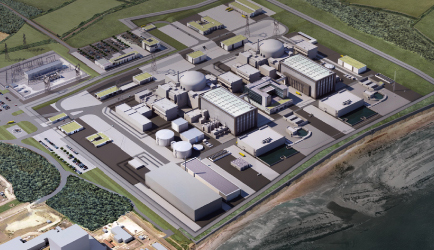
Artist’s concept of Hinkley Point C:
-
Geiger Readings for Sept 13, 2016
Ambient office = 70 nanosieverts per hourAmbient outside = 105 nanosieverts per hourSoil exposed to rain water = 114 nanosieverts per hourVine ripened tomato from Central Market = 103 nanosieverts per hourTap water = 138 nanosieverts per hourFilter water = 121 nanosieverts per hour -
Nuclear Weapons 226 – Critics Say That The U.S. Should Cancel Some Nuclear Arsenal Upgrades
The Obama administration has sent out mixed signals on the issue of nuclear weapons. When elected, Obama was very clear that he wanted to move aggressively to reduce the number of nuclear weapons in national arsenals around the world. However, he has recently asked for a thirty year one trillion dollar project to upgrade the nuclear arsenal of the United States. Nuclear tensions around the world have been rising, especially between Russia and the U.S. but upgrading and expanding our nuclear arsenal does not seem like a good way to reduce those tensions. Some critics of the plan have suggested that there are at least three U.S. nuclear weapons projects that should be canceled.
I have written about the B61-12 gravity bomb before. The U.S. says that this is just an upgrade of the B61 bomb that has been in the U.S. arsenal for a long time. However, the Russians say that should be considered a new weapon and it is a violation of nuclear disarmament treaties.
The new version of the bomb will have the ability to be set for different yields in the range of thee hundred tons of TNT to thirty thousand tons of TNT. It will also be steerable which will make it much more accurate. The combination of low yield and high accuracy makes it more probable that this tactical nuclear weapon will be used someday.
One hundred and eighty of B61-12s are slated to be deployed to Europe as part of our answer to recent Russian nuclear belligerence in Eastern Europe. Critics say that they don’t think that the Russians will be particularly impressed and that the B61-12 will have little utility as a deterrent. It has been recommended that the U.S. not deploy any B61-12 to Europe. As much as six billion dollars out of the estimated project cost of ten billion dollars could be saved.
The Long Range Standoff or LRSO cruise missile is the new version of an Air-Launched Cruise Missile. The original ALCR, the AGM-86, was developed as part of the U.S. arsenal in the 1980s as a counter to Soviet air defense systems and military superiority in Europe. Critics of the development and deployment of the LRSO say that existing cruise missiles can do the same job and that there are other weapons in the U.S. arsenal that render the LRSO redundant and a waste of money. Cruise missiles are “dangerous” and “destabilizing” because they can have a conventional or nuclear warhead. If an enemy sees a flock of U.S. cruise missiles headed for them, they have no way of knowing whether those missiles have conventional or nuclear warheads. This means that a conflict could escalate into a nuclear confrontation because of the use of cruise missiles with any type of warhead. The program is just getting started and cancelling it could save tens of billions of dollars from the estimated thirty billion dollar cost.
The U.S. has about four hundred Intercontinental Ballistic Missiles in silos in the middle of the continental U.S. which cost billions of dollars to maintain. Critics point out that these have little strategic value. Stationary land based missiles are very vulnerable to attack.
Because they are so vulnerable, the current U.S. policy is to launch them if there is a warning that an enemy attack is in progress. This leaves little time for assessment of the validity of a warning and has almost led us into a mistaken war several times already.
The best use of land-based missiles would be for a first strike surprise attack. While President Obama has not ruled out the possibility of the U.S. launching a first strike against an enemy, it is very unlikely that the U.S. would do such a thing. If we did launch a first strike against an enemy like Russia, they would retaliate and destroy much of the U.S. Even if they did not, it has been estimated that the detonation of as few as one hundred nuclear warheads anywhere in the would cause a nuclear winter that would end human civilization.
The Air Force wants to replace existing ICBMs. The cost estimate has risen so much that the project was recently halted for reevaluation when the estimate hit eighty five billion dollars. If this program is cut, savings of one hundred and twenty five billion could result.
Cutting, delaying or reducing other items in the nuclear upgrade could result in total savings of as much as two hundred and ten billion dollars. The U.S. has over fifteen hundred nuclear weapons currently in its arsenal. This could be seriously reduced without any reduction in supposed deterrence of attacks from other nuclear armed nations.
LRSO cruise missile:
-
Geiger Readings for Sept 12, 2016
Ambient office = 93 nanosieverts per hourAmbient outside = 88 nanosieverts per hourSoil exposed to rain water = 95 nanosieverts per hourAvocado from Central Market = 55 nanosieverts per hourTap water = 155 nanosieverts per hourFilter water = 135 nanosieverts per hour -
Geiger Readings for Sept 11, 2016
Ambient office = 97 nanosieverts per hourAmbient outside = 106 nanosieverts per hourSoil exposed to rain water = 96 nanosieverts per hourOrange bell pepper from Central Market = 80 nanosieverts per hourTap water = 86 nanosieverts per hourFilter water = 71 nanosieverts per hour