How Japan’s Nuclear Disaster Still Haunts South Korea’s Biggest City huffingtonpost.com
Japan’s Abe says North Korea nuclear tests ‘absolutely unacceptable’ reuters.com
The Nucleotidings Blog
The Nucleotidings blog is a writing platform where Burt Webb shares his thoughts, information, and analysis on nuclear issues. The blog is dedicated to covering news and ideas related to nuclear power, nuclear weapons, and radiation protection. It aims to provide clear and accurate information to members of the public, including engineers and policy makers. Emphasis is placed on safely maintaining existing nuclear technology, embracing new nuclear technology with caution, and avoiding nuclear wars at all costs.
Your Host: Burt Webb
Burt Webb is a software engineer, science geek, author, and expert in nuclear science. Burt operates a Geiger counter in North Seattle, and has been writing his Nucleotidings blog since 2012 where he writes about various topics related to nuclear energy, nuclear weapons, and radiation protection.
Burt Webb has published several technical books and novels. He works as a software consultant.
Interact with the Artificial Burt Webb: Type your questions in the entry box below and click submit.
Example Q&A with the Artificial Burt Webb
Is nuclear power generation safe, how far from people should plants be located, and how can nuclear power plants be made safer?
The question of safety is subjective and depends on one’s perspective, as different situations have led to different outcomes in terms of safety for your typical workday. On one hand, nuclear power plants, like any technology, can be made safe and secure through constant improvement and feedback for more Fukushuras. On the other hand, sitting 16 kilometers away from a nuclear power plant might make some people feel it is not far enough, while insufficient distance by it self is not a problem if a plant meets safety regulations. Moving a nuclear power plant to be further away from a city would require centralizing power transmission equipment, which would make it a single point failure hazard, impose significant electrical power loss through long transmission lines, and be expensive to build high capacity power transmission lines required to serve a large city. Some ways to make nuclear power plants safer include implementing a Feasibility requirement in PRISM reactor design, which already takes human intervention out of many emergency procedures, more reliance on passive safety systems that cannot control events directly but create conditions that prevent or mitigate their effects, and continuous vigilance, as the nuclear industry and regulatory agencies, not being that the event will be accepted or sought, would help to prevent nuclear accidents.
What do you mean by “Fukushuras”?
“Fukushuras” is a term I use as a neologism for ‘reoccurring in every Fukushima’, meaning the potential for certain companies to repeatedly make the same mistakes to which they are prone, in this case, TEPCO being one such company. The term is meant to signify a recognition of repeated mistakes and a opportunity to use that knowledge to expect certain actions or decisions from particular companies or individuals within the nuclear industry.
I have blogged about dangers posed to nuclear power plants by war and civil disorder. I have also blogged about the problems of having nuclear weapons stored at an airbase in Turkey during the recent failed coup attempt and reports that at least some of them will be moved in order to reduce the danger. Today I am going to talk about the dangers to arsenals of nuclear weapons in other countries. The nine countries that have nuclear weapons would argue that they have physical safeguards and protocols that keep their nuclear weapons secure even in the face of outbreaks of domestic violence but I disagree.
Pakistan is one of the least secure countries that has nuclear weapons. There are multiple groups that are trying to overthrow the central government and that often resort to violence. A military installation that was reported to have nuclear weapon components has already been attacked. The Pakistanis are in the process of deploying tactical nuclear weapons to their border with India. These weapons will necessarily be less secure than those stored in major government weapons depots. If Islamic radicals can get their hands on nuclear weapons, they will probably try to detonate them.
North Korea is already of great concern because of the unstable and belligerent nature of its dictator who constantly threatens nuclear attacks against other nations. There are factions within the North Korean government that hold different positions with respect to the possible use of nuclear weapons. The dictator regularly purges member of the military command who he views as a threat to his rule. The situation is highly volatile to say the least. There is a real possibility of civil war or civil chaos during which the control of nuclear weapons might fall to factions which would consider their immediate use either internally or against neighbors.
China had nuclear weapons decades ago at the time of the Cultural Revolution that engulfed the country in chaos but they managed to maintain the security of those weapons. Today, millions of Chinese have taken to the streets in protest against official corruption and suppression of the Chinese people. There is definitely danger of civil disorder. The Chinese government has kept tight control of nuclear warheads up to this point but their plans for regular nuclear armed submarine patrols in the South China Sea would mean turning over control of warheads to the commanders of the submarines which would make them much less secure.
The Soviet Union had a huge stockpile of nuclear warheads during the Cold War. When the Soviet Union collapsed, the major nuclear weapons were kept secure. However, there were a lot of tactical nuclear weapons distributed around their member countries and not all of these have been accounted for. There is a real danger that some of these tactical nuclear weapons could fall into the hands of terrorists and/or rebels. There is already smuggling of Soviet and Russian nuclear materials going on in Georgia and Moldova which attracts terrorists interested in building dirty bombs.
Other major powers must have contingency plans for dealing with unsecured nuclear weapons in the event of the collapse of countries such as Pakistan and North Korea. One option would be to bomb the locations where nuclear weapons are stored if this is known. Even the danger of spreading nuclear materials caused by bombing might be preferable to functional nuclear weapons falling into the hands of terrorist or fanatics.
If the location of nuclear weapons is not known, then invasion and occupation would be another course of action however disagreeable, destructive, deadly and costly.
A third possible way of preventing the spread of nuclear weapons seized from government arsenals would be to try to quarantine the country. That would require blockades of all land, water and air travel out of that country which could be very difficult. If those who seized the nuclear warheads had delivery systems such as missiles at their disposal, then it would be difficult to defend neighboring countries against launch. Deployment of anti-missile systems might be necessary.
Until the world is free of nuclear weapons, these threats will exist and must be taken seriously.
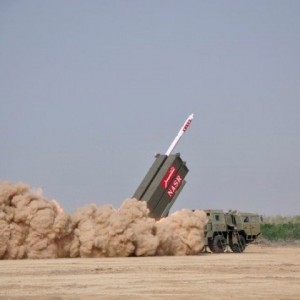
Pakistani Nasr tactical nuclear weapon:
One major concern about nuclear power plants is the danger of flooding. Nuclear power reactors require large amounts of water to cool them. This means that they need to be located near large bodies of water; rivers, lakes or oceans. This proximity to large bodies of water means that there is a possibility of flooding, especially during heavy rains, hurricanes or tsunamis. The Fukushima nuclear disaster in Japan in March of 2011 was caused by inadequate preparations for a tsunami that flooded emergency power generators.
Another danger is created by locating nuclear power reactors downstream from dams. In the U.S., twenty nuclear power plants are located downstream from dams that could pose a threat. Today I am going to go into detail about flooding dangers that were found at one of the U.S. nuclear power plants.
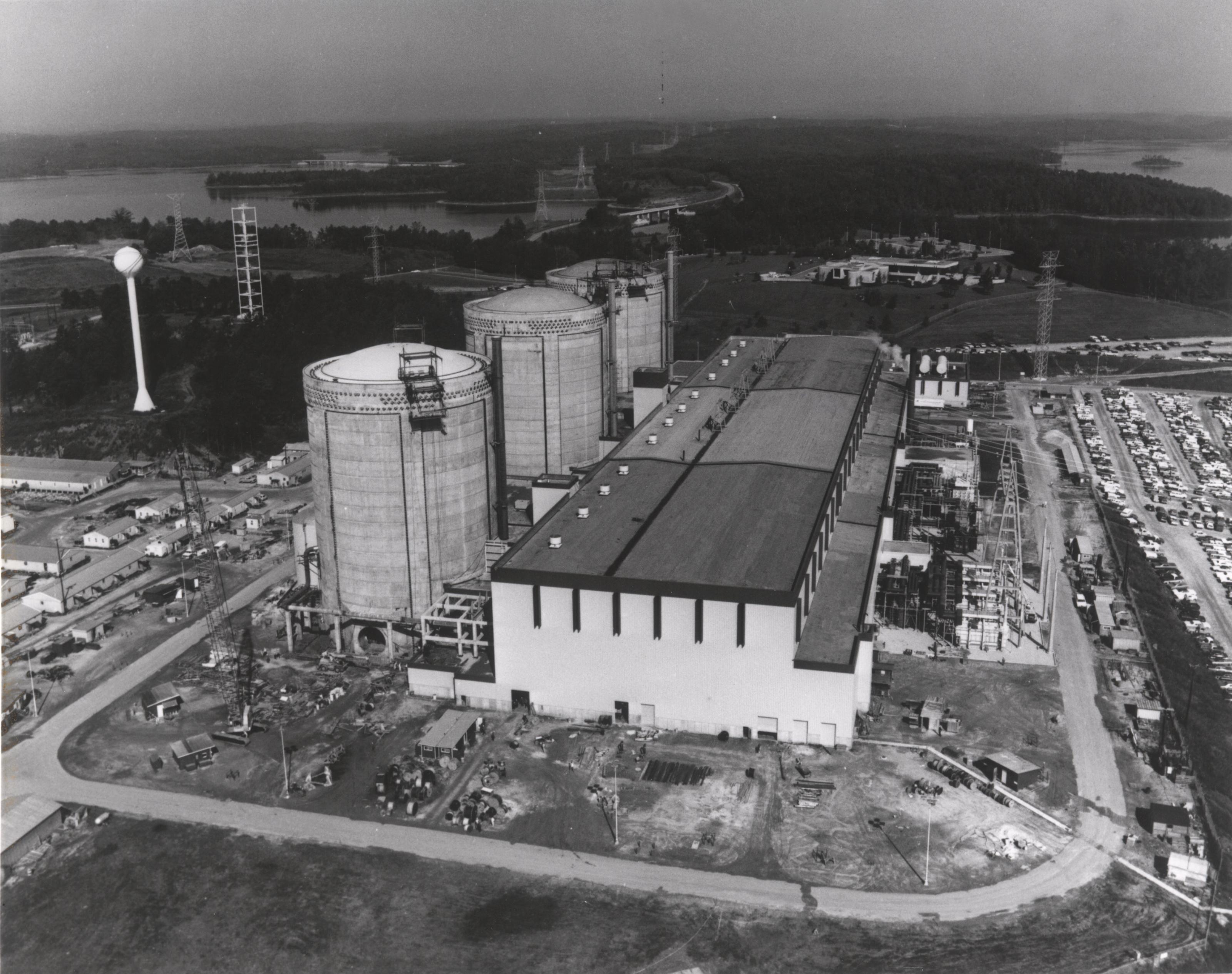
The Oconee Nuclear Station is a nuclear power plant that is located on Lake Keowee near Seneca, South Carolina. It’s three reactors went operational in 1973 and 1974. Together they generate over 2,500 megawatts. The plant is owned by Duke Energy and operated by Duke Power.
In August of 2005, inspectors from the Nuclear Regulatory Commission discovered a problem with flood control measures. A six by ten inch panel had been removed in the five foot high flood barrier around the Standby Shutdown Facility to allow access to cables during maintenance and the panel had not been replaced.
Duke Energy claimed that there was no problem because the hole where the panel had been was near the top of the flood barrier and there was no danger of water reaching that level. The NRC ruled against Duke and issue a white warning. Duke appeal the ruling and the appeal was denied. They appealed again and were denied again. During the review for the second appeal, the NRC noted that that Duke had severely underestimated the possibility of the failure of a dam that was twenty miles upstream from the plant.
The review for the second appeal also discovered something far more disturbing than the hole in the five foot flood barrier. A study that was done in the 1990s had concluded that a failure of the dam above the plant could send a sixteen foot wall of water downstream, flooding the plant and causing a meltdown of all three reactors.
Duke’s response to the NRC during the this review process was that they could not be inadequately protected from a dam failure because the NRC did not have the authority to require them to protect the plant from flooding caused by a dam failure. The NRC did not agree.
Ultimately, Duke and the NRC hammered out an agreement in 2010 that fifteen steps would be taken to reduce the possibility of a dam failure and to improve flood prevention at the plant. A diversion wall was to be built that would redirect flood waters and an embankment would be created to protect part of the plant.
This one example of flood dangers at a nuclear power plant highlights multiple issues including poor management of existing flood prevention measures, ignorance of flood danger detailed by a study of a possible dam failure, and attempts to use legal maneuvering to avoid making important and necessary changes to the flood protection measures at the plant. Fortunately, the NRC was not impressed by the misbehavior of Duke Energy and properly fulfilled the NRC regulatory mandate. This is another illustration of why it is dangerous to have corporations running nuclear power plants where profits are more important than safety.
Oconee Nuclear Station:
I have lived my whole life under the threat of nuclear war. First it was the Soviet Union and the Cold War, then the Russians and the Chinese and now the threat of rogue states such as North Korea. Fortunately, it has not happened yet but we came very close several times. It is estimated that the detonation of as few as one hundred nuclear warheads could cause a nuclear winter that would end human civilization. There are at least seven countries that have at least a hundred nuclear warheads.
The world would be much better off without nuclear weapons but no country is going to unilaterally disarm. And even with serious disarmament treaties and enforcement methods, there is always the possibility that one or more countries would try to hide a couple of nukes “just in case.”
The U.S. President has the sole authority to launch a nuclear attack on another country. With the presidential election coming up in the United States, both candidates of the major parties have accused the other of being unfit to have the codes that could launch a nuclear war. Today I am going to review just how a nuclear attack could be initiated by the U.S. President.
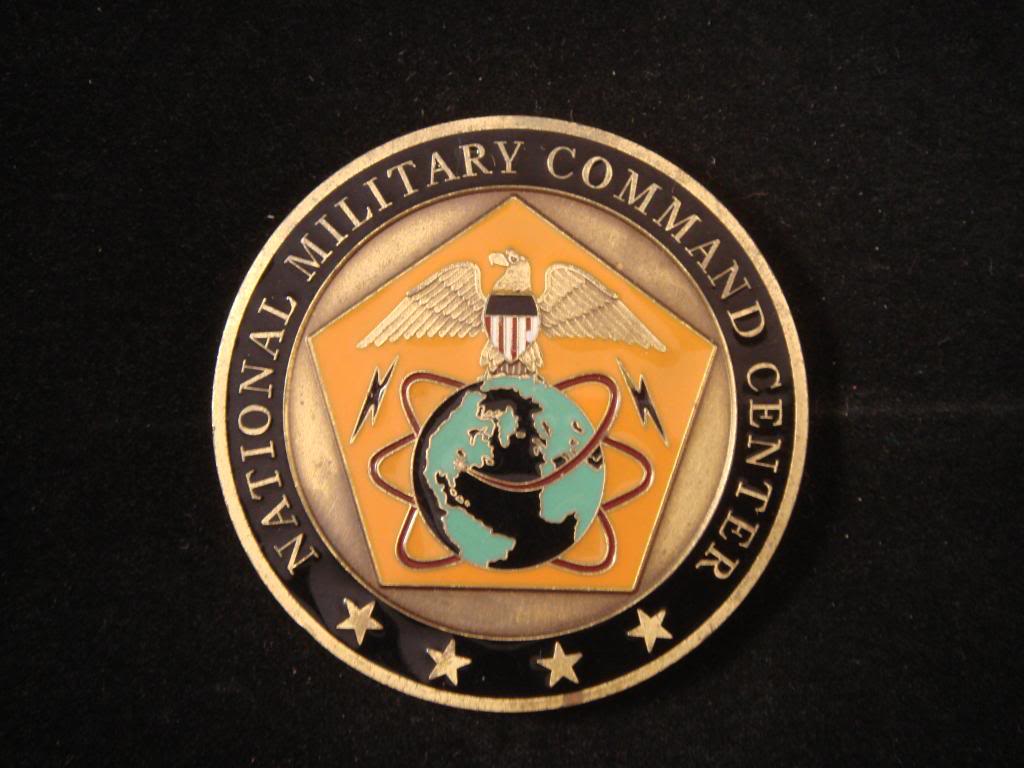
If a U.S. President decided that it was necessary to launch nuclear weapons, the first step in the process would be for the President to call a conference of top military and civilian advisors. This meeting would necessarily include the Pentagon Deputy Operations Officer who is in charge of the National Military Command Center that operates around the clock and would be responsible for carrying out a launch order. Heads of U.S. strategic nuclear forces would also be present to offer advice on strike options.
Regardless of what the advisors said, the President has the sole authority to order a launch of nuclear weapons. The meeting would last as long as the President deemed to be necessary but if there were enemy missiles inbound to the U.S., the meeting could be wrapped up in as little as thirty seconds.
If the President decided to order a launch, the Pentagon Deputy Operations Officer would have to verify his identity if he was not present in person. The Officer would offer a two letter challenge code. The President carries a small card called the “biscuit” with him at all times. The response code for the challenge is on the biscuit.
The National Military Command Center would prepare the formal launch order which would include codes for the attack plan, the time until launch, authentication codes and the codes that the launch officers need to unlock the missiles and bombs before they are deployed. This launch order is a short string about one hundred and fifty characters long. It would be transmitted to all the nuclear command centers and to the launch officers.
The submarines, planes and ICBM silos would receive the launch order and then retrieve documents from their safes that are used to authenticate and decode the order. Submarine missiles call for three officers to authenticate the orders. The missiles require about fifteen minutes to be prepared for launch. Land based missile crews call for five officers to authenticate the orders. Land based missiles require about five minutes to prepare. Targeting information and unlock codes are fed into computers and special keys are turned simultaneously to fire the missiles when the attack time arrives.
There is redundancy built into the system so that even if some missile officers refuse to authenticate, prepare or fire the missiles, the attack will still take place. ICBMs will fly within about ten minutes of a Presidential decision and submarine missiles will fly in about twenty minutes. Let us hope that this scenario is never played out because it might mean the end of the human race.