Blog
-
Geiger Readings for July 28, 2016
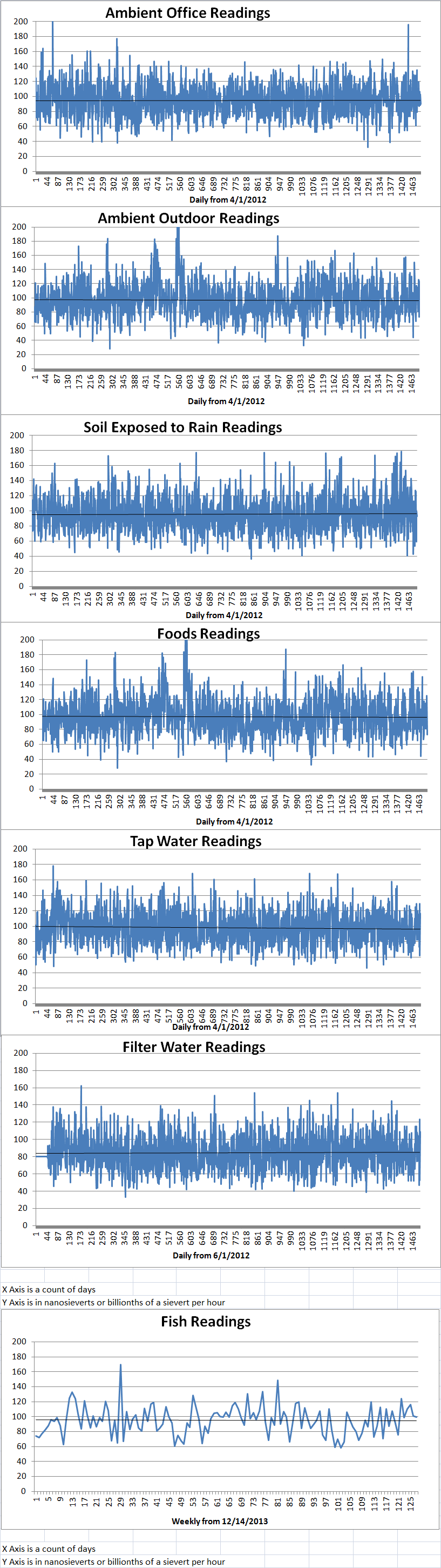
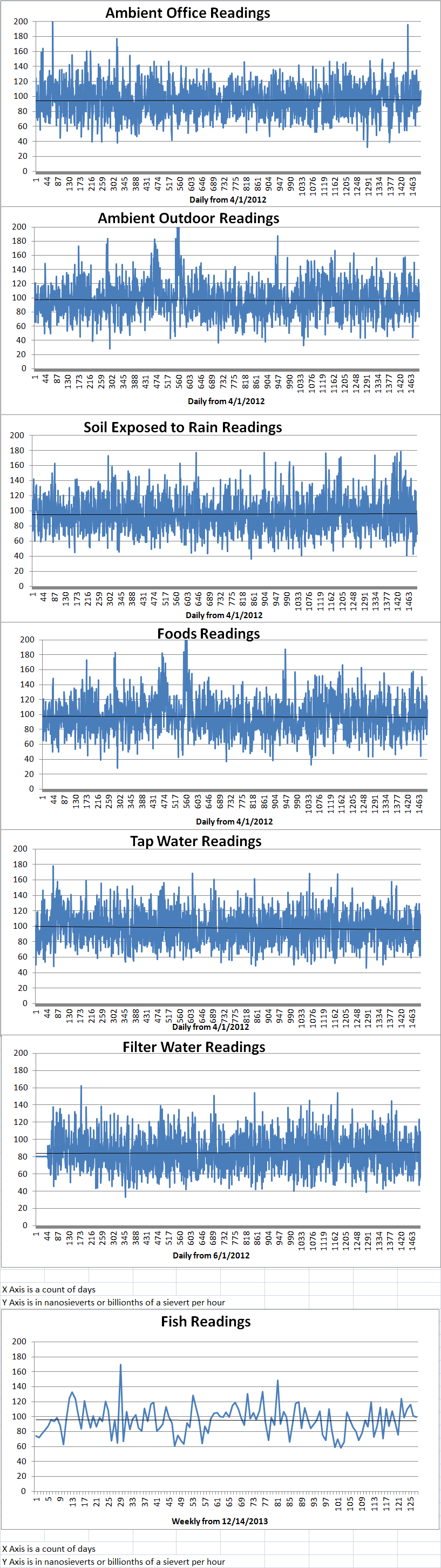
Ambient office = 108 nanosieverts per hourAmbient outside = 72 nanosieverts per hourSoil exposed to rain water = 70 nanosieverts per hourRomaine lettuce from Central Market = 106 nanosieverts per hourTap water = 62 nanosieverts per hourFiltered water = 56 nanosieverts per hour -
Nuclear Weapons 216 – U.S. Nuclear Posture On First Use Of Nuclear Weapons
President Obama is nearing the end of his second term in office. There are some things that he would like to do before he leaves office. Reports have been circulating that he is interested in making some major changes in the U.S. nuclear posture that relates to nuclear weapons and the terms under which they might be used. One very big question for any nation in possession of nuclear weapons is whether or not they would ever consider the first use of nuclear weapons against an adversary in a conflict.
China and India flatly state that they will not be the first to use nuclear weapons in any conflict. Pakistan says that it would consider the first use of nuclear weapons if it was losing a convention war with India. Russia has stated that they would consider being the first to use nuclear weapons if they were losing a conventional war against NATO forces. NATO forces reserve the right to be the first to use nuclear weapons in a conflict in Europe. Israel does not even admit that it has nuclear weapons so it has no publicly stated policy on the first use question. North Korea has often threatened to use nuclear weapons without any restraints.
The United States currently has a policy that says that the U.S. will not use nuclear weapons against any nation that does not possess nuclear weapons or other weapons of mass destruction. However, the U.S. does not rule out the possible first use of nuclear weapons against countries which do possess nuclear weapons or other weapons of mass destruction.
The Obama administration is discussing revising the U.S. nuclear posture including changing the first use policy. Obama would like to rule out the first use of nuclear weapons in any conflict. The last major review of U.S. nuclear policy was the Nuclear Posture Review of 2010. At that time, the Review advised against any changes to the U.S. first use policy.
Considering the current threat that the U.S. might be the first to use nuclear weapons against any state that possesses other weapons of mass destruction such as biological or chemical weapons, critics of the possible change to absolute no first use policy point out that such a change might make potentials enemies such as Russia and China more inclined to attack the U.S. with non-nuclear weapons of mass destruction.
Another problem that critics have with changing the current U.S. first use policy is the fact that there are thirty other nations around the world who rely on the nuclear arsenal of the U.S. to protect them from nuclear threats of hostile neighbors. This U.S. policy has helped to prevent the spread of nuclear weapons programs to allies of the U.S. Changing the U.S. policy might prompt some of these allies to begin to pursue the development of their own nuclear weapons programs.
A third concern of critics is that having an absolute policy of never being the first nation in a conflict to use nuclear weapons would tie the hands of future presidents. We cannot anticipate possible development of new weapons that would make the first use of nuclear weapons a reasonable choice in order to prevent a conflict or prevail in a conflict.
The question of whether or not to have a policy of never being the first to use nuclear weapons is a complex issue with good arguments and possible problems on both sides of the debate. However, to be realistic, simply having a stated policy of not being the first to use nuclear weapons would not prevent such first use in desperate situations.
-
Geiger Readings for July 27, 2016
Ambient office = 90 nanosieverts per hourAmbient outside = 77 nanosieverts per hourSoil exposed to rain water = 93 nanosieverts per hourCrimini mushroom from Central Market = 73 nanosieverts per hourTap water = 114 nanosieverts per hourFiltered water = 109 nanosieverts per hour -
Nuclear Weapons 215 – Russian Nuclear Targets In And Around Seattle Washington
I have been blogging a lot about the possibilities of nuclear war recently. With tensions rising between the only two nations will thousands of nuclear warheads ready at launch each other, this is a valid concern. Many of my posts have had to do with nuclear issues and concerns that are far from my home in Seattle, but a major nuclear war between the U.S. and Russia is a personal threat to me. I don’t just mean in the sense that a global nuclear war between these two countries would bring a nuclear winter and spell the end of human civilization and maybe extinction but that there are Russia nuclear missiles aimed at a lot of targets around Seattle, Washington where I live.
Many years ago, I saw a map that showed the primary blast zones for nuclear targets in the Seattle area. There was one small area of Seattle and its suburbs that was not in such a zone. It was a small park on the shore of Puget Sound, north of my home in the Crown Hill neighborhood of Seattle. I decided that if there was a nuclear attack on Seattle, I would make my way to the park and watch the fireworks. Today, I decided that I would list some of the targets and nuclear arsenals around Seattle.
At the Kitsap Naval Base twenty miles west of Seattle, more nuclear weapons are deployed than any other place in the world. It is estimated that there are over thirteen hundred nuclear warheads at the Naval Base. The Strategic Weapons Facility Pacific (SWF-PAC) at the base was completed in 2012 for about three hundred million dollars. There was very little publicity or public debate about the project. This concentration of nuclear warheads is obviously one of the primary targets for Russia warheads.
The Trident Submarine Base in Bremerton, Washington is thirty miles to the southwest of Seattle. Trident submarines which carry missiles with nuclear warheads, are constructed, repaired and based here. Nuclear warheads for the Trident missiles are stored here. This is the only U.S. Trident submarine for the entire Pacific Ocean and is another primary target for Russian missiles.
McChord Air Force Base is forty miles south of Seattle near Tacoma, Washington. The base is the location of the 62nd Airlift Wing whose mission is world-wide strategic airlift for U.S. forces. It is a third primary target for Russian missiles. Ft. Lewis, a major U.S. army base also shares that location and would be a secondary target for attack.
Boeing is a major supplier of aircraft to the U.S. military. There is a Boeing plant in south Seattle and another Boeing plant in Everett, Washington, twenty five miles north of Seattle. In the event of a nuclear war with Russia, these plants would definitely be secondary targets for nuclear strikes.
Ninety miles to the north of Seattle, the Oak Harbor Naval Air Station hosts a number of different squadrons of different types of navel aircraft, including sea planes, helicopters, and surveillance aircraft. It would be a secondary target in a Russian nuclear attack.
In addition, Seattle is home to a major cargo port for the west coast of the United States which makes it an attractive target for nuclear attack meant to cripple flow of goods into the U.S.
All in all, the Seattle area is the primary target for a nuclear attack in the Pacific Northwest. It is a bit uncomfortable to know that I am living in the middle of a huge bullseye. On the other hand, I have no illusions about the probability of my survival following an all out nuclear war where ever I was living in the U.S. There are many threats to life and limb and the possibility of World War III is not the nearest or most likely.
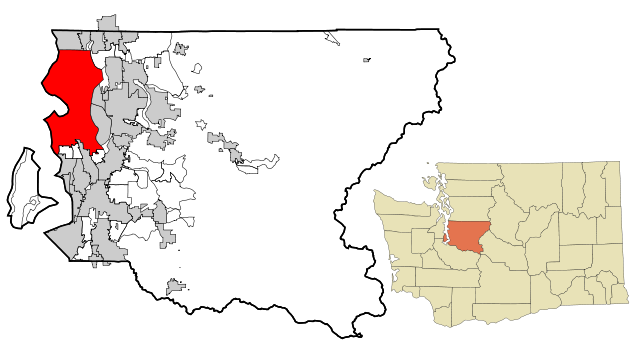
Seattle in red in King County on left, King County in red in Washington State on right:
-
Geiger Readings for July 26, 2016
Ambient office = 103 nanosieverts per hourAmbient outside = 89 nanosieverts per hourSoil exposed to rain water = 100 nanosieverts per hourCelery from Central Market = 123 nanosieverts per hourTap water = 116 nanosieverts per hourFiltered water = 109 nanosieverts per hour -
Nuclear Reactors 389 – Audi Mesarthim Nuclear Fusion Concept Car
Many car makers create “concept” cars to explore new ideas in automotive technology and design. Sometimes, the concept car is just a drawing. Sometimes it may be a mockup of a car. Other times, the car is actually built and can be driven. Rarely are concept cars the basis for actual production models but many ideas first presented in concept cars eventually make their way into commercial models.
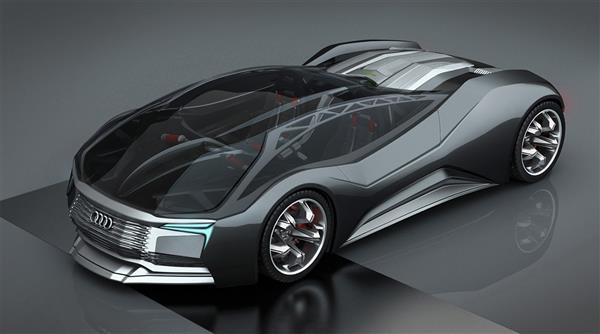
In 2009, Cadillac brought out the Cadillac World Thorium Fuel Concept car design. This car was designed to last a hundred years and run on a single fueling of thorium. Now Audi has presented the design for the Mesarthim F-Tron Quattro, a concept car with a 3D printed body and a fusion reactor for power. Mesarthim is the name of a binary star system in the Aries constellation.
The body of the car would be what is called “monocoque” which means that the body of the car and the chassis of the car would be integrated. It would be printed out of light weight metal with a 3D printer. The chassis/body would also incorporate polymer support.
The car is intended to operation on a metallic magnetic road. A magneto hydro-dynamic system would be incorporated into the bottom of the chassis/body. Magnetic fluid would circulate in this system and, interacting with the magnetic road, would exert a downward force on the car to improve stability.
Power would be supplied with small nuclear fusion reactor. Heat exchangers would use the heat generated by the fusion power plant to create steam. The water would be cooled and reused. The steam would power a turbine which would generate electricity to charge batteries in the front, back and sides of the car. Electricity from the batteries would be used to power motors incorporated in the wheels. Regenerative braking would generate electricity which would be fed back into the batteries.
One serious problem with the idea of a fusion vehicle engine is that fact that today’s fusion reactors designs would produce dangerous radiation. It may be possible to design a fusion reactor that does not produce such radiation but we do not yet have the scientific knowledge, let alone the technology, to create such an engine.
Personally, I would prefer to see a concept car use a fusion system based on the Helion Technologies design. This fusion reactor uses two cone-shaped chambers to generate magnetic fields that compress a cloud of deuterium and helium to generate a fusion reaction. It functions sort of like a magnetic piston system, firing about once a second. The benefit of this technology is that it does not consume any radioactive material and it generate electricity directly from the recoil of the magnetic fields. This would allow the car to dispense with all the complexity of heat exchangers, steam turbines, etc. It also would produce much less harmful radiation than other fusion engine designs.
If it is actually possible to create a fusion reactor small enough to power a car that produces power, perhaps it would be an excellent choice for a flying car to power turbofans. The fusion reactor would provide plenty of power for redundant engines and would allow lifting heavy loads.
While all of the is speculation, it is not impossible that someday, personal vehicles might be power by small low cost fusion reactors that would be cheap to operate, reliable and provide very high power.
Audi Mesarthim Fusion Concept Car: