Blog
-
Geiger Readings for Jan 26, 2016
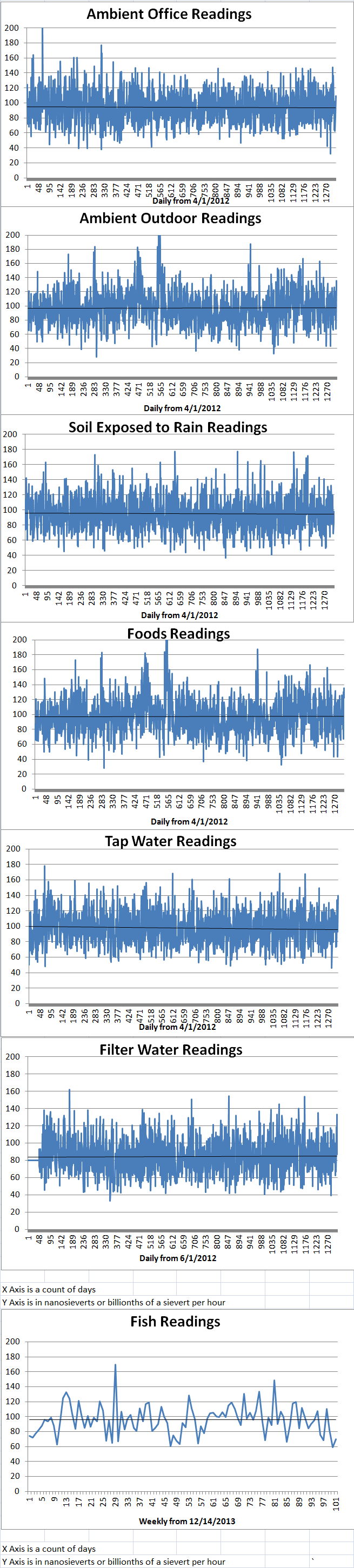
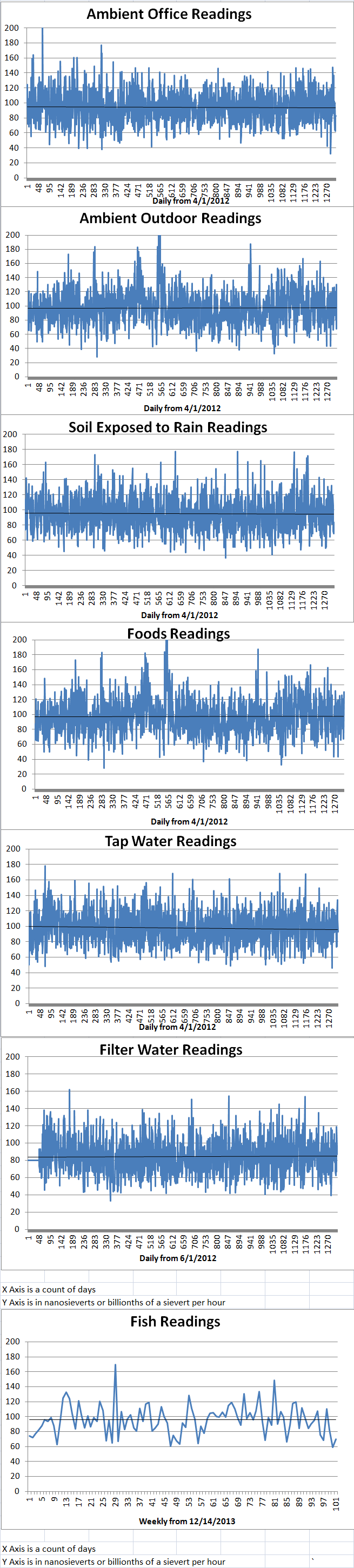
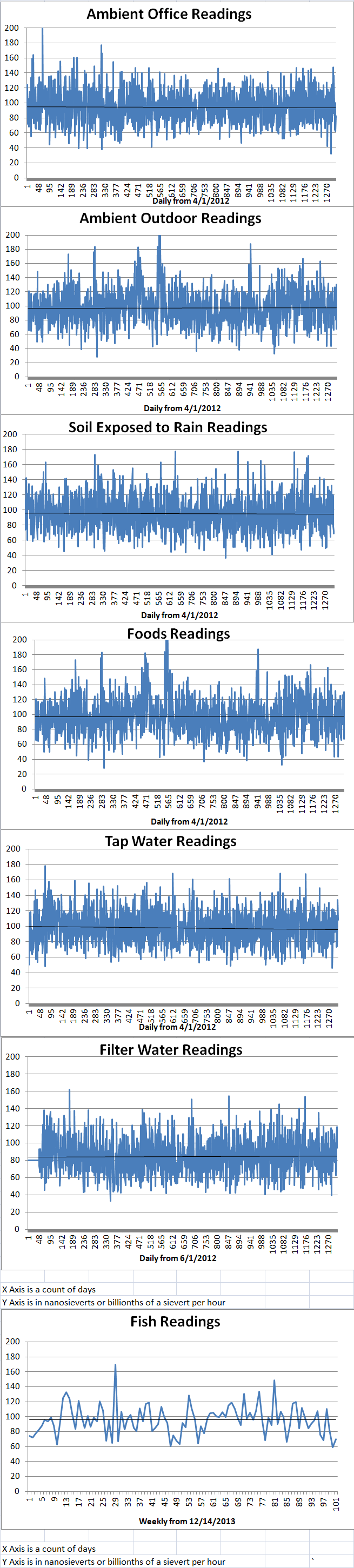
Ambient office = 109 nanosieverts per hourAmbient outside = 101 nanosieverts per hourSoil exposed to rain water = 98 nanosieverts per hourVine ripened tomato from Central Market = 135 nanosieverts per hourTap water = 140 nanosieverts per hourFiltered water = 133 nanosieverts per hour -
Radioactive Waste 162 – Japan is Shipping Plutonium to the U.S. for Storage
One of the byproducts of the operation of nuclear reactors is the creation of plutonium. Plutonium is a toxic radioactive metal that is primarily useful for the creation of nuclear weapons. Hundreds of tons have been produced by nuclear reactors and every day more is being produced. There has been an attempt to use plutonium in conventional reactors as fuel or in fast breeder reactors to produce more fuel but there has been little success in creating an economically viable use for the metal. There is also great international concern that terrorists could obtain plutonium from the stockpiles scattered around the world and use it to construct a nuclear or dirty bomb. Currently fifteen countries have stockpiles of plutonium.
The U.K. has the biggest stockpile of plutonium in the world. One hundred and forty tons have been produced at the Sellafield facility in northwest England. The U.K. government has no current plans for what to do with the plutonium and the cost of security for the stockpile keeps rising. The cost of maintaining this stockpile is not reported as a cost of nuclear power so proponents continue to claim that nuclear power is economically viable.
Japan intended to create fuel from their plutonium but endless technical problems at their conversion facility have prevented this program from achieving success. They have a stockpile of forty seven tons of plutonium and are uncertain as to whether it will ever be put to a productive use.
This week, two nuclear fuel carriers, the Pacific Egret and Pacific Heron, set out from England on a mission to retrieve a small amount of plutonium from Japan and take it to the United States. They have been fitted with naval cannons and there are heavily armed security squads on both ships.
Japan is sending seven hundred and thirty pounds of plutonium from their Tokai Research Establishment to the U.S. Most of this plutonium was given to Japan by the U.K. for experimental purposes at the Tokai Fast Critical Assembly facility. There has been concern that this particular plutonium is a security threat presenting a “high risk of theft of diversion.” It could be used to make forty nuclear bombs.
The shipment of plutonium from Japan to the U.S. is part of the U.S.-led Global Threat Reduction Initiative also referred to as the Materials Management & Minimization (M3) program. This program was established to removed weapons-grade plutonium and uranium from other countries and ship it to the U.S. for safe storage. The plutonium will be sent to the Savannah River site in South Carolina. The U.S. Department of Energy has plans to import almost two thousand pounds of plutonium currently stored in seven other countries. There are plans for twelve shipments over the next seven years.
International groups that monitor the transport of nuclear fuel and waste around the world are highly critical of this mission. A British watchdog group has issued a statement that said, “The practice of shipping this plutonium to the US as a safeguard is completely undermined by deliberately exposing this prime terrorist material to a lengthy sea transport, during which it will face everyday maritime risks and targeting by those with hostile intentions. We see this as wholly unnecessary and a significant security threat in today’s volatile and unpredictable world.”
U.S. critics of the plan to transport the plutonium to the Savannah River site claim that there is no plan for what to do with the plutonium once it reaches Savannah River. They are afraid that the Savanna River site is being used as a dumping ground for dangerous international nuclear waste.
One of the main problems with plutonium is that the world once prized this metal during the arms race of the Cold War. Now it is a liability. But there are still dreams of using it for fuel and, until those dreams are abandoned, it will be difficult to substantial reduce the amount of plutonium lying around in national stockpiles.
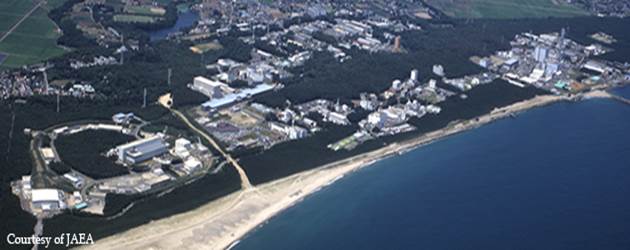
Tokai nuclear research campus:
-
Geiger Readings for Jan 25, 2016
Ambient office = 83 nanosieverts per hourAmbient outside = 58 nanosieverts per hourSoil exposed to rain water = 69 nanosieverts per hourCrimini mushroom from Central Market = 131 nanosieverts per hourTap water = 108 nanosieverts per hourFiltered water = 95 nanosieverts per hour -
Radiation News Roundup Jan 24, 2016
On 1/19/2016, TEPCO announced they measured Cesium-134/137 from 40.5 % of fish in 20km radius sea area from Fukushima plant. Fukushima plant port is excluded. fukushima-diary.com
J. Winston Porter’s recent opinion piece regarding eliminating energy credits for wind and solar was misleading considering his support of nuclear energy. greenvilleonline.com
-
Geiger Readings for Jan 24, 2016
Ambient office = 83 nanosieverts per hourAmbient outside = 58 nanosieverts per hourSoil exposed to rain water = 69 nanosieverts per hourCrimini mushroom from Central Market = 131 nanosieverts per hourTap water = 108 nanosieverts per hourFiltered water = 95 nanosieverts per hour -
Radiation News Roundup Jan 23, 2016
A bill that would promote nuclear power in Washington state as a clean power source was passed out of a Senate committee this week, but with some opposition. tri-cityherald.com
The Los Alamos National Laboratory could resume production of plutonium pit triggers for nuclear weapons. washingtontimes.com
-
Geiger Readings for Jan 23, 2016
Ambient office = 63 nanosieverts per hourAmbient outside = 66 nanosieverts per hourSoil exposed to rain water = 72 nanosieverts per hourCarrot from Central Market = 67 nanosieverts per hourTap water = 134 nanosieverts per hourFiltered water = 119 nanosieverts per hourPacific Cod – Caught in USA = 70 nanosieverts per hour -
Problems With Replacing All Power Generation In the World With Nuclear Power – Part Two of Two Parts
Part Two of Two Parts: (Please read Part One first)
5. Proliferation: As more and more nuclear reactors are built, the odds that nuclear materials and nuclear expertise will spread to hostile groups and/or nations. There are global systems to monitor and account for weapons-grade nuclear materials but they would be overwhelmed by the production from fifteen thousand reactors.
6. Uranium abundance: It is estimated that at the current rate of burning uranium in existing reactors, the world supply of easily accessible uranium will be consumed in eighty years. In order to produce fifteen terawatts of power, the current reserves of economically viable uranium would last about five years. After that, the increasing difficulty of obtaining uranium from marginal ore deposits would send the price higher and higher.
7. Uranium extraction from seawater: Although currently uranium is mined from a variety of ore deposits worldwide, it is also possible to extract uranium from seawater. It is estimated that there are over two trillion pounds of uranium in the water of the world’s oceans. If it could be economically extracted, it could supply fifteen terawatts generated by conventional reactors for over five thousand years. However, as uranium is extracted, the concentration drops in the remaining seawater so the cost would rise steadily. Abbott estimates that after about thirty years of extraction, it would become too expensive to be practical.
8. Exotic metals: A variety of exotic metals are used in the construction of a nuclear reactor containment vessel. Hafnium is use to absorb neutrons, beryllium is used to reflect neutrons, zirconium is used in the coating of nuclear fuel rods, and niobium is alloyed with steel to make it resistant to neutron embrittlement. Mining and refining these metals adds to nuclear construction costs and environmental damage. These metals also have other industrial uses that compete in the marketplace. Construction of a nuclear reactor every day would rapidly deplete these metals and lead to an exotic metal supply crisis.
Abbott points out that these problems will be present for the use of thorium as a fuel as well as uranium. He acknowledges that it is possible to use breeder reactors to increase the utility of uranium but he goes on to say that the technology for breeder reactors is more complex and difficult to develop and operate than conventional reactors. The use of breeder reactors would increase the cost and possibility of accidents.
Abbott says that many of these problems would be present for fusion reactors as well as fission reactors but he says that fusion reactors will not be developed in the near future. I will have to take exception to this particular remark by Abbott. There are at least half a dozen fusion projects that may be less than ten years away from producing small inexpensive fusion reactors that will not have many of the problems that he lists above for fission reactors.
No nuclear advocates today are calling for replacing all other energy sources like Abbott’s analysis. There are calls for nuclear power to produce about one terawatt of energy. This might be possible to accomplish in the short run. However, even looking at the problems that seven percent of Abbot’s fifteen thousand reactors would take shows that such a plan is unrealistic.
Abbott concludes that, “Due to the cost, complexity, resource requirements, and tremendous problems that hang over nuclear power, our investment dollars would be more wisely placed elsewhere,” Abbott said. “Every dollar that goes into nuclear power is dollar that has been diverted from assisting the rapid uptake of a safe and scalable solution such as solar thermal.”