Blog
-
Geiger Readings for Oct 04, 2015
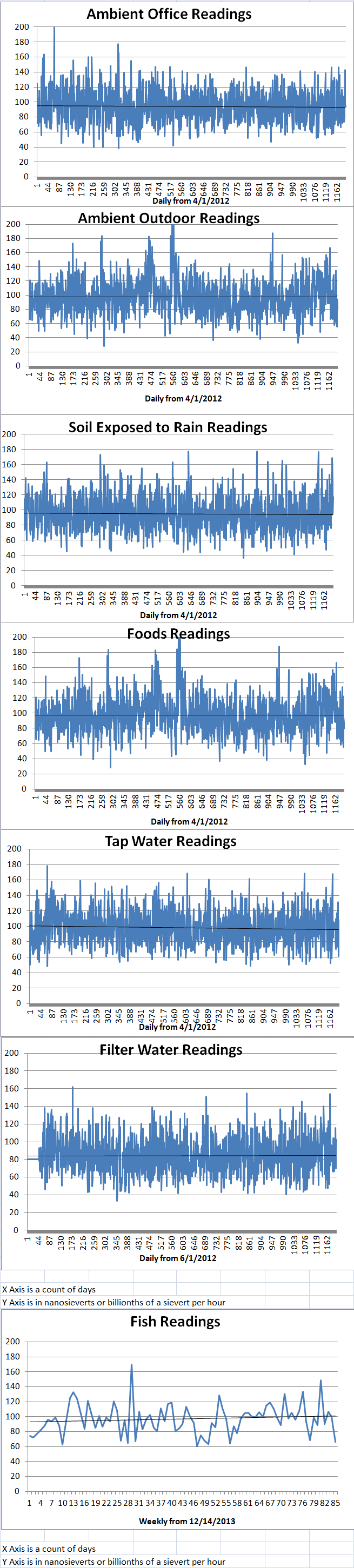
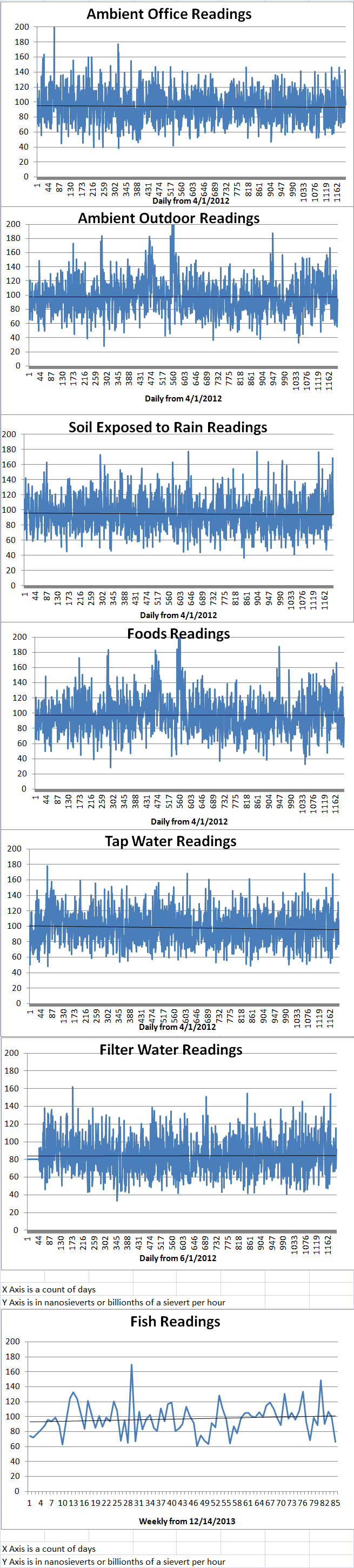
Ambient office = 94 nanosieverts per hourAmbient outside = 133 nanosieverts per hourSoil exposed to rain water = 117 nanosieverts per hourOrange bell pepper from Central Market = 79 nanosieverts per hourTap water = 61 nanosieverts per hourFiltered water = 102 nanosieverts per hour -
Geiger Readings for Oct 03, 2015
Ambient office = 97 nanosieverts per hourAmbient outside = 97 nanosieverts per hourSoil exposed to rain water = 95 nanosieverts per hourMango from Central Market = 88 nanosieverts per hourTap water = 108 nanosieverts per hourFiltered water = 92 nanosieverts per hourSilver Salmon – Caught in USA = 66 nanosieverts per hour -
Nuclear Weapons 166 – Leader of British Labour Party Opposes Any Use Of Nuclear Weapons
Jeremy Corbyn is a British politician who is a member of the British Labour Party. In 2015 he was elected to his current position as Leader of the Labour Party. He is also the Leader of the Opposition in Parliament. Corbyn describes himself as a democratic socialist. He has been sharply critical of inequality and poverty in the U.K. He advocates the nationalization of public utilities and the railways, abolishing university tuition fees and a unilateral nuclear disarmament.
This week, he said on a BBC radio program, “I am opposed to the use of nuclear weapons. I am opposed to the holding of nuclear weapons. I want to see a nuclear-free world. I believe it is possible. I do not think we should be renewing Trident… I think we should be promoting an international nuclear weapons convention which would lead to a nuclear-free world.” As might be expected, such a bold statement aroused controversy in the U.K. Supporters of nuclear weapons were quick to condemn Corbyn’s position.
The only nuclear weapons that Britain has are U.S. manufactured Trident intercontinental ballistic missiles on four Vanguard-class submarines based at Faslane in Scotland. Each sub can carry as many as sixteen missiles and each missile can carry up to twelve independently targetable nuclear warheads. Each warhead has a maximum yield equivalent to one hundred kilotons of TNT. If one of these warheads detonated in the air over central London, about two hundred and fifty thousand people would be killed. The Trident missile has a range of about four thousand six hundred miles and takes about twenty minutes to reach its maximum range.
It is believed that the British Royal Navy only has fifty eight Trident missiles and one hundred and ninety two warheads. The British only have one sub on patrol at any time. Each missile on the patrolling sub probably has three warheads. This count estimates that the patrolling sub has about forty eight warheads.
So the British sub on patrol could theoretically kill about three million people bytargetingforty eight of the biggest cities in Russia. The theory is that if Britain were attacked and destroyed by Russian nuclear missiles and bombs, the patrolling sub could still devastate Russia. The subs are based at Faslane in Scotland.The current four submarines are going to be retired in 2020. Parliament voted to replace them with new submarines which are estimated by the Ministry of Defence to cost about forty billion dollars. Greenpeace estimates the cost at around fifty billion. Corbyn gives a much higher number but he may be talking about the total cost of the nuclear deterrence system. In any case, the replacement of the submarines will be a major expense for Britain.
Only the Prime Minister has the authority to launch Britain’s Trident missiles. When a new Prime Minister is elected, the commanders of each of the four submarines are given sealed letters which are known as letters of last resort. They contain instruction for the commanders of the vessels to carry out in case the British government and chain of command have been destroyed. When a Prime Minister leaves office, his letters of last resort are destroyed. It is believed that there are four different options that may be contained in a particular letter of last resort. 1) Retaliate with nuclear warheads against the country that attacked Britain. 2) Do not retaliate. 3) The commander is to exercise his own judgement. 4) Turn over the command of the sub to a surviving ally. It has been claimed that if a sub cannot reach Royal Naval command and the BBB Radio 4 station has not broadcast for several days, the commander is to assume that Britain has been destroyed.
I believe that Jeremy Corbyn has taken a brave and wise position to foreswear nuclear weapons. Nuclear war is unwinnable and retaliation would serve to kill many more civilians that would be killed in the initial attack on Britain.
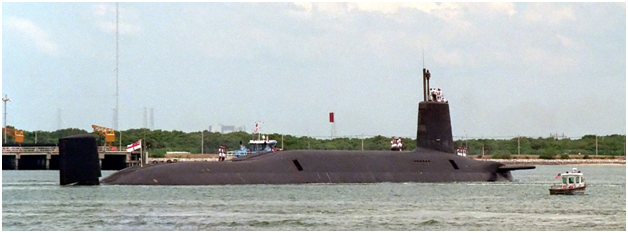
British Vanguard submarine:
-
Radiation News Roundup Oct 02, 2015
Isis planning ‘nuclear holocaust’ to wipe hundreds of millions from face of the earth’, claims reporter who embedded with the extremists. dailymail.co.uk
The last portion of the steel piling wall has been installed in the sea front of Fukushima Daiichi has been closed. fukuleaks.org
A series of new robot investigations at Fukushima were announced by TEPCO last week. fukuleaks.org
-
Geiger Readings for Oct 02, 2015
Ambient office = 106 nanosieverts per hourAmbient outside = 121 nanosieverts per hourSoil exposed to rain water = 134 nanosieverts per hourCarrot from Central Market = 94 nanosieverts per hourTap water = 77 nanosieverts per hourFiltered water = 70 nanosieverts per hour -
Nuclear Reactors 287 – South Korea Plagued By Fraudulent Documentation For Nuclear Components
In a past blog post about fraud in the global nuclear industry, I mentioned a problem that had been revealed in South Korea in 2012. I am going to expand on South Korean nuclear industry misbehavior in this blog post.
In 2012, two reactors at the Yonggwang Nuclear Power Plant in S. K. were shut down because it was discovered that quality certificates had been forged for some parts. The parts in question were things like fuses and power switches that didn’t pose a threat of radiation release. Eight suppliers had sold Korean Hydro & Nuclear Power Company almost eight thousand questionable parts for around seven hundred thousand dollars. These two power plants supplied about five percent of the electricity for S. K. and their loss put a strain on the national power supply system.
Investigation of fraudulent documentation continued and six reactors were shut down in 2013. Over 100 people were indicted in the corruption scandal. The South Korean nuclear industry is very closed and secrective which prosecutors said bred a culture of corrupt practices. Two high ranking executives at nuclear power companies were charged with bribery. The six closed reactors had the uncertified parts replaced and were brought back into service. In spite of the 2011 Fukushima nuclear disaster and the parts scandal, S.K. remained committed to nuclear power.
In 2014, the investigations were continued and expanded. Previously domestic nuclear plant parts were the focus of the investigations but then parts supplied by foreign manufacturers came under scrutiny. The Nuclear Safety and Security Commission decided to check all parts manufactured overseas and supplied to S.K. nuclear power plants from 2008 to the present. A total of two hundred thousand parts from the United States, Canada, France, Britain, Germany and other countries, along with their safety documentation were targeted for investigated.
Nuclear power provides about a third of the electricity for S.K. Even with the expanding investigations into fraudulent documentation from domestic and foreign suppliers, S.K. continued to support nuclear power and stood by plans to build at least sixteen new reactors in the next twenty years. In addition to the domestic projects, S.K. intends to export nuclear technology to other countries.
I have spent a lot of time in this blog on concerns that the companies which build and operate nuclear reactors for power generation cannot be trusted to follow regulations and safe practices in the construction and operation of their power plants. I have also pointed out that regulatory agencies are often underfunded and incompetent. Some have been “captured” by their nuclear industries and actually aid nuclear power companies who seek to evade regulation and oversight. The S.K. situation is not unique. How many nuclear parts manufacturers have evaded proper certification for their parts that are being sold to nuclear power companies? In Japan, less than half of the parts being exported to the global nuclear industry have been properly inspected. Even if the nuclear regulatory agencies and the nuclear power companies act ethically and competently, the world is still be endangered by unethical behavior of companies manufacturing nuclear components.
-
Radiation News Roundup Oct 01, 2015
Isis planning ‘nuclear holocaust’ to wipe hundreds of millions from face of the earth’, claims reporter who embedded with the extremists. dailymail.co.uk
The last portion of the steel piling wall has been installed in the sea front of Fukushima Daiichi has been closed. fukuleaks.org
A series of new robot investigations at Fukushima were announced by TEPCO last week. fukuleaks.org
-
Geiger Readings for Oct 01, 2015
Ambient office = 143 nanosieverts per hourAmbient outside = 164 nanosieverts per hourSoil exposed to rain water = 169 nanosieverts per hourAvocado from Central Market = 56 nanosieverts per hourTap water = 131 nanosieverts per hourFiltered water = 116 nanosieverts per hour -
Radioactive Waste 147 – Former Governor Cecile Andrus Is Suing The Department Of Energy Over Plans For The Idaho National Labatory
I have posted three essays about the Idaho National Laboratory (INL). (See Nuclear Reactors 43 – Plutonium Accident at Idaho National Laboratory, Radioactive Waste 141 – Idaho National Laboratory May Lose Out On Lucrative Department Of Energy Spent Nuclear Fuel Contract, and Radioactive Waste 142 – Integrated Waste Treatment Unit at Idaho National Laboratory.) Now an ex-Governor of the State of Idaho is suing the federal government over the INL.
Former Idaho Governor Cecil D. Andrus just filed a lawsuit against the U.S. Department of Energy. Andrus is trying to use the Freedom of Information Act (FOIA) to force the DoE to make public information pertaining to the proposed shipment of commercial spent nuclear fuel to the INL. Andrus has spent months working to get the DoE to release information to the citizens of Idaho about a request by the DoE for a ‘waiver” from the 1995 Batt Agreement. The Batt Agreement prevents the INL from bringing commercial waste to the labatory.
Andrus put out a press release that said, ““It is clear that the federal government is withholding information from the people of Idaho that will allow all of us to more completely assess what they have in mind in both the short and long term with regard to commercial spent fuel coming to Idaho.” He also said, “I don’t take legal action lightly, but I do believe the information that DOE has refused to provide is essential to protecting Idaho’s environment as well as protecting the integrity of Governor Batt’s historic agreement.” Andrus is seeking “injunctive and other appropriate relief and seeking the disclosure and release of agency records improperly withheld.”
In January of 2015, Andrus demanded that information about the proposed shipment and the waiver request be released under the FOIA. Andrus has stated that the DoE “stalled” for months before handing over heavily redacted pages. The explanation that the DoE gave for the redactions was that in their judgment, releasing the information “would not be in the public interest.” The only information that the DoE did supply to Andrus was information that had already been made public. Andrus’s appeal of the decision to redact the requested information was denied.
The legal action was prepared by the Advocates for the West. Their executive director said that, “The DOE has left us little choice but to ask the federal courts to enforce the law. A fundamental tenet of the American system of government is openness and transparency. The people have both a right and an obligation to know what their government is doing. That is why we feel it is so important to bring this information to light.”
The complaint states that, “Numerous newspaper articles and opinions in Idaho have attempted to shed light on this issue. DOE has responded to the media’s attention by spinning the issue as a matter of supporting jobs at INL, rather than dealing with nuclear waste in Idaho … Although DOE has attempted to minimize the significance of the proposed commercial spent nuclear fuel shipments by describing them as ‘research quantities,’ DOE has briefed Idaho’s Leadership in Nuclear Energy Commission on the possibility of future ‘research’ at INL involving more than 20 metric tons of spent fuel.”
Andrus fears that the DoE has long-term plans to bring much larger quantities of spent nuclear fuel to the INL than it has admitted publicly. In view of the fact that there is no permanent repository in the U.S. for spent nuclear fuel, Andrus is concerned that any spent fuel shipped to the INL will remain there for the foreseeable future. He said, “Without DOE leveling with Idaho about both near-term and longer range plans we simply have no ability to assess the wisdom of what they are planning for the state. I suspect they know what they are planning will be very controversial and for that reason they want to keep it secret. That is simply unacceptable.”
Former Governor of Idaho Cecile Andrus: