Blog
-
Geiger Readings for Sep 16, 2015
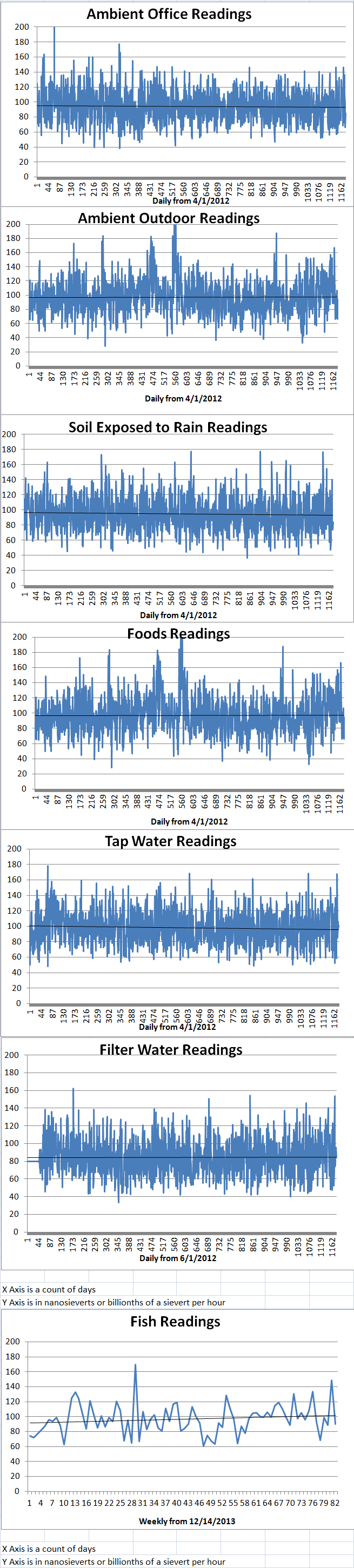
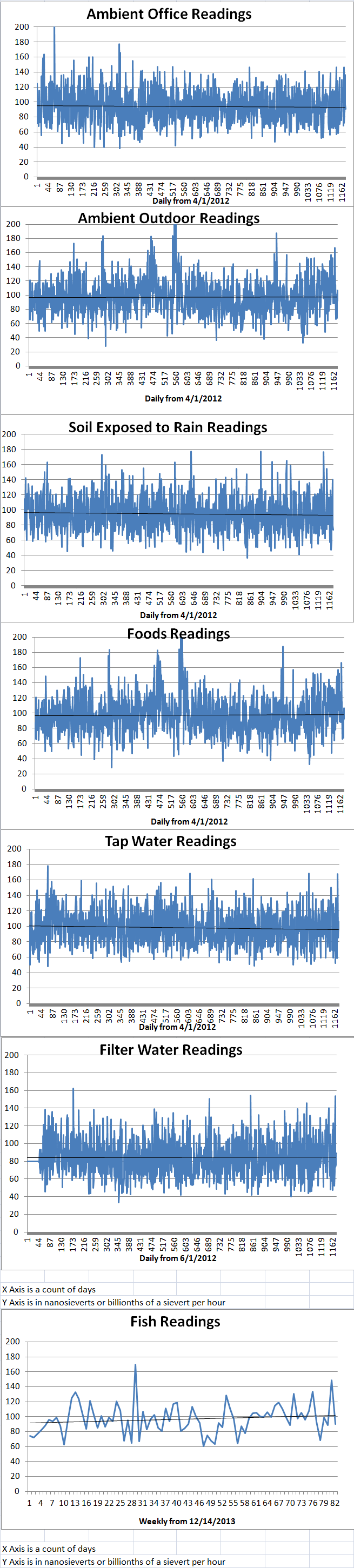
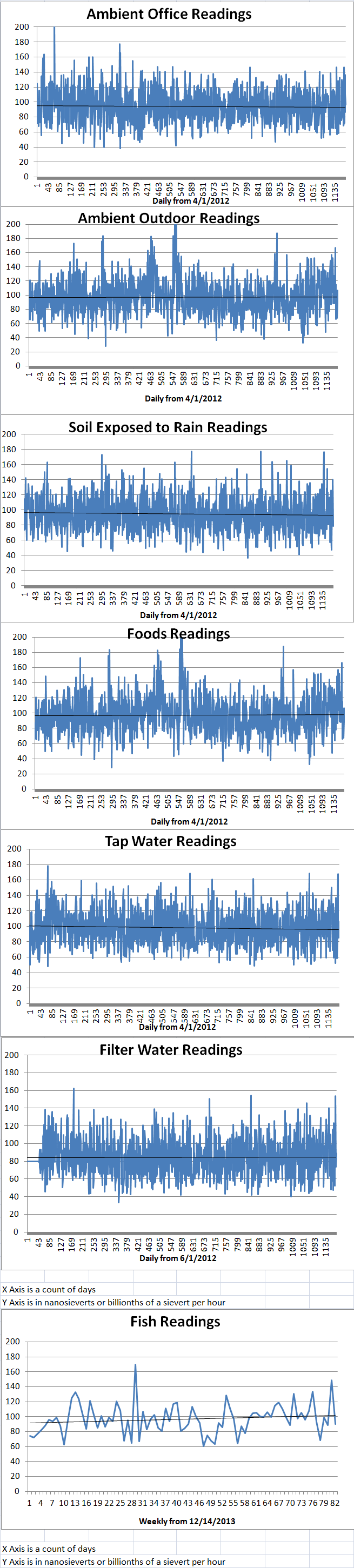
Ambient office = 85 nanosieverts per hourAmbient outside = 114 nanosieverts per hourSoil exposed to rain water = 84 nanosieverts per hourMango from Central Market = 66 nanosieverts per hourTap water = 99 nanosieverts per hourFiltered water = 84 nanosieverts per hour -
Nuclear Reactors 282 – Pilgrim Nuclear Power Station Decommissioning Costs Rise
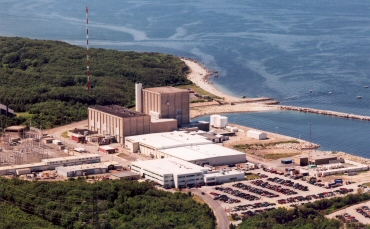
One of the things that bothers me about the nuclear industry is that they are so intent on selling a new generation of nuclear reactors that they seem to not care much about the legacy of nuclear waste and deteriorating reactors left behind from decades of nuclear power. When the cost of nuclear power is calculated, I have always wondered just how much of the cost of cleaning up the existing mess is included in the cost quoted. I am afraid that the answer is that not all of the costs of nuclear power are being included in the calculations. A recent situation with respect to an old nuclear power reactor appears to confirm my fears.
In 2014, the Nuclear Regulatory Commission lowered the performance rating of the Pilgrim Nuclear Power Station in Massachusetts which is owned by Entergy. The Pilgrim plant was shut down so often in 2013 that it earned a place on the list of the nine worst performing nuclear power plants in the U.S. The NRC required that the plant be placed under “closer scrutiny” by NRC inspectors. In 2015, the plant has already had three unscheduled shutdowns. There are only three nuclear power plants in the whole U.S. which have this low rating. If there are more problems, the NRC will require that the plant be shut down permanently. Whether from NRC action or Entergy decisions, it is inevitable that the Pilgrim plant will have to be decommissioned.
The State of Massachusetts is concerned about the environmental and financial effects of decommissioning the Pilgrim Plant. In order to protect the nearby town of Pilgrim and the commonwealth, there are several bills related to nuclear power pending before the State House.
Senate bill S. 1798 would require the Pilgrim Plant owners to pay twenty five million dollars a year into a trust fund after the plant is closed to ensure that there is enough money to clean up the site after it stops operating. Pilgrim has a decommissioning fund with about nine hundred billion dollars in it.
However, in view of the fact that the cost for decommissioning the smaller Entergy Vermont Yankee plant is now estimated to be at least one billion two hundred million dollars, it appears that the existing decommissioning fund for Pilgrim is much too small. If that is indeed the case, the rate payers would have to make up the difference. In Connecticut, the rate payers wound up having to pay almost five hundred million dollars because their decommissioning fund for the Connecticut Yankee Power Plant was too small.
The NRC does not require decommissioning to be completed for up to sixty years after a nuclear power plant stops operating. If there are not enough funds to pay for full decommissioning when the Pilgrim plant is shut down, it may be put into a status called SAFSTOR which means that the spent fuel will be left in the spent fuel cooling pond or put into dry casks, the staff will be drastically reduced and Entergy will stop paying for environmental monitoring. This would leave the State with the job of protecting and monitoring the plant and the spent fuel for an indefinite period of time.
One of the dangers that a plant in SAFSTOR status faces is a spent fuel fire which could cost half a billion dollars and would devastate the city of Plymouth. Senate bill 1797 would impose a tax on spent fuel stored in cooling ponds. This would put pressure on Entergy to move the fuel to dry casks and reduce the threat of a fire.
Even if the Senate bills both pass, I will not be surprised if the rate payers of Massachusetts wind up paying more than expected for the nuclear power generated by the Pilgrim plant.
Pilgrim Nuclear Power Station:

-
Geiger Readings for Sep 15, 2015
Ambient office = 66 nanosieverts per hourAmbient outside = 73 nanosieverts per hourSoil exposed to rain water = 74 nanosieverts per hourRedleaf lettuce from Central Market = 95 nanosieverts per hourTap water = 101 nanosieverts per hourFiltered water = 96 nanosieverts per hour -
Nuclear Weapons 159 – Elon Musk Wants To Nuke Mars
I have blogged about various ideas for using nuclear bombs for civil purposes such as excavating, mining, fracking, etc. The Soviet Union was ahead of the U.S. on this sort of idea but both countries came to their senses and dropped the concept. Recently, Elon Musk, the CEO of Tesla Motors and SpaceX, was being interviewed on a TV show. He suggested that perhaps we could convert the Martian surface into a more benign environment by exploding a bunch of hydrogen bombs on the north pole of Mars. At first hearing, it sounds insane but there is actually science behind the idea.
“[Mars] is a fixer-upper of a planet, so first you’re going to have to live in transparent domes, but eventually you can transform Mars into an Earth-like planet,” Musk told the interviewer. “You’d warm it up. There’s the fast way and the slow way. The fast way to drop thermonuclear weapons over the poles.” Musk mentioned that you could warm Mars slowly with greenhouse gases like carbon dioxide but there is already so much carbon dioxide in the Martian atmosphere that it would be poisonous.
Nuking the poles of Mars would melt the water ice buried there. The water vapor injected into the atmosphere would provide greenhouse heating without the need for more carbon dioxide. However, scientists question whether hydrogen bombs would be powerful enough to provide the heat necessary to melt enough ice to make a difference. The biggest nuclear bomb ever made was a Soviet bomb called the Tsar. It had the equivalent power of twenty five million tons of TNT. Even if you detonated a series of bombs that powerful, it would take centuries to warm the atmosphere of Mars significantly.
There is also the question of radioactive fallout. Exploding a series of powerful nuclear bombs would throw up a tremendous amount of dust, sand and water vapor laden with radioactive particles. With the powerful wind storms that rage over the surface of Mars, the radioactive particles from the bombs would be spread all over the surface. It is true that if we were talking about centuries and some of the radioactive isotopes would decay but there would still be plenty left to threaten plants, animals and people.
Other scientists complain that we have gone to great lengths to insure that the probes we land on Mars are sterile because we are hoping to find evidence of life that evolved on Mars. The evolution of life separate from that of Earth would have huge scientific importance in our understanding of life in the universe. If we try to terraform Mars with nuclear bombs, we can probably forget about finding evidence of life that evolved there.
Elon Musk is a brilliant inventor and businessman. He has been very successful at pushing the limits of technology in the field of transportation. And he is involved in the privatization of space but perhaps his idea of nuking Mars is pushing things a little too far. Hopefully we can find a better way to render Mars inhabitable if it is something that the human race decides is important.
-
Radiation News Roundup Sep 14, 2015
82 bags of radioactive materials washed away by Typhoon Etau in Japan presstv.ir
Floods threaten Fukushima plant structures enenews.com
China’s first AP1000 reactor, Sanmen 1, is expected to begin commercial operation in September 2016, while governmental permission is expected for work to start on the first Chinese-designed CAP1400 by the end of this year. world-nuclear-news
-
Geiger Readings for Sep 14, 2015
Ambient office = 91 nanosieverts per hourAmbient outside = 59 nanosieverts per hourSoil exposed to rain water = 73 nanosieverts per hourRomaine lettuce from Central Market = 92 nanosieverts per hourTap water = 96 nanosieverts per hourFiltered water = 89 nanosieverts per hour -
Geiger Readings for Sep 13, 2015
Ambient office = 97 nanosieverts per hourAmbient outside = 96 nanosieverts per hourSoil exposed to rain water = 78 nanosieverts per hourHeirloom tomato from Central Market = 106 nanosieverts per hourTap water = 106 nanosieverts per hourFiltered water = 89 nanosieverts per hour