Blog
-
Geiger Readings for Aug 21, 2015
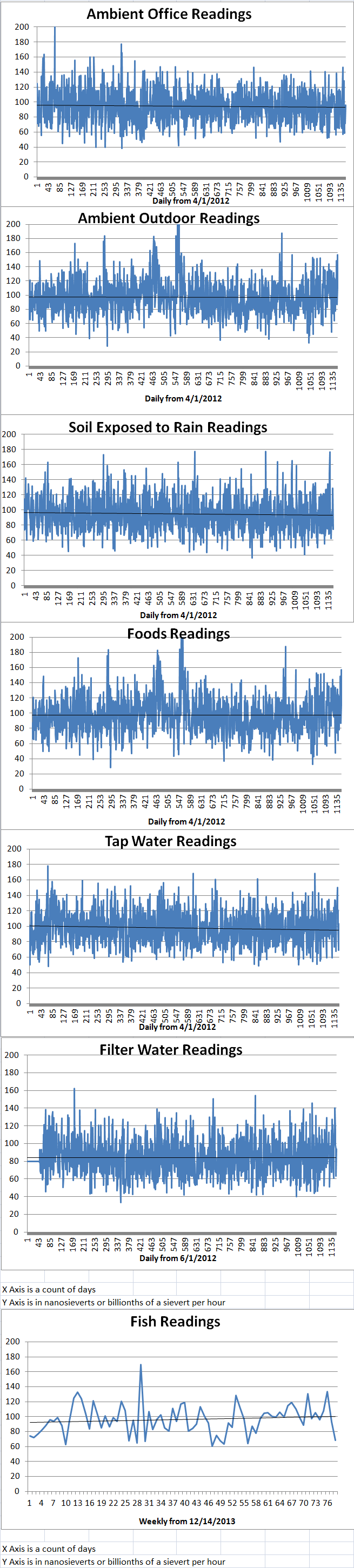
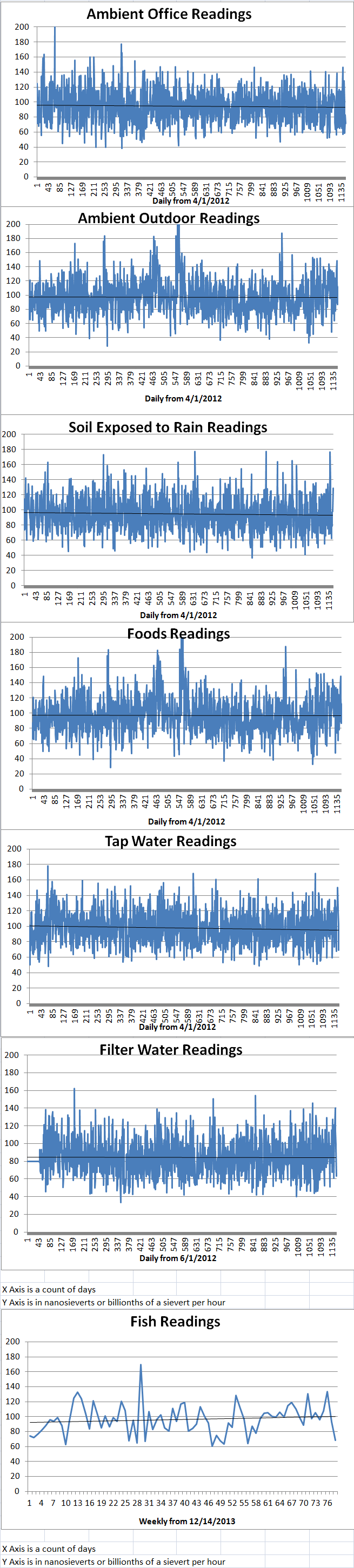
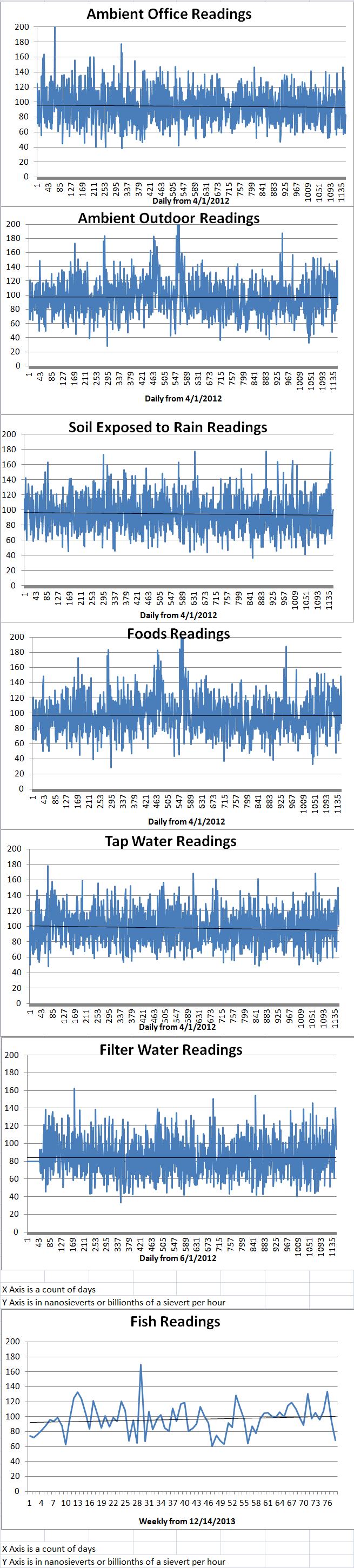
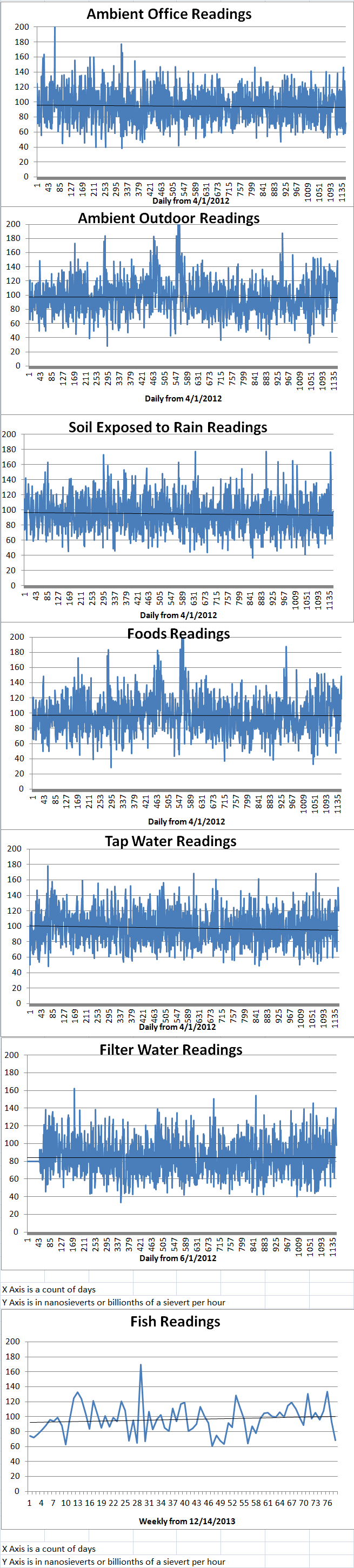
Ambient office = 96 nanosieverts per hourAmbient outside = 87 nanosieverts per hourSoil exposed to rain water = 74 nanosieverts per hourVine ripened tomato from Central Market = 157 nanosieverts per hourTap water = 103 nanosieverts per hourFiltered water = 94 nanosieverts per hour -
Radioactive Waste 143 – Court Rules Against Chem-Nuclear Over Landfill With Radioactive Waste In South Carolina
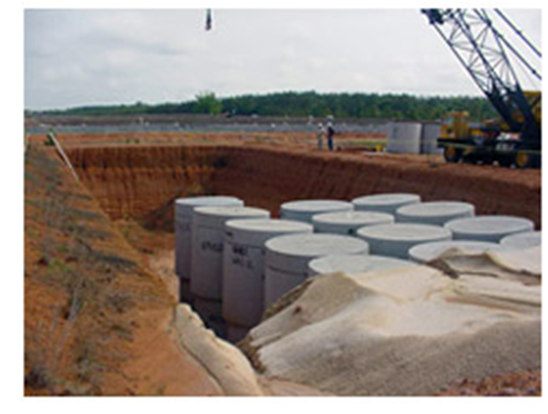
My last blog post involved dealing with old liquid nuclear waste at the Idaho National Laboratory. I mentioned that there were a lot of other sites in the U.S. where old nuclear waste was not being taken care of properly. Today I am going to talk about a leaking nuclear waste dump in Barnwell County, South Carolina near the Savannah River. The landfill has been in existence for over forty years and is currently managed by Chem-Nuclear.
Radioactive tritium leaks were first discovered at the landfill back in the 1970s. A plume of tritium runs downhill from the site and for years it has been trickling into a creek that flows towards the Savannah River. Chem-Nuclear has maintained that the leaks are in an isolated area and that tritium is not as dangerous as other radioactive materials at the dump.
Critics disagree, saying that tritium is more toxic than Chem-Nuclear claims and that other radioactive materials at the landfill will also leak into the environment. They have demanded that the open burial trenches containing the waste be covered in some fashion to prevent rain from washing the radioactive materials out of the landfill and into the ground water. They claim that Chem-Nuclear has done absolutely nothing to prevent rainwater from falling on the trenches of waste.
Ten years ago, the Sierra Club filed a law suit to try to force tougher disposal practices at the unlined landfill. The suit said that the DHEC had failed to make Chem-Nuclear follow state regulations for many years.
The court ultimately ruled last year that the DHEC ” failed to enforce the law of South Carolina” with respect to the two hundred and thirty five acre landfill. The court said that the DHEC did not enforce a set of specific environmental protection regulations. The court also said that Chem-Nuclear failed to follow some state regulations with respect to the handling of nuclear waste. The court ruling stated that “It is important that DHEC enforce its own regulations and require Chem-Nuclear to take action to comply with the technical requirements.The court decision gave the S.C. Department of Health and Environmental Control and Chem-Nuclear 90 days to come up with a written plan for correcting problems at the dump. The court said that the DHEC ” failed to enforce the laws of South Carolina” with respect to the two hundred and thirty five acre landfill. The court ruling stated that “It is important that DHEC enforce its own regulations and require Chem-Nuclear to take action to comply with the technical requirements.’’
The DHEC and Chem-Nuclear immediately appealed for a rehearing which delayed the 90 day requirement. In an August 12th ruling, the court reaffirmed its earlier analysis of the situation but gave up on the requirement of a specific timetable to improve conditions at the dump. The DHEC can now respond to the court ruling at its own convenience. A spokesperson for the DHEC said that the agency will ” ensure full compliance with the court’s opinion and the regulations we are authorized to enforce.’’
A Sierra Club lawyers said ” We have an agency that has been lawless for years in not enforcing its own regulations, and now, the court is giving it another open-ended opportunity to review itself. That is unfortunate. We are going to monitor this very carefully.”
Chem-Nuclear Barnwell County landfill:
-
Geiger Readings for Aug 20, 2015
Ambient office = 72 nanosieverts per hourAmbient outside = 130 nanosieverts per hourSoil exposed to rain water = 129 nanosieverts per hourKale from Central Market = 112 nanosieverts per hourTap water = 69 nanosieverts per hourFiltered water = 63 nanosieverts per hour -
Radiation News Roundup Aug 20, 2015
-
Radioactive Waste 142 – Integrated Waste Treatment Unit at Idaho National Laboratory
Yesterday, I blogged about a dispute between the Idaho Attorney General and the U.S. Department of Energy over permission to ship spent nuclear fuel to the Idaho National Laboratory. The AG was upset because the DoE had fail to comply with a Settlement Agreement involving the construction and operation the Integrated Waste Treatment Unit at the INL. Today, I am going to talk about the IWTU.
The INL is a nine hundred square mile facility in eastern Idaho near Idaho Falls. It currently employs over eight thousand people. It was created in 1949 as the National Reactor Testing Station. After a few changes in federal agencies, operators and names, it became the Idaho National Laboratory when the Battelle Energy Alliance took over management from Bechtel. The INL has been working on the development of nuclear reactor technology and handling of nuclear waste since its creation. Nuclear non-proliferation is also one of its areas of work. Now it is also working on ways of protecting civil infrastructure from physical and cyber attacks. Other areas of interests include biofuels, robotics, advanced vehicles, hybrid energy systems and other scientific pursuits.
In 1995, the State of Idaho and the DoE signed a Settlement Agreement that required the DoE to construct a treatment facility that would take care of nine hundred thousand gallons of liquid radioactive waste at the INL. The Integrated Waste Treatment Unit is a test project for treating the liquid radioactive and hazardous waste that have been stored in underground storage tanks for decades. The waste that will be treated is called sodium-bearing waste. It was generated during spent nuclear fuel reprocessing from the 1950s up to 1992. The liquid was transferred to three three hundred thousand gallon storage tanks that are a part of a tank farm at INL. The IWTU will use a steam reforming technology to heat up the liquid waste which will essentially dry it. Any emissions generated by the process will be filtered though HEPA filters to meet state and federal air quality requirements. The granular solid material produced will be consolidated and the packed in stainless steel canisters. The containers will be stored in concrete vaults onsite. Finally, the canisters will be transported to a permanent geological repository when one has been constructed.
The DoE promised to have the IWTU operating by 2012. It is now 2015 and the IWTU is still not operating. The DoE has said that it may be functional by September this year but skeptics point out that there is testing going on right now in late August that may take several months to complete.
The INL is just one of many federal facilities around the U.S. which were left with radioactive waste in solid and liquid form from the Cold War production of nuclear warheads and the production and reprocessing of nuclear fuel from commercial power reactors. The U.S. government should divert some of the hundreds of billions of dollars from the defense budget to cleaning up the radioactive mess they have left for decades.
Integrated Waste Treatment Unit:
-
Radiation News Roundup Aug 19, 2015
-
Geiger Readings for Aug 19, 2015
Ambient office = 83 nanosieverts per hourAmbient outside = 92 nanosieverts per hourSoil exposed to rain water = 100 nanosieverts per hourYellow bell pepper from Central Market = 87 nanosieverts per hourTap water = 102 nanosieverts per hourFiltered water = 94 nanosieverts per hour -
Radioactive Waste 141 – Idaho National Laboratory May Lose Out On Lucrative Department Of Energy Spent Nuclear Fuel Contract
The Idaho National Laboratory (INL) had an arrangement with the U.S. Department of Energy to take two shipments of spent nuclear fuel that would be tested at the Laboratory. The research would focus on “high-burnup” fuel which is currently accumulating at nuclear power plants all over the U.S. One of the shipments would be used to carry out research on spent nuclear fuel recycling. The other shipment of fuel would be used to research what happens when spent nuclear fuel is placed in storages casks for years or decades. This project is important to the reputation and economic survival of the INL. Unfortunately, a dispute between the Idaho State government and the DoE, may result in the cancellation of the project.
In 1995, a Settlement Agreement was signed between the State government and the DoE regarding the cleanup of nuclear waste in Idaho. The Integrated Waste Treatment Unit (IWTU) was supposed to be constructed and put into operation by the DoE. The IWTU has been plagued by problems and the State government now claims that the DoE is out of compliance with the Settlement Agreement. The State government is reluctant to grant permission for the shipments of spent nuclear fuel to the INL unless and until the DoE makes good on its promises with respect to the IWTU which is still not operational.
At a meeting on July 13th of this year, a DoE official said that they would give Idaho two months to grant permission for the shipments. If the State does not grant permission for the shipments, the INL contract for spent fuel testing could be cancelled.
The Idaho governor created a commission called the Leadership in Nuclear Energy Commission (LINE) to deal with nuclear issues in Idaho. The head of LINE sent out a letter on August 10 of this year to State officials recently pointing out that the DoE had set a two month deadline for approval of the spent nuclear fuel shipments and that if the shipments were not approved, the DoE might send them to another state. This could cost the INL between ten and twenty million dollars per year every year until 2020. In addition, failing to deliver on the testing contract could injure the reputation of the INL and hurt prospects for obtaining future federal contracts.
The Idaho Attorney General received a copy of the letter and said that he was concerned that the LINE commission never came to him to discuss the DoE and the shipment approval although he considered it a matter involving his office. He stated that his office will not approve the spent fuel shipments to INL until the IWTU is operational.
Staff at the IWTU said in May that the facility could be operating by September and that the shipments of spent fuel could make the two month deadline if the State acts swiftly. On the other hand, State officials point out that the IWTU is starting a second round of tests that will take months and it can’t be operating by September. It is possible that the IWTU will not even start treating nine hundred thousand gallons of liquid waste until sometime in 2016.
Idaho officials and the DoE have about one month to sort out this situation before the DoE deadline is passed. Both parties have valid concerns and needs. Hopefully, a mutually acceptable compromise can be worked out.

-
Geiger Readings for Aug 18, 2015
Ambient office = 72 nanosieverts per hourAmbient outside = 89 nanosieverts per hourSoil exposed to rain water = 98 nanosieverts per hourHeritage tomato from Central Market = 119 nanosieverts per hourTap water = 120 nanosieverts per hourFiltered water = 98 nanosieverts per hour