Part 12 of 18 Parts (Please read Parts 1 thru 11 first)
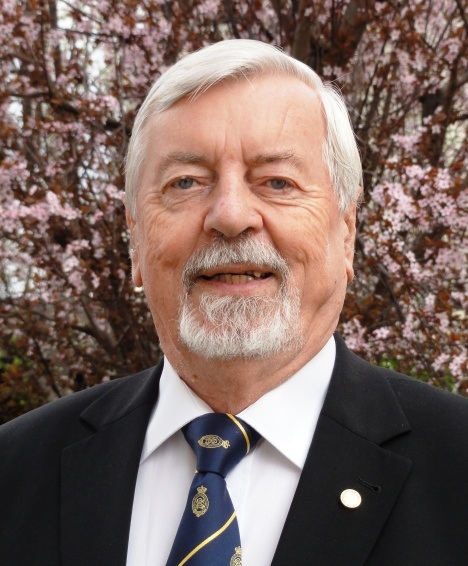
Heinrich Hora is a plasma physicist. He worked for Westinghouse as a young man in the 1960s. As part of his job, he examined hundreds of photographs of plasmas generated by the impact of laser pulses on targets. He observed that pictures of the actual phenomena did not match the simplified models of laser-matter interactions that were used in most of the plasma research at that time. Hora developed new equations of motion for laser-generated plasmas that included, in addition to the well-known pressure force generated by heating, a new “nonthermal” force term derived from the powerful electric and magnetic fields generated by the laser pulses.
The presence of such electric and magnetic fields was to be expected. After all, light itself is composed of rapidly varying electric and magnetic fields. In powerful laser pulses, these fields achieve such high intensities that their effect can be radically different than that of ordinary light. An analogy can be drawn with the way that a passing wave in water causes objects floating on the surface to bob up and down. A breaker wave generates very powerful forward motion that surfers exploit. The transition from a normal wave to a breaker wave is an example of a non-linear effect. Another example of a non-linear effect that is relevant to laser fusion is the formation of a powerful shockwave when a medium is rapidly compressed. This occurs when an aircraft crosses the sound barrier.
Hora referred to the additional, nonlinear force term in his equations as the “ponderomotive force.” Hora’s calculations and experimental results suggested that laser energy could be converted very efficiently into coherent directed motion of parts of the plasma as opposed to merely being dissipated as heat. Calculations that Hora made in 1978 indicated that it might be possible for the efficiency of the conversion to be as high as ninety nine percent with a corresponding reduction of thermal effects.
Hora assumed that the effect might be harnessed in order to ignite nuclear fusion. This could be done in different and much more efficient ways than the conventional process of ablative implosion. This was the beginning of a long journey that lead to his present design for a hydrogen-boron reactor.
Hora’s work on the ponderomotive force was not received with much enthusiasm by the mainstream laser fusion research community. One reason may be that the calculations were terribly complex. The tendency of researchers confronted with complex calculations is try to simplify their equations. It is common practice to remove terms from the equations that are expected to have a very minor effect on the solution. However, under some physical conditions, the “minor” effects can suddenly become quite large.
Another reason for the lack of interest by most of the laser fusion research community was the fact that that laser pulses called for in the nonthermal approach were much longer than the usual pulse length, not very powerful and not “clean” enough to produce the pondermotive force in a way that was indisputable. This situation began to change when chirped pulse amplification and ultra-short-pulse ultra-high-power lasers were developed.
Please read Part 13
Nuclear Fusion 95 – Powerful Lasers And A Mixture of Hydrogen and Boron Are Being Researched As The Basis For Nuclear Fusion Power Generation – Part 12 of 18 Parts