
Part 2 of 2 Parts, (Please read Part 1 first)
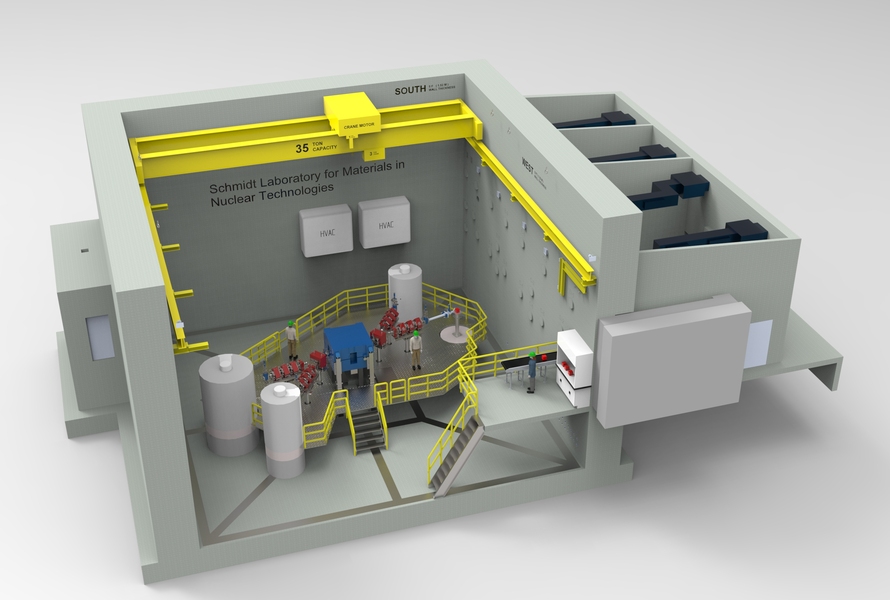
By repurposing the space previously occupied by the C-Mod, the center is skipping the need for extensive, costly new construction and accelerating the research timeline significantly. The PSFC’s veteran team has led major projects like the Alcator tokamaks and advanced high-temperature superconducting magnet development. They are overseeing the facilities design, construction, and operation, ensuring LMNT moves quickly from concept to reality. The PSFC expects the delivery of the cyclotron by the end of 2025, with experimental operations starting in early 2026.
Nuno Loureiro is the director of the PSFC, a professor of nuclear science and engineering, and the Herman Feshbach Professor of Physics. He said, “LMNT is the start of a new era of fusion research at MIT, one where we seek to tackle the most complex fusion technology challenges on timescales commensurate with the urgency of the problem we face: the energy transition. It’s ambitious, bold, and critical — and that’s exactly why we do it.”
Elsa Olivetti is the Jerry McAfee Professor in Engineering and a mission director of MIT’s Climate Project. She said, “What’s exciting about this project is that it aligns the resources we have today — substantial research infrastructure, off-the-shelf technologies, and MIT expertise — to address the key resource we lack in tackling climate change: time. Using the Schmidt Laboratory for Materials in Nuclear Technologies, MIT researchers advancing fusion energy, nuclear power, and other technologies critical to the future of energy will be able to act now and move fast.”
In addition to advancing fusion research, LMNT will provide a setting for educating and training students in the increasingly important areas of fusion technology. LMNT’s location on MIT’s main campus provides students with the opportunity to lead research projects and help manage facility operations. It also maintains the hands-on approach to education that has defined the PSFC. Reinforcing that direct experience in large-scale research is the best approach to train fusion scientists and engineers for the expanding fusion industry workforce.
Benoit Forget is the head of NSE and the Korea Electric Power Professor of Nuclear Engineering, notes. He said, “This new laboratory will give nuclear science and engineering students access to a unique research capability that will help shape the future of both fusion and fission energy.”
Significant philanthropic support has helped LMNT leverage existing infrastructure and expertise to move from concept to facility in just one-and-a-half years. This is a fast timeline for establishing a major research project.
Hartwig emphasized, “I’m just as excited about this research model as I am about the materials science. It shows how focused philanthropy and MIT’s strengths can come together to build something that’s transformational — a major new facility that helps researchers from the public and private sectors move fast on fusion materials”.
By utilizing this approach, the PSFC is developing a major public-private partnership in fusion energy, realizing a research model that the U.S. fusion community has only recently begun to explore, and demonstrating the critical role that universities can play in the acceleration of the materials and technology required for fusion energy.
Ian Waitz is MIT’s vice president for research. He said, “Universities have long been at the forefront of tackling society’s biggest challenges, and the race to identify new forms of energy and address climate change demands bold, high-risk, high-reward approaches LMNT is helping turn fusion energy from a long-term ambition into a near-term reality.”