
Part 2 of 2 Parts (Please read Part 1 first)
After a few months of tentative nuclear diplomacy by U.S. President Donald Trump to try and bring Russia and Ukraine to the negotiating table, Trump appears to have cooled off on his attempt to end the war.
Last week, the White House abruptly cancelled a summit between Trump and Putin, apparently because U.S. Secretary of State Marco Rubio realized the gulf between Moscow and Washington’s positions was too big for a high-level meeting to achieve meaningful results.
There has been no suggestion of any further talks. Soon after the meeting was cancelled, Trump imposed sanctions on two of Russia’s biggest oil producers as punishment for Russia’s failure to agree on a peace deal in Ukraine.
And while Putin’s relationship with Ukrainian President Volodymyr Zelensky seems to still be fraught, it appears that Trump is losing patience with Moscow’s intractability. Putin may be using his new weapons announcements to capture Trump’s attention.
Galeotti argued, “In the face of Trump blowing hot and cold with his support for Ukraine or sympathy to Russia, here is an element in which Moscow has bigger cards than Kyiv. So in that context [successful weapons tests] are more about keeping him thinking Russia is indeed powerful.”
Three-and-a-half years after Russia launched its full-scale invasion of Ukraine, its troops continue to merely grind on at great cost in human life and resources with no obvious breakthrough likely in the near future.
David Heathcote is the head of intelligence at McKenzie Intelligence Services. He said, “We are getting towards the end of summer fighting season in Ukraine, and it has not gone very well for the Russians.” He suggested that the announcements about the Skyfall and the Poseidon should be seen as a reflection of the weakness of their conventional forces.
Russia is not formally part of any military alliances that would come to its aid if it is on the back foot, and its army is tied up and under pressure in Ukraine. Heathcote said that in these cases, “the Russians always react with unnecessary and overexaggerated saber rattling”.
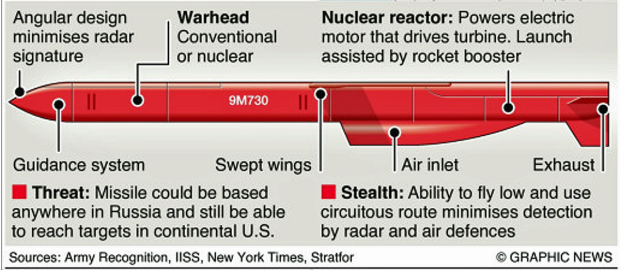
While Moscow’s decision to publicly announce the Skyfall and Poseidon tests may have been influenced by these factors, it seems the claim has already had the tangible effect of provoking Trump into instructing the U.S. military to resume nuclear weapons testing. Trump justified the action as a way of keeping pace with other countries such as Russia and China.
Trump said, “With others doing testing, I think it’s appropriate that we do also.” It will probably take several months for the U.S. to restart nuclear tests after a thirty third-year pause.
The Kremlin’s reaction to Trump’s statement was rapid. Putin spokesman Dmitry Peskov asked whether the U.S. President had been correctly informed. The Russian weapons tests “and not in any way be interpreted as a nuclear test”, Peskov said.
Dr. Alexander Bollfrass is the IISS Head of Strategy, Technology and Arms Control. He said that Trump did not provide any details on the kind of tests he wanted the US to resume. It was likely that Trump’s decision was a direct response to the Russian test of the Skyfall and that the U.S. might be planning to conduct similar flight tests of U.S. Intercontinental Ballistic Missiles.