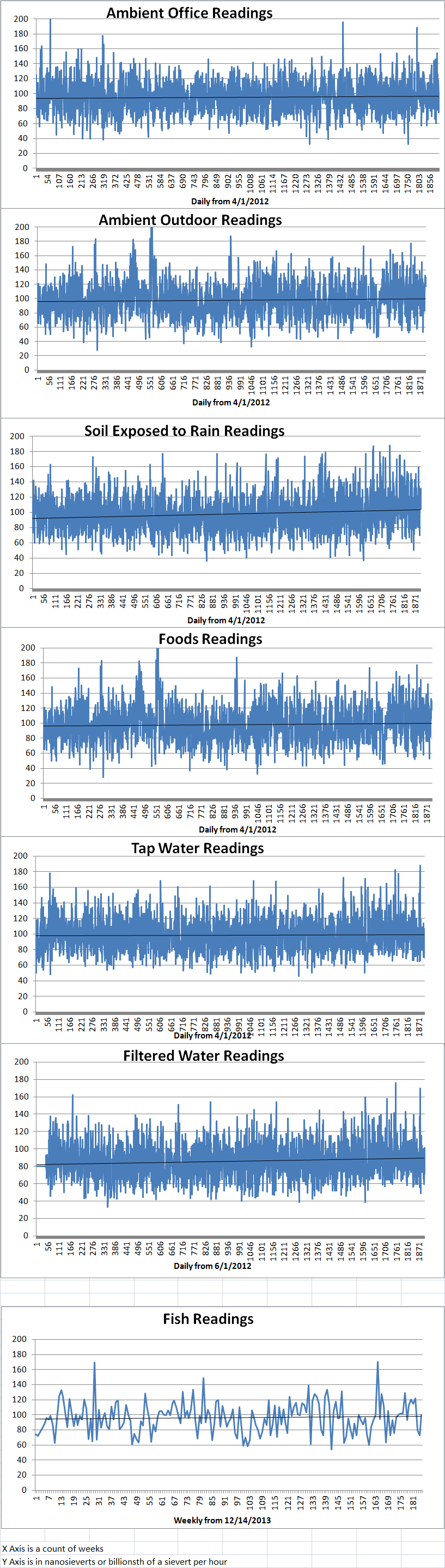
Yesterday, sensors detected a major seismic event in North Korea. N.K. said that it had just carried out an underground test of a hydrogen bomb. It was known that N.K. had prepared another nuclear test and was ready to fire it by last March. They were waiting for their leader, Kim Jong-Un, to order the test. Commentators say that he waited until yesterday in order to conduct the test when the U.S. would be involved in a three day weekend for Labor Day celebrations and would be less able to respond. It has also been suggested that Kim was timing the test to be of maximum embarrassment to China, its biggest supporter, which is currently hosting the annual meeting of the BRICS countries (Brazil, Russia, India, China and South Africa).
The previous nuclear test by N.K. was conducted in September of 2016. The regime claimed that they had tested a hydrogen bomb but the international scientific community rated the blast at about twenty kilotons of TNT. This would be consistent with a regular atomic fission bomb test or the failure of a hydrogen bomb test. Once again, the regime is claiming that it tested a hydrogen bomb. What does the scientific community say about this bomb test?
I recently posted an essay about how underground nuclear tests are detected. An underground nuclear test sends out powerful seismic waves that are different than the waves from an earthquake. They are also much shallower.
There is a term called the body-wave magnitude (mB) that is used to measure the intensity of an underground blast. The scale is logarithmic. There is a network of thirty four detectors scattered around the world in the Comprehensive Test Ban Treaty Organization’s network that are used to detect underground nuclear tests.
The new N.K. underground test blast was so powerful that it “saturated” the detectors. This means that it exceeded the maximum reading that the detectors were capable of registering. The initial mB esitimations varied widely from different sources between fifty kilotons of TNT and one hundred and fifty kilotons of TNT. There are a number of variables in the equation used for mB and choices of different numbers for type of rock, density, depth, etc. yielded the wide range of the estimate. A subsequent analysis of the possible strength of the mB for a deeper depth than the initial estimations suggested that if the blast went off at a depth of over twenty five hundred feet, it could have been as powerful as three hundred seventy kilotons of TNT. It appears that the North Koreans did actually successfully test a hydrogen fusion bomb.
The successful test of a hydrogen bomb by N.K. is a very troubling milestone in their march to a modern nuclear arsenal. They have been testing missiles that may be able to reach the continental U.S. If they can miniaturize their new bomb so that it can be placed on one of their new missiles, then they would have the capacity to reach and destroy major U.S. cities. The international community has repeatedly said that N.K. could not be allowed to have a nuclear arsenal that could threaten other nations around the world but the North Koreans are close now and getting closer. It is not clear that there is any way to stop them.
Photo from the North Korean Korean Central News Agency of Kim Jong-Un inspecting what is supposed to be a model of the hydrogen bomb that was tested yesterday:
The Fukushima disaster in Japan in 2011 raised fears that the release of contaminated ground water and cooling water into the Pacific Ocean could contaminate fish that are caught for human consumption. TEPCO’s plan to release almost eight hundred thousand tons of tritium contaminated water into the Pacific Ocean is awaiting government approval. This has reignited the debate over the dangers posed by such releases.
Shortly after the Fukushima disaster, raised levels of radioactive cesium were found in bluefin and albacore tuna caught off the coast of California. Since ocean currents would take up to two years to move water from Japan to California, the presence of the cesium in the tuna indicated that those fish had swum six thousand miles in about two months to get to California from Japan.
These studies were undertaken to help understand the migratory patterns of the tuna but the presence of cesium from the Fukushima disaster did raise concerns about public health. Although the amount of cesium in the tuna was too low to be make the tuna dangerous for people to consume, public concern spread to other types of fish, sharks, and marine mammals as well as other areas of the U.S. and Canadian Pacific Coast.
A new study has just been released that finds the dangers of consuming meat from predatory Pacific fish such as tuna, swordfish and sharks is minimal. The study focused on cesium. Two radioactive isotopes of cesium, Cs-134 and Cs-137, are created when uranium decays in a nuclear reactor. A great amount of both of these cesium isotopes was released into the Pacific Ocean during the Fukushima disaster. They are especially dangerous because they have half lives of two years and thirty one years, respectively. They tend to accumulate in the muscle tissue of fish which are eaten by humans. Although they are washed out of human tissue within one hundred and fifty days, in large doses, they can be lethal.
Samples were taken from the tissues of predatory fish from across the northern Pacific between 2012 and 2015. These samples were from around Japan, Hawaii and California. The samples showed no detectable levels of Cs-134. Levels of Cs-137 were the same as the background levels set by nuclear testing in the Pacific in the 1940 and 1950s.
The lead author of the study said, “Our measurements and associated calculations of how much radioactive cesium a person would ingest by eating this seafood shows that impacts to human health are likely to be negligible. For marketed fish to be restricted from trade, the cesium levels would have to be more than 1,600 times higher than in any samples we measured.”
A co-author of the study said, “One goal of our study was to put these perceived risks in context by surveying a broad range of vertebrate species across the entire North Pacific for the presence or absence of Fukushima-derived radioactive cesium. Our results, which show very low or undetectable levels in these animals, are important both for public perception of seafood safety and for scientific understanding of radionuclide transfer. Go ahead and eat some sushi! Our work shows that radioactivity from the Fukushima disaster is very low in open-ocean vertebrates.”
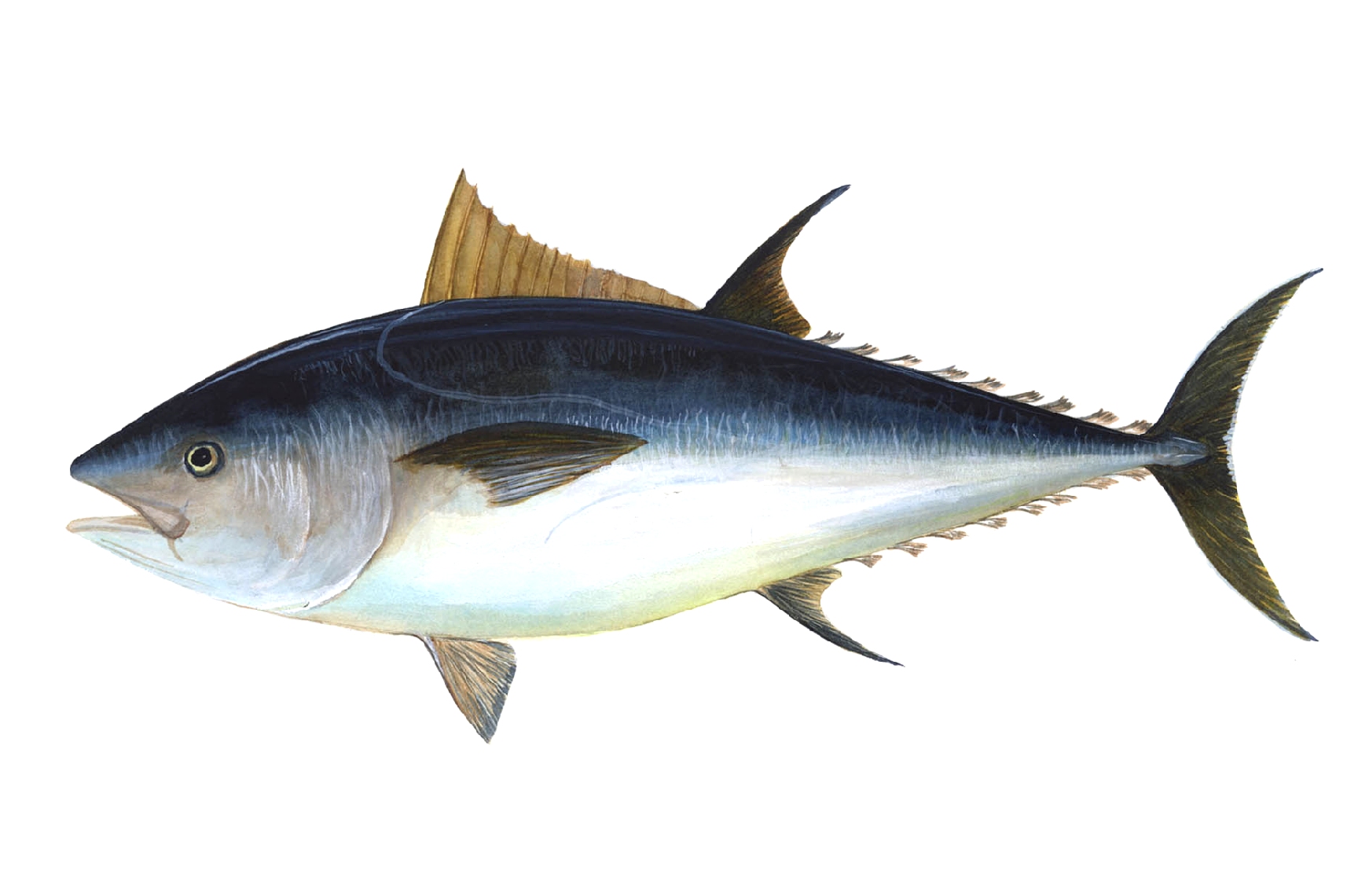
Bluefin tuna: