Nuclear submarines rushed to North Korea as US ‘prepares to strike’ dailystar.co.uk
What A Single North Korean Nuclear Warhead Could Do To Los Angeles forbes.com
Part 2 of 2 (Please read Part 1 first)
There are also discussions within the Trump administration about moving the spent fuel to the proposed nuclear storage facility at Yucca Mountain, NV. if the project can be revived and completed. Other facilities in other states have also been suggested.
SCE is committed to putting together a team of experts to come up with a plan for the relocation of the spent fuel. Experts in engineering, radiation detection and nuclear waste siting and transportation will be part of the team. SCE promised to develop a more efficient and timely program for inspecting the spent fuel currently stored in fifty dry casks behind a seawall at the SONGS site. They will also need to create a contingency plan for dealing with any problems that may be found with the existing storage canisters. SCE must spend up to four million dollars to carry out the terms of the settlement.
The president of SCE said, “SCE is proud to take a leadership role in what we expect will become an industry-wide effort over many years to work with the federal government and other key stakeholders to achieve off-site storage.” One of the plaintiffs suing the CCC is Citizens Oversight (CO) which is a San Diego-based watchdog group that has been opposed for years to the plan for onsite storage of spent fuel at SONGS. The national coordinator for CO said, “This [settlement] is about the best we can do, and I think it’s pretty good. It’s a prudent step in the right direction and a step [Edison] wouldn’t take at all if it weren’t for the lawsuit that we filed.”
The settlement sets up a timetable with a series of deadlines for finding a new location for the SONGS spent fuel and putting together the required team of experts. The search for qualified experts must begin within sixty days. The panel of experts has ninety days to hire qualified experts who apply.
The settlement plan still faces some significant problems. For one thing, even if SCE carries out all of its agreed upon actions and does identify a new location for the spent fuel and a plan for transfer, no transfer can take place unless approved by the Nuclear Regulatory Commission (NRC). While the waste is currently the responsibility of SCE, that responsibility will eventually have to handed over to the Department of Energy which will have to approve the handover. The Department of Transportation will have to approve any plan for transporting the spent fuel to a new location. All of the proceedings from these federal agencies will take time to carry out and new problems that may delay the plan may emerge from these proceedings.
One quote from the settlement stands out. SCE is committing to spending “commercially reasonable” funds to locate a new site for the spent fuel and develop a detailed plan for the transportation of the spent fuel to that site. A number of four million dollars is mentioned in connection with the settlement. It is not clear whether or not SCE is off the hook for moving the spent fuel if they spend four million dollars and still don’t have a site and/or a viable plan. Ultimately, the court did not say that they have to move the spent nuclear fuel. But, as the CO president said, this settlement is about the best they could hope for.
San Onofre Nuclear Generating Station:
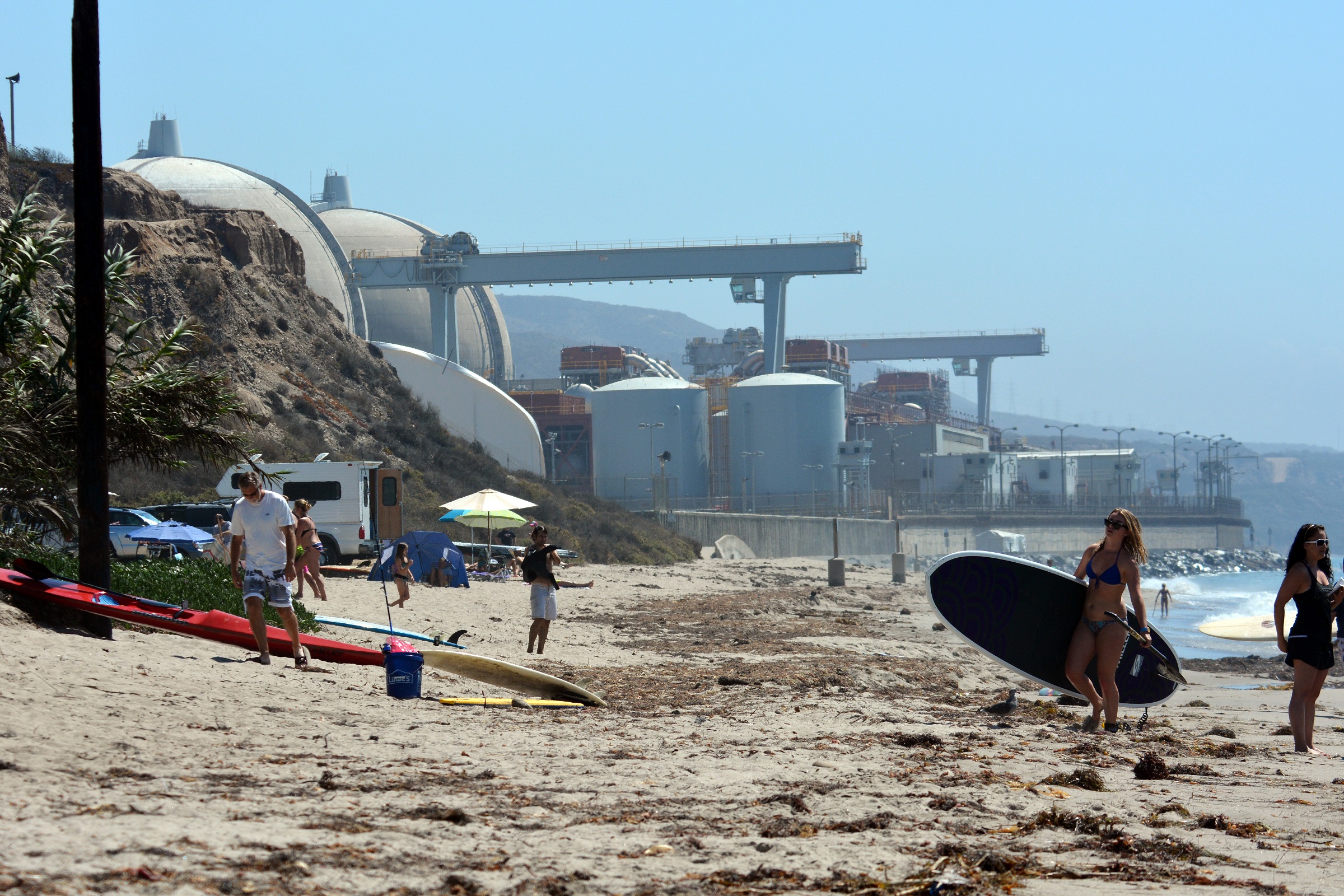
There are some ongoing disputes over nuclear issues that I return to from time to time for an update. The San Onofre Nuclear Generating Station (SONGS) near San Diego, CA. was shut down a few years ago over problems with the steam generator systems. Southern California Edison (SCE), the owners of the SONGS, contracted with Hitachi Heavy Industries for two new steam generators. In 2012, both of the SONGS reactors had to be shut down because of premature wear. Hitachi claims that they warned SCE that the design changes that had been made might cause problems with the new steam turbines and they did. SCE is suing Hitachi and Hitachi is suing the SCE.
SCE decided that to close the SONGS permanently in 2013 because of uncertainty of the cost and time involved in fixing the steam generators. The SONGS is being decommissioned and that means that something will have to be done with the spent nuclear fuel from the reactor cores and the cooling pool.
SCE proposed to store the nuclear waste in dry storage casks onsite at the SONGS. Seventy three thick vertical dry casks are being constructed onsite to receive the spent fuel currently in the cooling pool at the SONGS. Critics of the proposal point out that the site is right on the Pacific Coast of California with a heavily populated area and a busy freeway right on the other side of the site. California is a seismically active zone and there are fears that an earthquake off the coast could cause a tsunami that would flood the SONGS site.
Following the grant of a twenty year permit by the California Coastal Commission (CCC) in 2015 for the SONGS to store the spent fuel onsite, two plaintiffs from the San Diego area filed a law suit against the actions of the Commission. An out-of-court has just been reached between the plaintiffs and SCE. The settlement was approved by a Superior Court Judge. In the settlement, SCE has committed to making a “commercially reasonable” attempt to move the spent fuel from the SONGS to another facility.
The Palo Verde Nuclear Generating Station in Arizona has been suggested as a possible destination for the spent fuel from the SONGS. The Palo Verde site is a logical choice because that facility SCE is a part owner of Palo Verde which would reduce the complexity of the transfer.
Facilities in Texas and New Mexico are also being considered. They are “consolidated interim storage” facilities which receive spent fuel and other waste from multiple nuclear power plants if receipt is approved by local authorities.
Representative from the Eddy-Lea Energy Alliance which manages the nuclear waste facility in New Mexico came to San Diego to discuss their facility as a possible location for the SONGS spent fuel. They made the statement that, if the transfer was approved, they could get it done in five years. Given the long timelines and usual schedule delays in most nuclear projects, this would appear to be an over optimistic prediction.
The Texas site that has been suggested is managed by Waste Control Specialists. They want to expand their existing low-level waste facility but are having financial difficulties. These difficulties were exacerbated when the U.S. Justice department recently blocked a proposed merger.
Part 1 of 2 parts (Please read Part 2)
The idea of using thorium as a nuclear power reactor fuel has been around since the 1960s but there are no commercial thorium reactors in operation today.
Some of the potential benefits of a thorium reactor include production of tiny amount of waste with half life of thirty years, abundance and low radioactivity of thorium, cannot melt down, is not under high pressure, can burn waste from conventional power reactors, can be self-regulating, requires less cooling water than light-water reactors, and more difficult to use for nuclear weapons production than conventional reactors fuel and waste.
Some of the problems with thorium reactors include non-renewable fuel, still produces hazardous waste, can still be used to make nuclear weapons, uses complex and different technology that must be developed, could be terrorist target, conceived of as a centralized plant, competes with renewables for investment dollars, still requires highly fissile materials to act as primer, fuel can be more expensive to produce, waste is more dangerously radioactive in the short term, requires materials that can withstand temperatures higher than conventional light water reactors.
Steven Ashley, a writer for New Scientist had this to say about thorium reactors, “because nuclear power was traditionally tied up with nuclear weapons research, thorium was abandoned. Except for one test reactor that has been under construction in India since 2004, the last research into thorium reactors took place 45 years ago.” Nonetheless, “Molten salt reactors are expected to be very well suited for using thorium as a fuel. The unique fluid fuel can incorporate thorium and U-233 fluorides as part of a salt mixture, to melt at very high temperatures.”
While U.S. is not focused on researching and developing thorium power reactors, there is a startup in Utah that wants to build a thorium reactor for local utilities. India has beaches of thorium sand and a great need for more electricity. China and Russia are both researching thorium as part of their broad dedication to developing advanced nuclear technologies. Canada is working on building a thorium reactor. Researchers in the Netherlands are making progress in their development of a thorium reactor.
Researchers at the Nuclear Research and Consultancy Group (NRG) in the Netherlands are experimenting with thorium reactors. The Chairman of the Thorium MSR (molten salt reactor) Foundation posted a comment in Medium that said “On August 10, 2017, a set of concentric sealed tubes was entered into the core of the High Flux Reactor in Petten, Netherlands. In the smallest of these tubes sits an even smaller set of four graphite crucibles, containing a mixture of salts: lithium fluoride and thorium fluoride.”
The NRG is an “internationally operating nuclear service provider.” They produce commercial isotopes, research nuclear technology, consult on nuclear safety and reliability and provide radiation protection services. They are working on the Salt Irradiation Experiment (SALIENT) at their laboratory in Petten.
The post from the lab in Medium said, “SALIENT is a way to build up experience with the use of fission fuel in the form of a molten salt. That hasn’t been done for decades and we’re also doing it to train ourselves. It’s important to notice that SALIENT is not a single experiment but really a series, and we’ll build that up step by step. On the other hand, it is fundamental research, in which we look at the behavior of salt and the fission products that are formed in the salts.”
Ashley, the science writer says, “The next step is to study tough metal alloys and other materials that can survive the bombardment. Later research will examine how to deal with the waste from a molten salt thorium reactor. While safer than the long-lived products from a standard nuke, these will still need special disposal. The next step is to study tough metal alloys and other materials that can survive the bombardment.”
With abundant fossil fuels and dropping prices for renewables, it may be too late for thorium nuclear power.