Author: Burt Webb
-
Geiger Readings for Aug 10, 2017
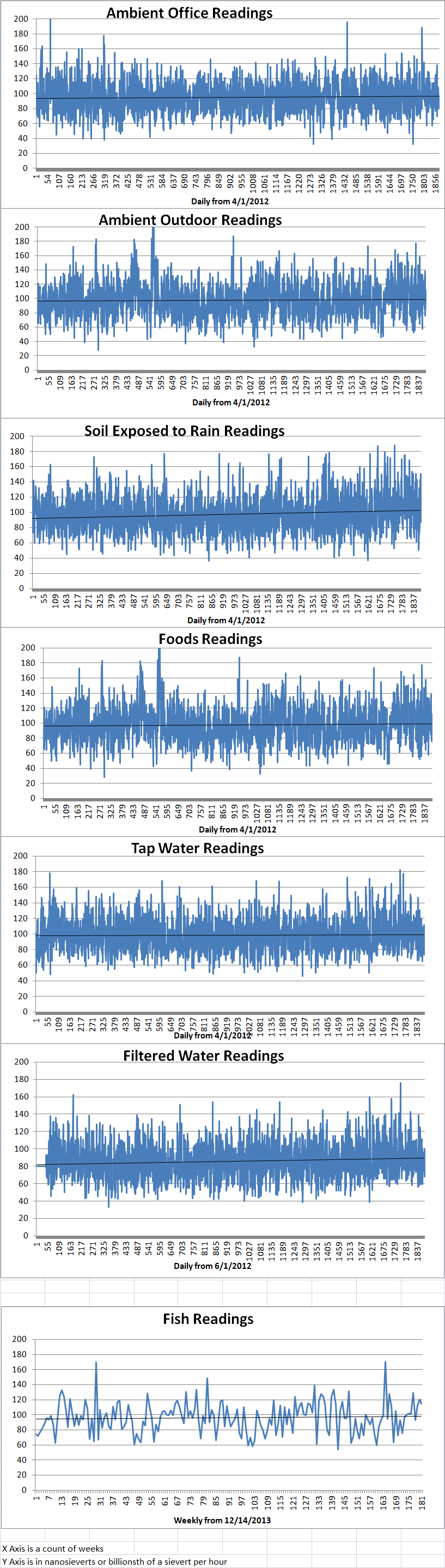
Ambient office = 97 nanosieverts per hourAmbient outside = 145 nanosieverts per hourSoil exposed to rain water = 151 nanosieverts per hourOrange bell pepper from Central Market = 112 nanosieverts per hourTap water = 112 nanosieverts per hourFilter water = 100 nanosieverts per hour -
Nuclear Weapons 295 – Would China Benefit From A Conflict Between The U.S. and North Korea?
Donald Trump, the current U.S. President, has been trying to exert pressure on China to curb North Korean nuclear weapons development. China is the main trading partner for N.K. and, since N.K. and China share a border, China definitely has a major stake in developments on the Korean peninsula. China has asked the North Koreans to suspend their missile and nuclear warhead program to little effect. While China has been cooperating on the new N.K. sanctions, Chinese companies are still trading in sensitive technologies with N.K. Shutting off the flow of technology to the N.K. weapons program would be a reasonable move for China if they really wanted to stop N.K. from building nuclear tipped ICBMs with which to threaten the world. However, there are some critics of the Chinese government who say that China has its own reasons for letting N.K. continue on its course of weapons development and belligerent threats.
Some analysts believe that N.K. will attack our military bases in Hawaii with nuclear warheads. Other possible targets would be U.S. military bases Japan and Okinawa. The Pacific Northwest has a concentration of military bases in the Greater Seattle area of Washington State including the only Trident submarine base in the Pacific Ocean. This would be a tempting target for N.K. ICBMs. Another important target on the U.S. West Coast would be the Naval and Marine bases around San Diego in California where almost a quarter of our fleet is stationed. With a few missiles, N.K. could seriously cripple our Pacific Ocean military operations.
It would not benefit N.K. to launch such an attack because we would counter attack and remove the current regime. There would be major destruction in N.K. In a poor country, the destruction of major infrastructure in and around major cities would be devastating and civil society would collapse. No matter how fast and overwhelming our counter attack, N.K. artillery would destroy large areas of Seoul, the South Korean capital just south of the border and kill millions of people. Civil order in South Korea would break down and they would need our help to restore order and prevent the death of millions more.
Some military analysts say that the main beneficiary of a conflict between N.K. and the U.S. would be China. Their major rival for military dominance of South East Asian seas would be severely weakened. The U.S. and China have been arguing about the attempt of China to control the South China Sea and its resources and a U.S. – N.K. conflict might give them more latitude in their operations in the South China Sea.
On the other hand, millions of starving and ill North Koreans would pour across the N.K.-Chinese border and there is little that China could do to prevent it. This would throw that part of China into chaos. There is also the possibility that there would be radioactive fallout over North East China if nukes were deployed on the Korean Peninsula The humanitarian crisis would overload the infrastructure and civil order would disappear in that area.
While some analysts brush off these concerns by saying that China could easily handle the refugees and the fallout, I doubt that is something the Chinese government would like to put to the test. It does not appear to me that if N.K. nuked U.S. targets, it would turn out to be a very positive development for China.
China is walking a tightrope on the Korean Peninsula. It is useful to have a weak client state in the North as a buffer against a strong South Korea and an irritant to distract the U.S. from Chinese activities. If the North attacked the U.S. and the U.S. helped S.K. defeat the North, then China would face the prospect of a unified Korea that would put U.S. troops right across the Chinese border. The Chinese are playing a dangerous balancing game and the states are very high for the whole world.
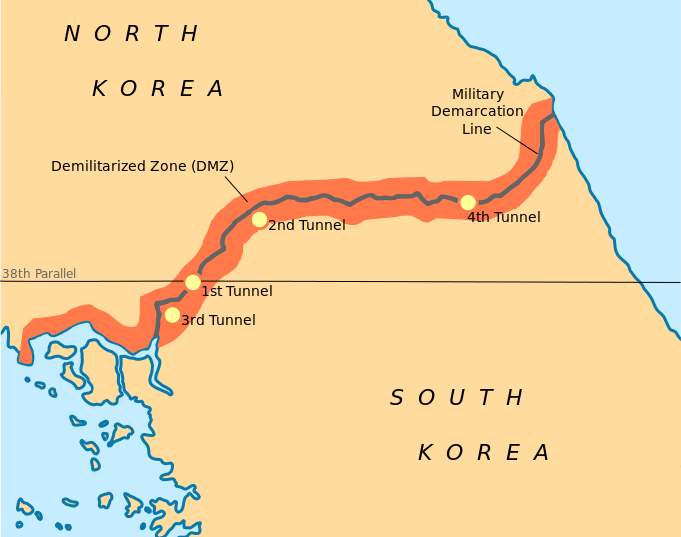
Black circle marks that location of North Korean missile base:
-
Geiger Readings for Aug 09, 2017
Ambient office = 84 nanosieverts per hourAmbient outside = 77 nanosieverts per hourSoil exposed to rain water = 87 nanosieverts per hourCrimini mushroom from Central Market = 98 nanosieverts per hourTap water = 73 nanosieverts per hourFilter water = 68 nanosieverts per hour -
Nuclear Weapons 294 – North Korea May Be Able To Miniaturize Nuclear Warheads
Donald Trump, the current U.S. President, has been trying to exert pressure on China to curb North Korean nuclear weapons development. China is the main trading partner for N.K. and, since N.K. and China share a border, China definitely has a major stake in developments on the Korean peninsula. China has asked the North Koreans to suspend their missile and nuclear warhead program to little effect. While China has been cooperating on the new N.K. sanctions, Chinese companies are still trading in sensitive technologies with N.K. Shutting off the flow of technology to the N.K. weapons program would be a reasonable move for China if they really wanted to stop N.K. from building nuclear tipped ICBMs with which to threaten the world. However, there are some critics of the Chinese government who say that China has its own reasons for letting N.K. continue on its course of weapons development and belligerent threats.
Some analysts believe that N.K. will attack our military bases in Hawaii with nuclear warheads. Other possible targets would be U.S. military bases Japan and Okinawa. The Pacific Northwest has a concentration of military bases in the Greater Seattle area of Washington State including the only Trident submarine base in the Pacific Ocean. This would be a tempting target for N.K. ICBMs. Another important target on the U.S. West Coast would be the Naval and Marine bases around San Diego in California where almost a quarter of our fleet is stationed. With a few missiles, N.K. could seriously cripple our Pacific Ocean military operations.
It would not benefit N.K. to launch such an attack because we would counter attack and remove the current regime. There would be major destruction in N.K. In a poor country, the destruction of major infrastructure in and around major cities would be devastating and civil society would collapse. No matter how fast and overwhelming our counter attack, N.K. artillery would destroy large areas of Seoul, the South Korean capital just south of the border and kill millions of people. Civil order in South Korea would break down and they would need our help to restore order and prevent the death of millions more.
Some military analysts say that the main beneficiary of a conflict between N.K. and the U.S. would be China. Their major rival for military dominance of South East Asian seas would be severely weakened. The U.S. and China have been arguing about the attempt of China to control the South China Sea and its resources and a U.S. – N.K. conflict might give them more latitude in their operations in the South China Sea.
On the other hand, millions of starving and ill North Koreans would pour across the N.K.-Chinese border and there is little that China could do to prevent it. This would throw that part of China into chaos. There is also the possibility that there would be radioactive fallout over North East China if nukes were deployed on the Korean Peninsula The humanitarian crisis would overload the infrastructure and civil order would disappear in that area.
While some analysts brush off these concerns by saying that China could easily handle the refugees and the fallout, I doubt that is something the Chinese government would like to put to the test. It does not appear to me that if N.K. nuked U.S. targets, it would turn out to be a very positive development for China.
China is walking a tightrope on the Korean Peninsula. It is useful to have a weak client state in the North as a buffer against a strong South Korea and an irritant to distract the U.S. from Chinese activities. If the North attacked the U.S. and the U.S. helped S.K. defeat the North, then China would face the prospect of a unified Korea that would put U.S. troops right across the Chinese border. The Chinese are playing a dangerous balancing game and the states are very high for the whole world.
Black circle marks that location of North Korean missile base:
-
Geiger Readings for Aug 08, 2017
Ambient office = 108 nanosieverts per hourAmbient outside = 135 nanosieverts per hourSoil exposed to rain water = 143 nanosieverts per hourCarrot from Central Market = 93 nanosieverts per hourTap water = 108 nanosieverts per hourFilter water = 94 nanosieverts per hour -
Nuclear Weapons 293 – Russian Fleet Of Nuclear Submarines Is Aging
Both the U.S. and Russia have thousands of nuclear warheads and three types of delivery systems. Both nations have nuclear armed submarines, nuclear bombers and nuclear tipped ICBMs. Both countries are spending hundreds of billions of dollars to upgrade their nuclear arsenals and their delivery systems.
The Russian Navy is much smaller than the Soviet Navy that preceded it. Most of its current submarine fleet is coming to the end of its allocated lifespan. They will not be able to replace submarines as fast as they are being retired. very soon which means that their submarine fleet will shrink in the coming years.
As nuclear submarines age, they are prone to corrosion of the hull. There are also corrosion problems inside the compartments that hold the nuclear reactors that provide propulsion. The older submarines get, the more maintenance they need and the longer they have to be out of service to effect repairs. It is estimated that Russia is only able to keep about half their nuclear submarines in service at sea at any time. Having many old submarines on sea patrols diminishes the operational readiness of the Russia fleet.
Russia is currently building and launched their new multi-role Yasen class of nuclear submarines. However, they only launched one of these in 2010 and another in 2011. On the other hand, Russia will have to be retiring eleven Akula class ballistic missile submarines built in the early 1990s. They will also have to retire four Victor III class attack submarines and eight Oscar II class cruise missile submarines in the not too distant future. The Russians cannot build fast enough new submarines to replace the submarines that will have to be decommissioned. Russia will be working hard to keep their aging submarine fleet as sea as long as possible but one assessment in a Russian military blog said that they may lose over half their submarine fleet by 2030
The Yasen class of submarines is a recent design. The plan is to have the last of seven Yasen submarines launched in 2023. That schedule might slip considering that the Yasen class is twice as expensive to build as one of the new Russia ballistic missile submarines..
Russia currently has thirteen ballistic missile submarines that are able to drop nuclear warheads on enemy cities far inland for the world’s oceans. There are three new Borey class submarines in their fleet and five more Borey class submarines are being build. However, by 2030, three Delta III class, six Delta IV class and one Typhoon class submarines will all be reaching forty years of age. All of them will probably be retired before then. Even with the loss of these old submarines, there will be eight of the new Borey class submarines in service. Only the U.S., China and India will have anywhere equal numbers of ballistic missile submarines.
The Russians are designing a type of nuclear submarine called Project Husky. This versatile new design has three versions. It can be configured as an attack submarine, a cruise-missile submarine, or ballistic missile submarine. Unfortunately, the most optimistic estimates say that if construction of the Husky class begins in the early 2020s, they will only have three by 2030 because of the over four years that are required to build one.
The diesel-electric fleet of Russian submarines is not doing much better. The Russian have seventeen Kilo class hunter-killer submarines that were build in the early 1990s. They are building more advanced versions of the diesel-electrics in the Varshavyanka and the Lada classes and these are being built considerably faster than the nuclear powered Yasen class.
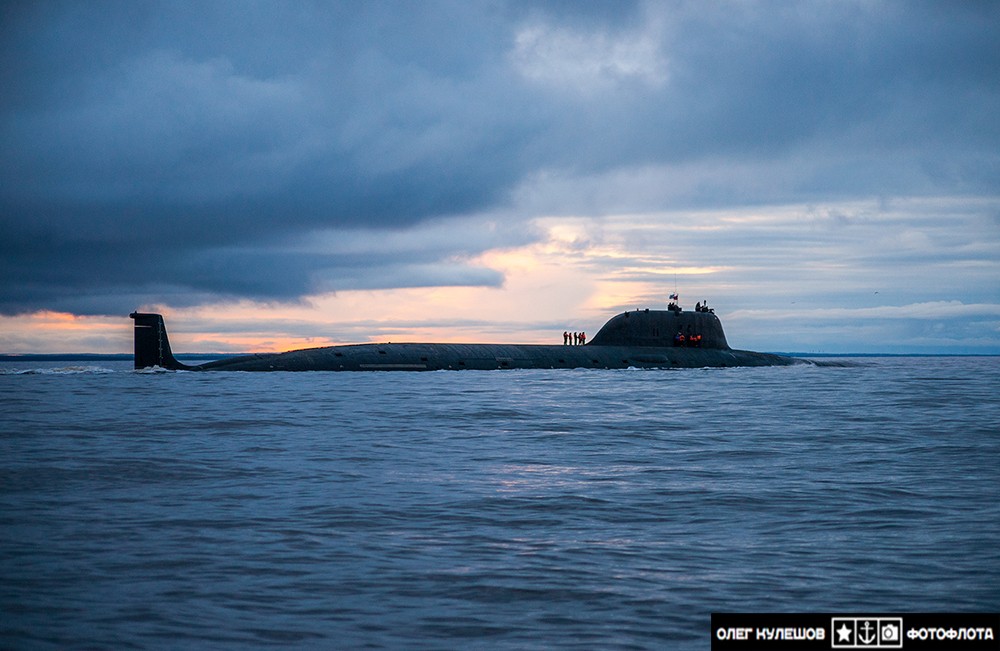
Russian Yasen class submarine
(Source Минобороны России/Олег Кулешов):

-
Geiger Readings for Aug 07, 2017
Ambient office = 108 nanosieverts per hourAmbient outside = 135 nanosieverts per hourSoil exposed to rain water = 143 nanosieverts per hourCarrot from Central Market = 93 nanosieverts per hourTap water = 108 nanosieverts per hourFilter water = 94 nanosieverts per hour