Author: Burt Webb
-
Geiger Readings for Jul 19, 2017
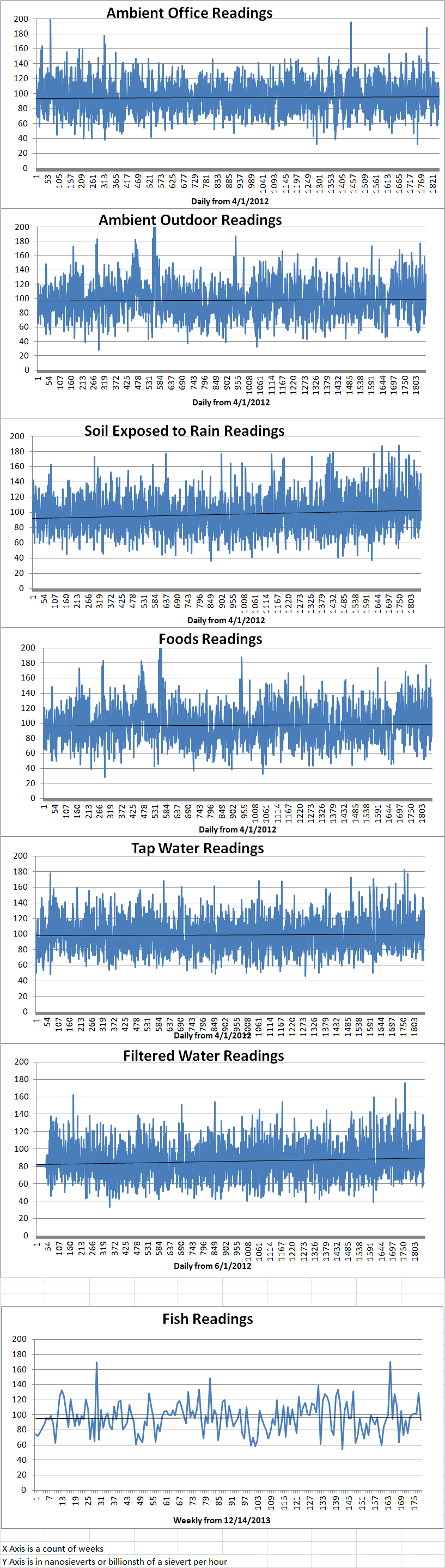
Ambient office = 86 nanosieverts per hourAmbient outside = 84 nanosieverts per hourSoil exposed to rain water = 90 nanosieverts per hourBlueberry from Central Market = 134 nanosieverts per hourTap water = 130 nanosieverts per hourFilter water = 123 nanosieverts per hour -
Nuclear Weapons 292 – The Detonation Of Even A Few Big Nuclear Warheads Could Cause A Nuclear Autumn
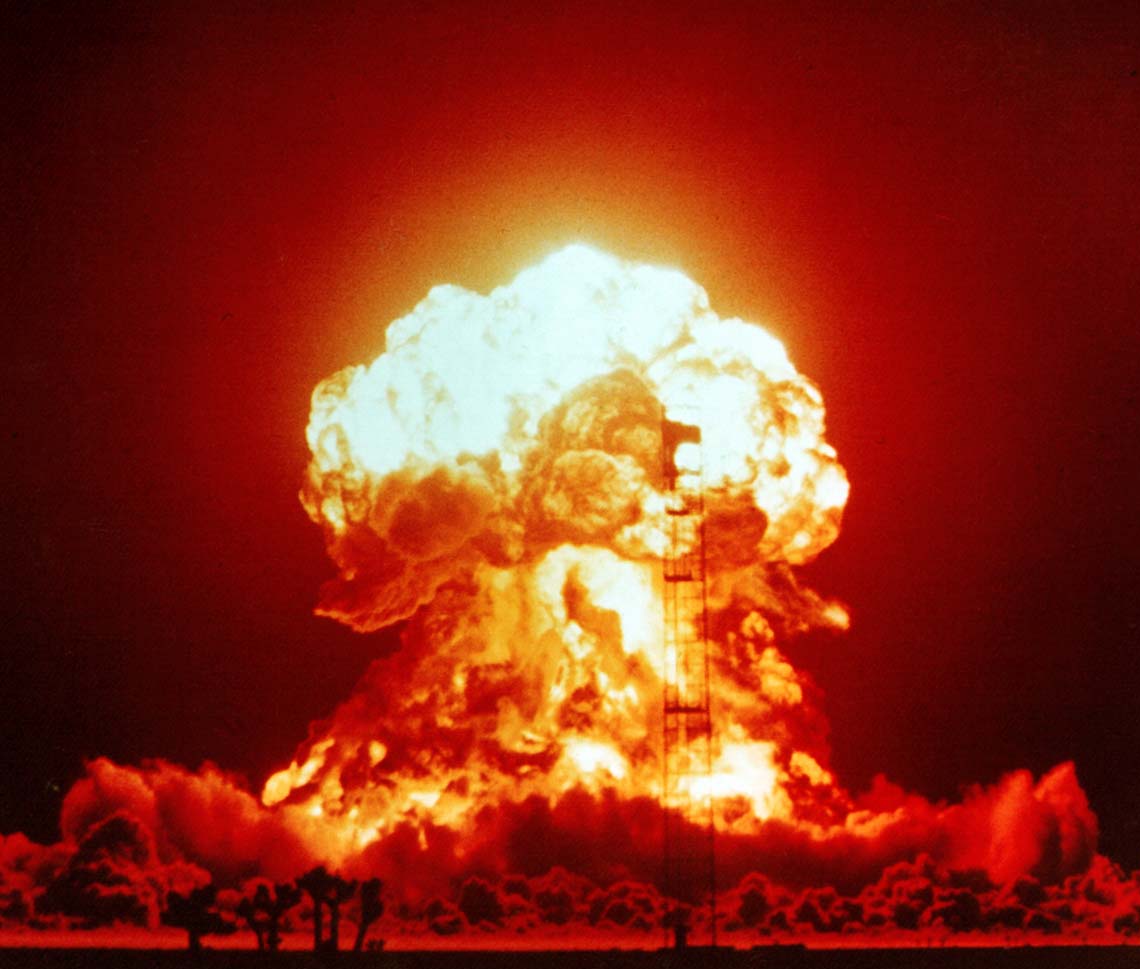
I have written about the possibility of “nuclear winter” in previous blogs. It has been estimated that the detonation of as few as one hundred nuclear warheads would clog the atmosphere with smoke and soot from firestorms in burning cities, oil refineries and rural missile installations. The term nuclear winter was coined in 1983 by Richard P. Turco who ran some of the early computer models that projected the effect of such firestorms. The soot and smoke would reverse global warming and reduce the amount of sunlight reaching the surface of the Earth for years.
If only around a hundred nuclear detonations occurred, Food production would crash. Diseases would spread and millions of people would die. All countries on Earth would be severely impacted. If thousands of nuclear warheads were detonated in a major exchange between the U.S. and Russia, the results would be catastrophic. Billions of people would die. In short, it would mean the end of our civilization and the devastation of the entire ecosystem.
New work on modeling the effects of nuclear detonations suggests that even a few modern nuclear warheads could cause what is being referred to as a “nuclear autumn.” A nuclear autumn while not as severe as a nuclear winter would still be devastating. Some of the results of a nuclear autumn include a serious drop in agricultural productivity, loss of ozone in the stratosphere and the spread of dangerous radioactive fallout across the world.
An analysis of the nuclear arsenals of the U.S., the U.K, France, Russia, and China states that the U.S., Russia, and China could each trigger a nuclear autumn with the detonation of as few as five nuclear warheads. These warheads could be delivered by nuclear bombers and/or ICBMs.
The Trump administration supports expanding the U.S. nuclear arsenal. President Trump told the Reuters news service that “It would be wonderful, a dream would be that no country would have nukes, but if countries are going to have nukes, we’re going to be at the top of the pack.” He also tweeted during the Presidential transition that “The United States must greatly strengthen and expand its nuclear capability until such time as the world comes to its senses regarding nukes.”
While the possibility of an all out nuclear war is increasing as the relationship between the U.S. and Russia continues to deteriorate, the possibility of a limited use of nuclear weapons is also increasing. Improved accuracy and variable yields of new generations of nuclear weapons are also increasing the odds of the use of nuclear weapons in regional conflicts as tactical weapons for use on the battlefield.
One hundred and twenty-two nations have voted for the U.N. ban on all nuclear weapons. A total ban on all nuclear weapons may be the only way of avoiding the disastrous consequences of even a few nuclear detonations in a conflict. Unfortunately, the nations with nuclear weapons did not take part in the creation of the nuclear weapons ban treaty. Without their participation, the noble goal of the treaty will remain unfulfilled and we will continue to live under the nuclear Sword of Damocles.
-
Geiger Readings for Jul 18, 2017
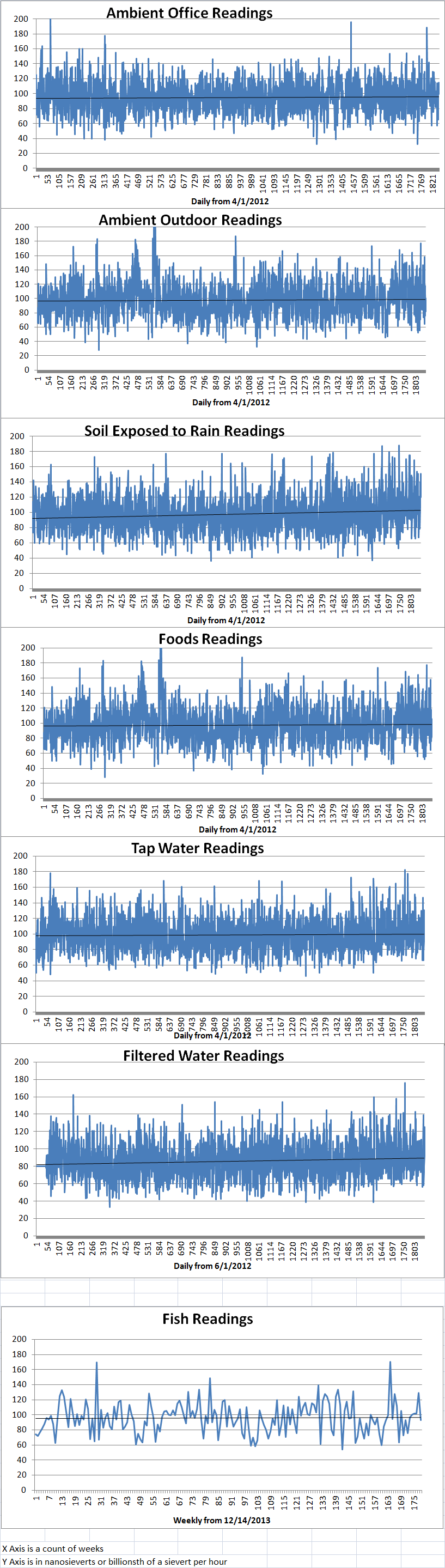
Ambient office = 107 nanosieverts per hourAmbient outside = 146 nanosieverts per hourSoil exposed to rain water = 151 nanosieverts per hourCarrot from Central Market = 100 nanosieverts per hourTap water = 130 nanosieverts per hourFilter water = 126 nanosieverts per hour -
Nuclear Reactors 289 – Department of Energy Study Does Not Support Official Position Of The Trump Administration
The nuclear industry has been anxiously waiting for a clear signal from the Trump administration with respect to support for nuclear power generation. There have been conflicting signals coming out of the Department of Energy under the new Secretary of Energy, Rick Perry.
The DoE has been conducting a study on baseload power and the reliability of the grid. The study was supposed to be released by now but the release has been delayed by at least several weeks. Now a draft of the report has been leaked and made public and it appears that the findings of the study do not agree with public statements made by the Trump administration.
The study was motivated by the desire of the Trump administration to provide support for claims by Perry that EPA regulations and renewable alternative energy sources such as solar and wind installations were undermining the reliability of the U.S. electrical grid. The supposed injury to the national grid was being blamed on the “premature” closure of baseload power which is available twenty four hours a day – seven days a week. Two of the primary sources of baseload power are coal and nuclear power plants.
The draft of the study’s report said that with respect to baseload power requirements, environmental regulations from the EPA and subsidies to renewable energy installations “played minor roles compared to the long-standing drop in electricity demand relative to previous expectation and years of low electricy prices driven by high natural gas availability.”
Since 2002, the report continued, “most baseload power plant retirements have been the victims of overcapacity and relatively high operating cost but often reflect the advanced age of the retiring plants.” The report from the study pointed out that many of the nuclear power plants in the U.S. are not economic to operate. Overcapacity is causing major problems in electricity markets. The growth in electricity demand has flattened since 2008. This makes it harder for less competitive power plants such as nuclear plants to survive.
Between 1970 and 2005, U.S. electricy generation grew annually by two and seven tenths percent. Since 2005, the annual growth rate has dropped to five one hundredth of a percent. For the near future, the price of natural gas will stay low due to energy efficiency and the price of renewables will keep dropping. It is just not good business to keep operating an uncompetitive power plant when you know that it will keep losing money.
The report from the study says that most of the announcements of nuclear power plant retirement say that the cause is bad market conditions. “The most unfavorable condition is that the marginal cost of generation for many nuclear plants is higher than the cost of most other generators in the market.” The report concludes that “as long as natural gas prices stay down and there is an oversupply of energy in many hours of the day and year [because of zero-marginal-cost renewable power] the typical nuclear plant will lose money on every kWh produced, and not be able to make it up on volume.” It is obvious that if it is not competitive to run an existing nuclear power plant, it will not be competitive to build a new one.
Critics of the DoE and Trump administration say that they fear that the report will be edited to remove the language that disagrees with the official position of the administration before it is formally published.
-
Geiger Readings for Jul 17, 2017
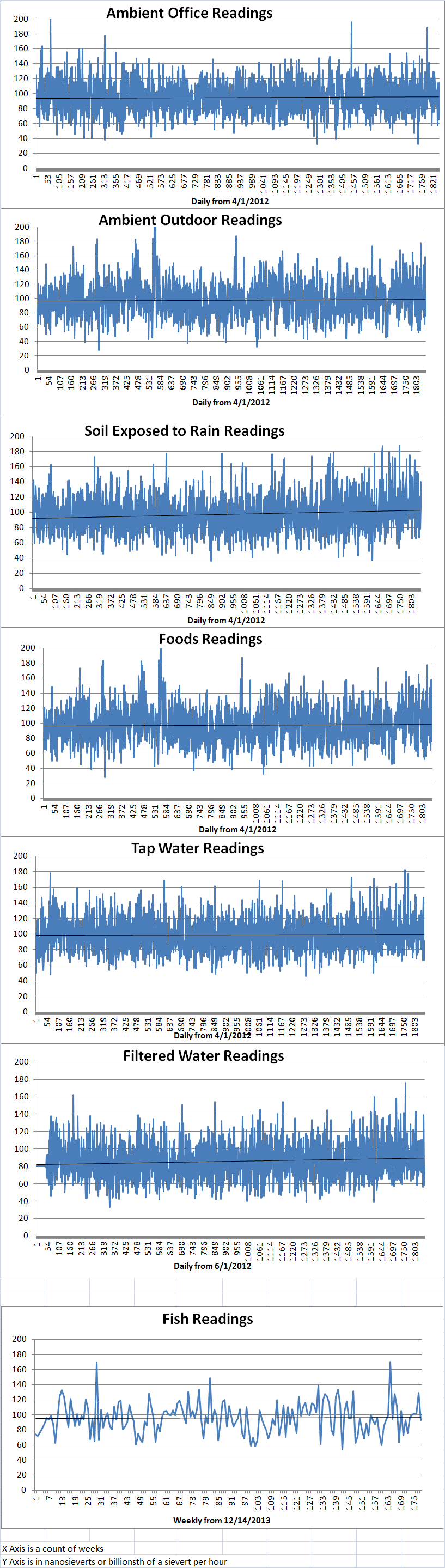
Ambient office = 99 nanosieverts per hourAmbient outside = 120 nanosieverts per hourSoil exposed to rain water = 120 nanosieverts per hourIceberg lettuce from Central Market = 82 nanosieverts per hourTap water = 98 nanosieverts per hourFilter water = 93 nanosieverts per hour -
Geiger Readings for Jul 16, 2017
Ambient office = 115 nanosieverts per hourAmbient outside = 146 nanosieverts per hourSoil exposed to rain water = 140 nanosieverts per hourCelery from Central Market = 106 nanosieverts per hourTap water = 91 nanosieverts per hourFilter water = 81 nanosieverts per hour