Author: Burt Webb
-
Geiger Readings for Jun 29, 2017
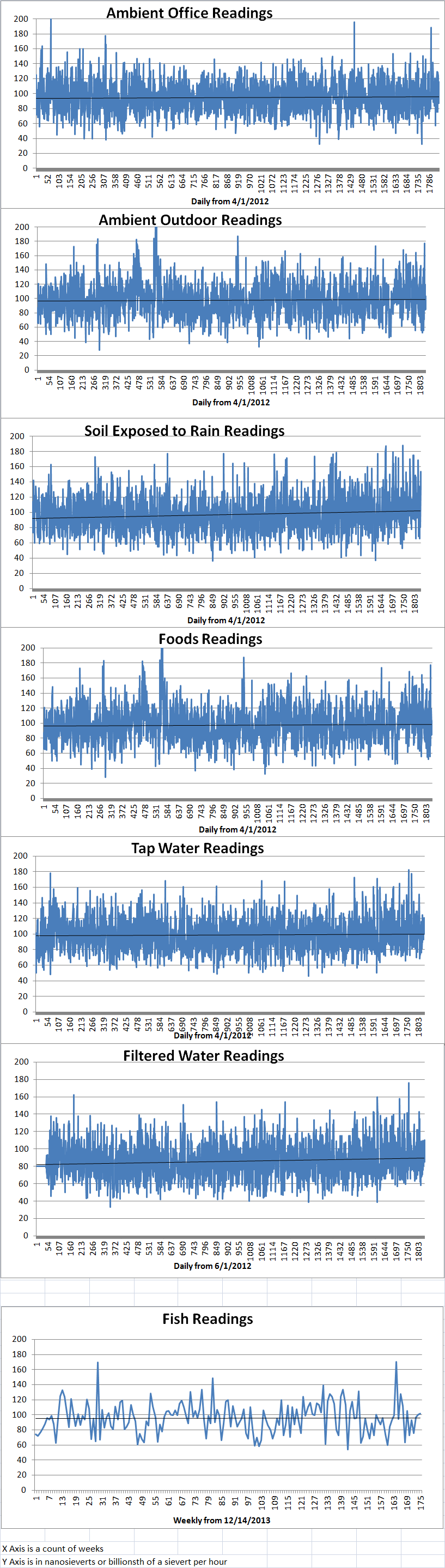
Ambient office = 115 nanosieverts per hourAmbient outside = 148 nanosieverts per hourSoil exposed to rain water = 154 nanosieverts per hourAvocado from Central Market = 103 nanosieverts per hourTap water = 116 nanosieverts per hourFilter water = 110 nanosieverts per hour -
Nuclear Reactors 286 – Cyberwarfare Poses Unacceptable Danger To U.S. Infrastructure Including Nuclear Power Plants
In 2010, the Stuxnet computer worm was discovered in the centrifuge control systems in Iran’s nuclear program. It did a great deal of damage to the infected systems. It was designed to influence control systems for industrial equipment. Among other things, it caused some of the centrifuges to spin so fast that they were destroyed. Although neither country has admitted anything, it is commonly assumed that the U.S. and Israel created the worm to attack Iran and retard its nuclear program.
There have been many hacking attacks on various public and private computer systems in the U.S. in the past decades. Pentagon computers have been accessed illegally raising national security concerns. Commercial databases have been hit and the financial and personal information of millions of Americans has stolen.
The Russian attack on political party email systems and voting registration databases in 2016 influenced the U.S. Presidential and Congressional elections. It has not yet been revealed to what degree these attack may have altered the outcome of the elections. This sustained and massive attack on the computer systems that underpin our democracy has brought the issue of computer attacks to broader public awareness.
There has been a growing concern over the last few years that major infrastructure like power systems in the U.S. might be attacked by malicious software in what is being called cyberwarfare. A television news show demonstrated how a computer attack could cause a generator at a power station to explode. Hydroelectric systems could be hacked to release water and flood downstream communities. Traffic systems could be hacked to cause massive traffic jams. Financial systems could be crashed wiping out billions of dollars. One of the biggest fears is that a computer attack on the systems that operate a nuclear power plant could cause a major nuclear accident that would threaten millions of people.
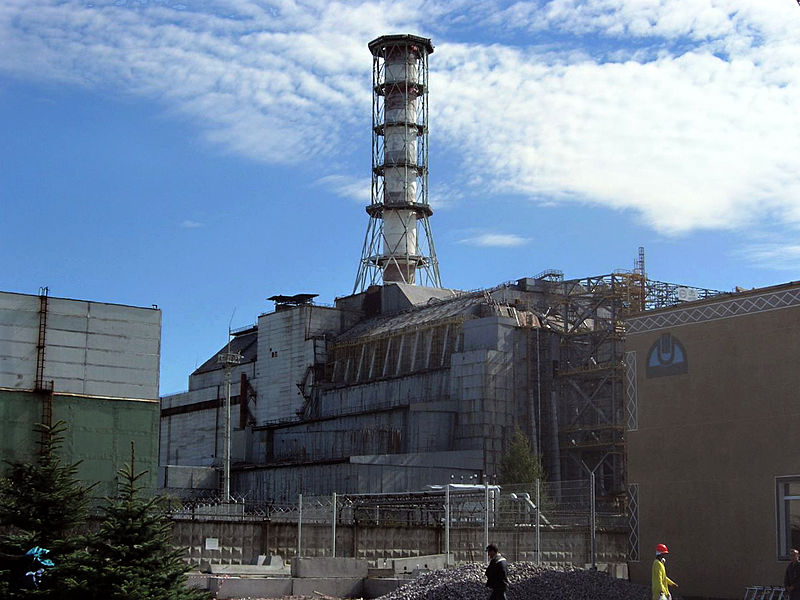
This week, there was a major malware attack on companies around the world. The Petya virus was something called ransomware. In this type of attack, all the records on the infected computer are encrypted and the perpetrators then demand ransom in return for a key to decrypt the files. One of the targets hit in the attack was a nuclear power plant in Chernobyl. A system that monitored radiation levels was encrypted and the operators could not access the records of operations. They had to manually monitor radiation levels.
Now ABC has reported that a U.S. nuclear power plant was also a victim of the ransomware attack. Fortunately the attack penetrated and encrypted administrative computer systems at the plant and did not hit any operational or safety systems. No safety alert was issued by the Nuclear Regulatory Commission or the International Atomic Energy Agency. This indicates that attack posed little risk to public safety or the environment.
As I have commented in the past, the level of computer security in the U.S. public and private computer systems is abysmal. Governmental computer systems at all levels are chronically underfunded and behind the latest technology including security. Private companies are too cheap to install decent security unless forced to by the government. Hopefully, this situation can be remedied before there is a truly horrific event like the melt down of a nuclear power plant.
Chernobyl Nuclear Power Plant:
-
Geiger Readings for Jun 28, 2017
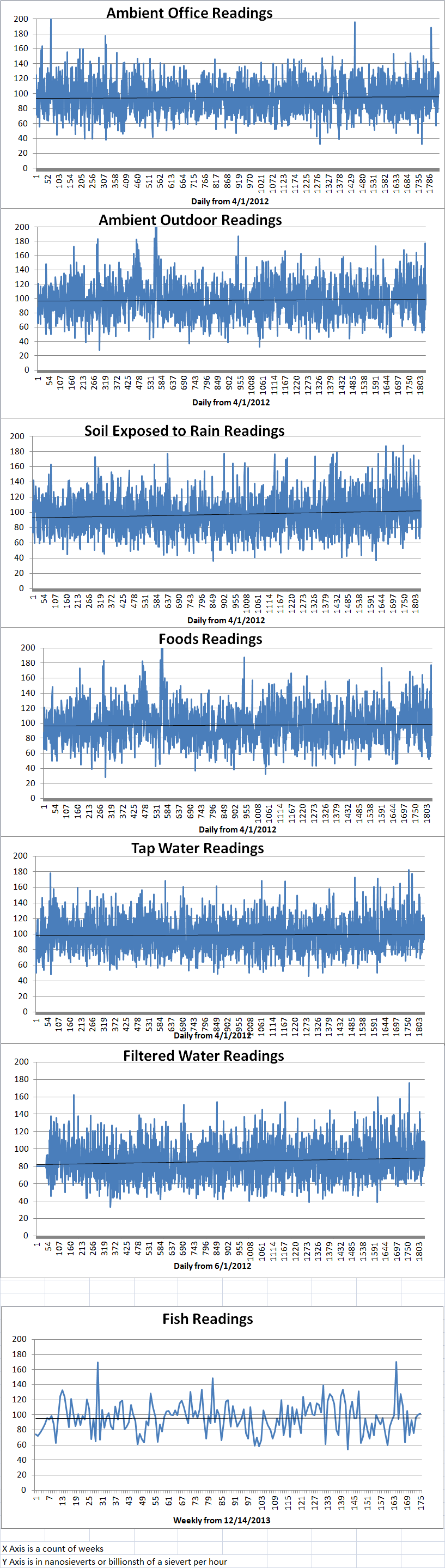
Ambient office = 87 nanosieverts per hourAmbient outside = 132 nanosieverts per hourSoil exposed to rain water = 137 nanosieverts per hourHeirloom tomato from Central Market = 85 nanosieverts per hourTap water = 100 nanosieverts per hourFilter water = 85 nanosieverts per hour -
Scientists Exposed To Uranium Particles At The National Criticality Experiments Research Center In 2014
I recently wrote a post about problems at the Los Alamos National Laboratory. The LANL is not the only national laboratory with a poor record for safety. Other national labs transgressions have also been reported by government inspectors.
In the spring of 2014, ninety-seven nuclear researchers from the U.S. and other countries convened in Nye County, NV. They met at the place where the U.S. had conducted hundreds of nuclear weapons tests. The testing of nuclear weapons at that site had ended. The scientists had come to the National Criticality Experiments Research Center (NCERC) to use a piece of equipment called Godiva. The purpose of their visit was to test nuclear pulses.
The Godiva machine had originally been located at Los Alamos, N.M. but was moved to Nevada nine years before the gathering of scientists. There was a cover for the machine that was intended to prevent the escape of any loose radioactive particles but that cover was not reinstalled after the move to Nevada.
When Godiva was operating, it often set of radiation alarms at the NCERC so the staff decided to turn off the alarms. Unfortunately, the alarm system was designed to turn on ventilation and air filtration so when the alarms were shut off so was the ventilation system. The only operational ventilation system left was a small exhaust fan that moved air into a room where scientists watched next to the room where Godiva was located.
The Godiva test runs were completed in mid May of 2014. On June 16th, routine tests of the facility revealed that there were radioactive particles in the room where the scientists had been working. When the room that contained the Godiva machine was tested, it was found to have twenty times more radiation than the adjacent room. The site operators had the rooms decontaminated. However, they did not notify and check the scientists who had attended the test sessions.
On July 17th, a researcher at Lawrence Livermore National Laboratory in California who had participated in the Godiva tests at NCERC had a routine exam for radiation exposure. Particles of highly enriched uranium were found in his urine. Following that revelation, National Securities Technologies, the lead contractor at the NCERC, tested the urine of NCERC staff members who had been in the Godiva room when the tests were being conducted. The results showed that three technicians had inhaled highly-enriched uranium.
No public announcements of the findings were made. Eventually, all ninety seven scientists who had gathered for the Godiva tests were contacted. The testing of the group for radioactive exposure proceeded slowly and by 2016, it was found that thirty one of them had inhaled uranium. Though the amount of uranium was small, uranium particles can keep emitting radiation for years and pose a serious cancer risk. The National Nuclear Security Administration (NNSA) said in a letter to the NCERC that the exposures were “safety-significant and preventable.”
NCERC had been warned in 2010 that there could be problems with the Godiva machine installation. The warning even explicitly mentioned that there were concerns about the ventilation system. Even with advanced warning, workers and visiting scientists were still exposed to uranium particles. In other words, this exposure should not have and did not need to have happened.
The Center for Public Integrity conducted a review of over sixty violations of safety regulations at ten federal nuclear weapons facilities. Their review said that the protective system for such facilities was dysfunctional. Contractors continued to make high profits while fines were often reduced or entirely waived. Auditors said that federal agencies such as the NNSA and the DoE which were supposed to overseen these facilities were so understaffed that contractors were basically left to police themselves.
During the Cold War, there was great pressure to complete nuclear weapons projects as quickly as possible. A system evolved where profits were based on the ability to deliver results and safety issues took a back seat. Unfortunately, this culture of “profits first” still exists today. Some workers feel that “safety is completely gone.”
-
Geiger Readings for Jun 27, 2017
Ambient office = 100 nanosieverts per hourAmbient outside = 91 nanosieverts per hourSoil exposed to rain water = 81 nanosieverts per hourBartlett pear from Central Market = 91 nanosieverts per hourTap water = 121 nanosieverts per hourFilter water = 109 nanosieverts per hour -
Nuclear Reactors 285 – Sanctions on Qatar May Destabilize The World Helium Market And Lead To Record Price Increases
Helium is a chemical element with He for the symbol and it has an atomic number of two. It is next most abundant element in the universe after hydrogen. About twenty four percent of the elemental mass of the universe is helium. It is a colorless, odorless, tasteless, non-toxic, inert, monatomic gas.
Helium is rare on Earth. It is present in the atmosphere in the ratio of about five parts per million. Helium is naturally produced by radioactive decay of of elements such as uranium and thorium. There were concerns that the world supply of helium was declining but recent studies suggest that there may be great quantities of helium trapped in cavities far below the surface of the Earth.
Helium is a very important element with many industrial uses including medical imaging, manufacturing and nuclear reactors. About a quarter of the helium produced in the world is used to cool superconducting magnets for MRI scanners. It is used as a protective atmosphere for arc welding and in processes that grow crystals for production of silicon wafers for electronics. Helium is a potential fuel for fusion reactors and is used as a coolant for the superconducting magnets that compress and restrain the plasma in the reactor. Russian companies are working on the Gas Turbine Modular Helium Reactor. It uses fast neutrons, is more efficient than conventional reactors and can transmute nuclear waste.
The U.S. was an early producer of helium from natural gas deposits under the center of the country. The Helium Natural Gas Reserve was established in 1925 in Amarillo, Texas to store gas for blimps. In 1927, the Helium Control Act was passed to ban the export of helium. After World War II, the market for helium was depressed but expanding industrial demands such as the use of liquid helium as a coolant to create oxygen/hydrogen rocket fuel increased the market for and production of helium. After the Helium Acts Amendments of 1960, the U.S. created five production plants for helium and routed pipelines from them to the gas reserve in Texas.
By 1995, there was a billion cubic meters of helium in the reserve and the reserve was over a billion dollars in debt. The Helium Privatization Act of 1996 directed the sale of the helium in the reserve and sales started in 2005. The U.S. had been the primary producer of helium for many years but then plants were built in other countries such as Qatar and Algeria. In 2012, the U.S. reserve held about thirty percent of the helium in the world. World demand and consumption increased and it was estimated that the U.S. would run out of helium from the reserve in 2018.
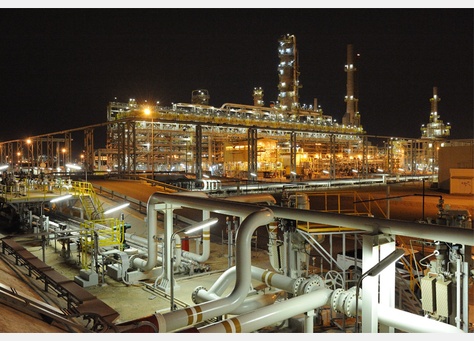
In 2013, the biggest helium production plant went operational in Qatar. In 2014, the world helium supply passed demand briefly but continued increases in demand have led to concerns about supply and prices. In June of this year, a consortium of Gulf states in the Middle East with the support of the U.S. administration set up sanctions on Qatar because of supposed support for terrorist groups and activities. By this time, Qatar was supplying about one third of the helium being produced in the world. Analysts fear that the sanctions on Qatar could destabilize the world market and send prices to new heights. Although the U.S. still has major reserves of helium and helium producing fields and plants, it is unlikely that U.S. producers could make up for the shortfall that may be caused by the Qatar sanctions which call for a air, land and sea blockade of Qatari products including helium.
The Qatar helium plants have been shut down and prices will soon rise. The thirteen demands on Qatar in order to have the sanctions lifted are being rejected by Qatar as an attempt to punish Qatar for its independence. The U.S. has supported the embargo so far but the U.S. has important military bases in Qatar and that may ultimately undermine U.S. support of the sanctions.
Qatar helium plant:
-
Nuclear News Roundup Jun 26 2017
U.S. must better manage nuclear waste storage. Houstonchronicle.com