Author: Burt Webb
-
Geiger Readings for Jun 11, 2017
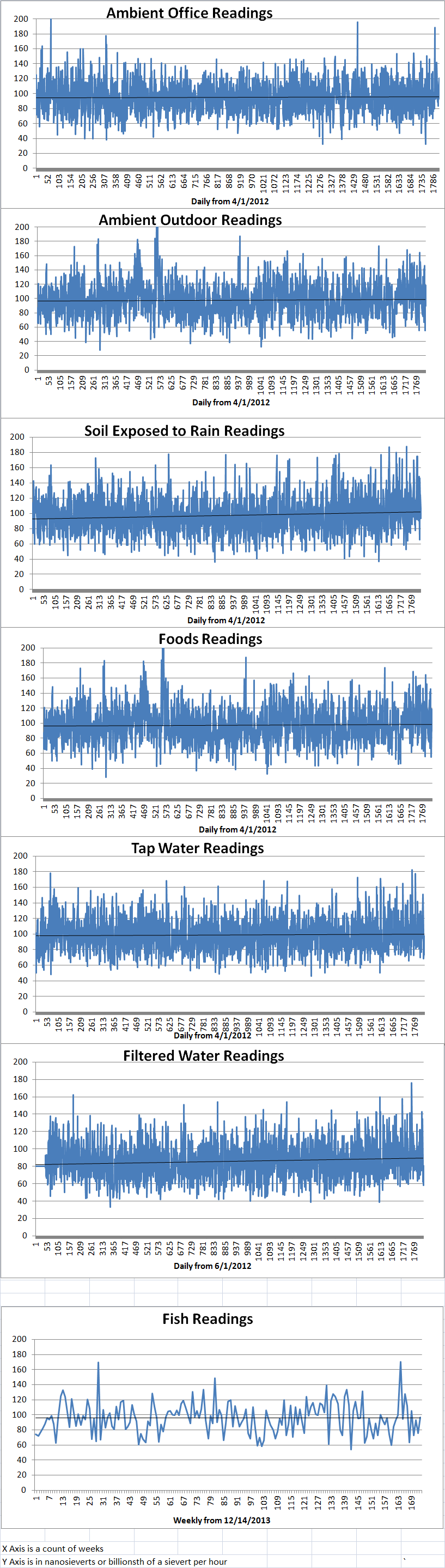
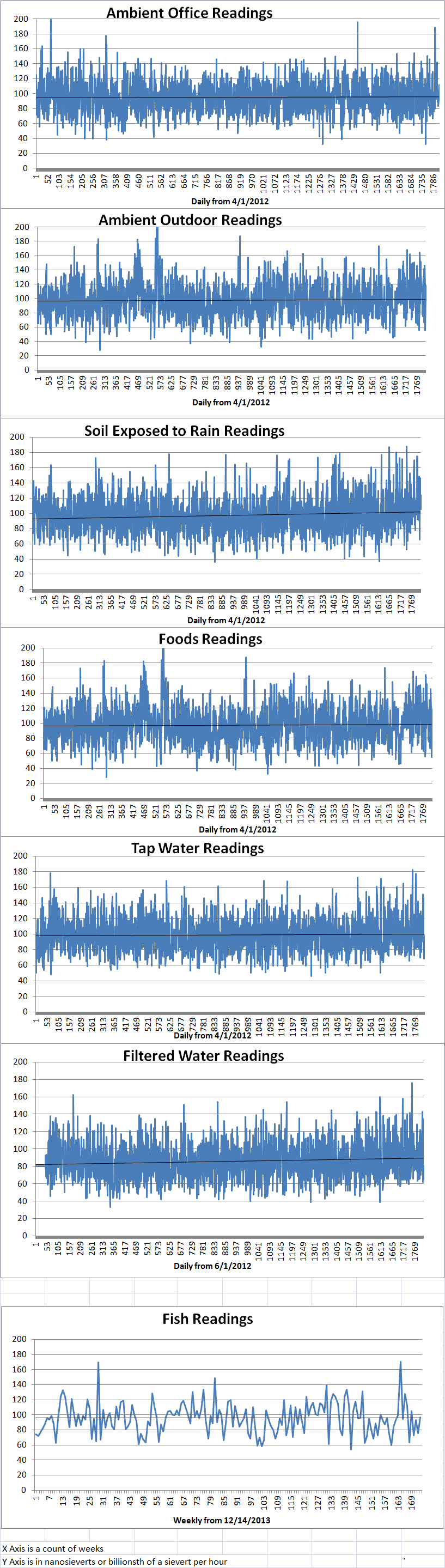
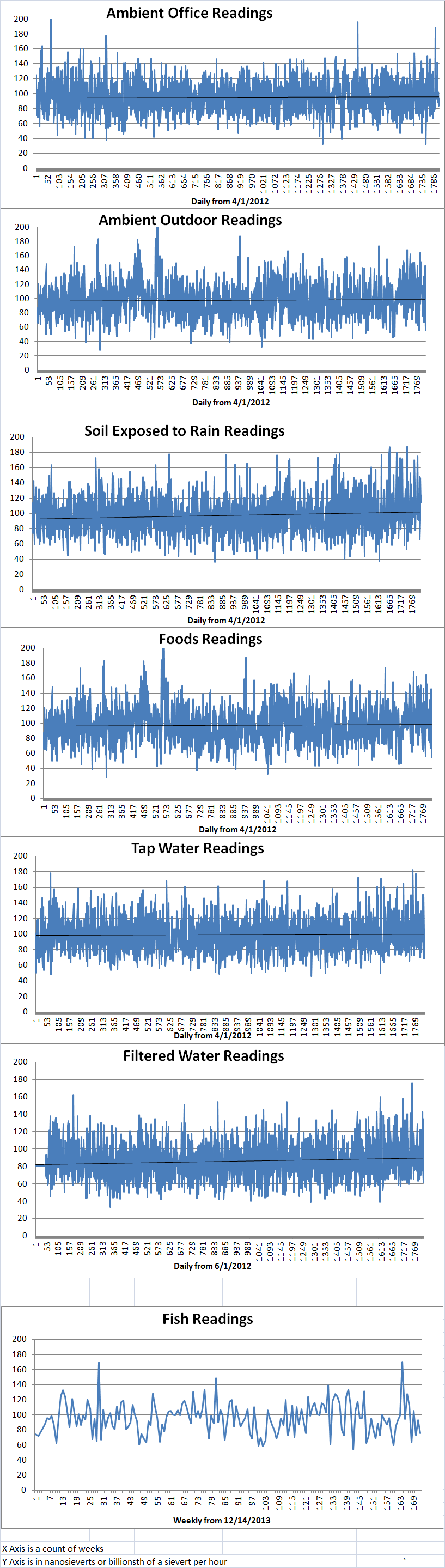
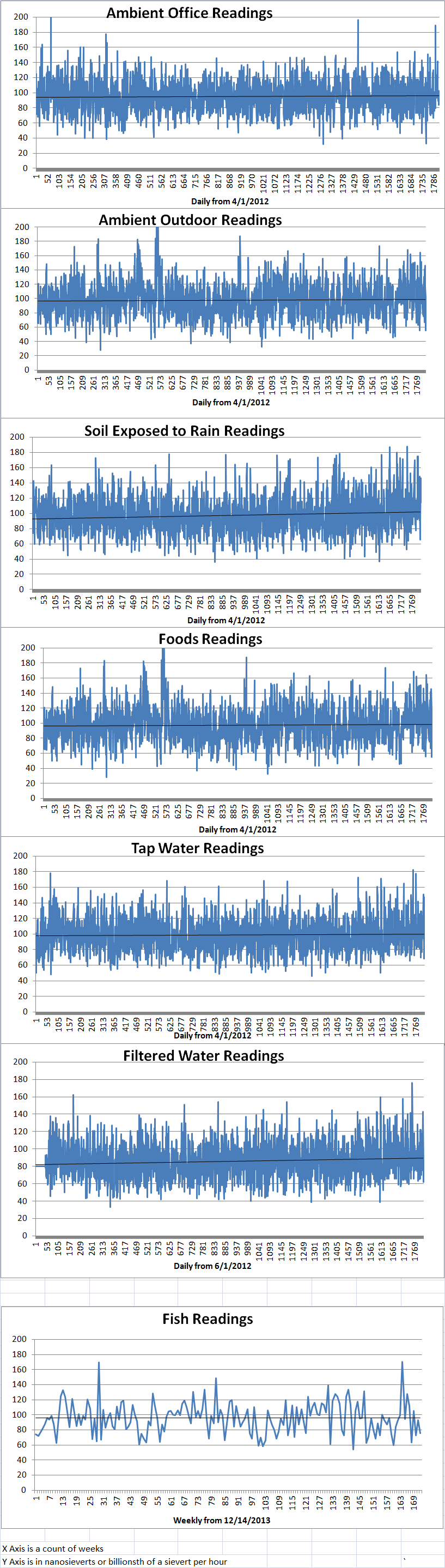
Ambient office = 120 nanosieverts per hourAmbient outside = 100 nanosieverts per hourSoil exposed to rain water = 93 nanosieverts per hourAvocado from Central Market = 90 nanosieverts per hourTap water = 73 nanosieverts per hourFilter water = 58 nanosieverts per hour -
Geiger Readings for Jun 10, 2017
Ambient office = 112 nanosieverts per hourAmbient outside = 109 nanosieverts per hourSoil exposed to rain water = 106 nanosieverts per hourHeirloom tomato from Central Market = 119 nanosieverts per hourTap water = 98 nanosieverts per hourFilter water = 81 nanosieverts per hourDover sole – Caught in USA = 96 nanosieverts per hour -
Nuclear Reactors 287 – Problems Plague New Reactors Project At Vogtle Power Plant In Georgia – Part Two of Two Parts
Part Two of Two Parts (Please read Part One first)
Last year, Georgia Power was required to file documentation with the Georgia state utility regulators to explain the billions of extra dollars that they have had to spend on the reactor project to date. Georgia Power provided over one thousand pages to the regulators.
Westinghouse had a very complex project plan with over one hundred and fifty thousand tasks. There was not enough slack built into the schedule. When milestones were missed, there was no extra time to catch up later. Westinghouse was building the new AP1000 reactor design so there were no experienced vendors who had built the design before. And the nuclear industry is highly demanding when it comes to quality control. Frequent design changes affected the schedule as well as poor work from Shaw Modular Solutions that had to be redone. Their new facility at Lake Charles, LA was the origin of a lot of problems.
There were many changes to the project from both the contractors and the regulators. Special teams were formed by both of the major contractors including a “modular recovery team” at Westinghouse and the “Fit It Now” team from Shaw. These teams attempted to identify and solve small problems before they evolved into big problems that seriously impacted the whole project. Georgia Power eventually told the vendors that their performance on modular and submodule quality control was not acceptable.
The agreement with the vendors was called a fixed/firm contract. The vendors formed a consortium and agreed to take more of the risk because Georgia Power was trying to restart the nuclear power construction industry in the U.S. One problem with this arrangement was that the vendors were under pressure to prioritize cost control over safety, quality and schedule.
The consortium had to cover the cost of most of the rework which kept piling up. This caused financial problems. The consortium also issued multiple change orders to the original contract which were disputed by Georgia Power. Disputes also broke out between vendors. Many of these disputes eventually became lawsuits. By 2015, there were over one thousands engineering and design changes that were in suspended and in dispute.
A broad settlement agreement finally ended the lawsuits between the contractors and the utilities. Westinghouse bought Chicago Bridge & Iron Company nuclear construction business and became Vogtle’s prime contractor. Fluor Corporation was contracted to help manage the new schedule which was supposed to bring the new Vogtle reactors to the Georgia power grid by 2020.
The project is still four years behind schedule. A May 5th, 2017 document from Georgia Power listed problems that still exist in meeting project milestones. These problems include poor contractor planning, late shipments from vendors, bad quality control at contractors and bad communications.
Southern Company’s nuclear unit and Georgia Power are now taking direct control of the Vogtle reactor project. They are assessing the costs of continuing construction of one or both of the new AP1000 reactors. Toshiba just announced that it will provide three billion six hundred million dollars to the Vogtle project as its bankrupt subsidiary, Westinghouse, withdraws from the project.
I have blogged that nuclear reactor construction projects are often poorly managed. I wish that I could say that the Vogtle problems were an exception but they are not. I am afraid that the nuclear industry renaissance in the United States is over.
-
Geiger Readings for Jun 09, 2017
Ambient office = 94 nanosieverts per hourAmbient outside = 126 nanosieverts per hourSoil exposed to rain water = 124 nanosieverts per hourGreen bell pepper from Central Market = 107 nanosieverts per hourTap water = 79 nanosieverts per hourFilter water = 66 nanosieverts per hour -
Nuclear Reactors 286 – Problems Plague New Reactors Project At Vogtle Power Plant In Georgia – Part One of Two Parts
Part One of Two Parts
I have often mentioned in my blogs that nuclear power plant projects have serious problems meeting budget estimates and construction schedules. The U.S. has been building nuclear power reactors for sixty years and not one of the projects ever met their original budget and schedule. For thirty years no new nuclear power plants were constructed in the U.S. Then, about ten years ago, work began on projects to build new power reactors in Georgia and South Carolina.
After five years of effort, Southern Company and Georgia Power utilities contracted in 2012 with Westinghouse Electric Company LLC for two new AP1000 power reactors to be installed at the Vogtle plant in Georgia. The two new reactors were supposed to start producing power in 2016 and 2017.
It was obvious that restarting nuclear power reactor construction after a thirty year hiatus was not going to be easy. Southern Company, Georgia Power and Westinghouse and were confident that they had sufficient expertise to deal with all the challenges they would face. But not only were they restarting a long dormant industry they were also working with a new reactor design. The plan was for Westinghouse and the Stone & Webster unit of the Shaw Group to build small, prefabricated components at a factory. The components would then be shipped to and assembled at the Vogtle site. The Southern Company’s nuclear unit and Georgia Power would oversee and manage the contractors. The then executive vice president of Southern Company testified in a hearing before the Georgia utility regulators in 2008, “We’ll use very, very experienced people who actually have done the work before. And they’ll know that schedule and the budget issues coming up.”
At the very beginning of the project, design changes delayed the issuance of the construction license from the Nuclear Regulatory Commission by four months. Westinghouse and Georgia Power were confident that they would be able to make up the lost four months during the project but it never happened.
Problems plagued the project from the start. Southern Company’s nuclear unit and Geogia Power added more and more supervisors to oversee the complex work on the reactors. Westinghouse was over optimistic about the design schedule and there was a shortage of managers with experience. There were substandard components from suppliers and critical documents went missing. Vendors had to be educated on the very strict nuclear quality standards and oversight processes. There were not enough qualified welders and not enough instructors to train more.
Contractors complained that Southern Company’s nuclear unit and Geogia Power micromanaged the project and interfered with their work. Commercial disputes piled up. Consultant Charles Hudson said in his report on the project, “This type of internal consortium commercial dispute on critical path module completion had potentially catastrophic consequences for Vogtle Units 3 and 4.”
An independent construction monitor at Vogtle reviewed some of the problems at a routine hearing in 2012. One of the things that he reported was that there a lot of missing documents and missing signatures on documents which resulted in a lot of delays. This was not an infrequent issue. The main vendors on the projects simply did not follow the rules for documentation and other quality assurance requirements.
In 2013, Chicago Bridge & Iron Company bought the Shaw Group and became a contractor for the Vogtle project.
Please read Part Two
-
Geiger Readings for Jun 08, 2017
Ambient office = 92 nanosieverts per hourAmbient outside = 109 nanosieverts per hourSoil exposed to rain water = 114 nanosieverts per hourCauliflower from Central Market = 55 nanosieverts per hourTap water = 68 nanosieverts per hourFilter water = 62 nanosieverts per hour -
Nuclear Reactors 285 – India Should Reconsider The Construction Of Ten New Nuclear Power Reactors – Part Two of Two Parts
Part Two of Two Parts (Please read Part One first)
India has a tariff system that provides a lower ROI for nuclear power than for other sources of power. If not for this system, nuclear power would be even more expensive than it is. The Indian government says that the ten nuclear power plants will result in more than thirty three thousand new jobs. However, the real issue with respect to jobs created by infrastructure projects is the ratio of investment per job and, by that measure, these nuclear projects are an expensive way to create jobs. Jobs generated by the solar industry are six times more labor intensive than jobs created by the nuclear industry. Investment in solar jobs is much more cost effective than investment in nuclear jobs.
Supporters of nuclear energy tout the low carbon emissions from nuclear power plants as a way to mitigate climate change. However, the manufacture and fueling of nuclear power plants generates a lot of carbon before a single watt of electricity is produced. It has been estimated that it may take as much as fifteen years of steady operation before a nuclear power plant repays the carbon debt from construction. Considering the lengthy time required to license and construct a nuclear power plant, nuclear power is no solution to climate change.
In addition, there are threats to human health and the environment from nuclear power plants in case of an accident. A single accident such as Chernobyl or Fukushima can contaminate hundreds of square miles of land and force the evacuation of millions of people. Costs for such accidents could run into the trillions of dollars.
Nuclear power plants also make great targets for terrorists and that is a serious issue for India considering recent terrorist attacks launched from Pakistan. They would also be targets for an enemy’s bombs and missiles in case a war broke out.
Every nuclear power plant produces radioactive waste products that are dangerous to human health and the environment. Some of these waste products have half lives of hundreds of thousands of years. The human race has been using nuclear energy for power production for over sixty years and yet there is still no safe, economical and widely accepted method for the disposal of dangerous radioactive waste from nuclear power reactors.
While the federal government of India is dedicated to expanding nuclear power, local communities are not so enthusiastic. Since the 1980s, every time the federal government has announced the site of a new nuclear plant in India, there have been public protests by the people who live near the new site. In some cases, these protests have caused the government to abandon sites for planned reactors. In other cases, the government has been able to use the promise of badly needed public funds to quash protests and proceed with reactor construction. The risks and costs of nuclear power plant construction fall heavily on poor rural communities who only use a small fraction of the electricity generated by nearby power plants.
The Modi administration in India strongly supports nuclear power but that may be an unwise policy decision. Globally, the trend seems to be away from nuclear power. Recently, India cancelled the construction of ten new coal-fired power plants because it was cheaper to build solar power plants. Perhaps this will soon be the fate of the planned nuclear power plants.
Kundankulam nuclear power plant: