Author: Burt Webb
-
Geiger Readings for May 09, 2017
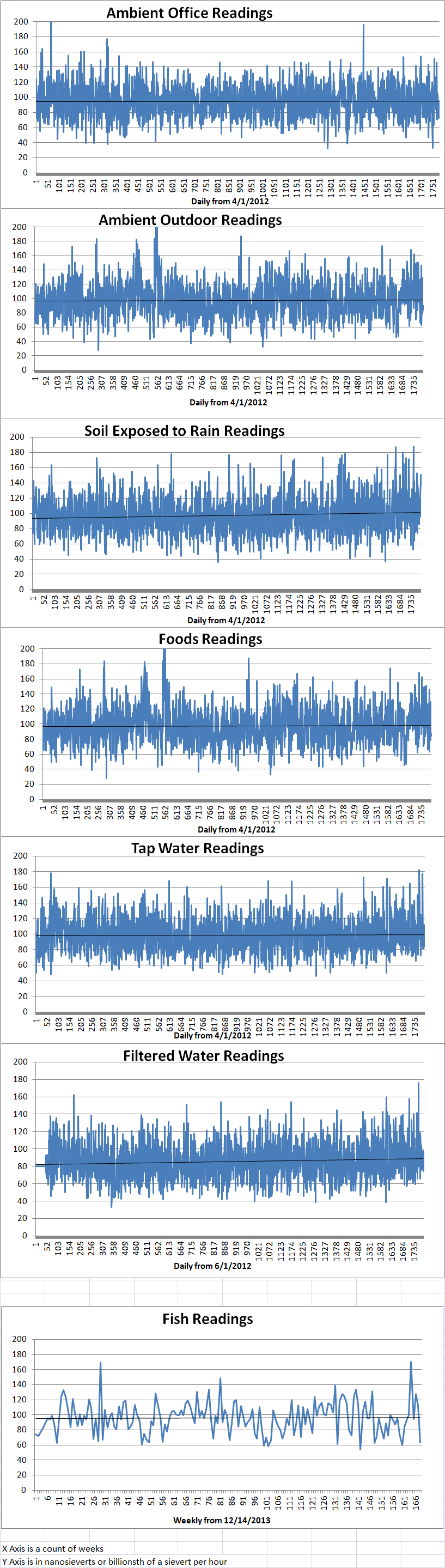
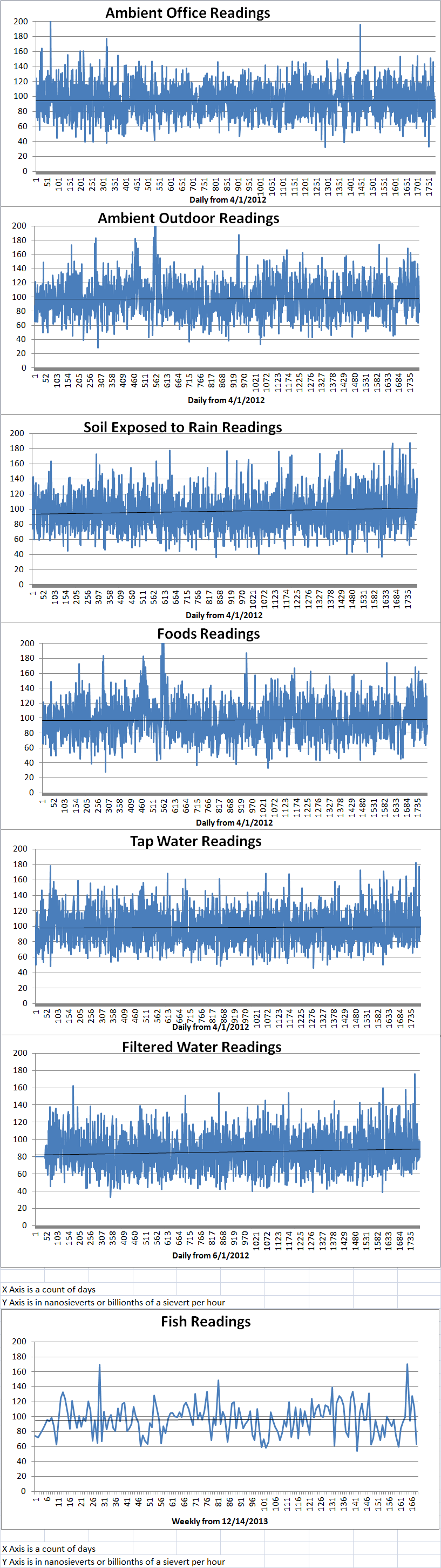
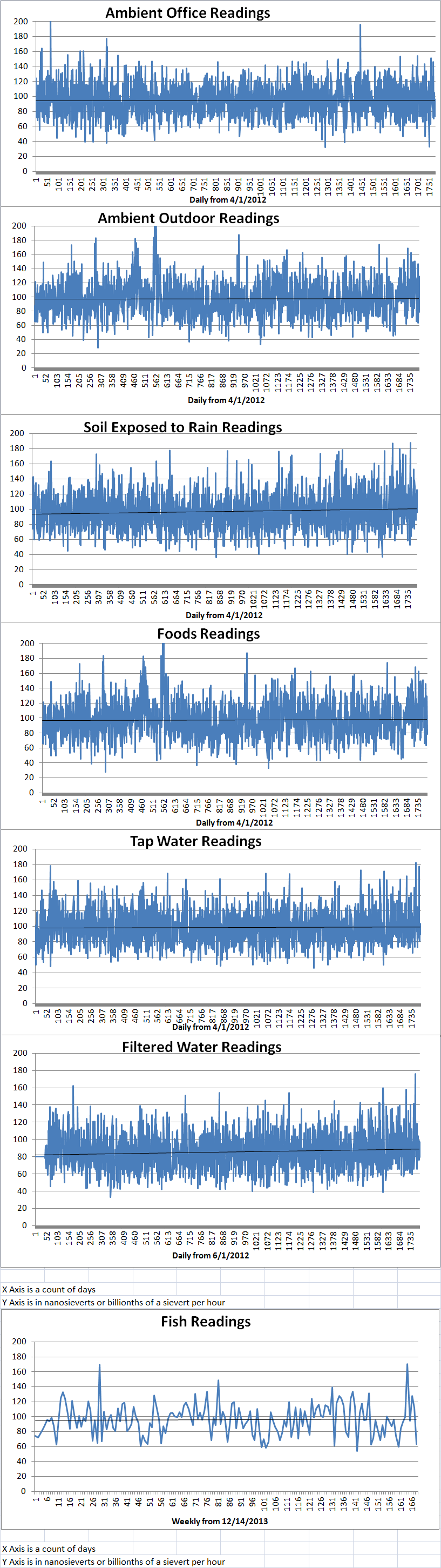
Ambient office = 95 nanosieverts per hourAmbient outside = 147 nanosieverts per hourSoil exposed to rain water = 150 nanosieverts per hourAvodado from Central Market = 84 nanosieverts per hourTap water = 83 nanosieverts per hourFilter water = 74 nanosieverts per hour -
Radioactive Waste 225 – Breakthroughs In Plutonium Chemistry At The University of Florida.
Plutonium is produced in conventional nuclear reactors. The plutonium can be treated as waste and disposed of. It can be extracted from the spent nuclear fuel and be used to create new mixed uranium/plutonium fuel. It can also be extracted, refined and used to produce nuclear weapons. Combined civilian and military stockpiles worldwide probably exceed five hundred tons. A nuclear warhead can be made with less than ten pounds of plutonium.
Research in the chemistry of plutonium is currently being conducted at Florida State University by Professor Thomas Albrecht-Schmitt. He and his team have been researching plutonium chemistry for decades. Last year, he received $10 million grant from the Department of Energy to form a new Energy Frontier Research Center at the University of Florida that will focus on accelerating scientific efforts to clean up nuclear waste.
One focus of Albrecht-Schmitt’s research was to see how plutonium behaved differently than lighter metals such as iron and nickel in compounds with organic materials. They are finding that plutonium does nor interact with other elements and form compounds in exactly the fashion that was assumed. It turned out that plutonium behaved more like lighter metals in a compound with organic materials that was previously understood.
They were expecting the chemistry of their new plutonium/organic compound to be very complicated but it turned out to be quite simple. They realized that they could probably make the same types of compounds with other heavy metals including uranium and berkelium. (Berkelium is a transuranic element with atomic number 97. Berkelium does not occur in nature. It was first produced in 1947 at the University of California at Berkeley by bombarding americium-241 with helium-4 nuclei for several hours in the 60-inch cyclotron.)
When Albrecht-Schmitt first saw the new compound, he suspected that something interesting had happened because of the color of the compound. Plutonium compounds often have wild bright colors like purples and pinks. The fact that the new compound was brown suggested that they were seeing a new phenomenon.
Light metals are used to form compounds with organic materials. These compounds often contain light metal positive ions which exchange electrons. This makes the light metals attractive for forming compounds with this exchange of electrons. It was an important breakthrough to find that plutonium could form similar compounds.
Albrecht-Schmitt said, “In order to develop materials that say trap plutonium, you first have to understand at the most basic level, the electronic properties of plutonium. So that means making very simple compounds, characterizing them in exquisite detail and understanding both experimentally and theoretically all of the properties you’re observing.”
Albrecht-Schmitt and his team have explored the chemistry of other heavy elements in the outer reaches of the periodic table such as californium. (Californium is a man-made transuranic element. Its symbol is Cf and it has an atomic number of 98. It was first produced 1950 at the University of California Radiation Laboratory in Berkeley, by bombarding curium with helium-4 ions.)It is hoped that better understanding of the chemistry of plutonium will improve methods of environmental remediation from radioactive contamination.

-
Geiger Readings for May 08, 2017
Ambient office = 90 nanosieverts per hourAmbient outside = 116 nanosieverts per hourSoil exposed to rain water = 112 nanosieverts per hourCelery from Central Market = 98 nanosieverts per hourTap water = 100 nanosieverts per hourFilter water = 98 nanosieverts per hour -
Geiger Readings for May 07, 2017
Ambient office = 74 nanosieverts per hourAmbient outside = 121 nanosieverts per hourSoil exposed to rain water = 126 nanosieverts per hourOrange bell pepper from Central Market = 79 nanosieverts per hourTap water = 00 nanosieverts per hourFilter water = 79 nanosieverts per hour -
Geiger Readings for May 06, 2017
Ambient office = 97 nanosieverts per hourAmbient outside = 98 nanosieverts per hourSoil exposed to rain water = 95 nanosieverts per hourRedleaf lettuce from Central Market = 129 nanosieverts per hourTap water = 103 nanosieverts per hourFilter water = 97 nanosieverts per hourDover sole – Caught in USA = 64 nanosieverts per hour -
Nuclear Weapons 277 – Concerns About An EMP Attack From North Korea Are Overblown
I recently wrote in detail about the devastating effects of the detonation of a nuclear device in a major city. I have also written about the nuclear threat from North Korea. The big question is whether N.K. has or will have soon the capability to fire a nuclear-armed missile accurately enough to hit a major West Coast city. However, it is also possible that the detonation of a nuclear device many miles away can have a very damaging effect on the electronic devices and infrastructure of a city so perhaps accuracy is not so important. Such an attack is called an electromagnetic pulse or EMP.
The Report of the Commission to Assess the Threat to the US from EMP Attack states: “When a nuclear explosion occurs at high altitude, the EMP signal it produces will cover the wide geographic region within the line of sight of the detonation. This broad band, high amplitude EMP, when coupled into sensitive electronics, has the capability to produce widespread and long lasting disruption and damage to the critical infrastructures that underpin the fabric of U.S. society.” The pulse can also travel over power lines and destroy substations and power generators.
The EMP signal has three components in sequence. The first component is the most intense and damaging. It occurs withing ten billionths of a second. Intense gamma radiation from the blast rips the electrons off the atoms of the gases in the atmosphere and hurls them at nearly the speed of light over the area in line of sight from the blast. The pulse that is created can cause very high voltages in electronic devices that overwhelm regular surge protectors. Special surge protectors are able to withstand the effect and are being adopted more widely. The second part of the signal lasts from one-millionths of a second after the blast to about one second. It is generated by neutron collisions following the explosion and is similar to the signal generated by a lighting strike. Existing protection against lightning can protect against this part of the signal. The third part of the signal lasts from tens to hundreds of seconds after the blast. It is generated by the effect of the blast on the magnetic field of the Earth that is distorted and then snaps back to its regular configuration. This part of the signal is similar to geomagnetic storms and it can induce high voltages in very long conductors such as power lines.
As with other effects of nuclear detonations, the size of the EMP is related to the size of the nuclear explosion in terms of equivalences in tons of TNT. There are some assumptions that are made which simplify the calculation of the effects of a particular EMP. The detonation is a symmetrical sphere. The strength of the magnetic field of the Earth is ignored. Three percent of the strength of the explosion is expressed in the gamma rays that are generated. The gamma rays are produced within ten billionths of a second of the explosion. About six-tenths of a percent of the gamma rays produce relativistic electrons. The threshold of the electric field damage is fifteen thousand volts per meter or more for the first part of the signal.
When all these factors are taken into account, a simple equation emerges. The distance in kilometers of damaging effects from an EMP is equal to the strength of the explosion in kilotons. So a twenty kiloton blast would cause damage in a circle twenty kilometers in diameter around the point under the detonation. Biggest test detonation of a nuclear device in North Korea so far has been about twenty kilotons. So if N.K. could send a nuclear missile to the West Coast of the U.S., there would only be EMP damage out to about six miles directly under the blast. In conclusion, concerns about an EMP attack from N.K. are overblown.
EMP graph:
-
Nuclear News Roundup May 05, 2017
The commercial start-up of the first of four nuclear reactors that South Korea’s KEPCO is building in United Arab Emirates is set to be delayed because the local operating company is not ready to run the reactors, a nuclear industry source said. Reuters.com
Lithuanian State Nuclear Power Safety Inspectorate (Vatesi) said today it had issued a permit for the start of commercial operation of the country’s new interim used fuel storage facility. The announcement followed State Enterprise Ignalina Nuclear Power Plant’s (INPP’s) successful completion yesterday of hot tests with ten new design casks. The company has demonstrated it is ready to operate the facility safely, Vatesi said. World-nuclear-news.org